What are Key Facts About NMCG? - Environment And Ecology | UPSC Learning
Topics
0 topics • 0 completed
🔍
No topics match your search
What are Key Facts About NMCG?
Medium⏱️ 8 min read
environment and ecology
📖 Introduction
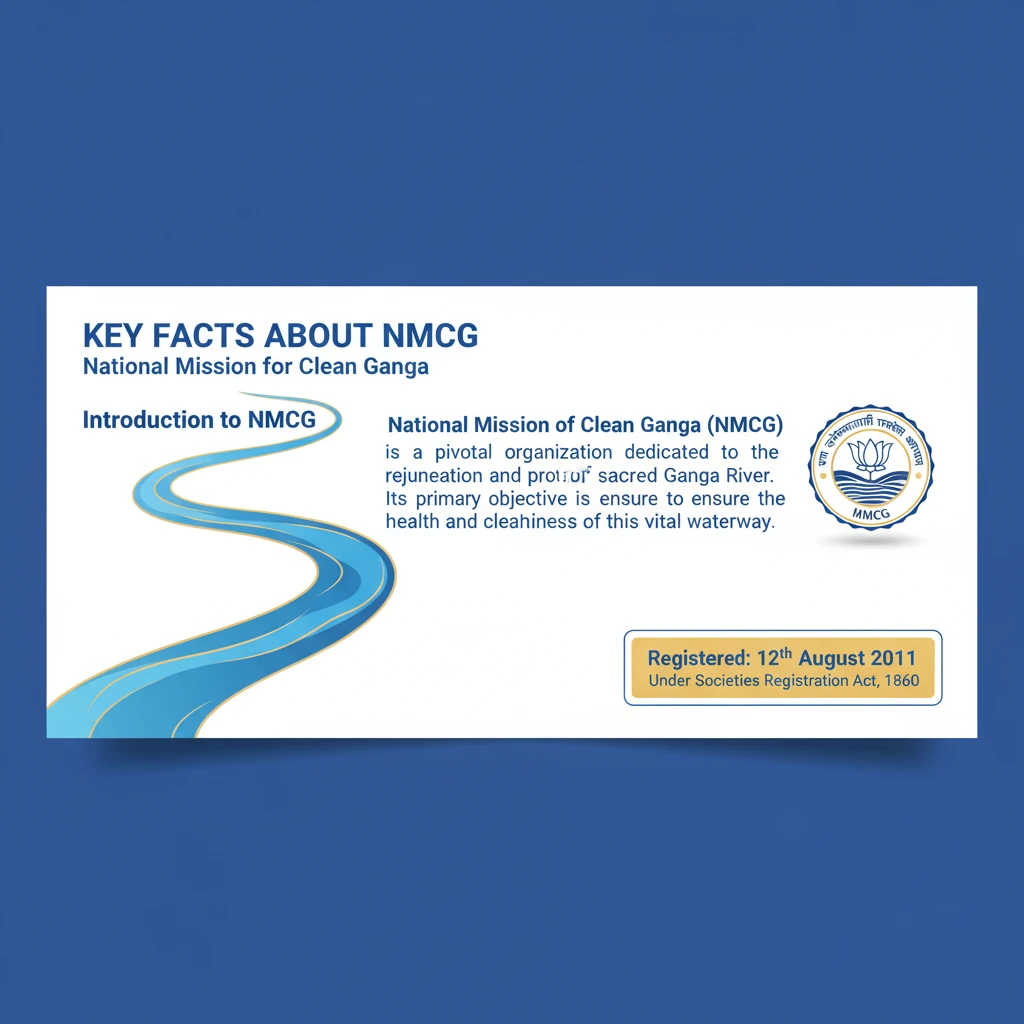
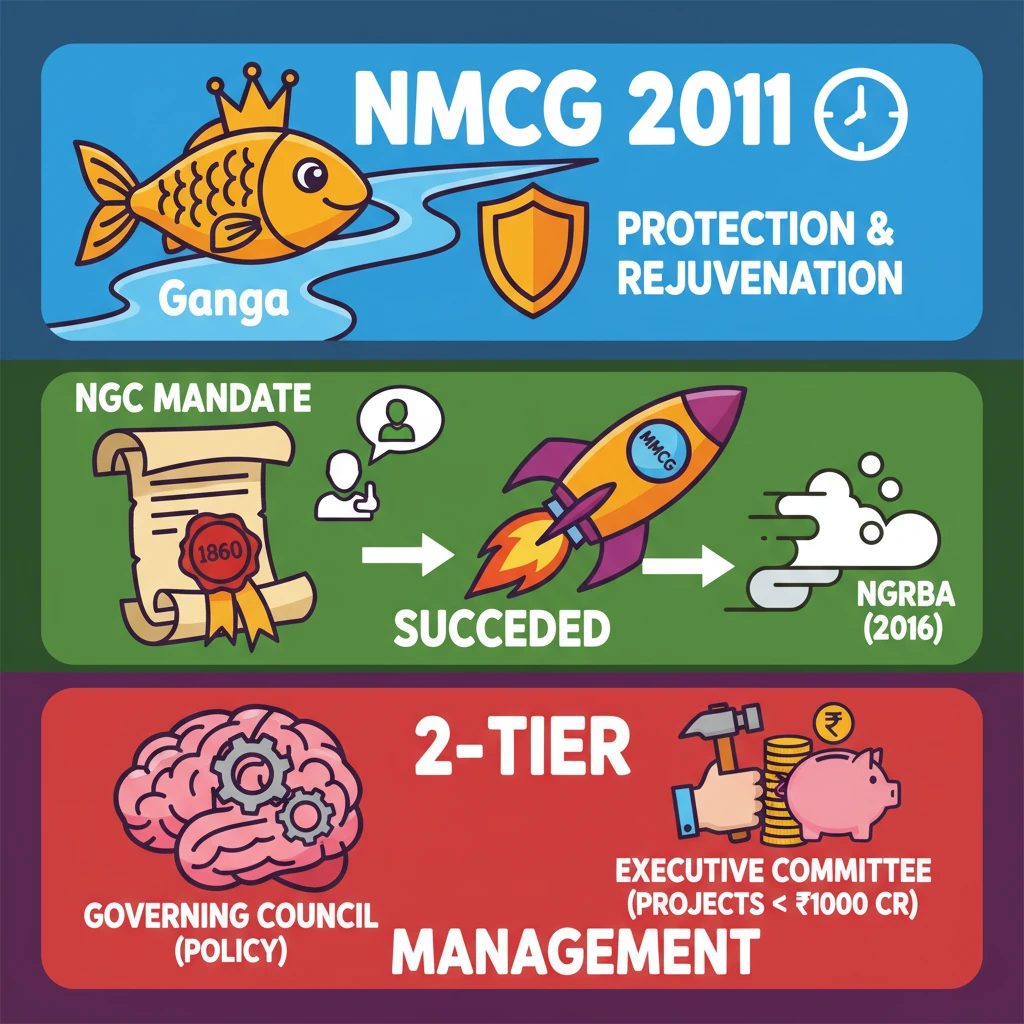
<h4>Introduction to NMCG</h4><p>The <strong>National Mission for Clean Ganga (NMCG)</strong> is a pivotal organization dedicated to the rejuvenation and protection of the sacred <strong>Ganga River</strong>. Its primary objective is to ensure the health and cleanliness of this vital waterway.</p><p>NMCG was formally registered as a society on <strong>12th August 2011</strong>. This registration was carried out under the provisions of the <strong>Societies Registration Act, 1860</strong>, providing it with a legal identity.</p><h4>Legal Framework and Evolution</h4><p>Initially, <strong>NMCG</strong> served as the implementation arm for the <strong>National Ganga River Basin Authority (NGRBA)</strong>. The <strong>NGRBA</strong> itself was constituted under the robust legal framework of the <strong>Environment (Protection) Act (EPA), 1986</strong>, highlighting the environmental significance of its mandate.</p><div class='key-point-box'><p>Following the dissolution of the <strong>NGRBA</strong> in <strong>2016</strong>, the <strong>NMCG</strong> transitioned its role. It now functions as the primary implementation arm for the <strong>National Council for Rejuvenation, Protection and Management of River Ganga</strong>, more commonly known as the <strong>National Ganga Council (NGC)</strong>.</p></div><p>The overarching goal of the <strong>National Ganga Council (NGC)</strong>, which <strong>NMCG</strong> supports, is multifaceted. It strives to ensure a continuous and adequate flow of water in the river, while also actively working to prevent, control, and abate environmental pollution impacting the <strong>Ganga</strong>.</p><h4>Management Structure of NMCG</h4><p>The <strong>NMCG</strong> operates through a streamlined <strong>two-tier management structure</strong> designed for efficient decision-making and project execution. Both tiers are strategically headed by the <strong>Director General (DG) of NMCG</strong>, ensuring unified leadership.</p><ul><li><strong>Governing Council:</strong> This body is responsible for overseeing the general policies and providing strategic direction to the <strong>NMCG</strong>. It sets the broader vision and guidelines for the mission.</li><li><strong>Executive Committee:</strong> Empowered with significant financial authority, this committee is authorized to approve projects. It can sanction projects with a substantial <strong>financial outlay of up to Rs 1,000 crore</strong>, facilitating rapid implementation of crucial initiatives.</li></ul><h4>Five-Tier Structure for Ganga Rejuvenation</h4><p>The comprehensive strategy for <strong>Ganga rejuvenation</strong> is envisioned through a <strong>five-tier structure</strong>. This multi-layered approach ensures coordinated efforts across various administrative levels.</p><div class='info-box'><p>This structure is mandated by the <strong>Environment Protection Act (EPA), 1986</strong>, underscoring its legal backing. It encompasses national, state, and district levels, ensuring broad participation and accountability in the mission to clean the <strong>Ganga</strong>.</p></div>
💡 Key Takeaways
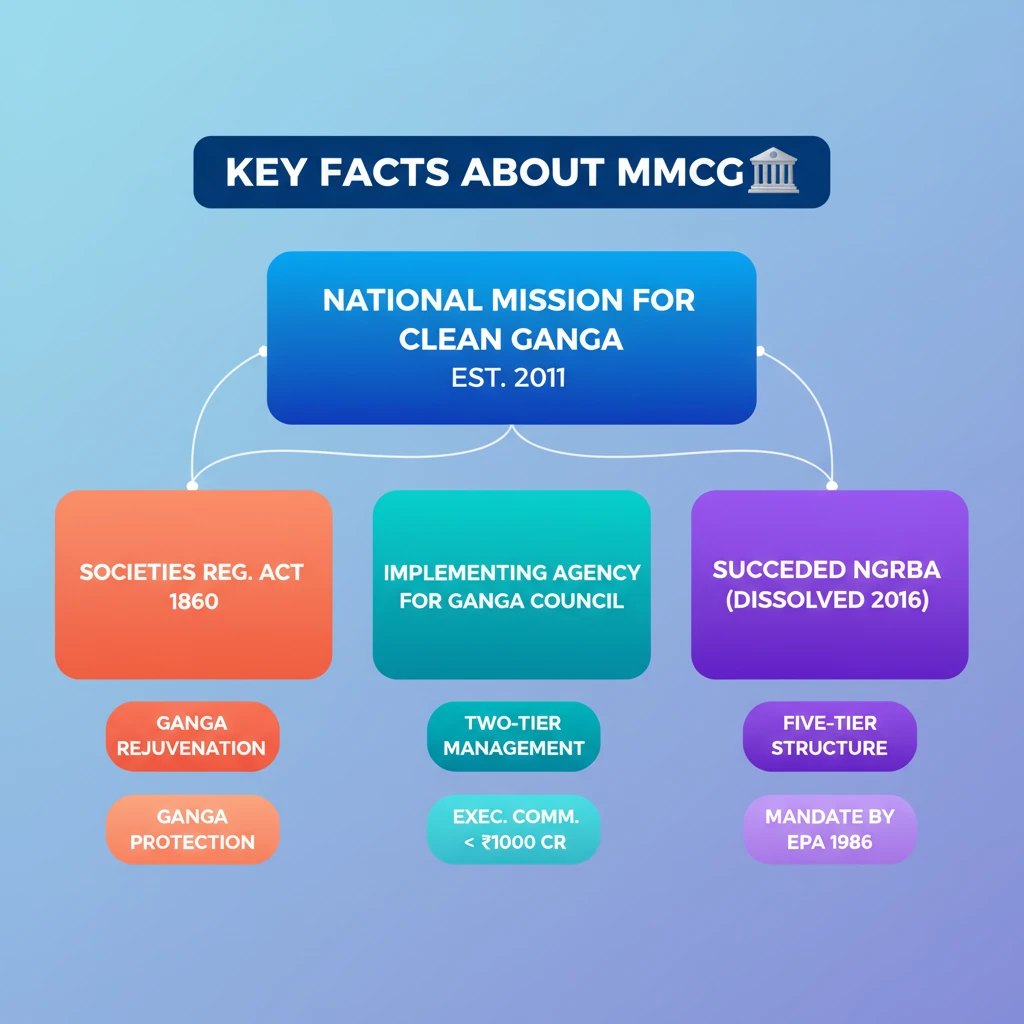
- •NMCG, established in 2011, is crucial for Ganga rejuvenation and protection.
- •It operates under the Societies Registration Act, 1860, and implements the National Ganga Council's mandate.
- •NMCG succeeded NGRBA (dissolved 2016) as the primary implementing agency.
- •Features a two-tier management: Governing Council (policy) and Executive Committee (project approval up to Rs 1,000 crore).
- •A five-tier structure, mandated by EPA 1986, guides Ganga rejuvenation at national, state, and district levels.
- •Its work is central to the Namami Gange Mission and India's SDG commitments.
🧠 Memory Techniques
98% Verified Content
📚 Reference Sources
•Official website of National Mission for Clean Ganga (NMCG)
•Environment (Protection) Act, 1986