Nitrogen Pollution: Impacts on Environment, Health, and Eutrophication - Environment And Ecology | UPSC Learning
Topics
0 topics • 0 completed
🔍
No topics match your search
Nitrogen Pollution: Impacts on Environment, Health, and Eutrophication
Medium⏱️ 8 min read
environment and ecology
📖 Introduction
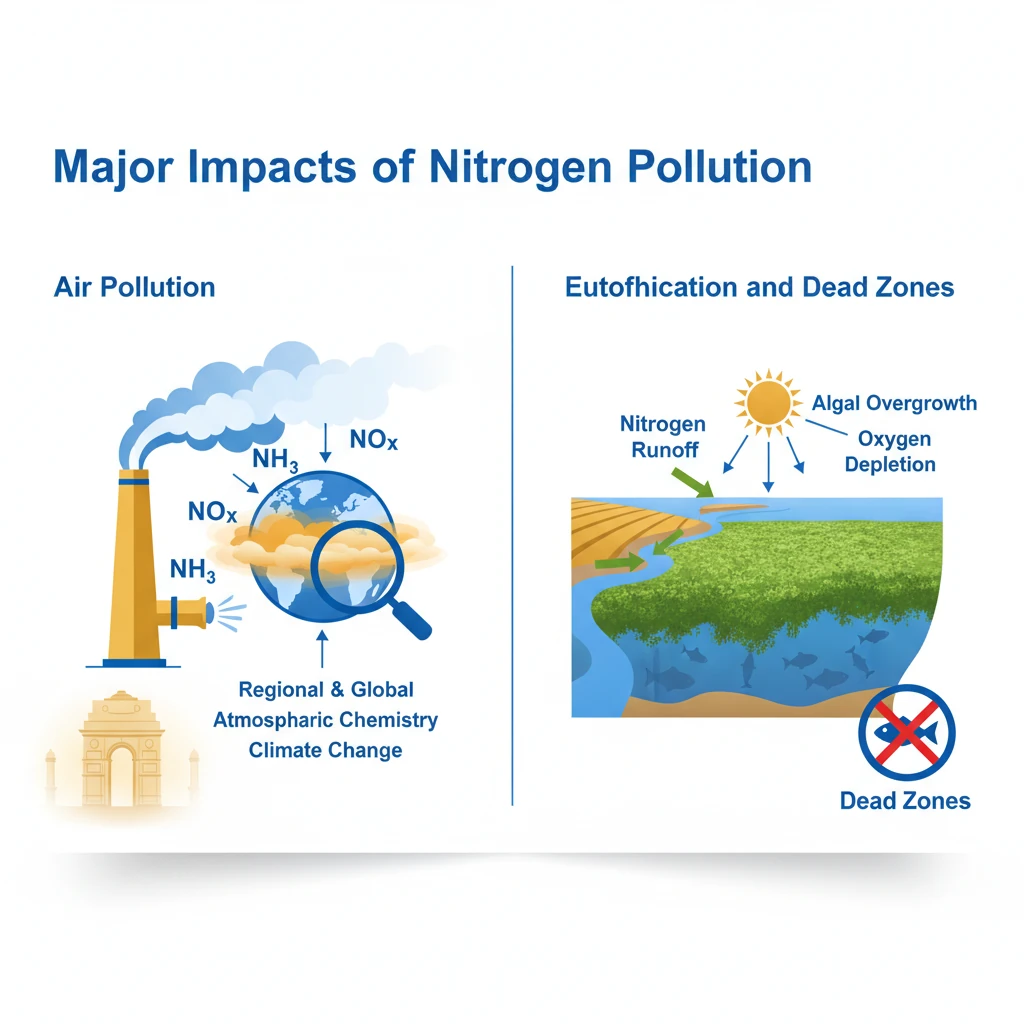
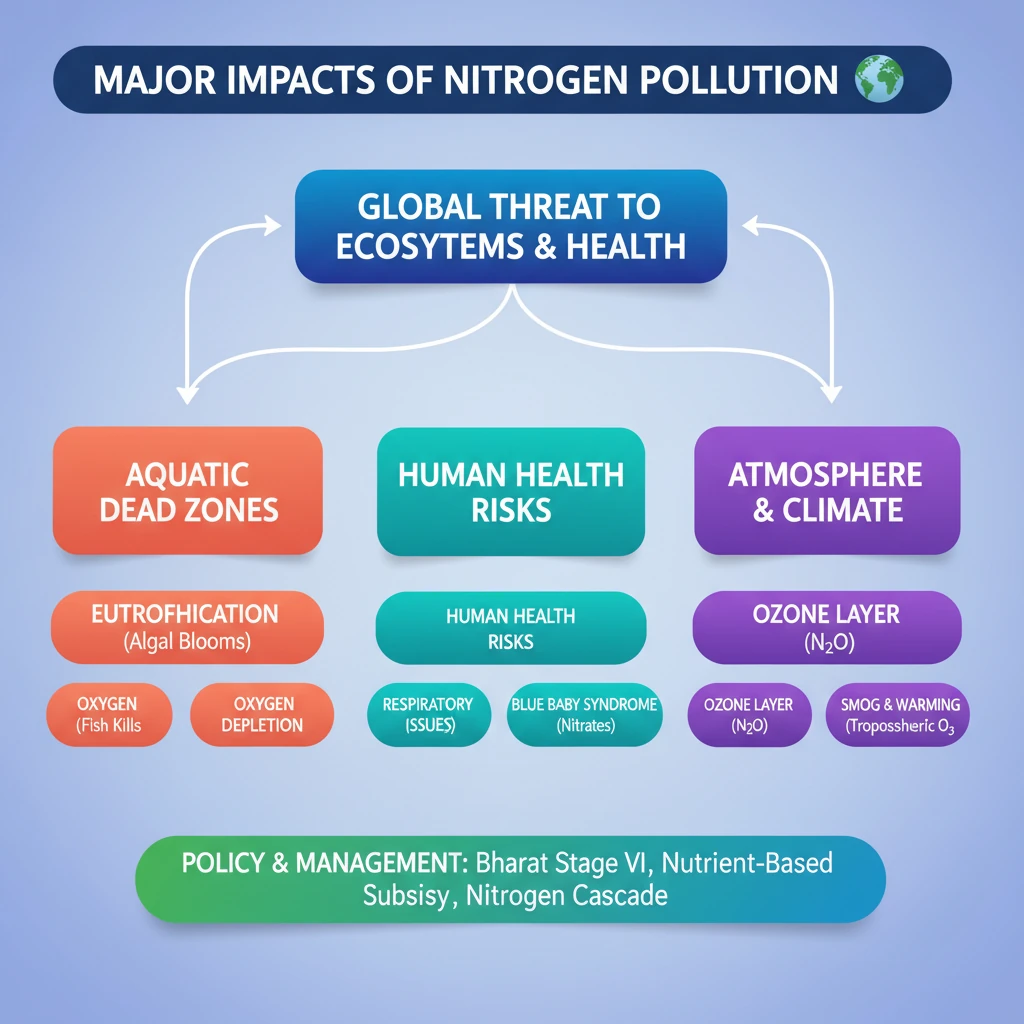
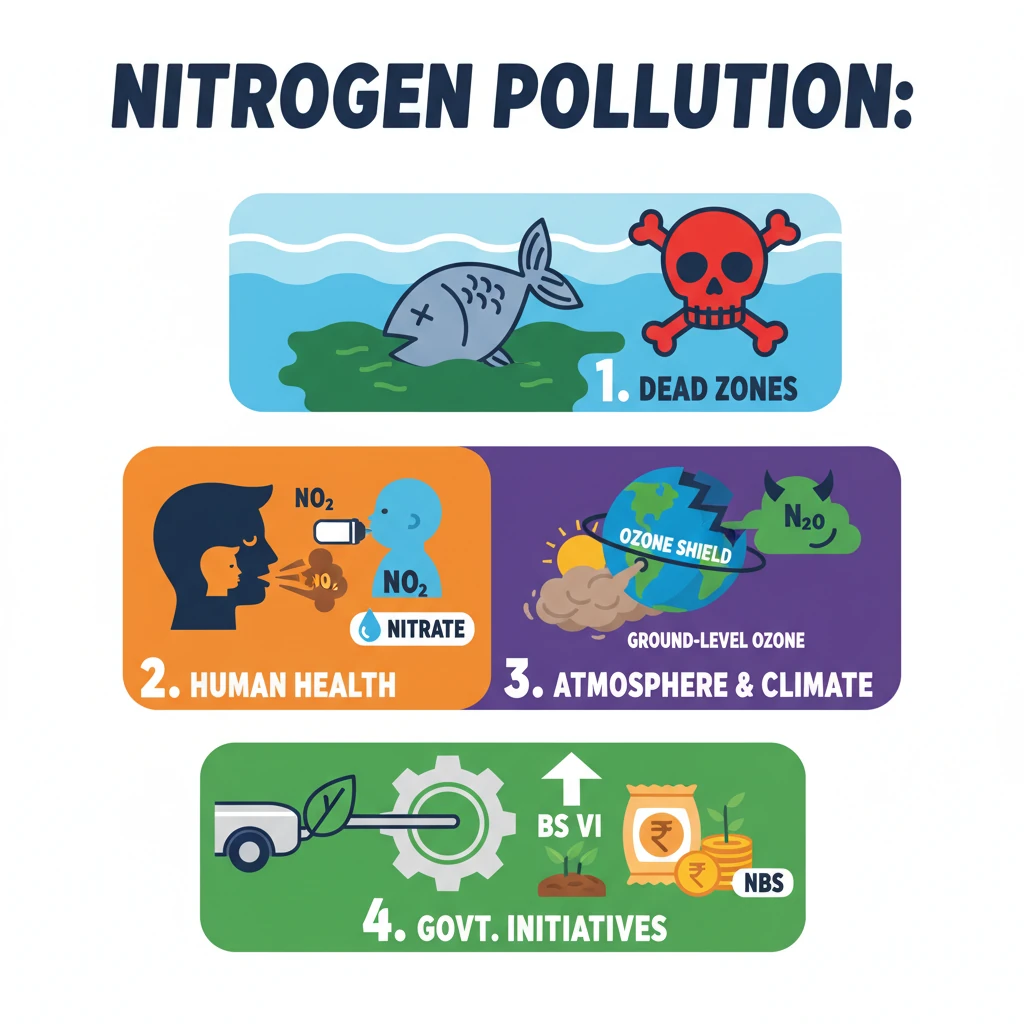
<h4>Major Impacts of Nitrogen Pollution</h4><p>Emissions of reactive <strong>nitrogen compounds</strong> significantly contribute to <strong>air pollution</strong>, causing both regional and global impacts on atmospheric chemistry and climate.</p><h4>Eutrophication and Dead Zones</h4><p><strong>Eutrophication</strong> occurs when excess <strong>nitrogen</strong> acts as a nutrient fertilizer for aquatic plants, leading to an overgrowth of algae and other aquatic vegetation.</p><p>This phenomenon is widely known as <strong>algal blooming</strong>, which can cover vast areas of water bodies.</p><div class='key-point-box'><p><strong>Algal blooming</strong> subsequently creates <strong>oxygen-depleted zones</strong>, often referred to as <strong>"dead zones"</strong>. In these areas, aquatic life suffocates and dies due to the severe lack of oxygen.</p></div><h4>Human Health Impacts</h4><p><strong>Nitrogen pollution</strong> exerts direct and indirect detrimental effects on <strong>human health</strong>.</p><p>High concentrations of <strong>nitrogen dioxide (NO2)</strong> in the air can exacerbate existing <strong>respiratory conditions</strong> such as <strong>asthma</strong> and elevate the risk of <strong>respiratory infections</strong>.</p><div class='info-box'><p>It is estimated that <strong>77%</strong> of people globally breathe annual average concentrations of <strong>nitrogen dioxide</strong> that exceed safe levels.</p></div><p>Furthermore, <strong>nitrate contamination</strong> of drinking water can pose serious health risks, particularly to infants.</p><p>This contamination can lead to <strong>methemoglobinemia</strong>, commonly known as <strong>“blue baby syndrome”</strong>, a condition that impairs the blood's ability to carry oxygen.</p><h4>Ozone Depletion and Tropospheric Ozone</h4><p><strong>Nitrous oxide (N2O)</strong>, when released into the atmosphere, contributes to the depletion of the <strong>stratospheric ozone layer</strong>.</p><p>The <strong>stratospheric ozone layer</strong> is vital as it shields Earth from harmful <strong>ultraviolet (UV) radiation</strong>.</p><p>Depletion of this protective layer increases the risk of <strong>skin cancer</strong>, <strong>cataracts</strong>, and other health problems in humans, while also harming <strong>marine ecosystems</strong> and <strong>agricultural crops</strong>.</p><div class='key-point-box'><p>Additionally, nitrogen oxides contribute to the formation of <strong>tropospheric ozone</strong> (ground-level ozone), which is a pollutant that causes further <strong>respiratory illnesses</strong>.</p></div><h4>Related Government Initiatives</h4><p>To combat nitrogen pollution, several government initiatives have been implemented:</p><ul><li><strong>Bharat Stage (BS VI) Emission Standards</strong>: These are stricter emission standards for vehicles and industries, specifically designed to curb the release of <strong>nitrogen oxides</strong> and <strong>particulate matter</strong>, which are precursors to both air and water pollution.</li><li><strong>Nutrient-Based Subsidy (NBS)</strong>: This policy incentivizes the use of controlled-release fertilizers, thereby encouraging more efficient <strong>nutrient management</strong> in agriculture and reducing environmental nitrogen loads.</li></ul>
💡 Key Takeaways
- •Nitrogen pollution causes eutrophication, leading to oxygen-depleted 'dead zones' in aquatic ecosystems.
- •It severely impacts human health, causing respiratory issues from NO2 and 'blue baby syndrome' from nitrate contamination.
- •Nitrous oxide (N2O) depletes the stratospheric ozone layer and contributes to ground-level tropospheric ozone.
- •Government initiatives like Bharat Stage (BS VI) emission standards and Nutrient-Based Subsidy (NBS) aim to mitigate nitrogen emissions.
- •Managing the 'nitrogen cascade' is crucial for environmental sustainability, biodiversity, and public health.
🧠 Memory Techniques
98% Verified Content
📚 Reference Sources
•General environmental science textbooks and reports on nitrogen cycle and pollution
•Reports from environmental agencies (e.g., EPA, UNEP) on dead zones and air quality