IUCN’s First Global Tree Assessment - Environment And Ecology | UPSC Learning
Topics
0 topics • 0 completed
🔍
No topics match your search
IUCN’s First Global Tree Assessment
Medium⏱️ 6 min read
environment and ecology
📖 Introduction
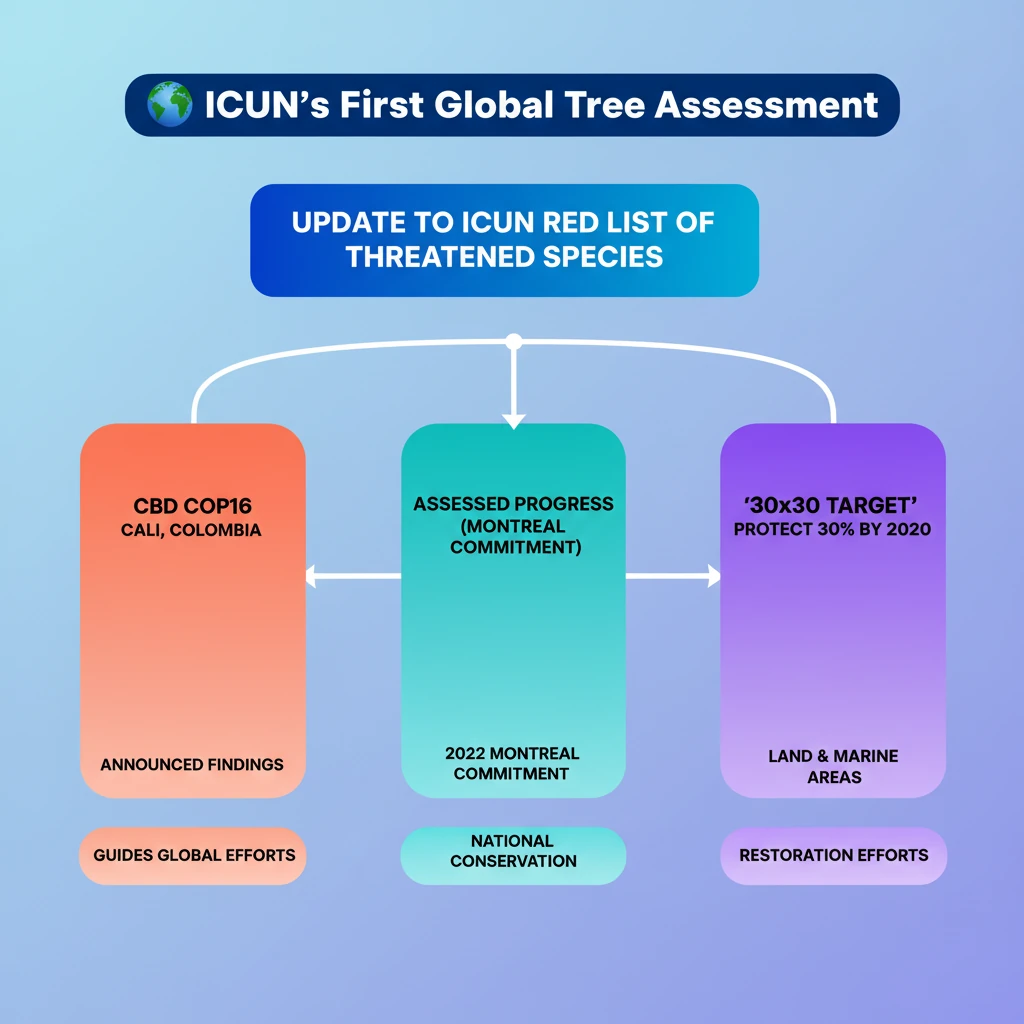
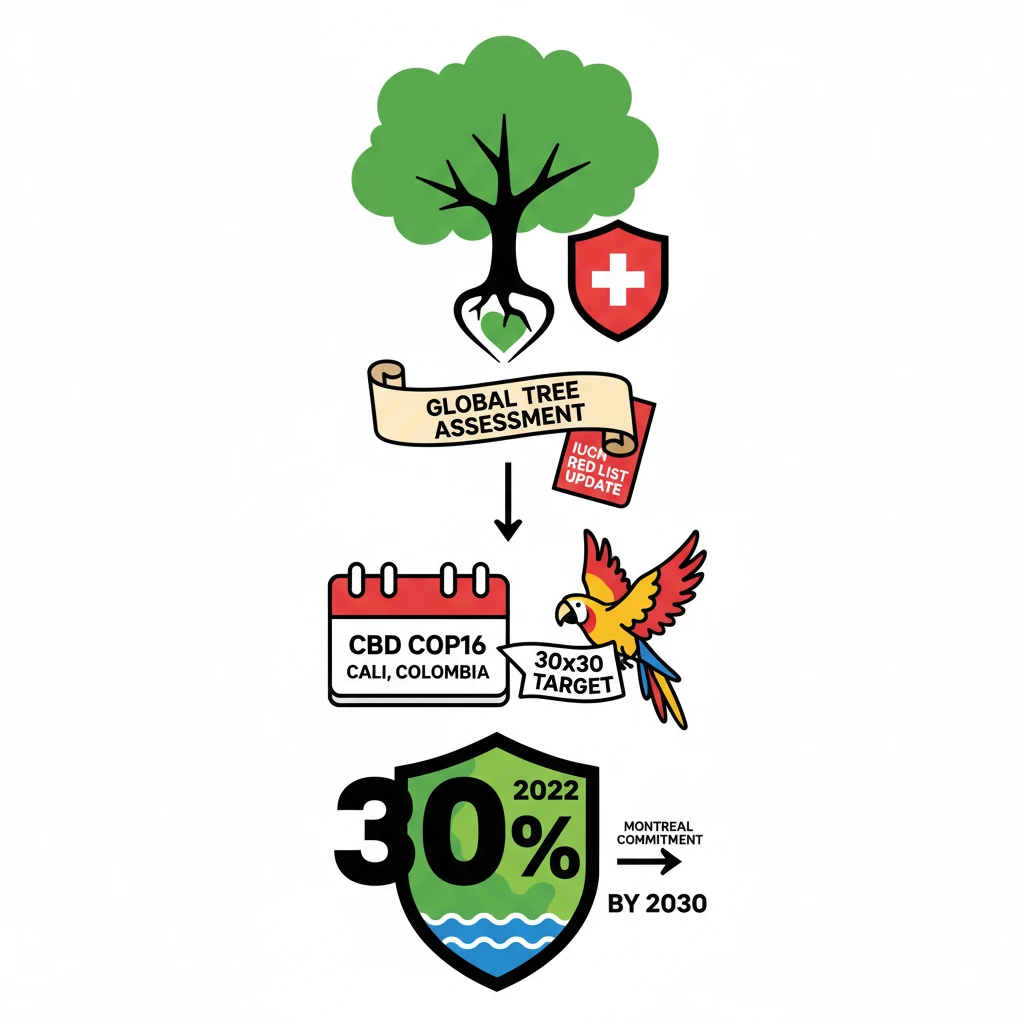
<h4>Introduction to the Global Tree Assessment</h4><p>The <strong>First Global Tree Assessment</strong> was recently published, marking a significant milestone in global conservation efforts. This comprehensive assessment provides a detailed overview of the conservation status of tree species worldwide.</p><p>Its findings were incorporated as part of an update to the <strong>IUCN Red List of Threatened Species</strong>. This integration ensures that the conservation status of trees is officially recognized and contributes to broader biodiversity assessments.</p><div class='key-point-box'><p>The <strong>Global Tree Assessment</strong> is crucial for understanding the health of global forests and identifying species most at risk, thereby guiding targeted conservation actions.</p></div><h4>Announcement and Context: CBD COP16</h4><p>The findings of the <strong>First Global Tree Assessment</strong> were officially announced at the <strong>Convention on Biological Diversity (CBD COP16)</strong>. This major international conference took place in <strong>Cali, Colombia</strong>.</p><div class='info-box'><p><strong>CBD COP16</strong>, the <strong>2024 UN Biodiversity Conference of the Parties</strong>, convened to assess global progress. A primary objective was to evaluate how countries are advancing towards the <strong>2022 Montreal commitment</strong>.</p></div><p>The <strong>Montreal commitment</strong>, also known as the <strong>Kunming-Montreal Global Biodiversity Framework (GBF)</strong>, includes a critical target. It aims to protect <strong>30% of the planet’s land and marine areas by 2030</strong>, often referred to as the <strong>'30x30 target'</strong>.</p><div class='exam-tip-box'><p>Understanding the link between the <strong>Global Tree Assessment</strong>, <strong>IUCN Red List</strong>, and international conventions like <strong>CBD COP16</strong> is vital for <strong>UPSC GS3 (Environment)</strong>. Pay attention to the specific commitments like the <strong>30x30 target</strong>.</p></div>
💡 Key Takeaways
- •The <strong>First Global Tree Assessment</strong> was published as an update to the <strong>IUCN Red List of Threatened Species</strong>.
- •Its findings were announced at <strong>CBD COP16</strong> in <strong>Cali, Colombia</strong>.
- •<strong>CBD COP16</strong> assessed progress towards the <strong>2022 Montreal commitment</strong>.
- •The <strong>Montreal commitment</strong> aims to protect <strong>30% of land and marine areas by 2030 ('30x30 target')</strong>.
- •The assessment provides critical data for guiding global and national tree conservation and restoration efforts.
🧠 Memory Techniques
95% Verified Content
📚 Reference Sources
•IUCN Official Website (Red List and Global Tree Assessment sections)
•Convention on Biological Diversity (CBD) Official Website (COP16 and Kunming-Montreal GBF sections)