Rat-Hole Mining - Environment And Ecology | UPSC Learning
Topics
0 topics • 0 completed
🔍
No topics match your search
Rat-Hole Mining
Medium⏱️ 8 min read
environment and ecology
📖 Introduction
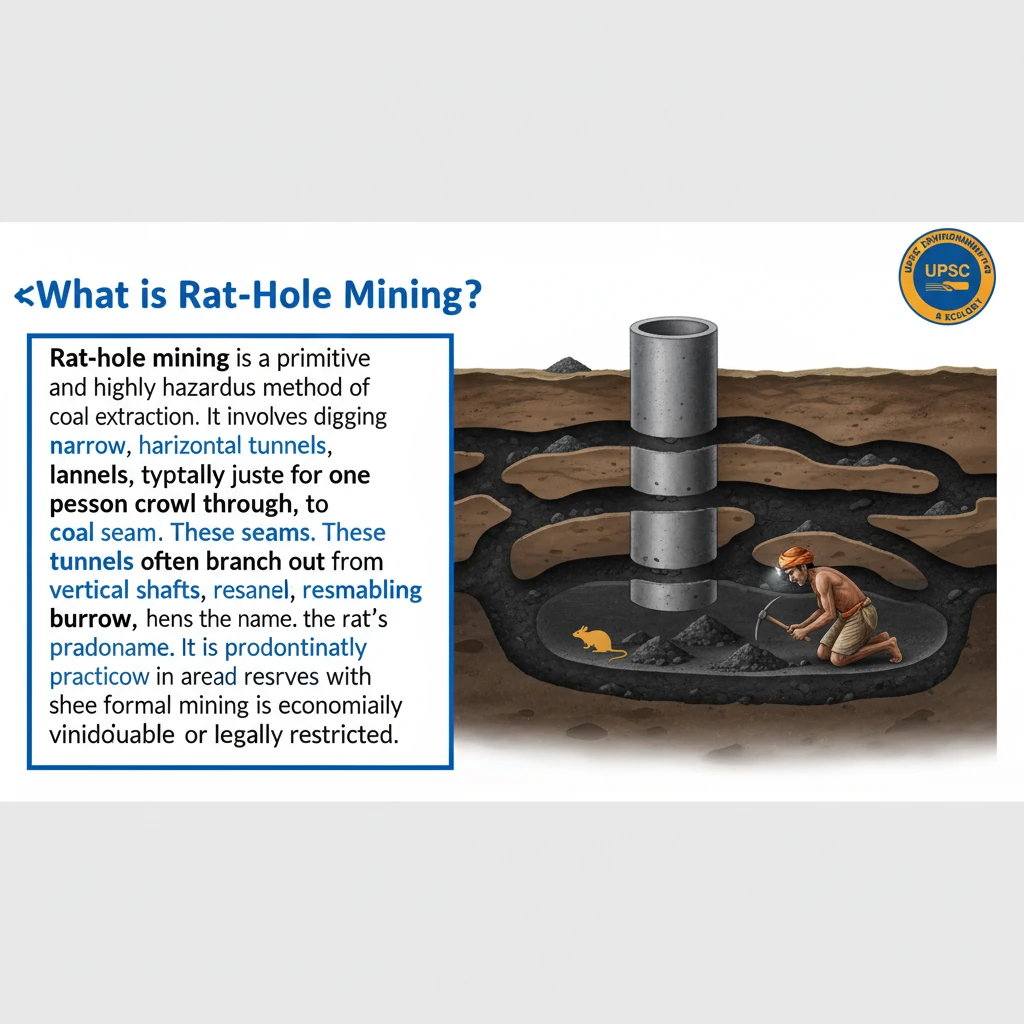
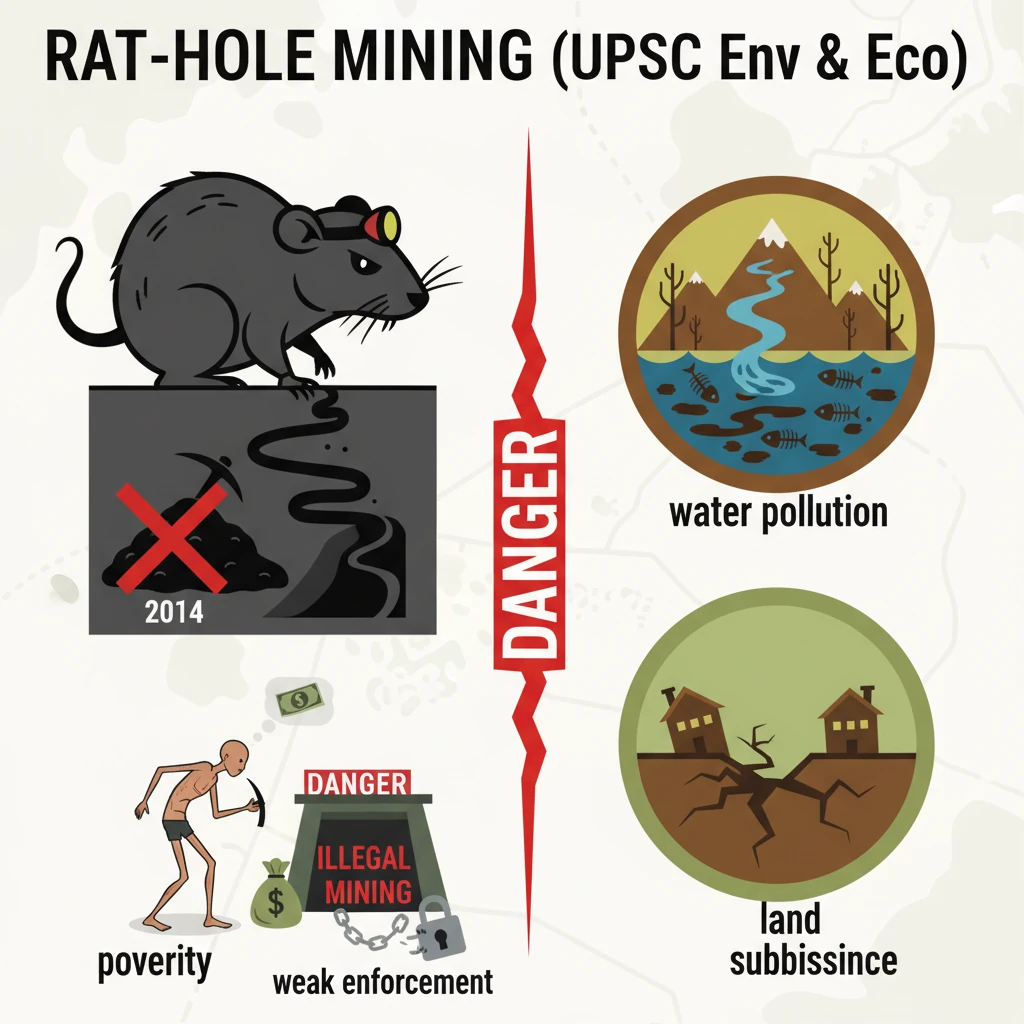
<h4>What is Rat-Hole Mining?</h4><p><strong>Rat-hole mining</strong> is a primitive and highly hazardous method of coal extraction. It involves digging narrow, horizontal tunnels, typically just large enough for one person to crawl through, to reach coal seams.</p><p>These tunnels often branch out from vertical shafts, resembling a rat's burrow, hence the name. It is predominantly practiced in areas with shallow coal reserves, where formal mining is economically unviable or legally restricted.</p><h4>Methods of Rat-Hole Mining</h4><p>Two primary types are commonly identified in <strong>rat-hole mining</strong>:</p><ol><li><strong>Side-cutting procedure:</strong> This involves digging a narrow tunnel into the side of a hill, following the coal seam horizontally.</li><li><strong>Box-cutting procedure:</strong> This requires a rectangular opening to be made, from which vertical shafts are dug down to reach the coal. Once the coal seam is reached, horizontal tunnels are excavated.</li></ol><p>These methods are labor-intensive and rely on rudimentary tools, posing severe risks to miners due to lack of proper engineering and safety protocols.</p><h4>Dangers and Environmental Impact</h4><div class='key-point-box'><p><strong>Significant Hazards:</strong> <strong>Rat-hole mining</strong> is fraught with dangers, including <strong>mine collapses</strong>, <strong>inundation by water</strong>, <strong>lack of oxygen</strong>, and <strong>exposure to toxic gases</strong> like methane and carbon monoxide.</p></div><p>The practice also leads to severe <strong>environmental degradation</strong>. This includes <strong>deforestation</strong>, <strong>soil erosion</strong>, <strong>water pollution</strong> (acid mine drainage), and <strong>land subsidence</strong>.</p><p>It disrupts local ecosystems and contaminates water sources, impacting both human health and biodiversity significantly.</p><h4>Legal Status and Bans</h4><div class='info-box'><p>The <strong>National Green Tribunal (NGT)</strong> imposed a comprehensive ban on <strong>rat-hole mining</strong> in <strong>Meghalaya</strong> in <strong>2014</strong>, citing its unscientific and environmentally destructive nature. This ban was later extended to other regions where such practices occurred.</p></div><p>Despite the ban, <strong>illegal rat-hole mining</strong> persists in several states, driven by economic desperation and weak enforcement. The recent tragedy in <strong>Assam’s Dima Hasao district</strong> underscores the continued dangers of this unregulated activity.</p><h4>The Assam Tragedy: A Recent Example</h4><p>In <strong>Assam’s Dima Hasao district</strong>, miners were tragically trapped after a flood inundated an <strong>illegal coal mine</strong>. This incident brought to light the <strong>persistent dangers</strong> of <strong>unregulated mining</strong>.</p><p>The tragedy highlights the significant challenges in enforcing existing bans and ensuring the safety of workers in informal mining operations. It also draws attention to the socio-economic factors that compel individuals to engage in these hazardous occupations.</p>
💡 Key Takeaways
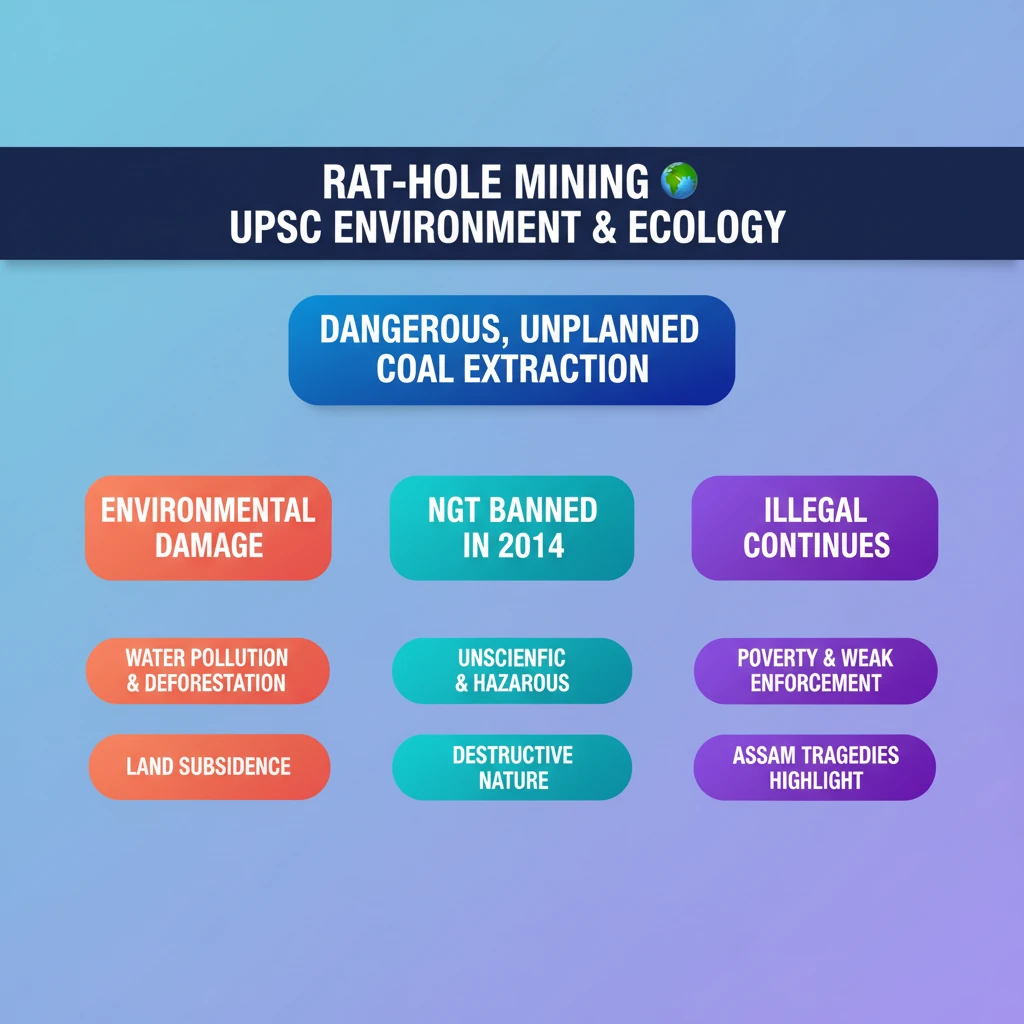
- •Rat-hole mining is a dangerous, unscientific coal extraction method involving narrow tunnels.
- •It causes severe environmental damage, including water pollution, deforestation, and land subsidence.
- •The National Green Tribunal (NGT) banned it in 2014 due to its destructive and hazardous nature.
- •Despite the ban, illegal rat-hole mining persists, driven by poverty and weak enforcement.
- •Recent tragedies in Assam highlight the urgent need for stricter regulation, alternative livelihoods, and effective governance to curb this practice.
🧠 Memory Techniques
95% Verified Content
📚 Reference Sources
•National Green Tribunal (NGT) rulings on mining bans (general knowledge)
•News reports on Meghalaya and Assam mining tragedies (general knowledge of events)