What is Avian influenza? - Environment And Ecology | UPSC Learning
Topics
0 topics • 0 completed
🔍
No topics match your search
What is Avian influenza?
Easy⏱️ 6 min read
environment and ecology
📖 Introduction
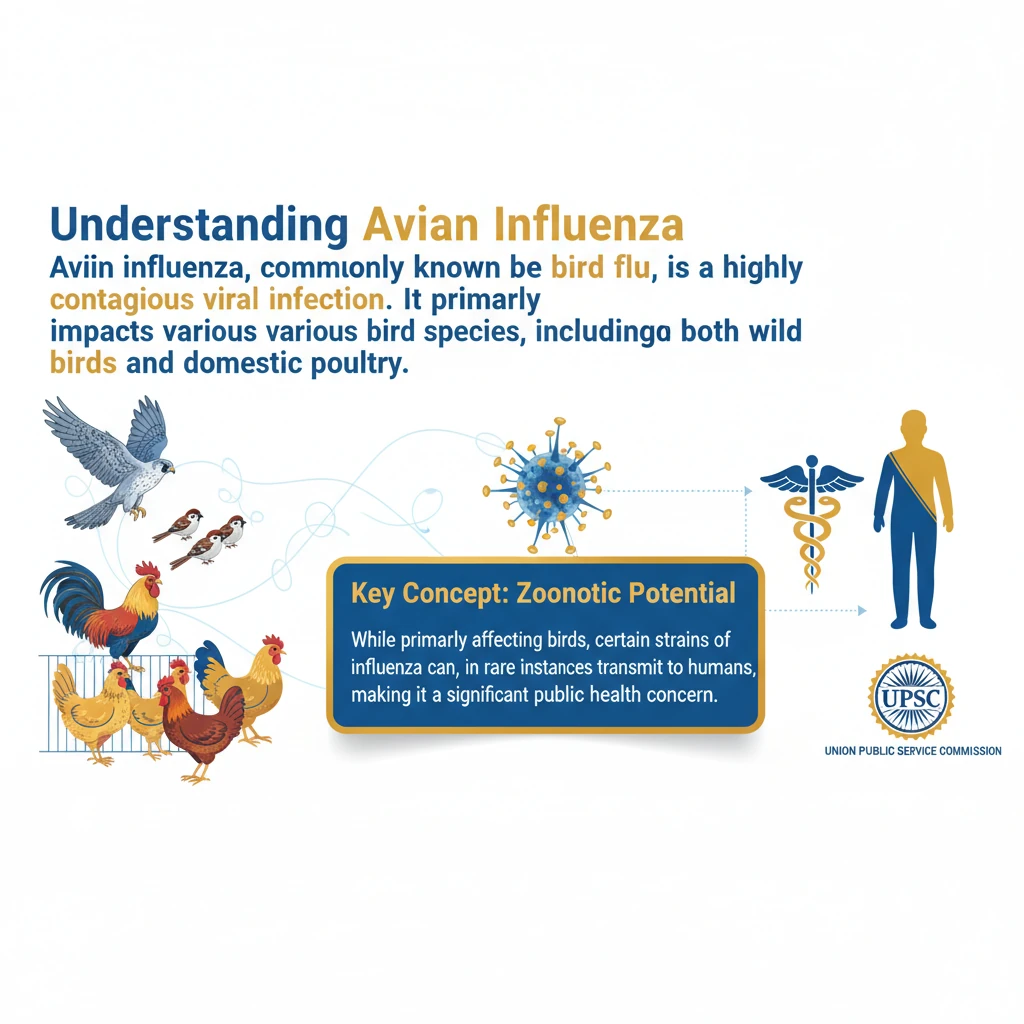
<h4>Understanding Avian Influenza</h4><p><strong>Avian influenza</strong>, commonly known as <strong>bird flu</strong>, is a highly contagious viral infection. It primarily impacts various bird species, including both <strong>wild birds</strong> and <strong>domestic poultry</strong>.</p><div class='key-point-box'><p><strong>Key Concept: Zoonotic Potential</strong></p><p>While primarily affecting birds, certain strains of avian influenza can, in rare instances, transmit to humans, making it a significant public health concern.</p></div><h4>Origin and Identification of H5N1</h4><p>The highly pathogenic <strong>H5N1 avian influenza virus</strong> was first identified in <strong>1996</strong>. This initial discovery occurred in <strong>domestic waterfowl</strong> located in <strong>Southern China</strong>.</p><div class='info-box'><p><strong>Virus Naming Convention:</strong></p><ul><li>The specific virus identified was named <strong>A/goose/Guangdong/1/1996</strong>.</li><li>This name indicates its type (A), host (goose), location of isolation (Guangdong), strain number (1), and year of isolation (1996).</li></ul></div><h4>Transmission to Humans and Mortality</h4><p>Human cases of <strong>H5N1 avian influenza</strong> occur occasionally. However, it is generally considered difficult for the infection to transmit from <strong>person to person</strong>.</p><p>Despite the low human-to-human transmission risk, when people do become infected, the outcome can be severe. The <strong>World Health Organization (WHO)</strong> reports a high mortality rate associated with human H5N1 infections.</p><div class='info-box'><p><strong>Human Mortality Rate:</strong></p><ul><li>According to <strong>WHO</strong> data, the mortality rate for infected individuals is approximately <strong>60%</strong>.</li></ul></div><div class='exam-tip-box'><p><strong>UPSC Insight:</strong> Questions on Avian Influenza often focus on its <strong>zoonotic nature</strong>, <strong>public health implications</strong>, and <strong>preventive measures</strong>. Understanding the high mortality rate in humans is crucial.</p></div>
💡 Key Takeaways
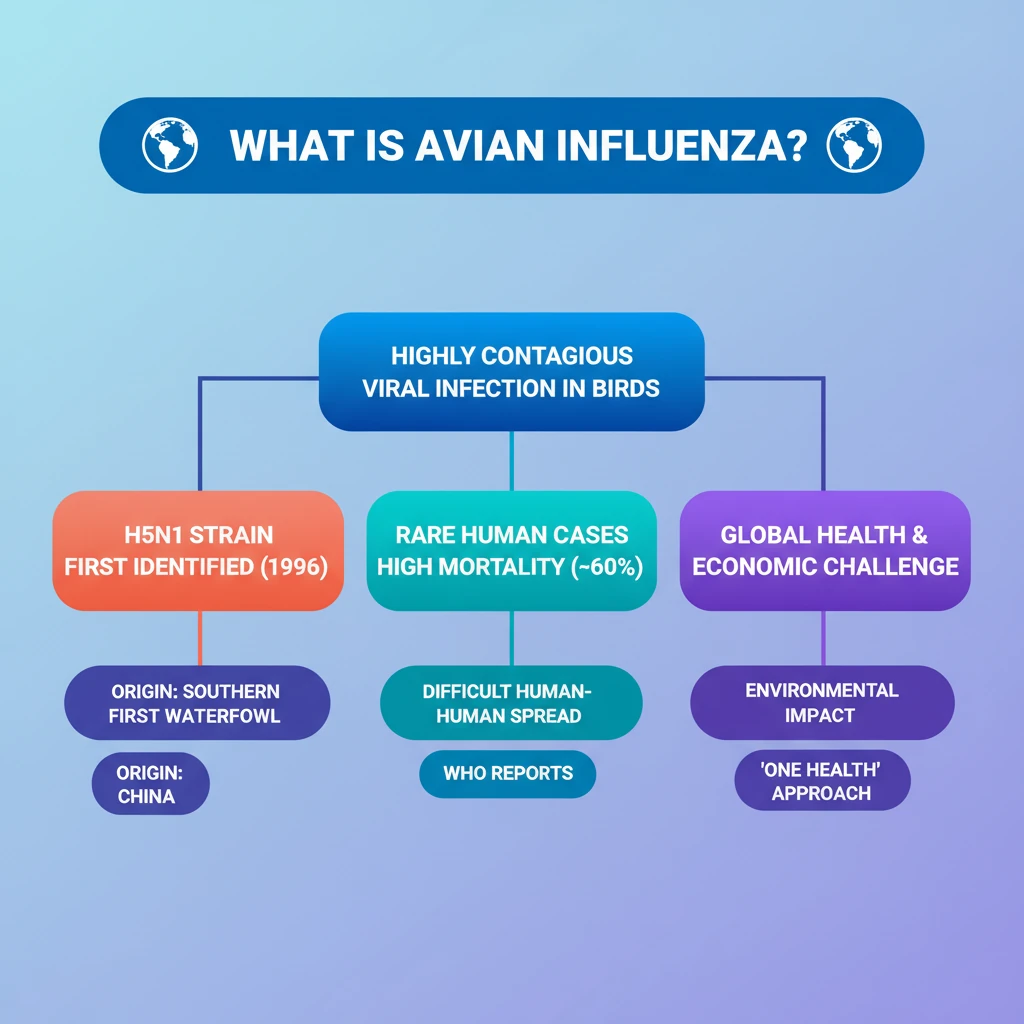
- •Avian influenza (bird flu) is a highly contagious viral infection primarily affecting birds.
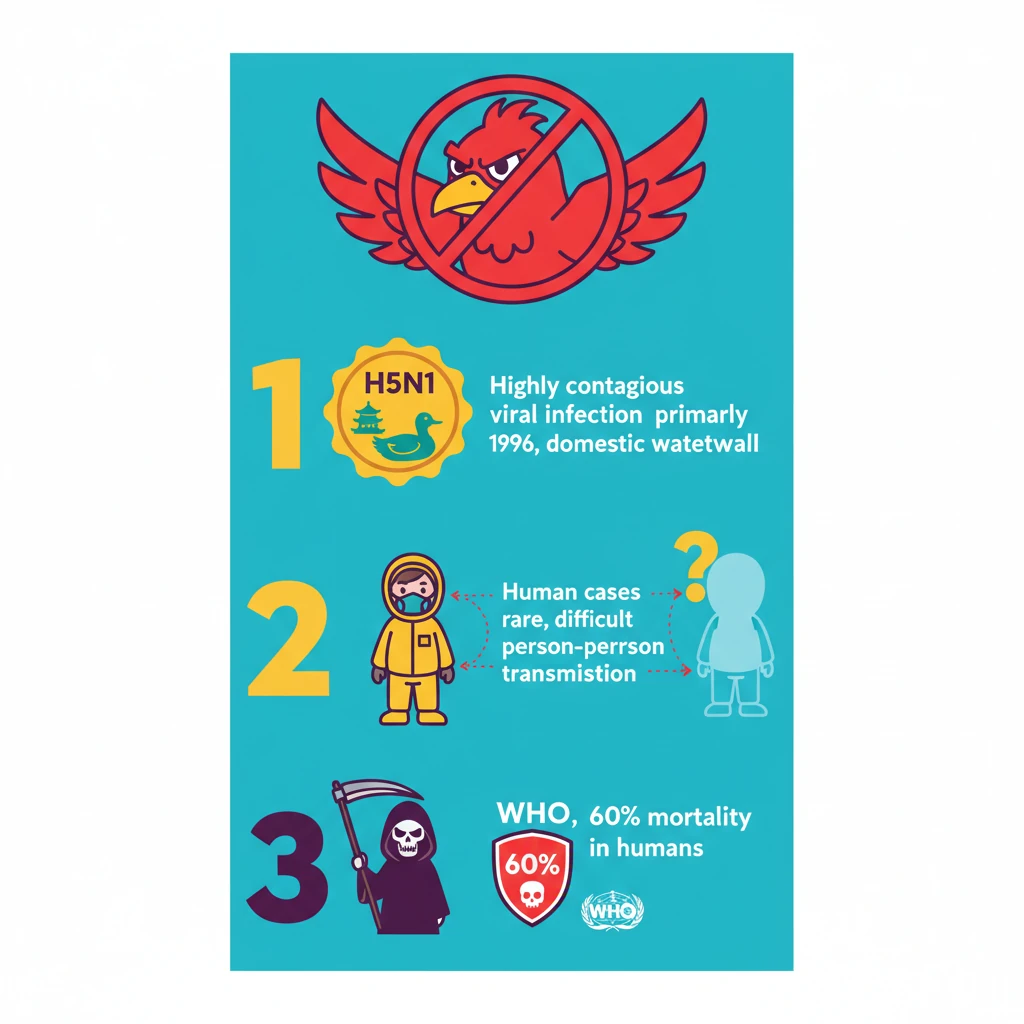
- •The H5N1 strain was first identified in domestic waterfowl in Southern China in 1996.
- •Human cases are rare but can occur, with difficult person-to-person transmission.
- •WHO reports a high mortality rate (approx. 60%) in humans infected with H5N1.
- •It poses ongoing global health, economic, and environmental challenges, requiring a 'One Health' approach.
🧠 Memory Techniques
95% Verified Content
📚 Reference Sources
•World Health Organization (WHO) fact sheets on Avian Influenza (H5N1)