Olive Ridley Turtles: Threats, Conservation - UPSC - Environment And Ecology | UPSC Learning
Topics
0 topics • 0 completed
🔍
No topics match your search
Olive Ridley Turtles: Threats, Conservation - UPSC
Medium⏱️ 8 min read
environment and ecology
📖 Introduction
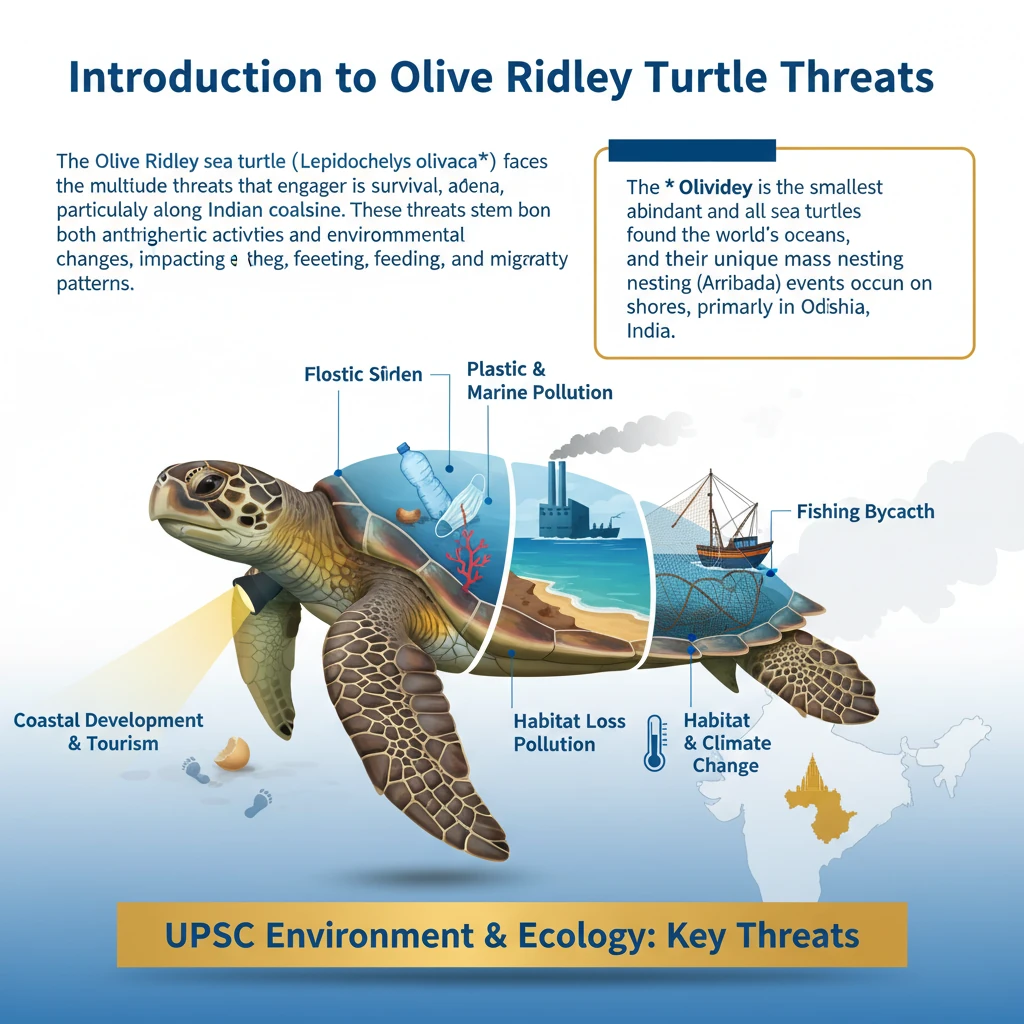
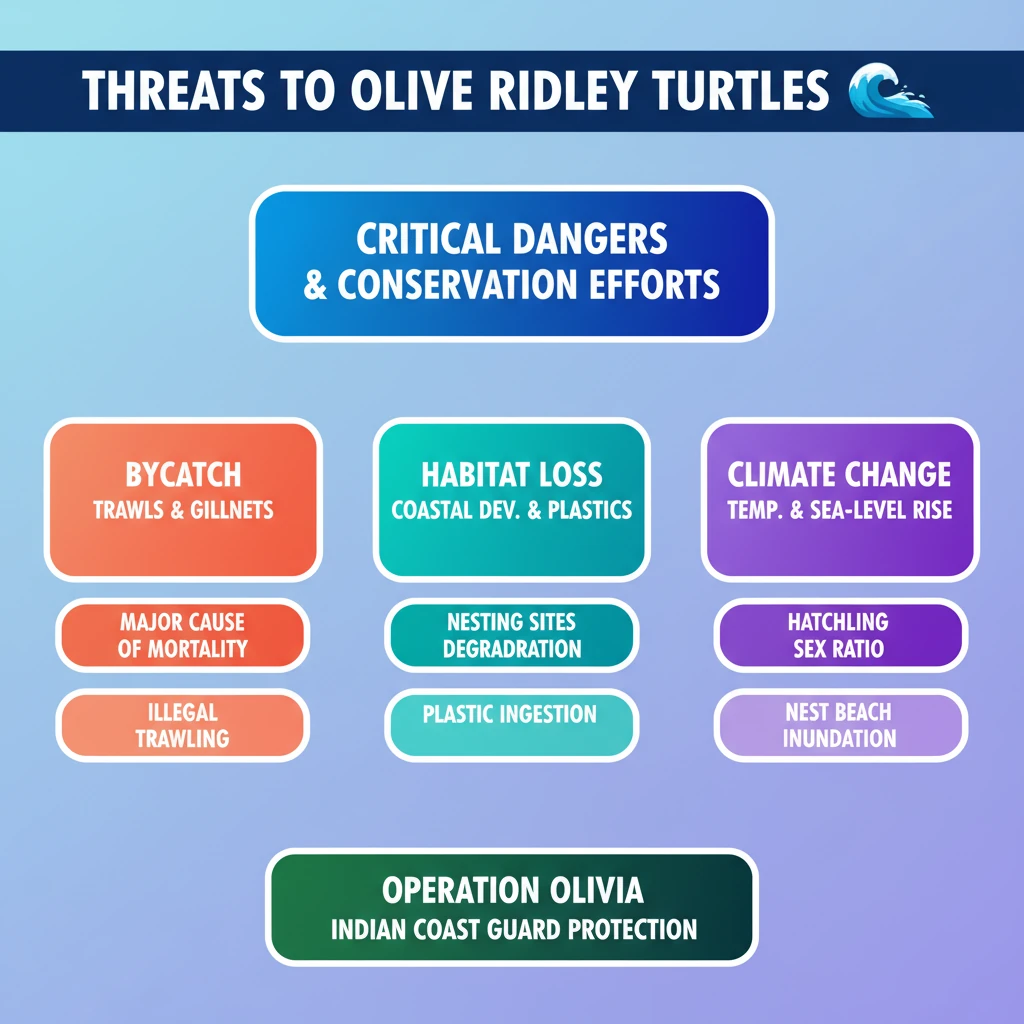
<h4>Introduction to Olive Ridley Turtle Threats</h4><p>The <strong>Olive Ridley sea turtle</strong> (<em>Lepidochelys olivacea</em>) faces a multitude of threats that endanger its survival, particularly along the Indian coastline. These threats stem from both anthropogenic activities and environmental changes, impacting their nesting, feeding, and migratory patterns.</p><div class='key-point-box'><p>The <strong>Olive Ridley</strong> is the smallest and most abundant of all sea turtles found in the world, known for its unique mass nesting phenomenon called <strong>Arribada</strong>.</p></div><h4>Threats from Fishing Activities</h4><p>One of the most significant threats is <strong>bycatch</strong> in various fishing gears. This refers to the unintentional capture of non-target species during commercial fishing operations. Turtles caught in such gear often drown or suffer severe injuries.</p><ul><li><strong>Trawls</strong>: Large nets dragged along the seabed, highly destructive to marine life.</li><li><strong>Gillnets</strong>: Vertical panels of netting that entangle turtles.</li><li><strong>Longlines</strong>: Long lines with baited hooks that can hook turtles.</li></ul><div class='info-box'><p><strong>Bycatch</strong> is a leading cause of mortality for sea turtles globally, particularly in areas with intensive fishing.</p></div><h4>Poaching and Egg Harvesting</h4><p>Despite legal protections, <strong>poaching</strong> of adult turtles and the illegal <strong>harvesting of eggs</strong> remain persistent threats. These activities are primarily driven by demand for human consumption, either for meat or eggs, in local and international markets.</p><p>The collection of eggs directly reduces the reproductive success of the species, severely impacting population recovery efforts.</p><h4>Habitat Loss and Degradation</h4><p><strong>Coastal development</strong> poses a major threat by destroying or altering critical nesting beaches. Construction, tourism infrastructure, and artificial lighting disrupt the turtles' natural nesting behavior and hatchling orientation.</p><p><strong>Marine pollution</strong>, especially from plastics, is another severe issue. Turtles often mistake plastic bags for jellyfish, their natural prey, leading to internal injuries, blockages, and starvation.</p><div class='info-box'><p><strong>Plastic ingestion</strong> is a widespread problem affecting numerous marine species, causing significant mortality.</p></div><h4>Climate Change Impacts</h4><p>Rising global temperatures and sea levels exacerbate the existing threats. Increased temperatures can affect the <strong>sex ratio</strong> of hatchlings, as turtle sex is determined by nest temperature (Temperature-Dependent Sex Determination).</p><p><strong>Sea-level rise</strong> can inundate nesting beaches, reducing available habitat and increasing the risk of erosion. This directly impacts the success of nesting events and the survival of eggs and hatchlings.</p><h4>Conservation Initiatives: Operation Olivia</h4><p>To combat these threats, the <strong>Indian Coast Guard</strong> launched <strong>Operation Olivia</strong>. This crucial initiative, active since the <strong>1980s</strong>, focuses on protecting Olive Ridley turtles during their nesting season.</p><div class='exam-tip-box'><p><strong>Operation Olivia</strong> is a significant example of a government-led conservation effort. It's important for UPSC aspirants to remember its purpose and the agency involved (<strong>Indian Coast Guard</strong>).</p></div><p>The primary objectives of <strong>Operation Olivia</strong> include preventing illegal trawling activities near nesting sites and safeguarding the turtles and their eggs from poachers, especially along the Odisha coast, which hosts the world's largest mass nesting sites.</p>
💡 Key Takeaways
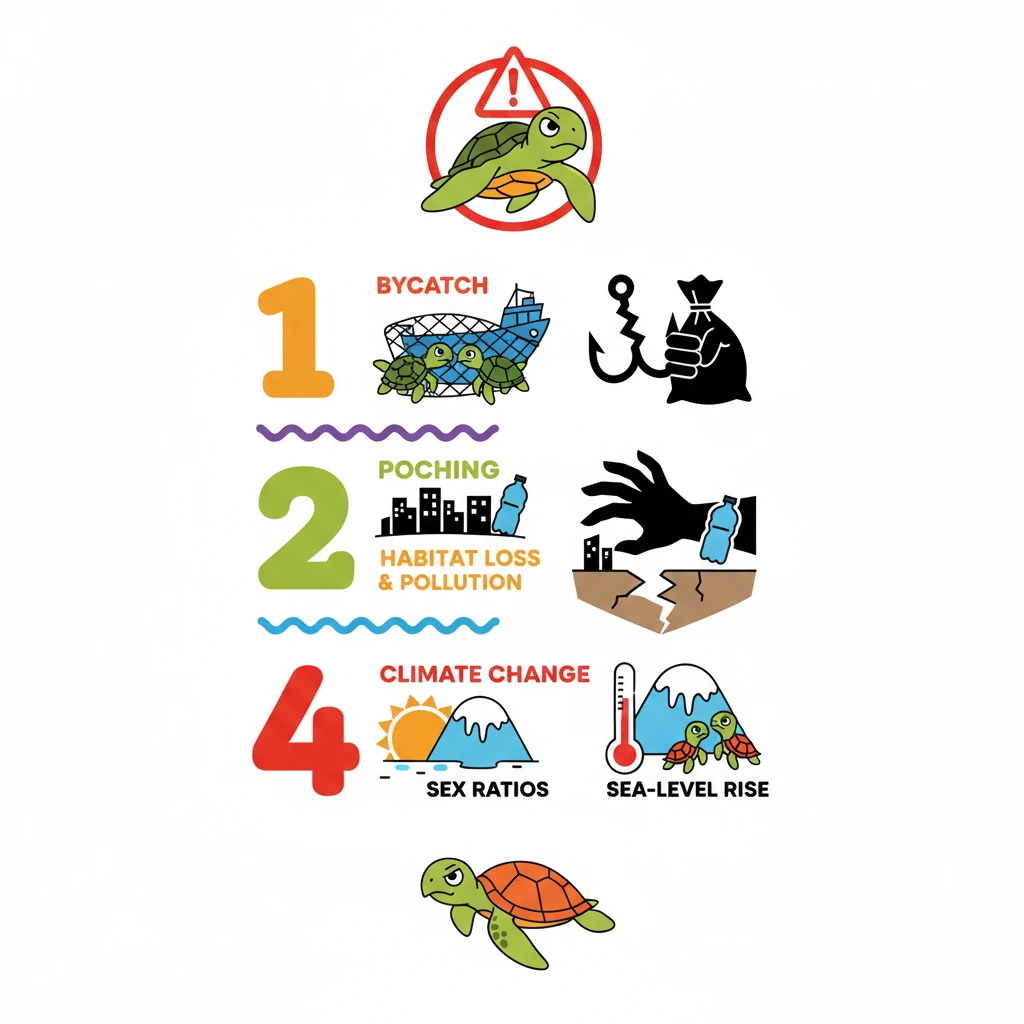
- •Olive Ridley turtles face significant threats: bycatch, poaching, habitat loss, pollution, and climate change.
- •Bycatch from trawls, gillnets, and longlines is a major cause of mortality.
- •Coastal development and plastic ingestion severely degrade nesting sites and food sources.
- •Rising temperatures impact hatchling sex ratios, and sea-level rise inundates nesting beaches.
- •Operation Olivia by the Indian Coast Guard protects nesting turtles and prevents illegal trawling.
- •Conservation requires a multi-faceted approach, including policy enforcement, pollution control, and climate change adaptation.
🧠 Memory Techniques
95% Verified Content
📚 Reference Sources
•Ministry of Environment, Forest and Climate Change (MoEFCC) reports
•IUCN Red List of Threatened Species (Olive Ridley Turtle assessment)
•Wildlife Protection Act, 1972
•Indian Coast Guard official communications regarding Operation Olivia