Natural Pathogenic Fungi to Save Eucalyptus Forests - Environment And Ecology | UPSC Learning
Topics
0 topics • 0 completed
🔍
No topics match your search
Natural Pathogenic Fungi to Save Eucalyptus Forests
Medium⏱️ 7 min read
environment and ecology
📖 Introduction
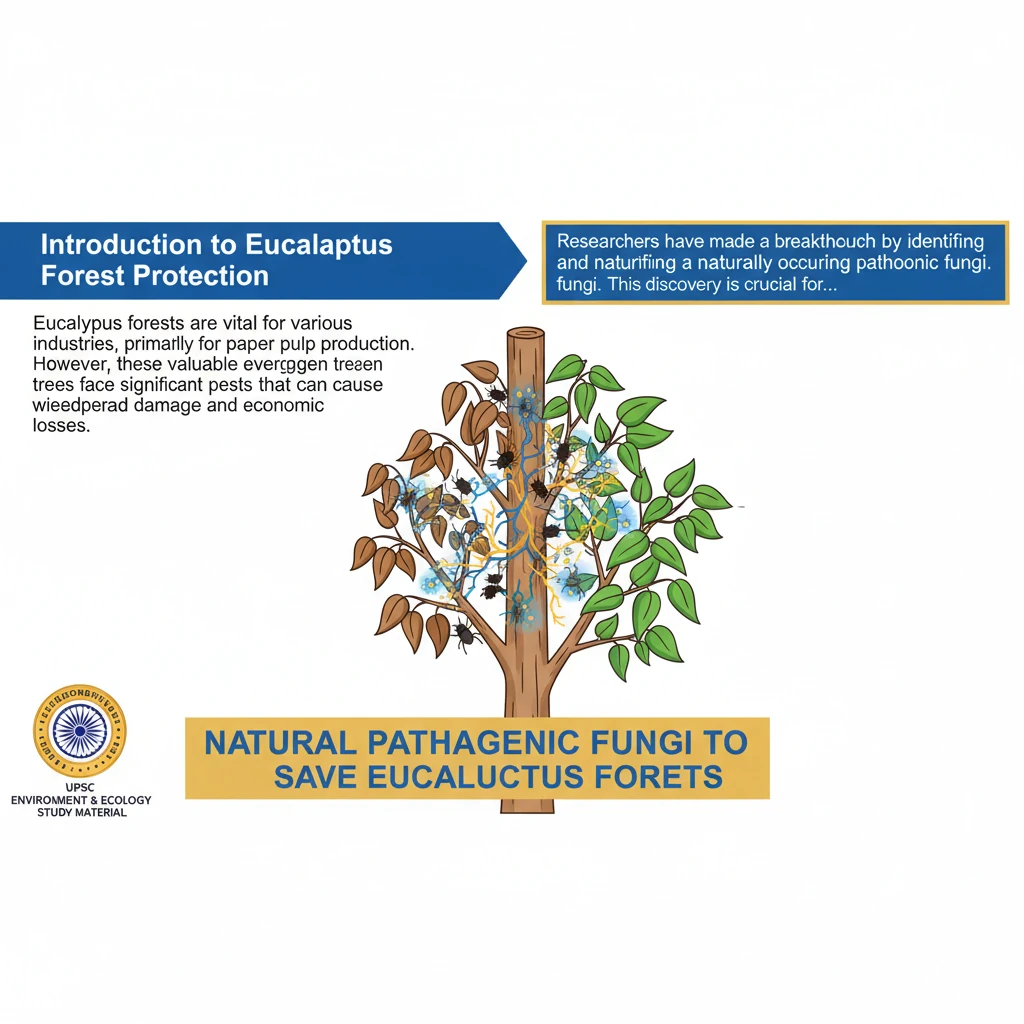
<h4>Introduction to Eucalyptus Forest Protection</h4><p><strong>Eucalyptus</strong> forests are vital for various industries, primarily for <strong>paper pulp production</strong>. However, these valuable evergreen trees face significant threats from pests that can cause widespread damage and economic losses.</p><div class='key-point-box'><p>Researchers have made a breakthrough by identifying and characterizing a <strong>naturally occurring pathogenic fungi</strong>. This discovery is crucial for developing a sustainable <strong>biopesticide</strong> to control harmful beetle populations affecting Eucalyptus trees.</p></div><h4>Understanding the Eucalyptus Snout Beetle</h4><p>The primary pest threatening Eucalyptus forests is the <strong>Eucalyptus snout beetle</strong>, scientifically known as <strong>Gonipterus platensis</strong>. This beetle is a voracious <strong>leaf-feeding pest</strong> and a major defoliator of eucalypts.</p><div class='info-box'><p>According to the <strong>Food and Agriculture Organization of the United Nations (FAO)</strong>, the Eucalyptus snout beetle causes significant damage globally. It targets leaves, buds, and shoots, leading to stunted growth and severe defoliation.</p></div><h4>Origin and Spread of the Pest</h4><p>The <strong>Eucalyptus snout beetle</strong> is indigenous to <strong>Australia</strong>, its native habitat. However, it has spread to many other countries worldwide where Eucalyptus trees are cultivated, becoming an invasive pest.</p><p>The beetle possesses a great <strong>flight capability</strong>, enabling it to cover vast areas. Its transfer is also facilitated by the <strong>transport of forest products</strong>, making its control challenging across different regions.</p><h4>Impact of Beetle Infestation</h4><p>Infestations by the <strong>Eucalyptus snout beetle</strong> result in heavy losses for the forestry industry. The continuous feeding on leaves, buds, and shoots severely impacts the trees' health and productivity.</p><p>This damage manifests as <strong>stunted growth</strong> and widespread <strong>defoliation</strong>, reducing the quantity and quality of wood available for industries like paper pulp production.</p><div class='exam-tip-box'><p><strong>UPSC Relevance:</strong> This topic highlights issues in <strong>environmental conservation</strong>, <strong>sustainable forestry</strong>, and the application of <strong>biotechnology</strong> in pest management, often relevant for <strong>GS Paper III (Environment & Ecology, Science & Technology)</strong>.</p></div>
💡 Key Takeaways
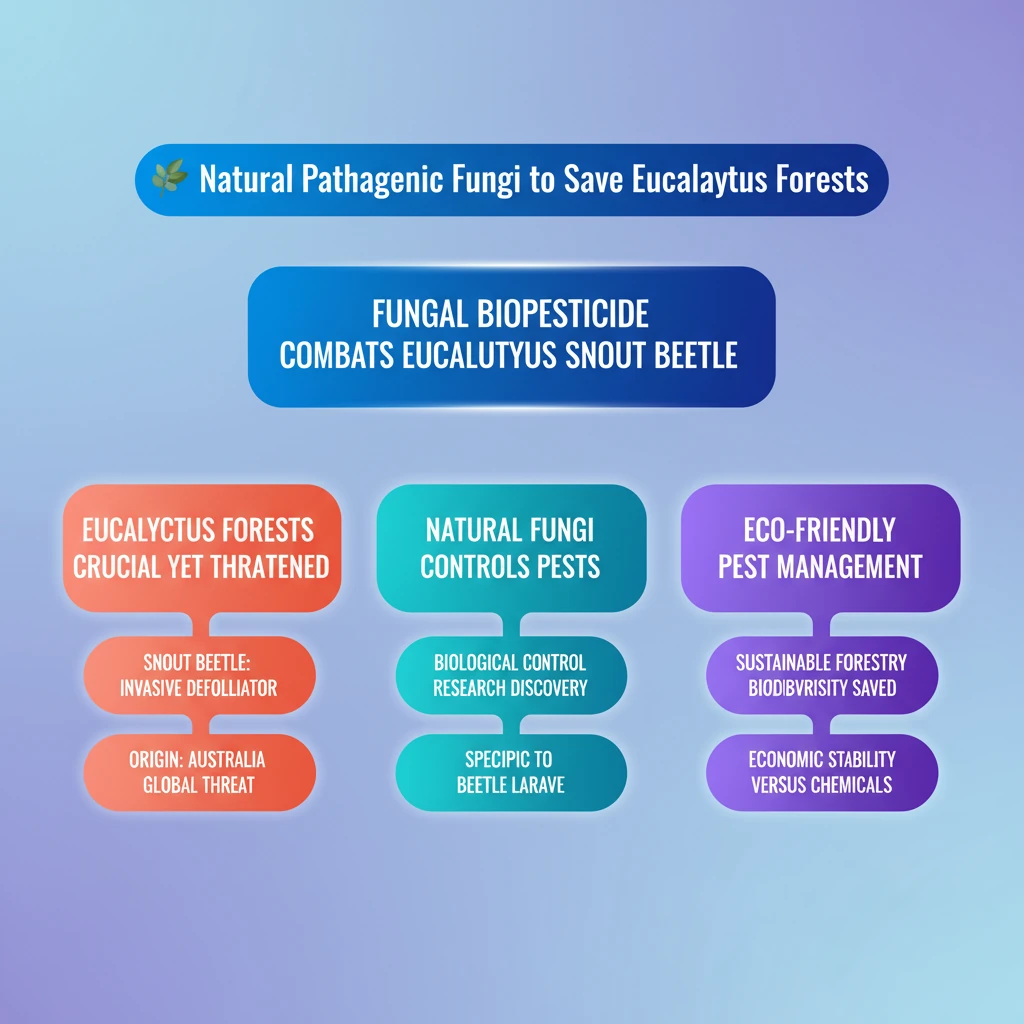
- •Eucalyptus forests are crucial for paper pulp but threatened by the Eucalyptus snout beetle.
- •Researchers found a natural pathogenic fungi to control the beetle, acting as a biopesticide.
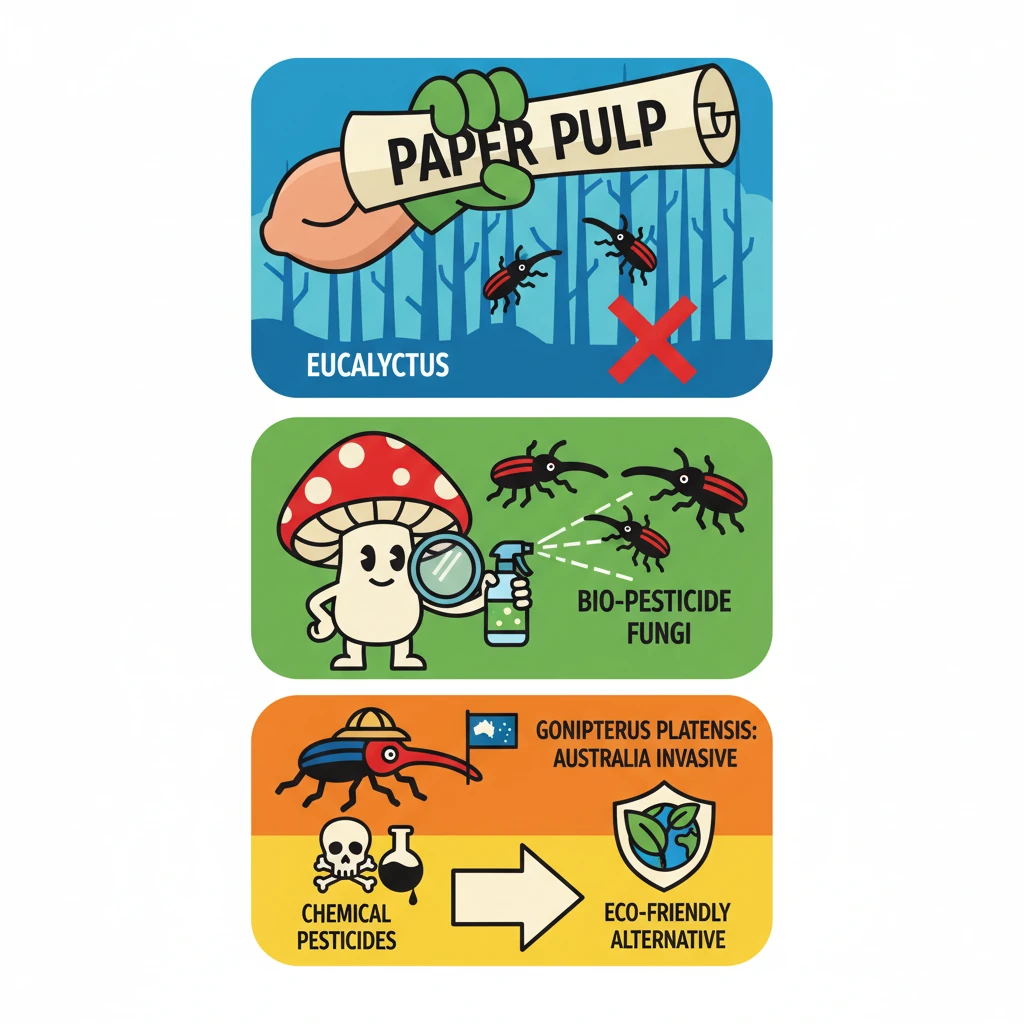
- •The Eucalyptus snout beetle (Gonipterus platensis) is an invasive defoliator originating from Australia.
- •Biopesticides offer an eco-friendly alternative to chemical pesticides for pest management.
- •This approach supports sustainable forestry, economic stability, and biodiversity conservation.
🧠 Memory Techniques
95% Verified Content
📚 Reference Sources
•Food and Agriculture Organization of the United Nations (FAO) - on Eucalyptus snout beetle