Balancing Climate Goals and Biodiversity Protection - Environment And Ecology | UPSC Learning
Topics
0 topics • 0 completed
🔍
No topics match your search
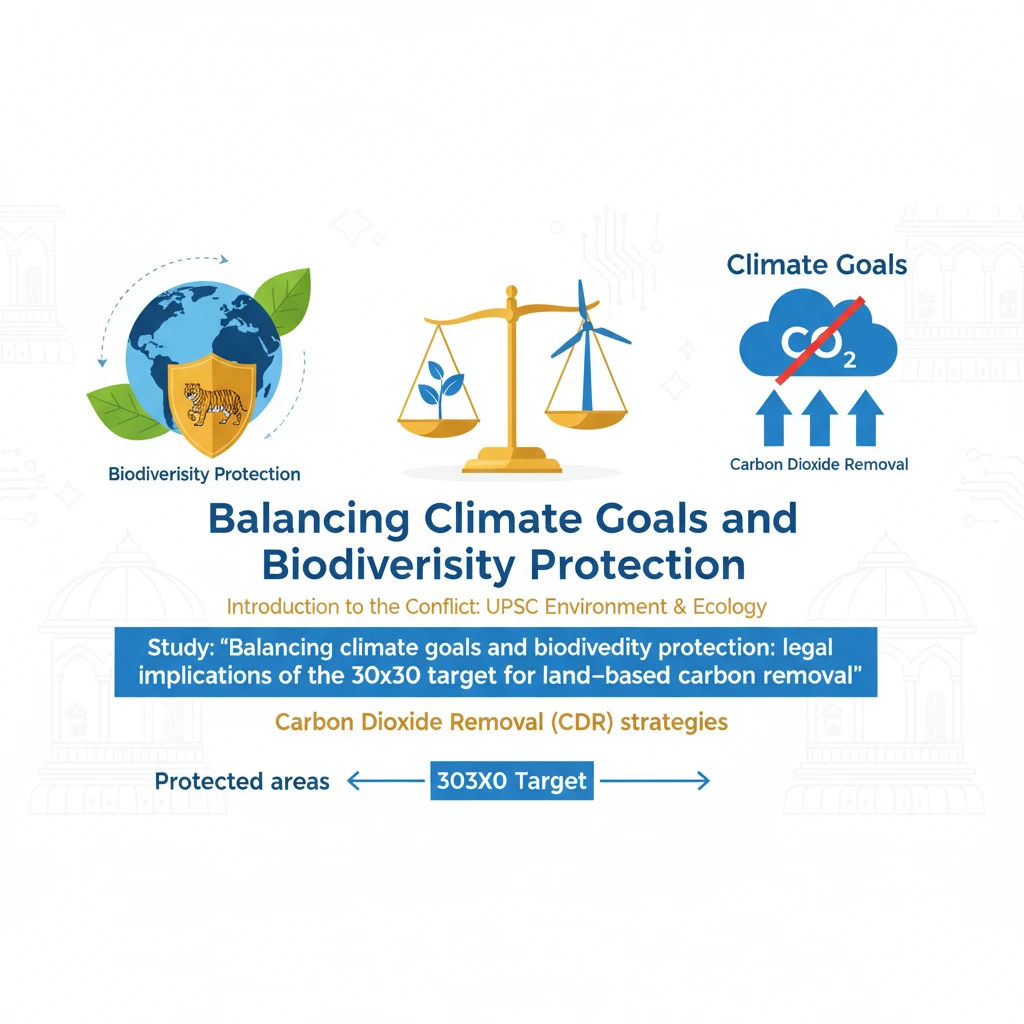
Balancing Climate Goals and Biodiversity Protection
Medium⏱️ 10 min read
environment and ecology
📖 Introduction
<h4>Introduction to the Conflict</h4><p>A recent study, titled <strong>“Balancing climate goals and biodiversity protection: legal implications of the 30x30 target for land-based carbon removal,”</strong> has brought to light a significant conflict. This research focuses on the tensions between land-based <strong>Carbon Dioxide Removal (CDR) strategies</strong> and the establishment of <strong>protected areas</strong>.</p><p>The study specifically examines this conflict within the framework of <strong>international environmental law</strong>. It highlights how efforts to achieve climate targets can inadvertently pose challenges to biodiversity conservation.</p><div class='exam-tip-box'><p><strong>UPSC Insight:</strong> Understanding such conflicts is crucial for <strong>GS Paper 3 (Environment)</strong>. Questions often revolve around the trade-offs and synergistic approaches required for sustainable development.</p></div><h4>Limited Land Availability: A Critical Challenge</h4><p>One of the primary issues identified is the <strong>limited availability of land</strong>. This constraint poses a critical challenge for simultaneously implementing both ambitious <strong>biodiversity targets</strong> and large-scale <strong>land-based climate mitigation strategies</strong>.</p><div class='key-point-box'><p>Many countries are pledging significant portions of their land for <strong>CDR activities</strong>. This creates direct competition for the land needed to establish and expand <strong>protected areas</strong>, which are vital for biodiversity.</p></div><h4>Global Targets and Current Status: The 30x30 Goal</h4><p>Nations worldwide have committed to the ambitious <strong>“30x30” biodiversity target</strong>. This goal aims to safeguard <strong>30% of the world’s terrestrial and marine areas by 2030</strong>.</p><div class='info-box'><p><strong>What is the 30x30 Target?</strong> It is a global initiative aiming to limit the accelerating loss of species and protect vital ecosystems. These ecosystems are crucial for economic security and ecological balance.</p></div><p>Despite this commitment, the current status shows a significant shortfall. As of <strong>2023</strong>, protected areas cover only approximately <strong>16% of terrestrial areas</strong> and a mere <strong>8% of marine areas</strong>.</p><p>This means that global efforts are currently falling considerably short of the ambitious <strong>30x30 goal</strong>, necessitating accelerated action and integrated planning.</p><h4>Land Use and Conflict: Biodiversity vs. Climate Mitigation</h4><p>The study underscores that certain <strong>land-based climate mitigation strategies</strong> inherently conflict with the urgent need to establish more <strong>protected areas</strong>. This is primarily due to existing <strong>land use constraints</strong>.</p><p>The large-scale deployment of <strong>Carbon Dioxide Removal (CDR) techniques</strong> could have severe consequences. It risks resulting in further <strong>biodiversity loss</strong> and intensified <strong>competition for land</strong> that is currently used for essential <strong>food crop production</strong>.</p><div class='exam-tip-box'><p><strong>UPSC Connection:</strong> This highlights the complex interlinkages between <strong>climate change mitigation</strong>, <strong>biodiversity conservation</strong>, and <strong>food security</strong>, all critical themes for essay and general studies papers.</p></div>
💡 Key Takeaways
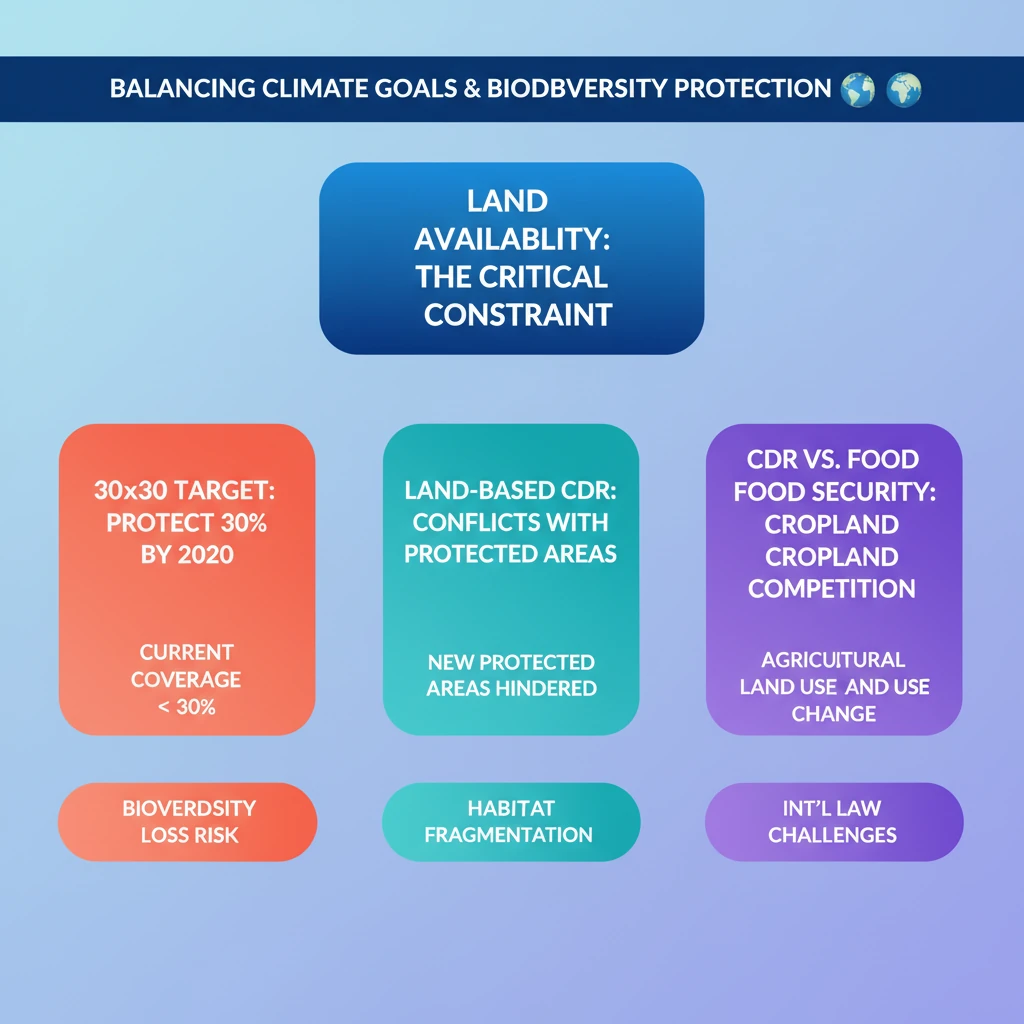
- •Land availability is a major constraint for simultaneously achieving climate goals (CDR) and biodiversity protection (30x30 target).
- •The 30x30 target aims to protect 30% of land and marine areas by 2030, but current coverage is significantly lower.
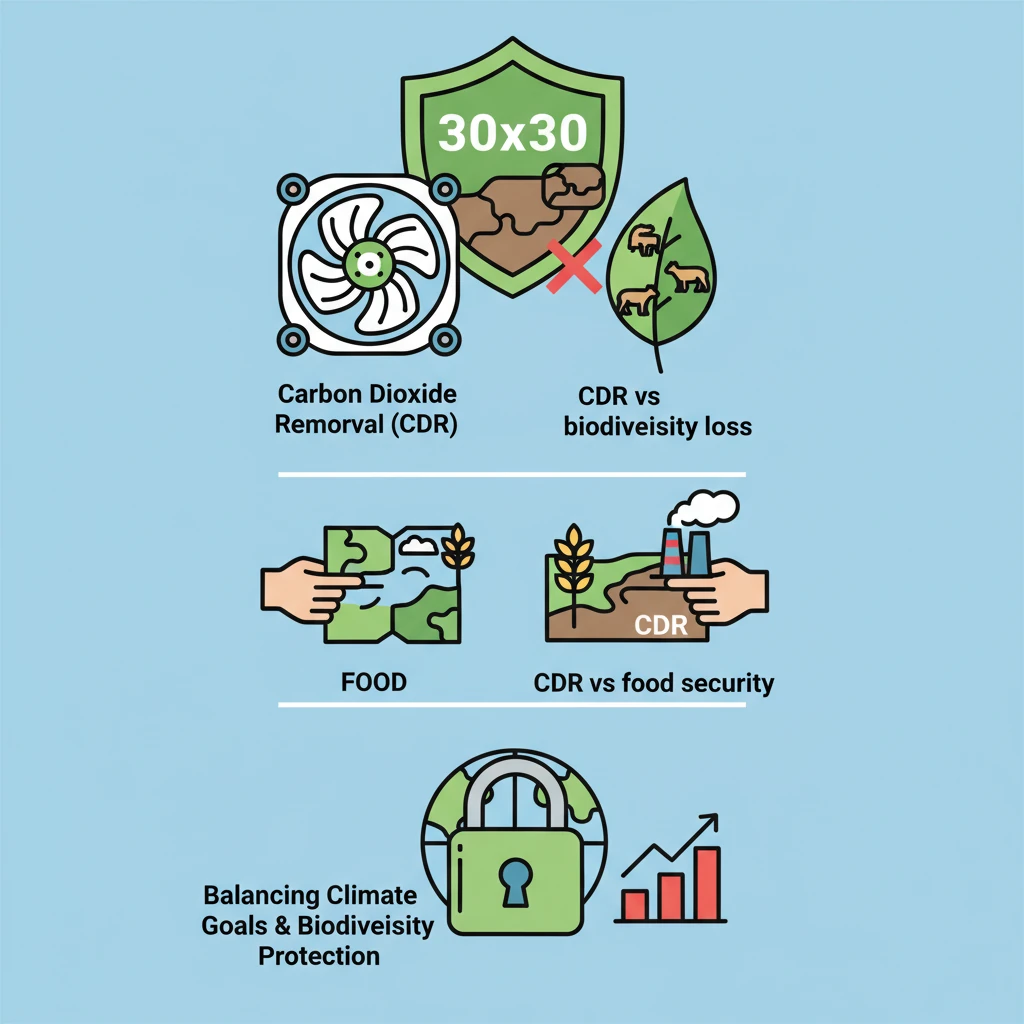
- •Land-based Carbon Dioxide Removal (CDR) strategies can conflict with establishing new protected areas and may lead to further biodiversity loss.
- •Large-scale CDR deployment could compete with land used for food crop production, posing food security challenges.
- •International environmental law faces challenges in reconciling these conflicting land-use demands.
- •Integrated policy frameworks and sustainable land-use planning are crucial to find synergistic solutions.
🧠 Memory Techniques
98% Verified Content
📚 Reference Sources
•Study: Balancing climate goals and biodiversity protection: legal implications of the 30x30 target for land-based carbon removal (Referenced by Drishti IAS)