Sustainable Nitrogen Management: FAO - Environment And Ecology | UPSC Learning
Topics
0 topics • 0 completed
🔍
No topics match your search
Sustainable Nitrogen Management: FAO
Medium⏱️ 9 min read
environment and ecology
📖 Introduction
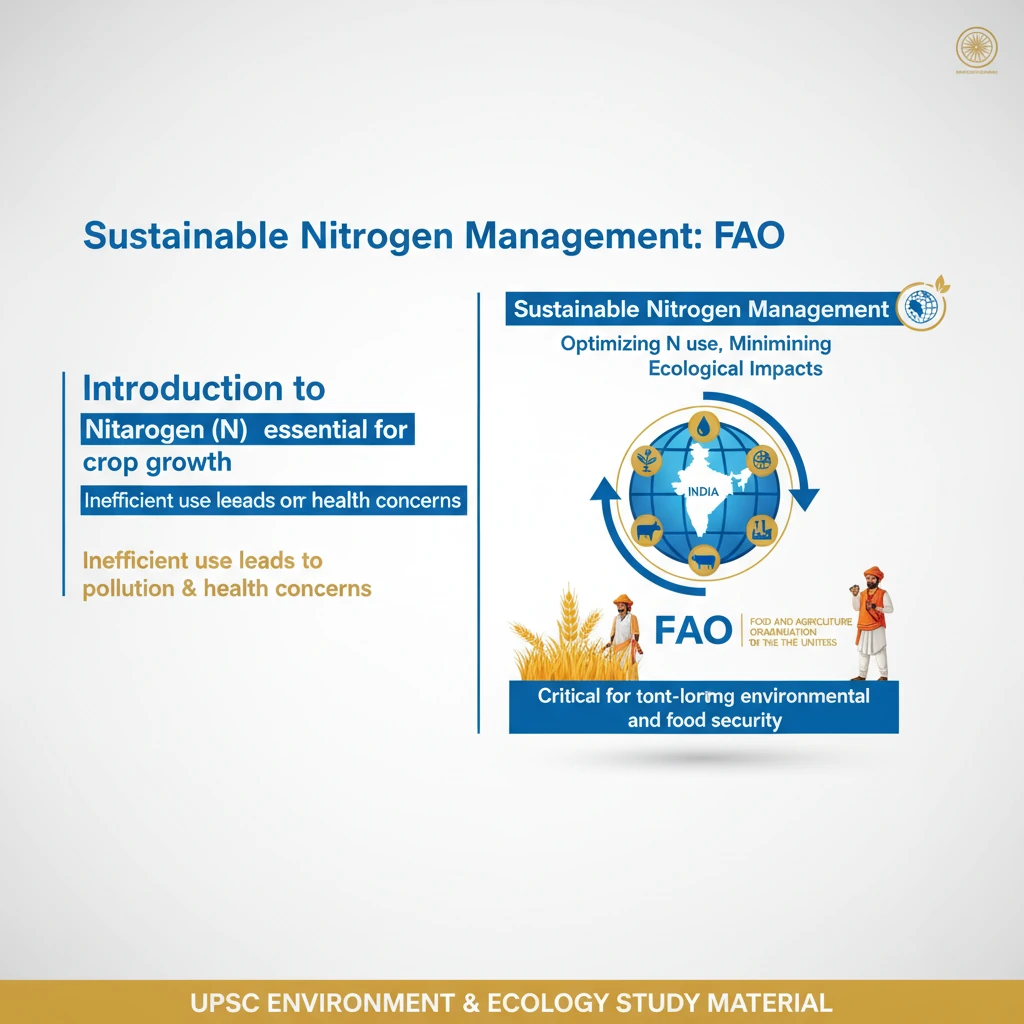
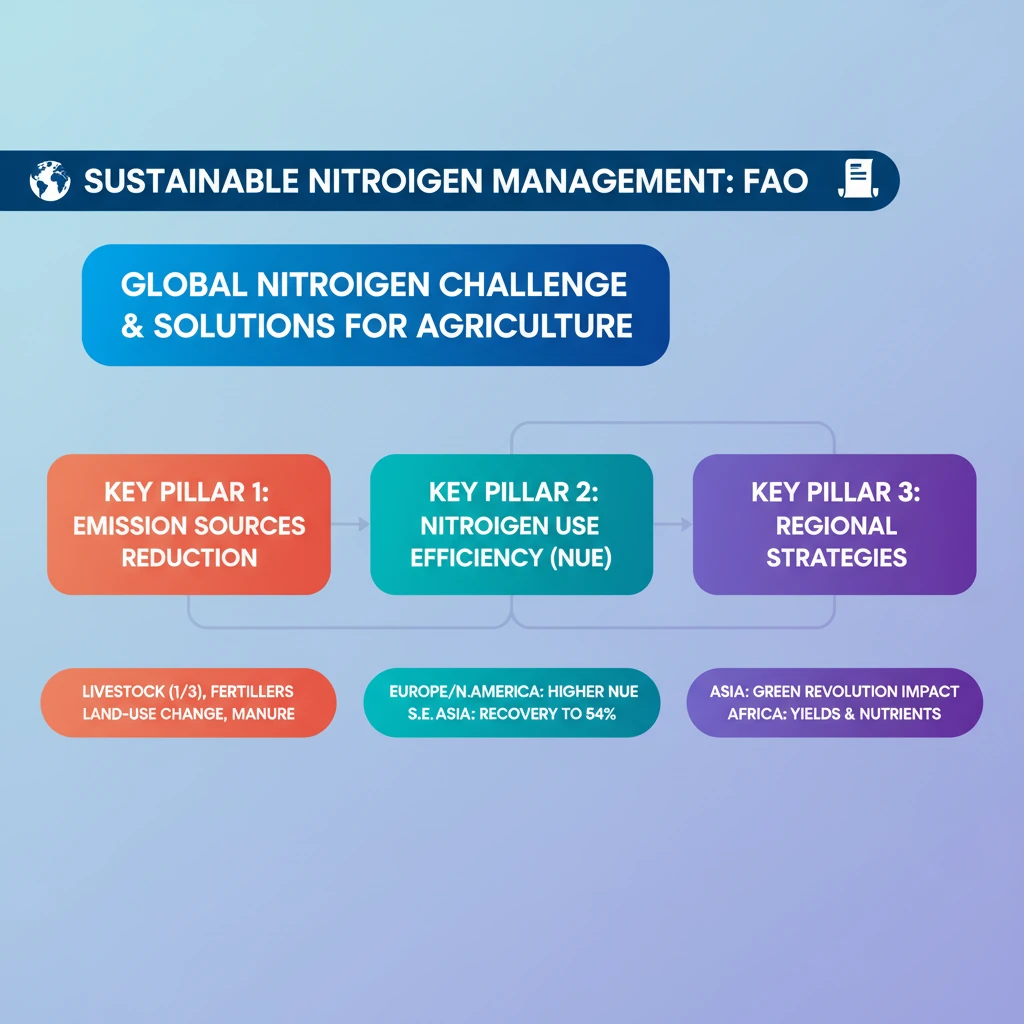
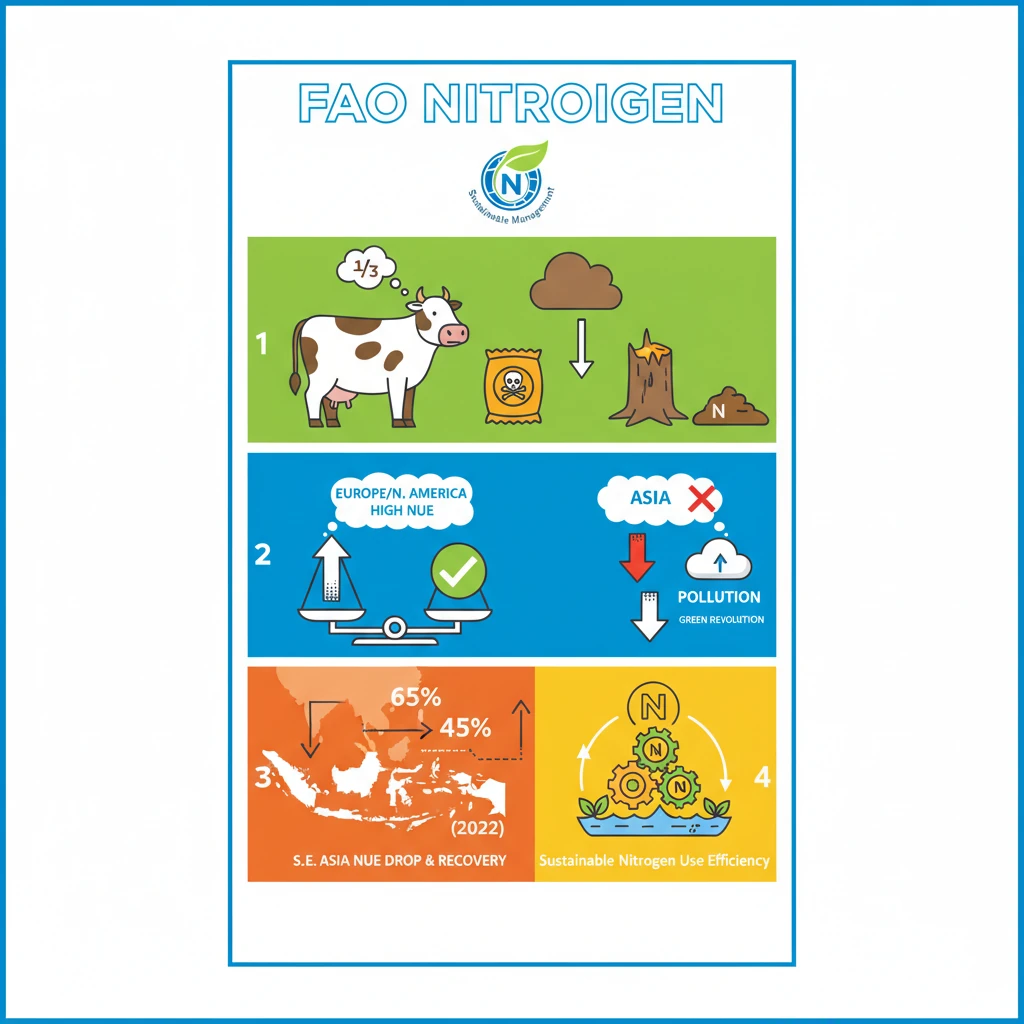
<h4>Introduction to Sustainable Nitrogen Management</h4><p><strong>Nitrogen (N)</strong> is a vital nutrient essential for crop growth and global food production. However, its inefficient use in agricultural systems leads to significant environmental pollution and health concerns.</p><p>The concept of <strong>Sustainable Nitrogen Management</strong> focuses on optimizing nitrogen use to maximize its benefits while minimizing adverse ecological impacts. This approach is critical for long-term environmental health and agricultural sustainability.</p><h4>Why Sustainable Nitrogen Management is in News</h4><div class='info-box'><p>The <strong>Food and Agriculture Organization (FAO)</strong> recently released a significant report titled <strong>“Sustainable nitrogen management in agrifood systems”</strong>. This report has brought the issue to the forefront of global environmental discussions.</p></div><p>This comprehensive report offers a detailed overview of the role of <strong>nitrogen use</strong> within agrifood systems. It also highlights the substantial challenges arising from its widespread and often inefficient application.</p><p>The report provides a critical assessment of the current state of <strong>nitrogen pollution</strong> globally, underscoring the urgent need for more sustainable management practices across various sectors.</p><h4>Key Highlights of the FAO Report</h4><p>The <strong>FAO report</strong> serves as a crucial document, providing actionable insights into the primary sources of nitrogen pollution and the distinct regional disparities in its management and environmental impact.</p><div class='key-point-box'><p>A central theme of the report is the imperative to improve <strong>Nitrogen Use Efficiency (NUE)</strong>. Enhancing NUE is vital for mitigating environmental damage while simultaneously ensuring global food security for a growing population.</p></div><h4>Major Sources of Nitrogen Loss and Emissions</h4><p>The report identifies several key contributors to global <strong>nitrogen emissions</strong>. These emissions originate from various human activities, collectively highlighting the scale and complexity of the nitrogen pollution problem.</p><ul><li><strong>Livestock:</strong> This sector is identified as the single largest contributor to nitrogen emissions, responsible for approximately <strong>one-third</strong> of the total emissions from human activities.</li><li><strong>Synthetic Fertilizers:</strong> The extensive use of artificial nitrogen fertilizers in modern agriculture is another primary source of significant nitrogen loss into the environment.</li><li><strong>Land-Use Change:</strong> Alterations in land use, such as deforestation, urbanization, and the conversion of natural ecosystems, also contribute substantially to nitrogen release.</li><li><strong>Manure Emissions:</strong> Improper storage and management of animal manure lead to considerable nitrogen release, particularly in the form of ammonia and nitrous oxide.</li></ul><h4>Regional Differences in Nitrogen Management</h4><p>The <strong>FAO report</strong> meticulously details the varying patterns of nitrogen use, efficiency, and pollution across different geographical regions. These differences reflect diverse agricultural practices, economic conditions, and policy frameworks.</p><div class='info-box'><ul><li><strong>Asia:</strong> This region experienced a significant increase in <strong>nitrogen pollution</strong>, largely attributable to the intensive use of fertilizers. This was driven by subsidies during the <strong>Green Revolution</strong>, which boosted yields but at an environmental cost.</li><li><strong>Southeast Asia:</strong> Witnessed a notable decline in <strong>Nitrogen Use Efficiency (NUE)</strong>, falling from <strong>65% in 1961</strong> to <strong>45% in the 1990s</strong>. However, subsequent efforts led to a recovery, with NUE increasing to <strong>54% in 2022</strong>.</li><li><strong>Africa:</strong> Many African nations struggle with persistently low crop yields and severe <strong>nutrient depletion</strong> in their soils. This is often due to inadequate agricultural policies and limited access to essential fertilizers.</li><li><strong>Europe & North America:</strong> These regions have generally achieved higher levels of <strong>NUE</strong>. This success is primarily attributed to the implementation of robust nutrient management guidelines and stringent environmental regulations.</li></ul></div><div class='exam-tip-box'><p>Understanding these <strong>regional differences</strong> is crucial for UPSC aspirants. This knowledge can be applied to answer questions on global environmental challenges, sustainable development, and policy responses in <strong>UPSC Mains GS-III</strong>.</p></div>
💡 Key Takeaways
- •The FAO report 'Sustainable nitrogen management in agrifood systems' highlights global nitrogen pollution.
- •Livestock is the largest source of nitrogen emissions (one-third), followed by synthetic fertilizers, land-use change, and manure.
- •Nitrogen Use Efficiency (NUE) varies regionally; Europe/North America have higher NUE, while Asia faced pollution from Green Revolution.
- •Southeast Asia's NUE dropped significantly (65% to 45%) but recovered to 54% by 2022.
- •Africa struggles with low yields and nutrient depletion due to limited access to fertilizers and inadequate policies.
- •Sustainable nitrogen management is crucial for balancing food security with environmental protection.
- •India needs climate finance, potentially from UNFCCC mechanisms (GCF, GEF), to scale up sustainable agricultural practices.
🧠 Memory Techniques
95% Verified Content
📚 Reference Sources
•Food and Agriculture Organization (FAO) report: 'Sustainable nitrogen management in agrifood systems'