Simlipal Tiger Reserve - Environment And Ecology | UPSC Learning
Topics
0 topics • 0 completed
🔍
No topics match your search
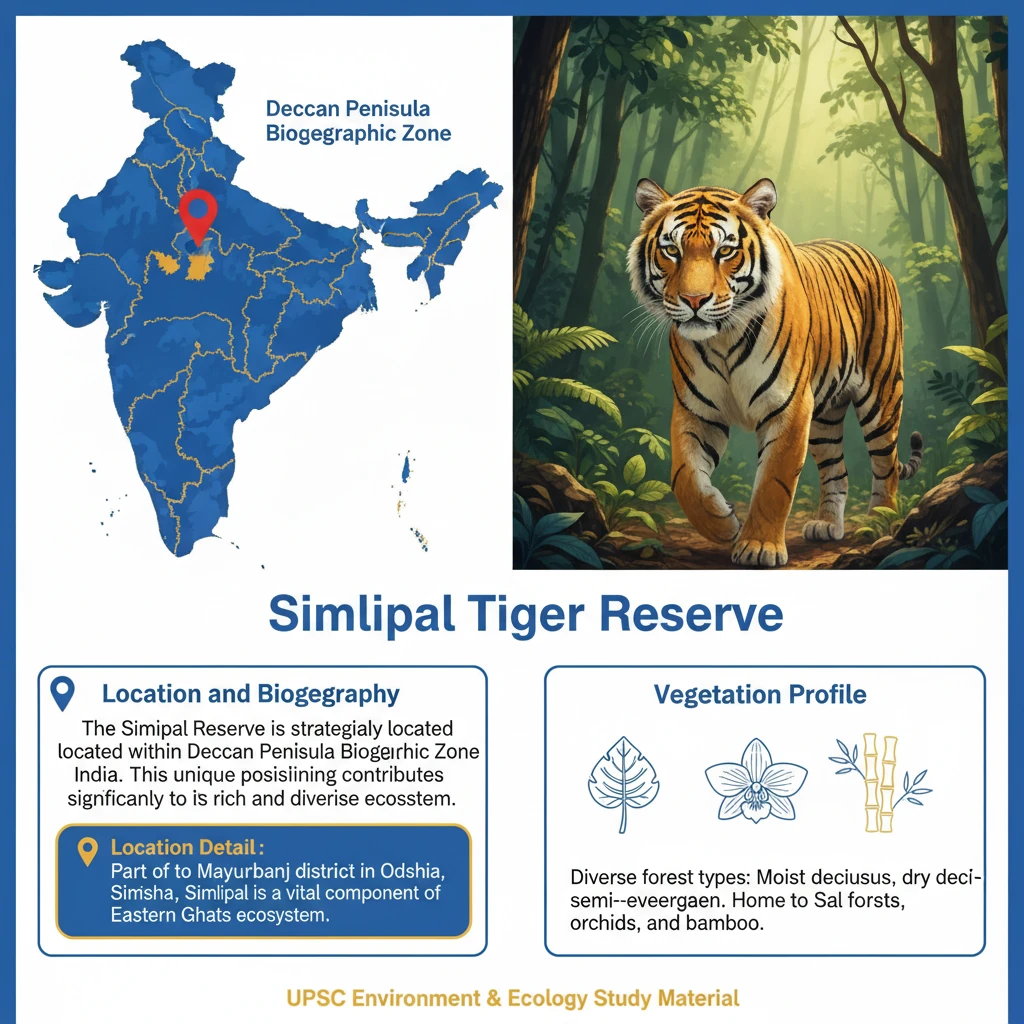
Simlipal Tiger Reserve
Medium⏱️ 8 min read
environment and ecology
📖 Introduction
<h4>Location and Biogeography</h4><p>The <strong>Simlipal Tiger Reserve</strong> is strategically located within the <strong>Deccan Peninsula Biogeographic Zone</strong> of India. This unique positioning contributes significantly to its rich and diverse ecosystem.</p><div class='info-box'><p>📍 <strong>Location Detail</strong>: Part of the <strong>Mayurbhanj district</strong> in <strong>Odisha</strong>, Simlipal is a vital component of the Eastern Ghats ecosystem.</p></div><h4>Vegetation Profile</h4><p>The reserve is characterized by a predominantly <strong>moist mixed deciduous forest</strong>. This forest type supports a wide array of plant life, adapting to varying moisture levels across the landscape.</p><p>Within this, one can find patches of <strong>tropical semi-evergreen forests</strong>, particularly in more sheltered and moist areas. Additionally, sporadic occurrences of <strong>dry deciduous forests</strong> and expansive <strong>grasslands</strong> contribute to the habitat heterogeneity.</p><h4>Exceptional Floral Richness</h4><p><strong>Simlipal</strong> is a treasure trove of botanical diversity. It is home to a significant percentage of India's flowering plants and a remarkable variety of orchid species, highlighting its ecological importance.</p><div class='info-box'><ul><li>🌺 <strong>Flowering Plants</strong>: The reserve holds approximately <strong>7%</strong> of India’s total <strong>flowering plant species</strong>.</li><li>🌸 <strong>Orchid Diversity</strong>: It accounts for about <strong>8%</strong> of India’s diverse <strong>orchid species</strong>, making it a crucial site for orchid conservation.</li></ul></div><h4>Diverse Faunal Population</h4><p>Beyond its iconic tigers, <strong>Simlipal</strong> boasts a rich array of mammalian species. These animals play crucial roles in maintaining the ecological balance of the forest ecosystem.</p><div class='info-box'><p>🐅 <strong>Key Mammal Species</strong>:</p><ul><li><strong>Sambar</strong>, <strong>Chital</strong> (Spotted Deer), and <strong>Barking Deer</strong> are commonly found herbivores.</li><li>The majestic <strong>Gaur</strong> (Indian Bison) and the elusive <strong>Mouse Deer</strong> also inhabit the reserve.</li><li>Predators include <strong>Leopards</strong> and the specialized <strong>Fishing Cat</strong>, alongside the Bengal Tiger.</li></ul></div><h4>Successful Conservation Initiatives</h4><p>Dedicated management efforts within <strong>Simlipal Tiger Reserve</strong> have led to notable successes in wildlife conservation. These initiatives focus on species revival and habitat protection.</p><div class='info-box'><p>🐊 <strong>Mugger Crocodile Revival</strong>: Significant success has been achieved in reviving populations of the <strong>Mugger Crocodile</strong> (<em>Crocodylus palustris</em>) along the major rivers, particularly <strong>Khairi</strong> and <strong>Deo</strong>, which flow through the reserve.</p></div><h4>Global Recognition as Biosphere Reserve</h4><p>The ecological significance of <strong>Simlipal</strong> has been recognized internationally. Its designation underscores its importance for both biodiversity conservation and sustainable development.</p><div class='key-point-box'><p>🌍 <strong>Global Network of Biosphere Reserves</strong>: <strong>Simlipal</strong> was officially designated as a site under the <strong>UNESCO Global Network of Biosphere Reserves</strong> in <strong>2009</strong>. This status highlights its role as a model region for sustainable living.</p></div><div class='exam-tip-box'><p>⚡ <strong>UPSC Insight</strong>: Understanding the criteria and benefits of being a <strong>Biosphere Reserve</strong> is vital for Environment & Ecology questions. Note the difference between a National Park, Wildlife Sanctuary, and Biosphere Reserve.</p></div>
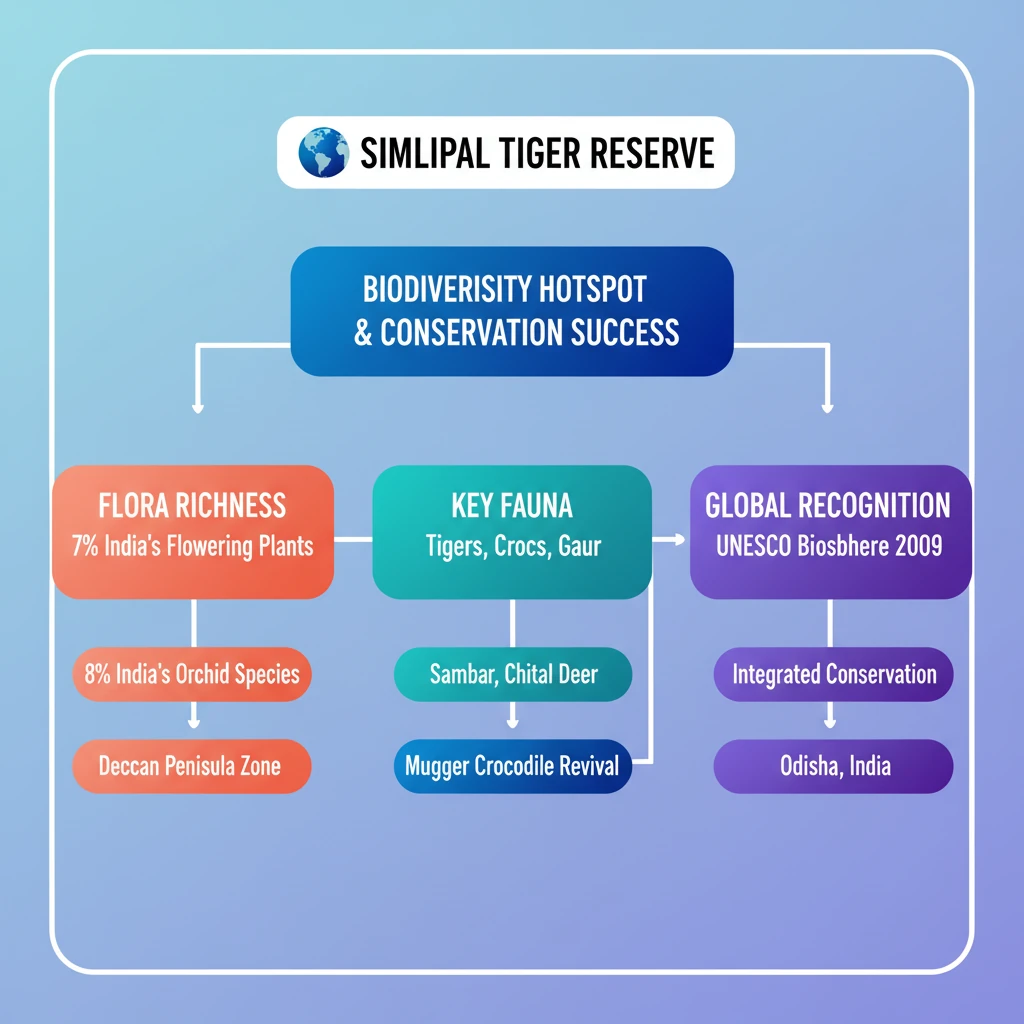
💡 Key Takeaways
- •Simlipal is a Tiger Reserve in the Deccan Peninsula Biogeographic Zone, Odisha.
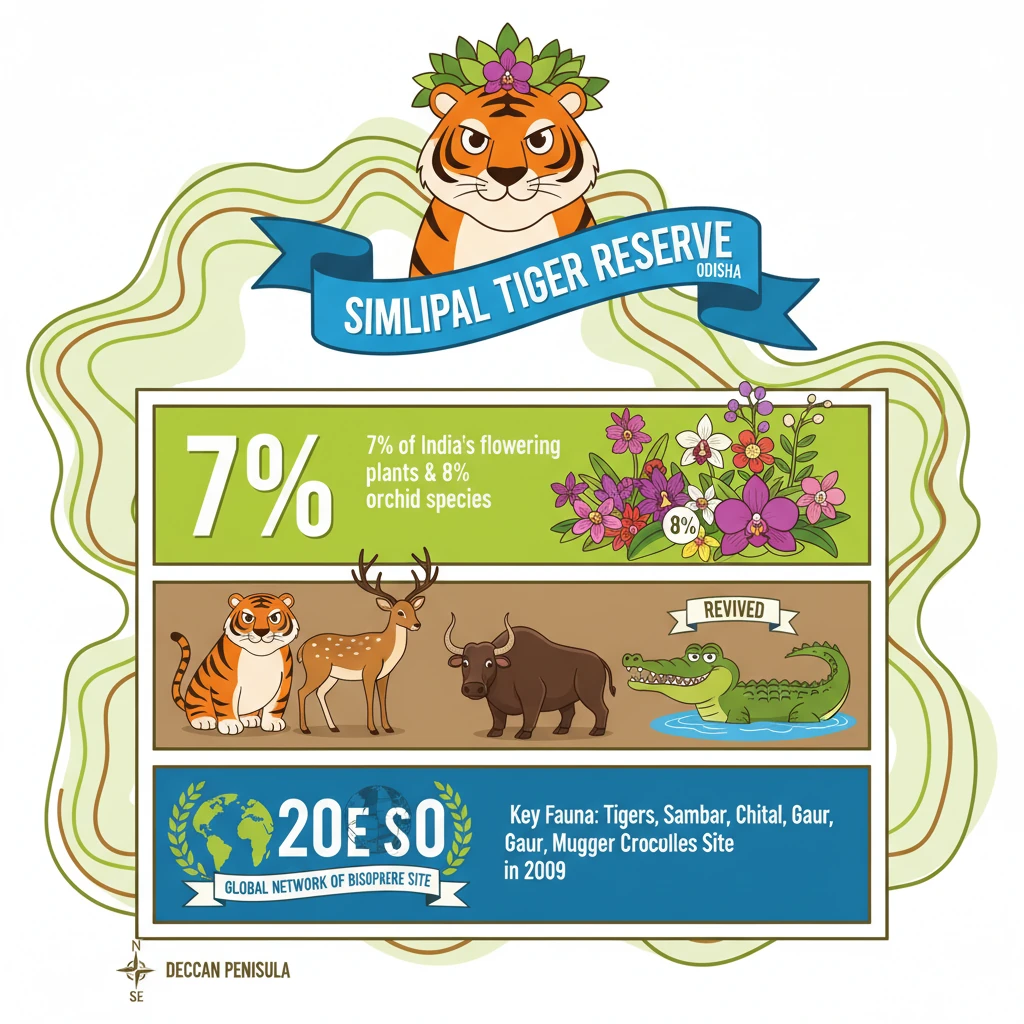
- •It boasts 7% of India's flowering plants and 8% of its orchid species.
- •Key fauna include tigers, sambar, chital, gaur, and successfully revived mugger crocodiles.
- •Designated a UNESCO Global Network of Biosphere site in 2009.
- •It's a critical example of integrated conservation, protecting diverse habitats and species while involving local communities.
🧠 Memory Techniques
98% Verified Content
📚 Reference Sources
•UNESCO Man and the Biosphere (MAB) Programme website - Similipal Biosphere Reserve profile
•Project Tiger, National Tiger Conservation Authority (NTCA) website - List of Tiger Reserves
•Ministry of Environment, Forest and Climate Change (MoEFCC), Government of India publications