Which Other Marine Species Use Tools? - Environment And Ecology | UPSC Learning
Topics
0 topics • 0 completed
🔍
No topics match your search
Which Other Marine Species Use Tools?
Medium⏱️ 6 min read
environment and ecology
📖 Introduction
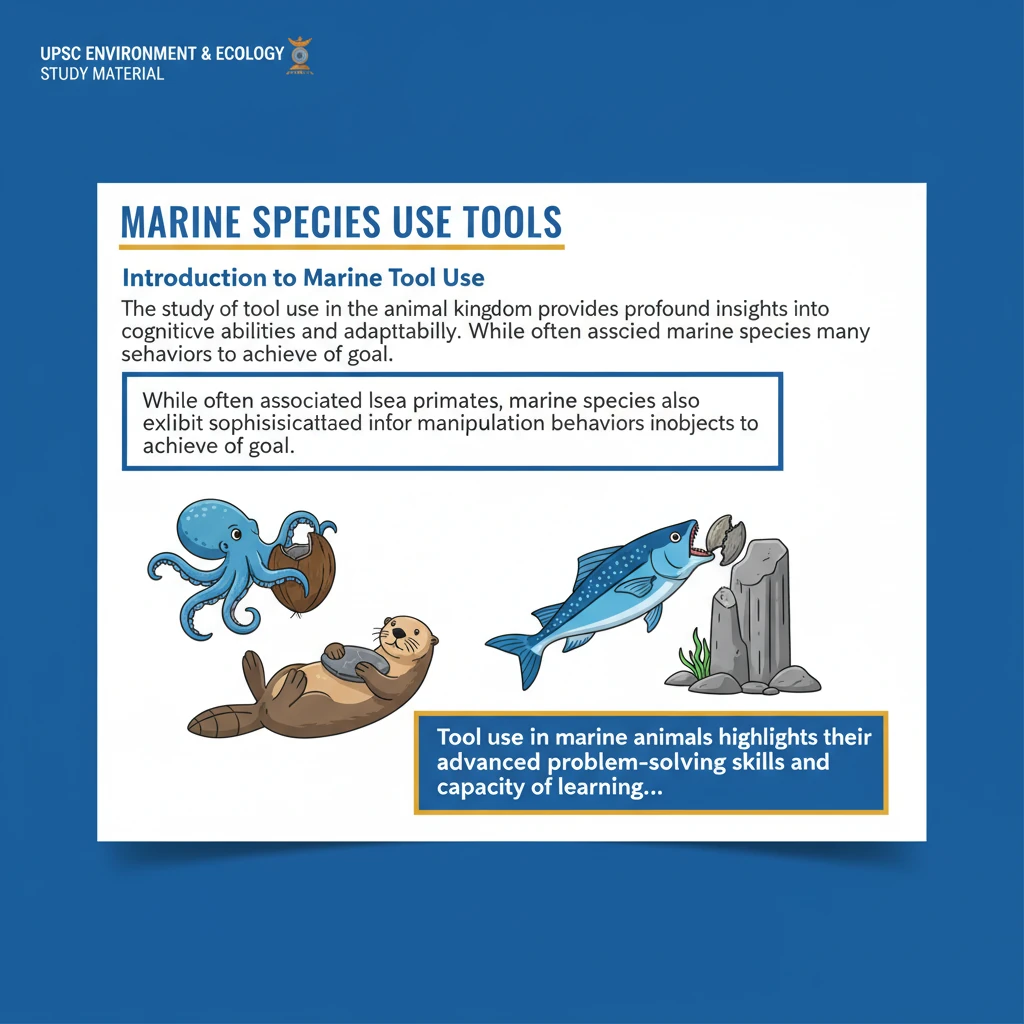
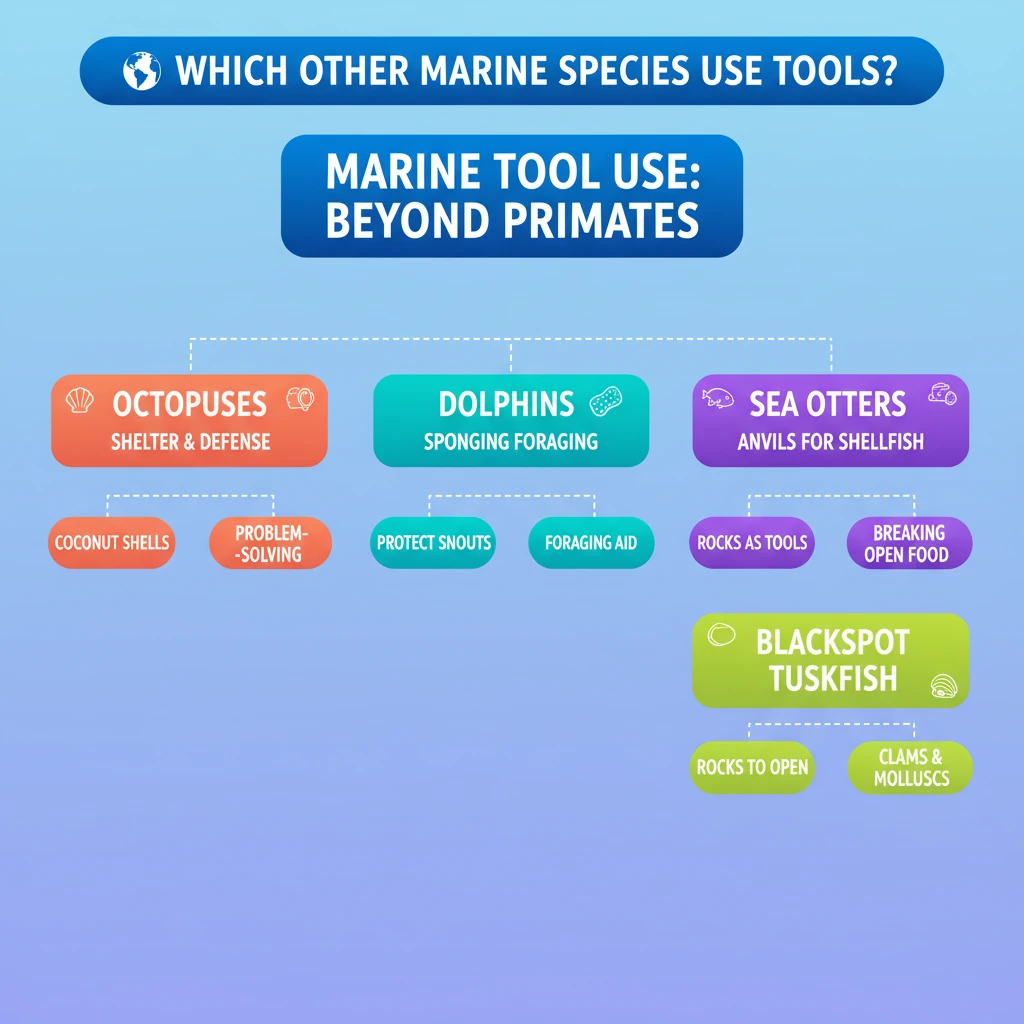
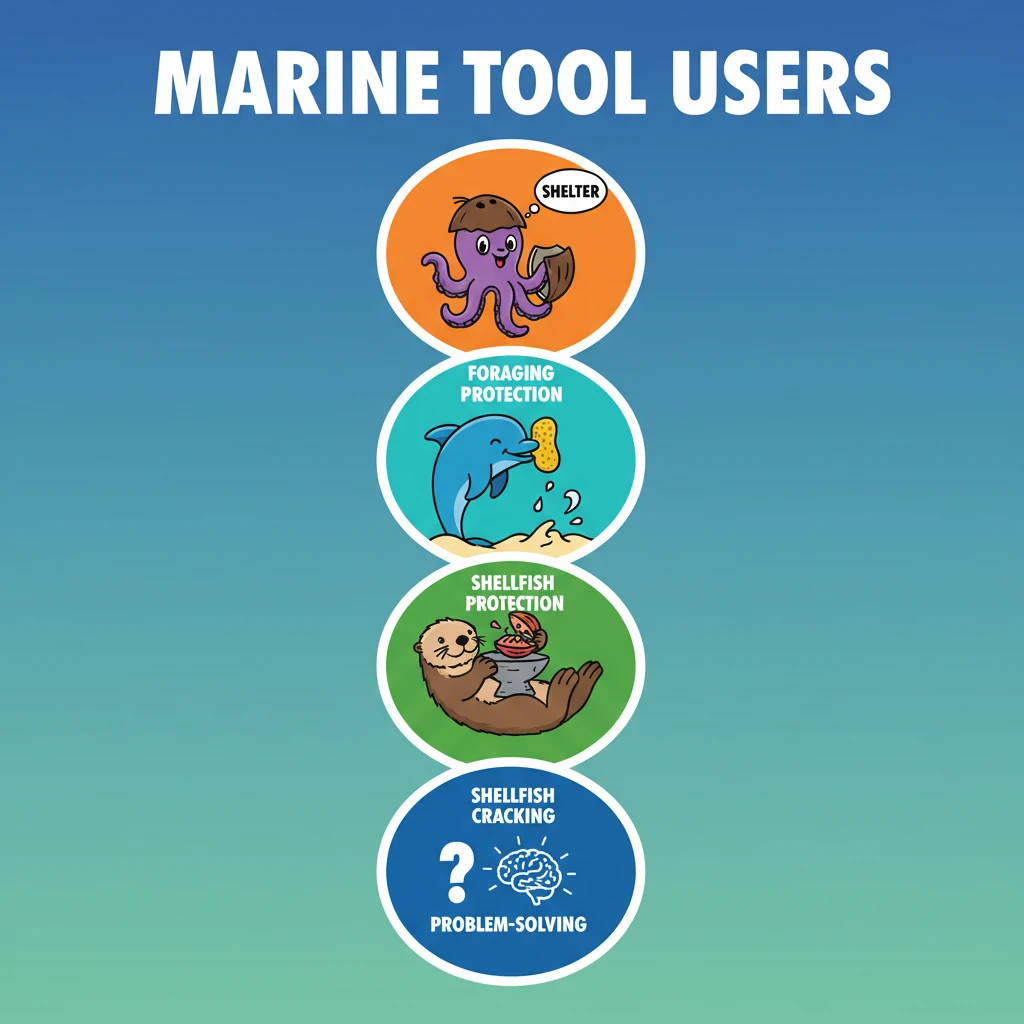
<h4>Introduction to Marine Tool Use</h4><p>The study of <strong>tool use</strong> in the animal kingdom provides profound insights into cognitive abilities and adaptability. While often associated with primates, many <strong>marine species</strong> also exhibit sophisticated behaviors involving the manipulation of objects to achieve a goal.</p><div class='key-point-box'><p><strong>Tool use</strong> in marine animals highlights their advanced problem-solving skills and capacity for learning, challenging traditional views on animal intelligence.</p></div><h4>Octopuses: Masters of Manipulation</h4><p><strong>Octopuses</strong>, known for their exceptional problem-solving capabilities, are prominent examples of marine tool users. These <strong>cephalopods</strong> demonstrate remarkable intelligence through their interactions with their environment.</p><p>They have been observed employing various objects for practical purposes, showcasing their ability to adapt and innovate.</p><div class='info-box'><p><strong>Observed Tool Use by Octopuses:</strong><ul><li>Using <strong>coconut shells</strong> for shelter and protection.</li><li>Dragging discarded <strong>shells</strong> to serve as mobile shields.</li><li>Disassembling and reassembling equipment in controlled environments like aquariums, indicating complex problem-solving.</li></ul></p></div><h4>Dolphins: The Sponging Foragers</h4><p>Certain species of <strong>dolphins</strong> have developed a unique form of tool use primarily for foraging. This behavior, known as <strong>“sponging,”</strong> is a significant example of cultural transmission within marine populations.</p><p>It involves protecting their sensitive snouts while searching for food in abrasive environments.</p><div class='info-box'><p><strong>Dolphin Sponging:</strong><ul><li>Some <strong>dolphin populations</strong> use marine <strong>sponges</strong> to protect their <strong>rostrums</strong> (snouts).</li><li>This protection is crucial while foraging on the rough seafloor, preventing injuries.</li><li>The behavior is considered a form of <strong>tool use</strong> and is unique to specific groups, suggesting learned traditions.</li></ul></p></div><h4>Sea Otters: Anvil Technique Specialists</h4><p><strong>Sea otters</strong> are well-documented for their inventive use of tools, particularly in their feeding habits. These marine mammals rely on external objects to access their primary food sources.</p><p>Their technique demonstrates a clear understanding of cause and effect and object properties.</p><div class='info-box'><p><strong>Sea Otter Tool Use:</strong><ul><li>They utilize <strong>rocks</strong> and other hard objects as tools.</li><li>The primary purpose is to break open hard-shelled prey, such as <strong>clams</strong> and other shellfish.</li><li>The common method is the <strong>“anvil technique,”</strong> where the otter places a rock on its chest and smashes the shellfish against it.</li></ul></p></div><h4>Fish: The Blackspot Tuskfish</h4><p>Even some fish species exhibit forms of tool use, challenging perceptions about their cognitive limits. The <strong>blackspot tuskfish</strong> is a notable example from coral reef ecosystems.</p><p>This behavior highlights learning and adaptability in a seemingly less complex organism.</p><div class='info-box'><p><strong>Blackspot Tuskfish Tool Use:</strong><ul><li>Found in <strong>coral reefs</strong>, this fish uses <strong>rocks</strong> to open <strong>clamshells</strong>.</li><li>This behavior demonstrates both <strong>learning</strong> and <strong>adaptability</strong>.</li><li>It is comparable to the <strong>archer fish’s</strong> technique of using water jets to shoot down prey above the surface, showcasing diverse forms of tool-assisted foraging.</li></ul></p></div>
💡 Key Takeaways
- •Tool use is not exclusive to primates; many marine species exhibit this complex behavior.
- •Octopuses use coconut shells for shelter and protection, demonstrating problem-solving.
- •Dolphins engage in 'sponging' to protect their snouts while foraging on the seafloor.
- •Sea otters utilize rocks as 'anvils' to break open shellfish for food.
- •The blackspot tuskfish uses rocks to open clams, showcasing learning and adaptability.
- •These behaviors highlight advanced cognitive abilities and adaptive strategies in marine life.
🧠 Memory Techniques
95% Verified Content
📚 Reference Sources
•National Geographic articles on octopus intelligence and dolphin tool use
•Scientific studies on sea otter foraging behavior
•Research papers on blackspot tuskfish tool use