What is Greenwashing? - Environment And Ecology | UPSC Learning
Topics
0 topics • 0 completed
🔍
No topics match your search
What is Greenwashing?
Medium⏱️ 8 min read
environment and ecology
📖 Introduction
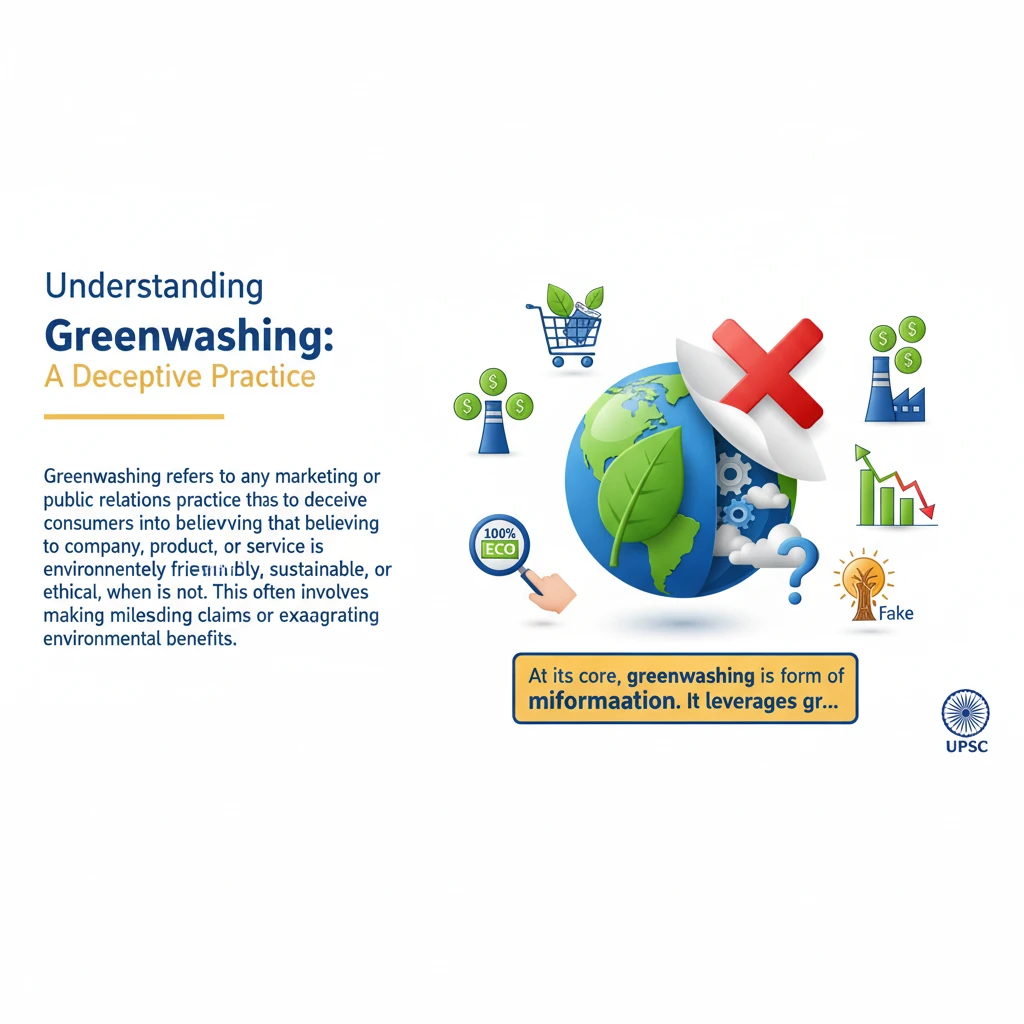
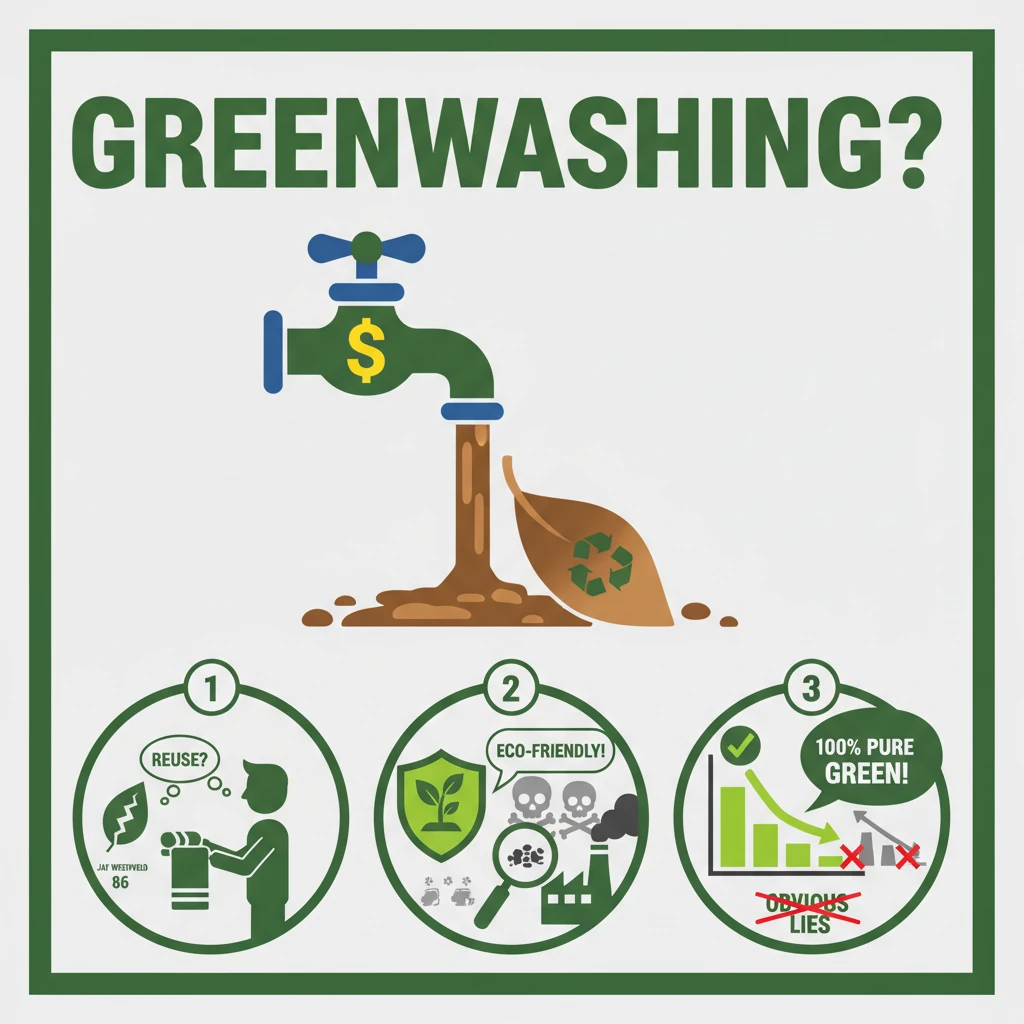
<h4>Understanding Greenwashing: A Deceptive Practice</h4><p><strong>Greenwashing</strong> refers to any marketing or public relations practice that aims to deceive consumers into believing that a company, product, or service is environmentally friendly, sustainable, or ethical, when it is not. This often involves making misleading claims or exaggerating environmental benefits.</p><div class='key-point-box'><p>At its core, <strong>greenwashing</strong> is a form of misinformation. It leverages growing consumer environmental awareness to boost sales or improve brand image without genuinely committing to sustainable practices.</p></div><h4>Origin of the Term Greenwashing</h4><p>The term <strong>greenwashing</strong> was first coined in <strong>1986</strong> by <strong>Jay Westerveld</strong>, an American environmentalist and researcher. He observed hotels placing 'reuse your towel' notices to save laundry costs, while simultaneously expanding their environmental footprint in other, more significant ways.</p><div class='info-box'><p><strong>First Use:</strong> <strong>Jay Westerveld</strong>, <strong>1986</strong></p></div><h4>Characteristics of Greenwashing</h4><p>Greenwashing involves a range of deceptive tactics. These often include <strong>exaggeration</strong>, <strong>omission</strong> of crucial information, or making outright <strong>false environmental claims</strong> about goods or services.</p><ul><li><strong>Exaggeration:</strong> Overstating minor environmental benefits.</li><li><strong>Omission:</strong> Hiding significant negative environmental impacts while highlighting minor positive ones.</li><li><strong>False Claims:</strong> Making statements that are simply untrue or lack credible evidence.</li></ul><h4>Misleading Visuals and Language</h4><p>Companies frequently employ <strong>misleading symbols</strong>, <strong>imagery</strong>, or <strong>language</strong> to create an eco-friendly perception. This often involves using green colors, nature imagery, or vague terms like 'natural' or 'eco-friendly' without specific substantiation.</p><div class='info-box'><p>These visual and linguistic cues highlight positive environmental aspects while cleverly concealing more harmful ones associated with the product's lifecycle or manufacturing processes.</p></div><h4>What Greenwashing Does NOT Include</h4><p>It is important to distinguish genuine greenwashing from other marketing practices. <strong>Greenwashing</strong> specifically excludes obvious <strong>hyperbole</strong>, common <strong>puffery</strong>, or generic <strong>colour schemes/images</strong> that are not inherently deceptive in their context.</p><div class='exam-tip-box'><p>For UPSC, understanding the nuances of <strong>greenwashing</strong> is crucial for topics like <strong>environmental ethics</strong>, <strong>sustainable development</strong>, and <strong>consumer protection</strong>. Be prepared to identify examples and discuss regulatory challenges.</p></div><h4>Defining Environmental Claims</h4><p>In the context of greenwashing, <strong>environmental claims</strong> refer to any representations made about goods or services. This includes their <strong>components</strong>, <strong>manufacturing processes</strong>, packaging, or disposal, which imply a positive environmental impact.</p>

💡 Key Takeaways
- •Greenwashing is a deceptive practice exaggerating or falsifying environmental claims.
- •The term was coined by Jay Westerveld in 1986, observing hotel towel reuse.
- •It involves misleading symbols, language, and omission of harmful impacts.
- •Excludes obvious hyperbole or generic, non-deceptive imagery.
- •Environmental claims refer to representations about goods/services, components, or processes.
- •Undermines genuine sustainability efforts and erodes consumer trust.
- •Combating greenwashing requires strong regulation and informed consumer choices.
🧠 Memory Techniques
98% Verified Content
📚 Reference Sources
•Environmental Protection Agency (EPA) resources on greenwashing
•TerraChoice Environmental Marketing Inc. - 'The Sins of Greenwashing' report
•Academic articles on corporate social responsibility and environmental marketing