What are India Specific Findings in Air Quality Life Index (AQLI) 2024? - Environment And Ecology | UPSC Learning
Topics
0 topics • 0 completed
🔍
No topics match your search
What are India Specific Findings in Air Quality Life Index (AQLI) 2024?
Medium⏱️ 8 min read
environment and ecology
📖 Introduction
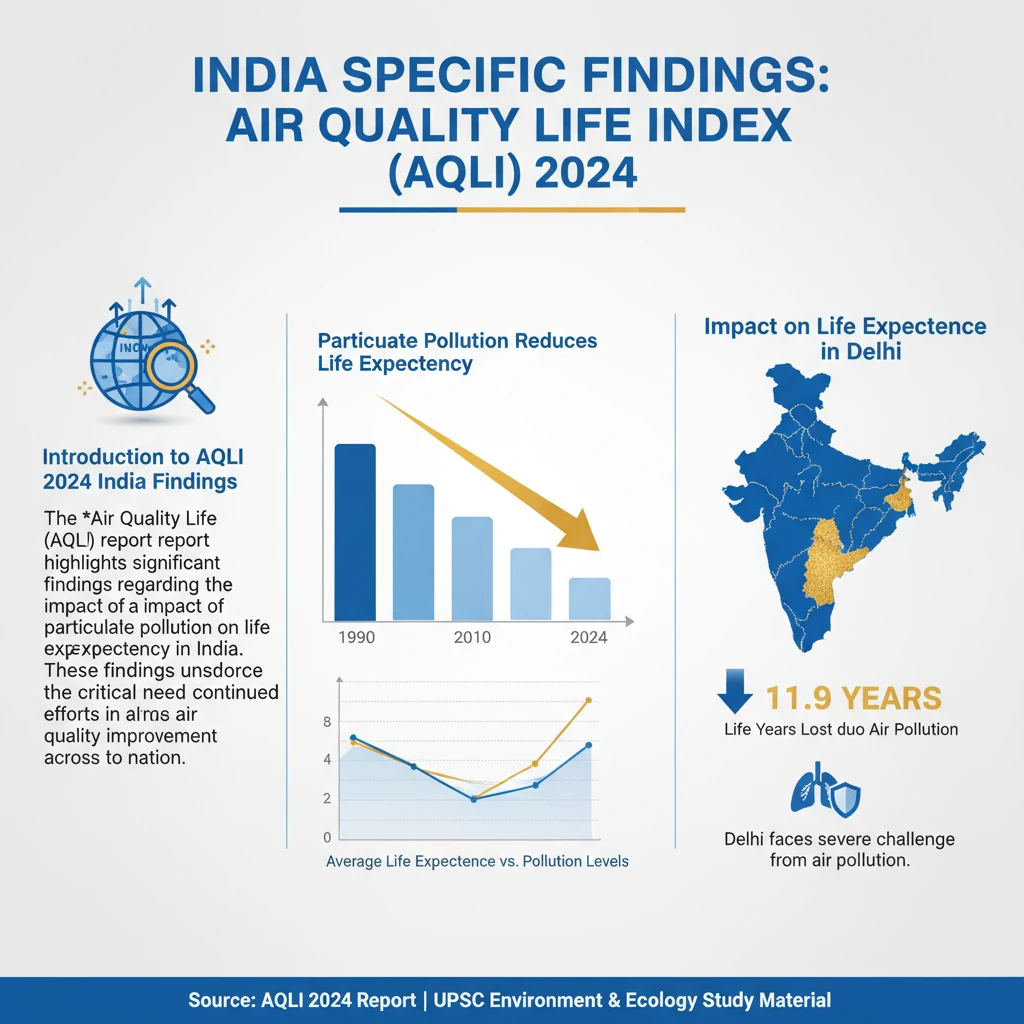
<h4>Introduction to AQLI 2024 India Findings</h4><p>The <strong>Air Quality Life Index (AQLI) 2024</strong> report highlights significant findings regarding the impact of <strong>particulate pollution</strong> on life expectancy in India.</p><p>These findings underscore the critical need for continued efforts in <strong>air quality improvement</strong> across the nation.</p><h4>Impact on Life Expectancy in Delhi</h4><p><strong>Delhi</strong>, India's capital, faces a severe challenge from air pollution, making it the <strong>most polluted city</strong> in the country.</p><p>The AQLI 2024 report projects a substantial increase in <strong>life expectancy</strong> if air quality targets are met.</p><div class='info-box'><ul><li>Meeting <strong>WHO guidelines</strong> (<strong>5 µg/m³</strong> PM2.5) could increase life expectancy for Delhi's <strong>18.7 million residents</strong> by <strong>7.8 years</strong>.</li><li>Achieving <strong>India’s national air quality standard</strong> (<strong>40 µg/m³</strong> PM2.5) could extend life expectancy by <strong>4.3 years</strong>.</li></ul></div><h4>Current Air Quality and Trends in Delhi</h4><p>In <strong>2022</strong>, Delhi recorded an average <strong>PM2.5 level</strong> of <strong>84.3 µg/m³</strong>.</p><p>Despite being the most polluted, this figure represents a <strong>significant improvement</strong> compared to previous years, indicating positive trends.</p><div class='info-box'><p><strong>Delhi's average annual PM2.5 concentration in 2022:</strong> <strong>84.3 µg/m³</strong>.</p></div><h4>Improvement in Air Quality Across India</h4><p>India as a whole has witnessed a noticeable decrease in <strong>particulate pollution</strong> over the past decade.</p><p>This national trend suggests that concerted efforts to improve air quality are yielding positive results.</p><div class='info-box'><ul><li>Average particulate pollution over the <strong>last decade</strong>: <strong>49 µg/m³</strong>.</li><li>Average particulate pollution in <strong>2022</strong>: <strong>43.4 µg/m³</strong>.</li></ul></div><p>If this downward trend continues, the average Indian resident could experience an increase of <strong>9 months</strong> in their life expectancy.</p><div class='key-point-box'><p>This <strong>9-month gain</strong> is projected relative to exposure to the pollution levels of the previous decade.</p></div><h4>Comparison with Other Health Risks</h4><p>The AQLI report also contextualizes the impact of air pollution by comparing it with other major health risks in India.</p><p>This comparison highlights the significant burden that particulate pollution places on public health.</p><div class='info-box'><table class='info-table'><tr><th>Health Risk</th><th>Life Expectancy Reduction (Years)</th></tr><tr><td><strong>Particulate Pollution</strong></td><td><strong>3.6 years</strong></td></tr><tr><td><strong>Malnutrition</strong></td><td><strong>1.6 years</strong></td></tr><tr><td><strong>Tobacco</strong></td><td><strong>1.5 years</strong></td></tr><tr><td><strong>Unsafe Water and Sanitation</strong></td><td><strong>0.7 years</strong> (8.4 months)</td></tr></table></div><div class='key-point-box'><p><strong>Particulate pollution</strong> remains the <strong>largest external threat</strong> to life expectancy in India, surpassing other critical health concerns.</p></div>
💡 Key Takeaways
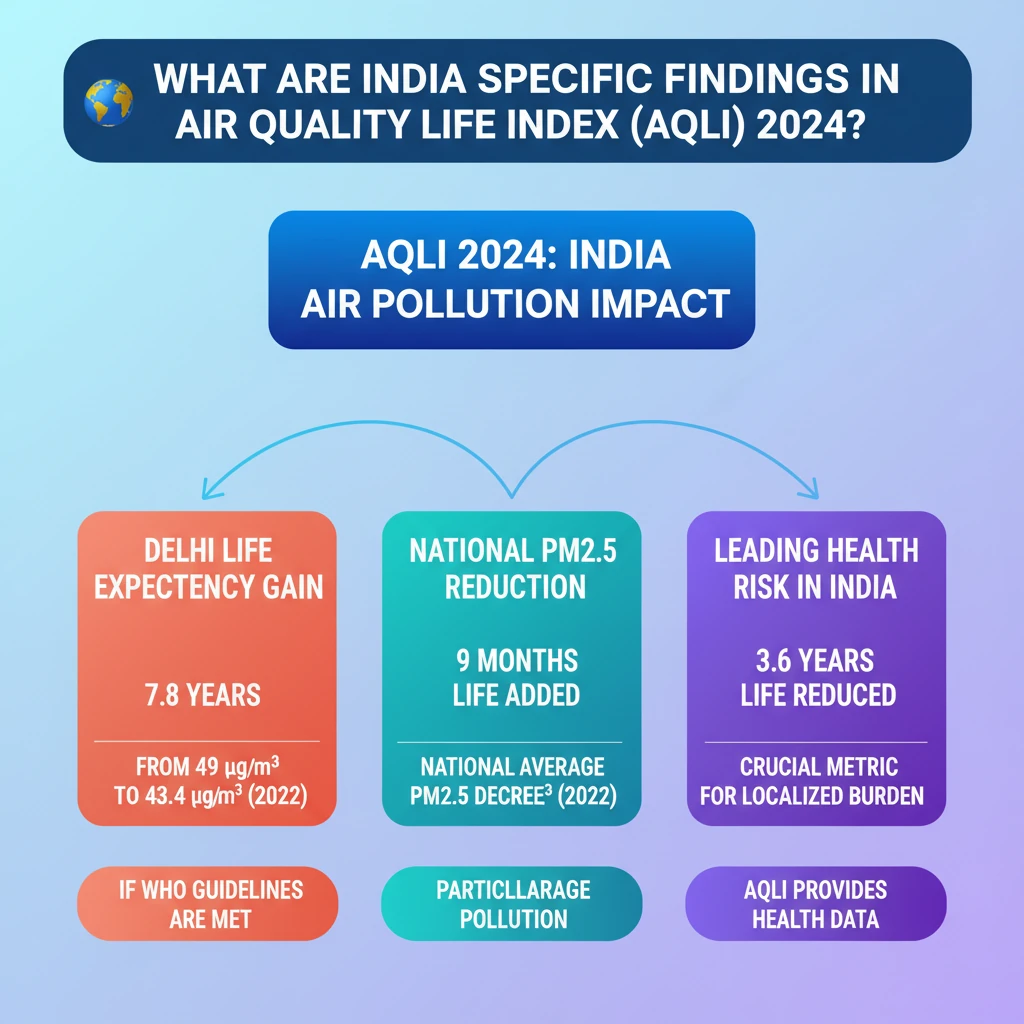
- •Delhi could gain 7.8 years in life expectancy if WHO air quality guidelines are met.
- •India's national average PM2.5 decreased from 49 µg/m³ to 43.4 µg/m³ in 2022.
- •This national improvement could add 9 months to the average Indian's life.
- •Particulate pollution is the leading external health risk in India, reducing life expectancy by 3.6 years.
- •AQLI provides a crucial metric for understanding the localized health burden of air pollution.
🧠 Memory Techniques

98% Verified Content
📚 Reference Sources
•Air Quality Life Index (AQLI) 2024 Report by Energy Policy Institute at the University of Chicago (EPIC)