Nagoya Protocol on Access and Benefit Sharing - Environment And Ecology | UPSC Learning
Topics
0 topics • 0 completed
🔍
No topics match your search
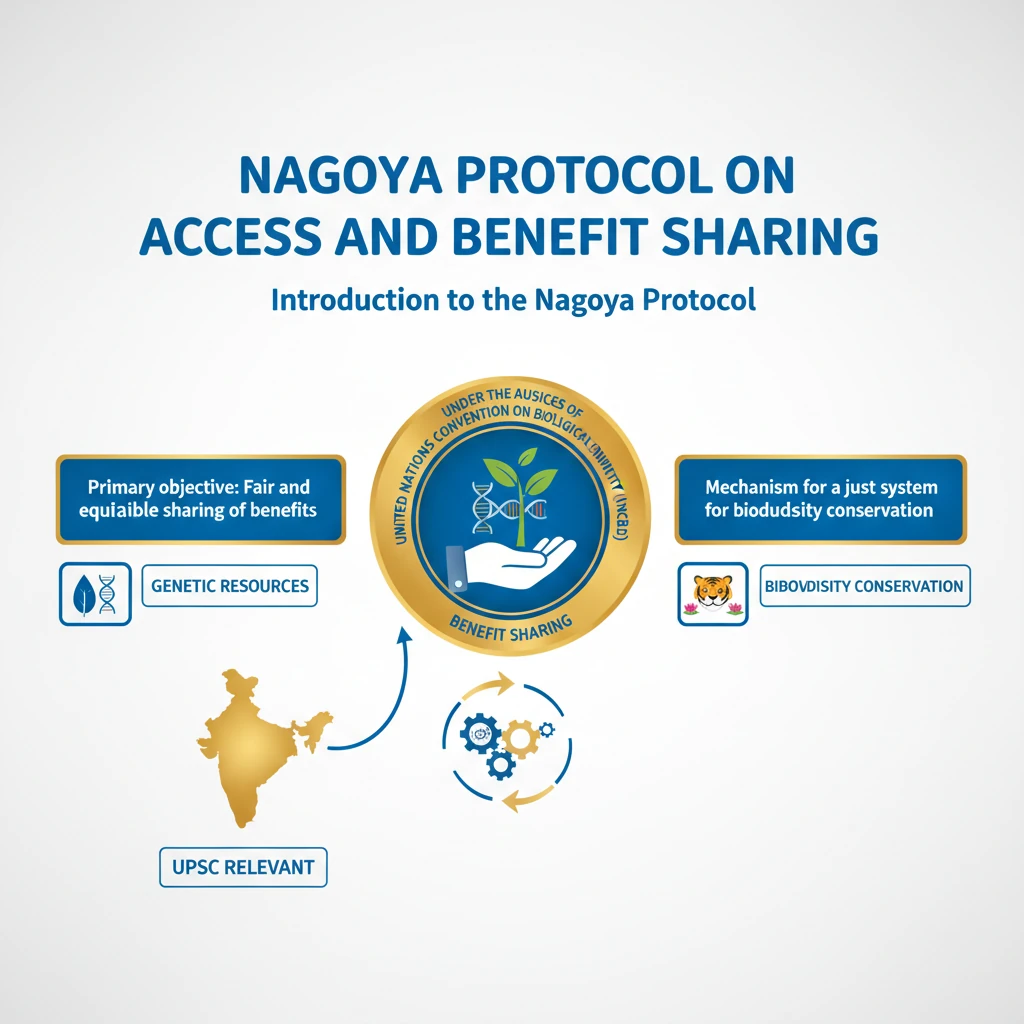
Nagoya Protocol on Access and Benefit Sharing
Medium⏱️ 5 min read
environment and ecology
📖 Introduction
<h4>Introduction to the Nagoya Protocol</h4><p>The <strong>Nagoya Protocol on Access and Benefit Sharing</strong> is a crucial international agreement. It operates under the umbrella of the <strong>United Nations Convention on Biological Diversity (UNCBD)</strong>.</p><p>Its primary objective is to ensure the <strong>fair and equitable sharing of benefits</strong> that arise from the utilization of <strong>genetic resources</strong>. This mechanism aims to create a more just system for biodiversity conservation and sustainable use.</p><h4>Why the Nagoya Protocol is Needed: Addressing Key Challenges</h4><p>The protocol was established to address several critical issues, particularly concerning traditional knowledge and the prevention of biopiracy. These challenges highlight the importance of international cooperation in managing biological resources.</p><h4>Preserving Traditional Knowledge</h4><p>Many plants, animals, and microorganisms possess valuable <strong>genetic information</strong>. This includes genes that can be utilized for producing medicines, developing new crops, or other beneficial products.</p><p>Indigenous and local communities have accumulated extensive <strong>knowledge, innovations, and practices</strong> related to these genetic resources over generations. This collective wisdom is known as <strong>traditional knowledge</strong>.</p><div class='info-box'><p><strong>Traditional Knowledge:</strong> The cumulative and dynamic body of knowledge, innovations, and practices developed by indigenous and local communities over centuries, often passed down through generations, concerning the sustainable use of biodiversity.</p></div><h4>Preventing Biopiracy and Ensuring Equal Sharing</h4><p>Both <strong>genetic resources</strong> and <strong>traditional knowledge</strong> are highly valuable for <strong>bioprospecting</strong>. Bioprospecting involves exploring biological material to discover new sources for drugs, food, cosmetics, or other commercial products.</p><p>While bioprospecting can contribute to conservation and sustainable use of biodiversity, it has historically led to exploitation. The Nagoya Protocol seeks to prevent situations where profits from these resources do not benefit their original custodians.</p><div class='key-point-box'><p><strong>Biopiracy:</strong> The unauthorized commercial exploitation of biological resources or traditional knowledge, often without fair compensation to the originating communities or countries.</p></div><h4>Case Study: Cameroon's Experience</h4><p>Cameroon provides compelling examples of the need for the Nagoya Protocol. Its rich biodiversity has been a target for bioprospecting, often without equitable benefit sharing.</p><ul><li><strong>Prunus africana:</strong> This plant, endemic to <strong>Cameroon</strong>, is used to produce drugs for <strong>prostate cancer</strong>. Foreign companies have historically purchased it at very low prices (e.g., <strong>USD 2.11 per gram</strong>) and sold derived drugs for significantly higher amounts (e.g., <strong>USD 405</strong>).</li><li><strong>Cameroon’s Bush Mango:</strong> This fruit is renowned for its medical properties. Its leaves, roots, and bark are traditionally used to treat various ailments like <strong>colds and skin pain</strong>. European pharmaceutical and cosmetic companies have shown considerable interest in its potential.</li></ul><h4>Benefiting Local Communities</h4><p>Historically, the profits generated from products derived from resources like <strong>Prunus africana</strong> and <strong>Bush Mango</strong> did not benefit the indigenous and local communities where these plants were harvested. This lack of benefit sharing created a clear injustice.</p><p>Adopting the <strong>Nagoya Protocol</strong> helps to safeguard the <strong>rights and interests</strong> of these communities. It fosters innovation and sustainable development based on biodiversity, ensuring that benefits are shared fairly.</p><h4>The Convention on Biological Diversity (CBD)</h4><p>The <strong>Nagoya Protocol</strong> is an agreement under the <strong>Convention on Biological Diversity (CBD)</strong>. The CBD is a legally binding international treaty focused on biodiversity conservation.</p><div class='info-box'><p><strong>CBD in Force:</strong> Since <strong>1993</strong></p></div><p>The <strong>CBD</strong> has three main objectives, which the <strong>Nagoya Protocol</strong> helps to fulfill:</p><ol><li><strong>Conservation of Biological Diversity:</strong> Protecting species, ecosystems, and genetic resources.</li><li><strong>Sustainable Use of its Components:</strong> Utilizing biodiversity in a way that does not lead to its long-term decline.</li><li><strong>Fair and Equitable Sharing of the Benefits Arising from the Utilization of Genetic Resources:</strong> This is the specific objective addressed by the <strong>Nagoya Protocol</strong>.</li></ol><div class='exam-tip-box'><p><strong>UPSC Insight:</strong> Understand the relationship between <strong>CBD</strong> and <strong>Nagoya Protocol</strong>. The protocol operationalizes one of the CBD's core objectives. Questions often link these treaties to India's biodiversity laws like the <strong>Biological Diversity Act, 2002</strong>.</p></div>
💡 Key Takeaways
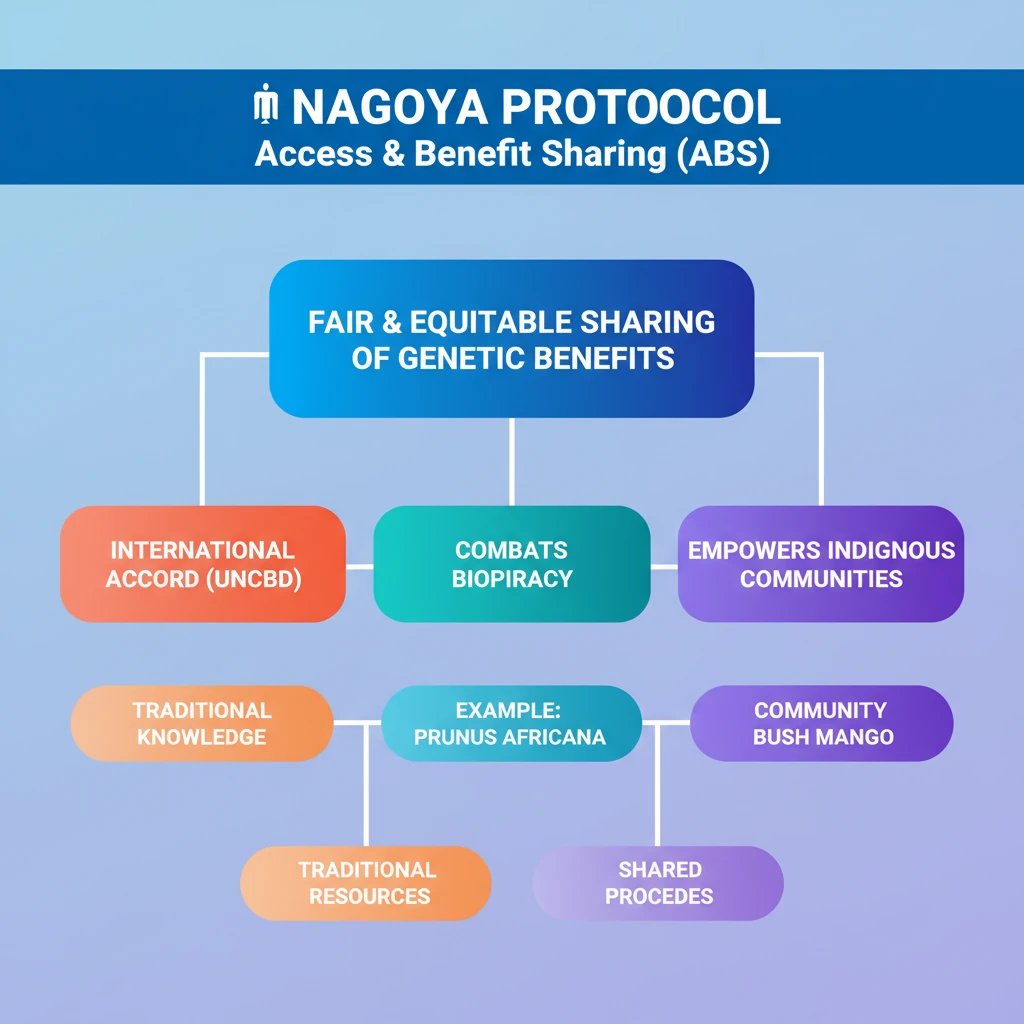
- •The Nagoya Protocol is an international agreement under the UNCBD.
- •Its core aim is fair and equitable sharing of benefits from genetic resources.
- •It addresses issues like biopiracy and the preservation of traditional knowledge.
- •Examples like Prunus africana and Bush Mango highlight the need for benefit sharing.
- •It empowers indigenous and local communities by ensuring their rights and interests are protected.
🧠 Memory Techniques
98% Verified Content