What are the Key Facts About the Hoollongapar Gibbon Wildlife Sanctuary? - Environment And Ecology | UPSC Learning
Topics
0 topics • 0 completed
🔍
No topics match your search
What are the Key Facts About the Hoollongapar Gibbon Wildlife Sanctuary?
Medium⏱️ 5 min read
environment and ecology
📖 Introduction
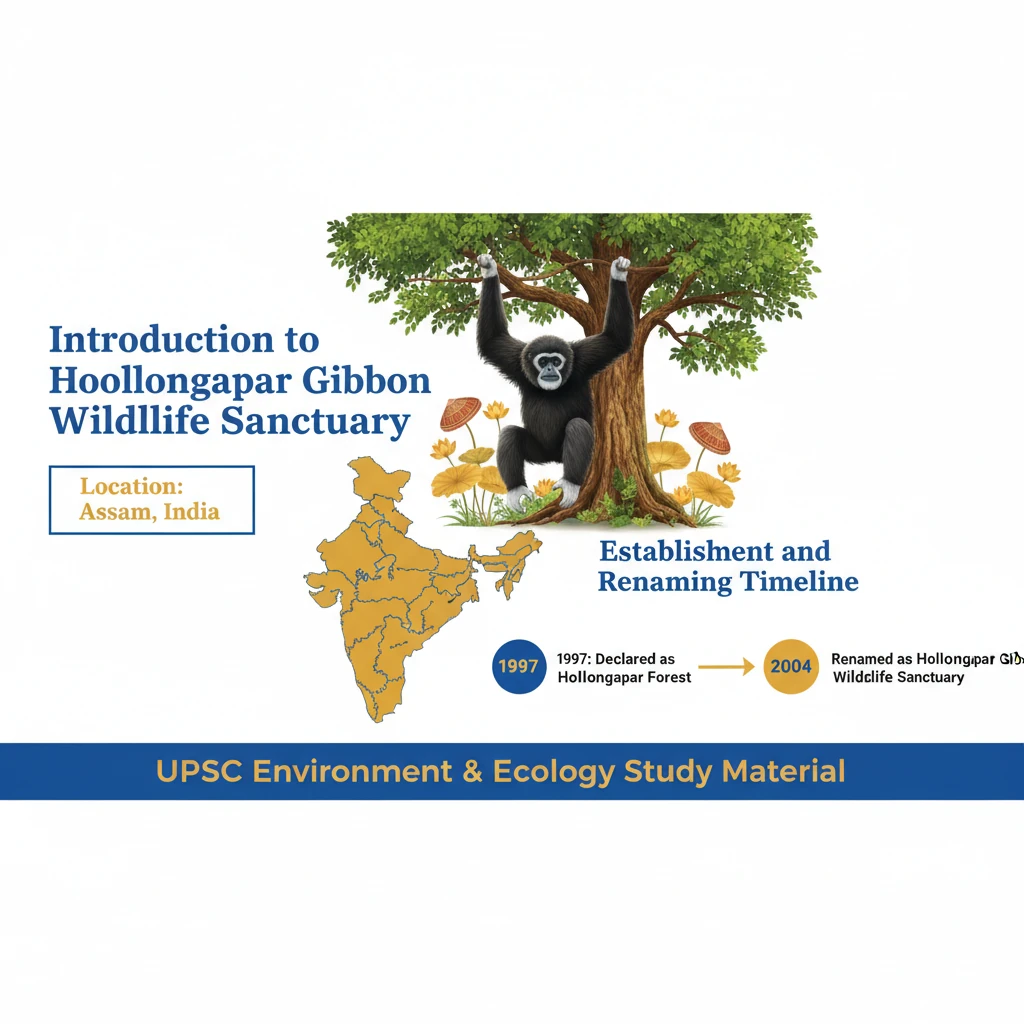
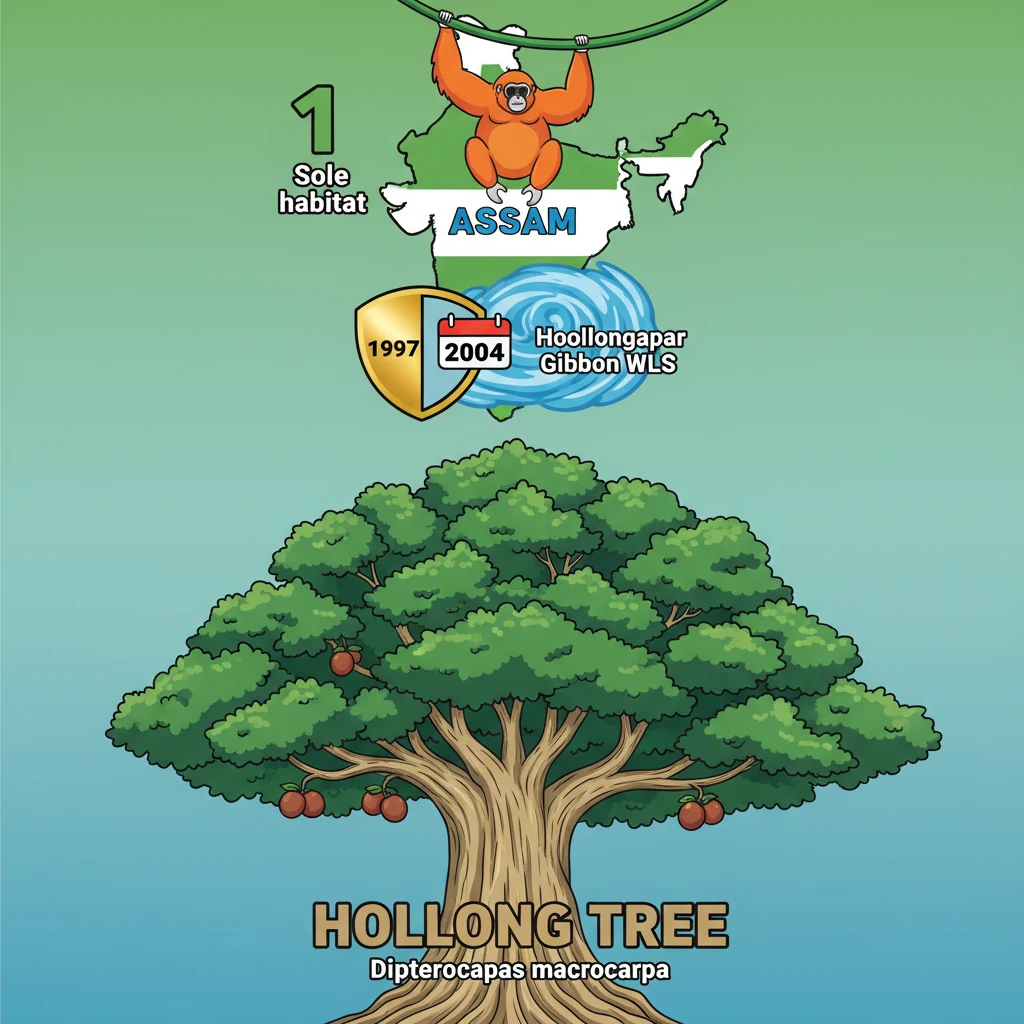
<h4>Introduction to Hoollongapar Gibbon Wildlife Sanctuary</h4><p>The <strong>Hoollongapar Gibbon Wildlife Sanctuary</strong> is a vital protected area located in the state of <strong>Assam, India</strong>. It plays a crucial role in the conservation of unique biodiversity in the region.</p><div class='info-box'><p><strong>Location:</strong> Assam, India</p></div><h4>Establishment and Renaming Timeline</h4><p>The sanctuary underwent significant changes in its designation and nomenclature over the years. These changes reflect its evolving status as a protected area.</p><div class='info-box'><ul><li><strong>1997:</strong> The area was initially <strong>established and renamed</strong> as a protected area.</li><li><strong>2004:</strong> It was officially renamed to <strong>Hoollongapar Gibbon Wildlife Sanctuary</strong> from its previous designations.</li></ul></div><p>Prior to its current name, it was known as the <strong>Gibbon Wildlife Sanctuary</strong> or the <strong>Hollongapar Reserve Forest</strong>, highlighting its historical significance as a forested region.</p><h4>Unique Biodiversity and Significance</h4><p>This sanctuary is globally recognized for its exceptional biodiversity. Its primary distinction lies in being the <strong>sole habitat for gibbons in India</strong>, making it a critical conservation site.</p><div class='key-point-box'><p>The <strong>Hoollongapar Gibbon Wildlife Sanctuary</strong> is the <strong>only sanctuary in India</strong> dedicated primarily to the conservation of <strong>gibbons</strong>, specifically the <strong>Western Hoolock Gibbon</strong>.</p></div><h4>Dominant Flora of the Sanctuary</h4><p>The vegetation within the sanctuary is rich and diverse, characterized by a prominent upper canopy. This forest type supports a wide array of plant and animal life.</p><div class='info-box'><p>The <strong>upper canopy</strong> is predominantly characterized by the towering <strong>Hollong tree</strong> (<em>Dipterocarpus macrocarpa</em>), which can reach impressive heights of up to <strong>30 metres</strong>.</p></div><p>Other significant tree species found in the sanctuary include <strong>Sam</strong>, <strong>Amari</strong>, <strong>Sopaat</strong>, <strong>Betelu</strong>, <strong>Udai</strong>, and <strong>Hingori</strong>. These species contribute to the rich ecological fabric of the area.</p><div class='exam-tip-box'><p>For <strong>UPSC Prelims</strong>, remember the <strong>Hollong tree</strong> as the dominant species and its scientific name, <em><strong>Dipterocarpus macrocarpa</strong></em>. Also, note the specific mention of it being the <strong>sole gibbon habitat</strong> in India, which is a key distinguishing fact.</p></div>
💡 Key Takeaways
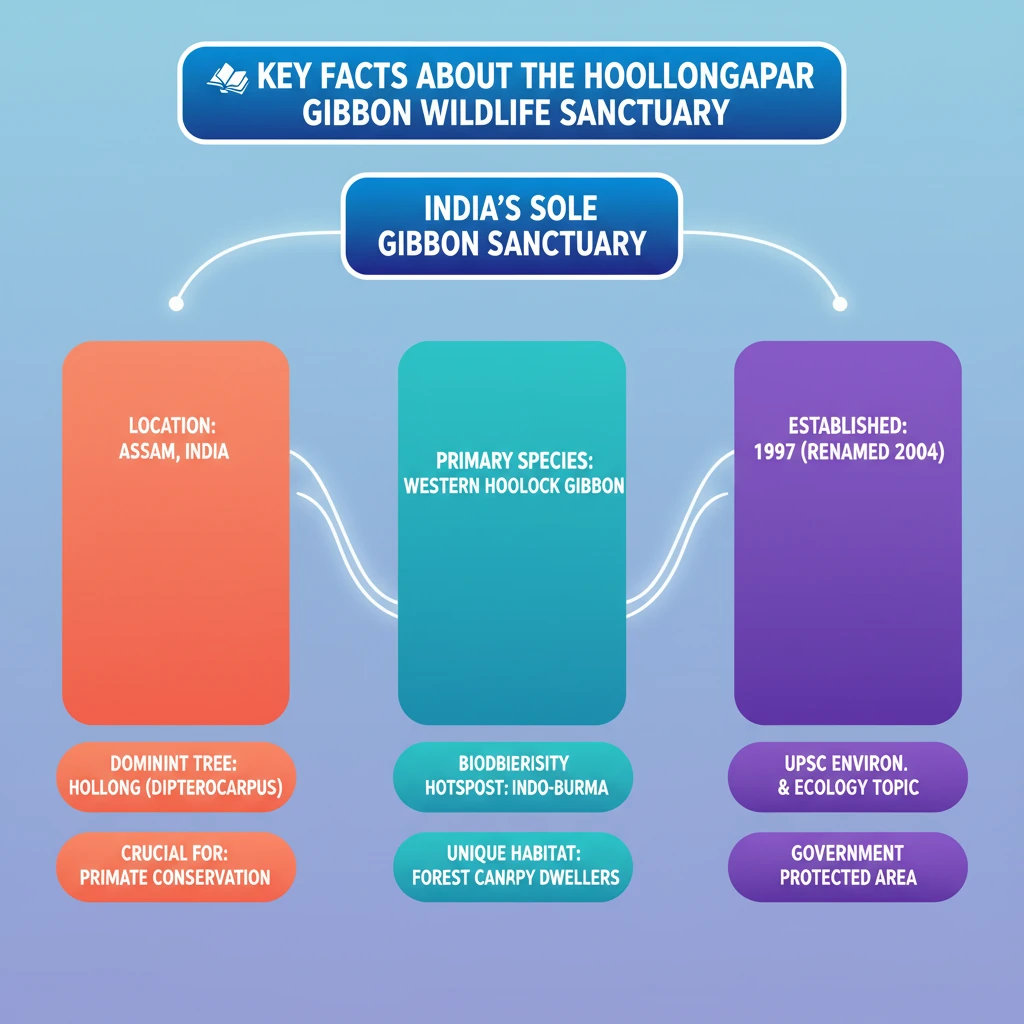
- •The Hoollongapar Gibbon Wildlife Sanctuary is located in Assam, India.
- •It is the sole habitat for gibbons (specifically the Western Hoolock Gibbon) in India.
- •The sanctuary was established and renamed in 1997, and officially became Hoollongapar Gibbon WLS in 2004.
- •The upper canopy is dominated by the Hollong tree (Dipterocarpus macrocarpa).
- •It is crucial for primate conservation and contributes significantly to the Indo-Burma Biodiversity Hotspot.
🧠 Memory Techniques
95% Verified Content
📚 Reference Sources
•IUCN Red List for Hoolock Gibbon conservation status
•General knowledge databases on Indian wildlife sanctuaries