What are the Key Points Related to Gupteswar Forest? - Environment And Ecology | UPSC Learning
Topics
0 topics • 0 completed
🔍
No topics match your search
What are the Key Points Related to Gupteswar Forest?
Medium⏱️ 7 min read
environment and ecology
📖 Introduction
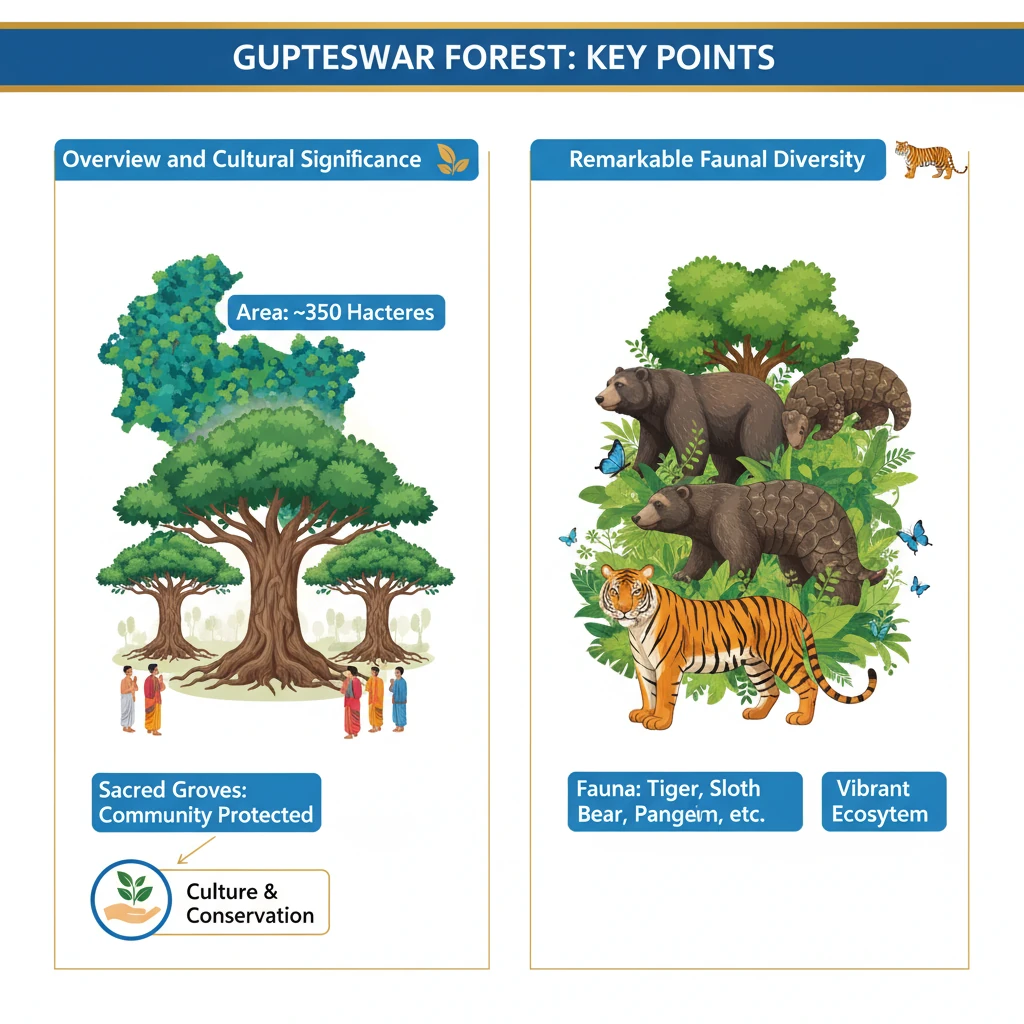
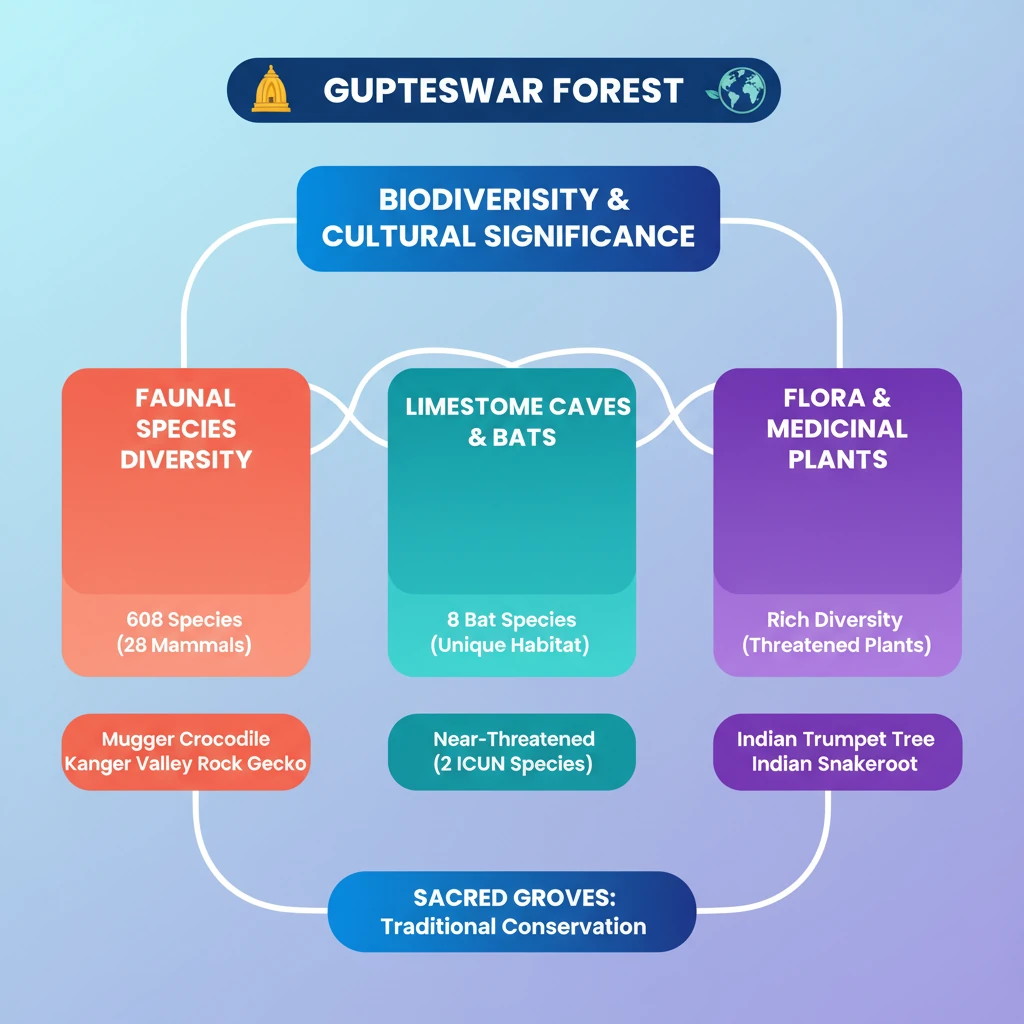
<h4>Overview and Cultural Significance</h4><p>The <strong>Gupteswar Forest</strong> spans a demarcated area of approximately <strong>350 hectares</strong>. This forest holds immense <strong>cultural significance</strong>, primarily due to its numerous <strong>sacred groves</strong>. These groves are traditionally revered and protected by the local community, highlighting a deep connection between culture and conservation.</p><h4>Remarkable Faunal Diversity</h4><p>The forest is a vibrant ecosystem, boasting a remarkable diversity of <strong>flora and fauna</strong>. It serves as a habitat for at least <strong>608 faunal species</strong>. Among these, a significant number, specifically <strong>28 species</strong>, are <strong>mammals</strong>, contributing to the rich biodiversity of the region.</p><div class='info-box'><p><strong>Gupteswar Forest Key Data:</strong></p><ul><li><strong>Area:</strong> 350 hectares</li><li><strong>Total Faunal Species:</strong> 608</li><li><strong>Mammal Species:</strong> 28</li></ul></div><h4>Significant Faunal Species Identified</h4><p>Several notable faunal species have been documented within the <strong>Gupteswar Forest</strong>, underscoring its ecological importance. These include a diverse range of reptiles and birds.</p><ul><li><strong>Reptiles:</strong> The <strong>mugger crocodile</strong> and the unique <strong>Kanger Valley Rock Gecko</strong>.</li><li><strong>Amphibians:</strong> The <strong>Sacred Grove Bush Frog</strong>, a species indicative of healthy sacred grove ecosystems.</li><li><strong>Avifauna (Birds):</strong> A variety of birds such as <strong>Naktibana</strong>, <strong>Jerdon’s Baza</strong>, <strong>Malabar Trogon</strong>, <strong>Common Hill Myna</strong>, <strong>White-bellied Woodpecker</strong>, and <strong>Banded Bay Cuckoo</strong>.</li></ul><h4>Unique Cave Ecosystem and Bat Species</h4><p>The <strong>limestone caves</strong> within the <strong>Gupteswar Forest</strong> provide a specialized habitat for various bat species. These caves are home to <strong>eight species of bats</strong>, two of which are of particular conservation concern.</p><div class='key-point-box'><p><strong>Near-Threatened Bat Species:</strong></p><ul><li><strong>Hiposideros galeritus</strong></li><li><strong>Rhinolophus rouxii</strong></li></ul><p>Both these species are categorized under the <strong>near-threatened category</strong> by the <strong>IUCN (International Union for Conservation of Nature)</strong>, highlighting the need for their protection.</p></div><h4>Rich Floral Diversity and Threatened Plants</h4><p>Beyond its faunal wealth, the <strong>Gupteswar Forest</strong> also exhibits a rich <strong>floral diversity</strong>. This includes several plant species that are considered threatened, particularly those with medicinal value.</p><p>Among the notable threatened medicinal plants found here are the <strong>Indian trumpet tree</strong> and <strong>Indian snakeroot</strong>. The presence of such species further emphasizes the forest's ecological importance and its potential as a reservoir for valuable botanical resources.</p><div class='exam-tip-box'><p><strong>UPSC Insight:</strong> When studying specific forest ecosystems like <strong>Gupteswar</strong>, remember to note not just the species count but also the presence of <strong>endemic</strong>, <strong>endangered</strong>, or <strong>near-threatened species</strong>, and the role of <strong>traditional conservation practices</strong> like <strong>sacred groves</strong>. These points are crucial for both Prelims and Mains answers in <strong>GS-III Environment</strong>.</p></div>
💡 Key Takeaways
- •Gupteswar Forest covers 350 hectares, rich in biodiversity and cultural significance due to sacred groves.
- •It hosts 608 faunal species, including 28 mammals, and notable species like mugger crocodile and Kanger Valley Rock Gecko.
- •Limestone caves are home to 8 bat species; Hiposideros galeritus and Rhinolophus rouxii are near-threatened (IUCN).
- •Forest boasts rich floral diversity, including threatened medicinal plants like Indian trumpet tree and Indian snakeroot.
- •Sacred groves highlight the importance of traditional community-led conservation practices.
- •Represents a critical area for biodiversity protection and cultural heritage in India.
🧠 Memory Techniques

95% Verified Content
📚 Reference Sources
•IUCN Red List (for Hiposideros galeritus and Rhinolophus rouxii status)