Bhitarkanika National Park: Key Fauna & Nesting Sites - Environment And Ecology | UPSC Learning
Topics
0 topics • 0 completed
🔍
No topics match your search
Bhitarkanika National Park: Key Fauna & Nesting Sites
Medium⏱️ 6 min read
environment and ecology
📖 Introduction
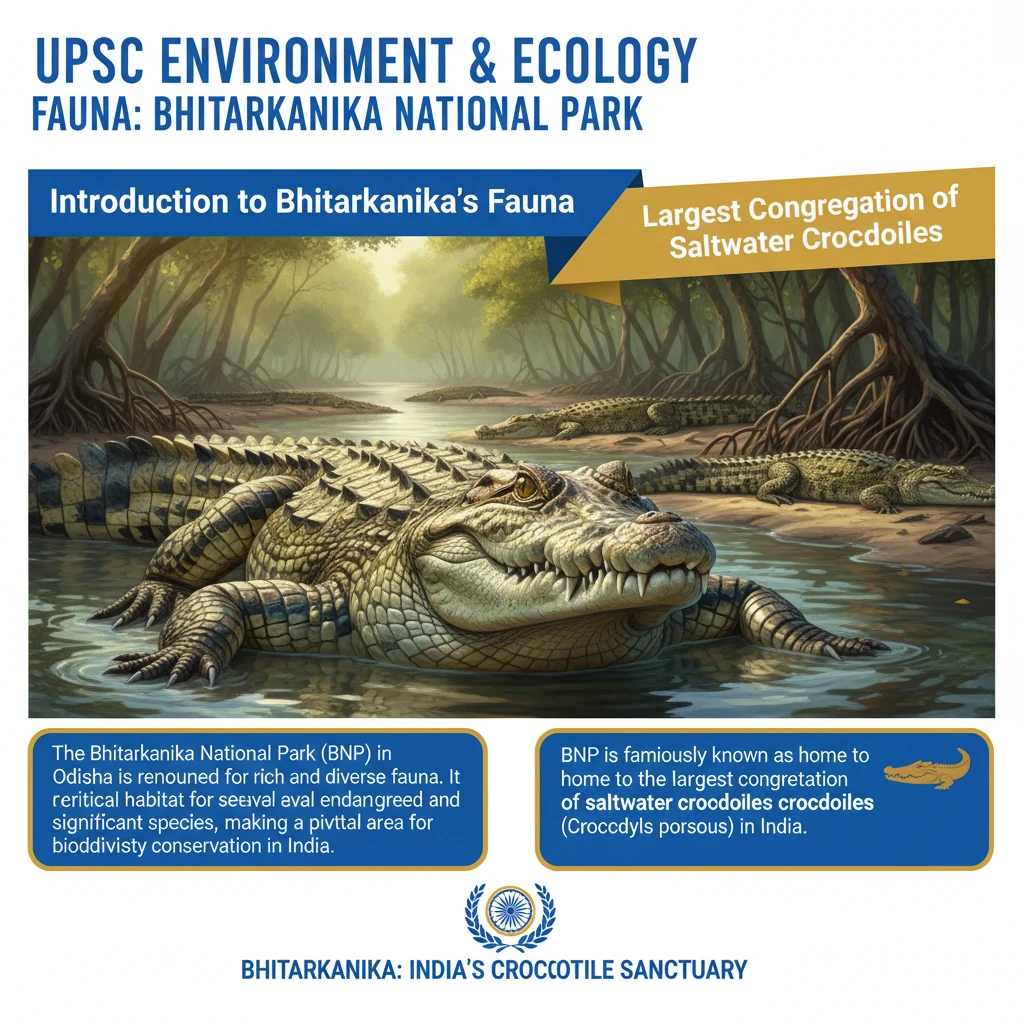
<h4>Introduction to Bhitarkanika's Fauna</h4><p>The <strong>Bhitarkanika National Park (BNP)</strong> in Odisha is renowned for its rich and diverse fauna. It represents a critical habitat for several endangered and significant species, making it a pivotal area for biodiversity conservation in India.</p><h4>Largest Congregation of Saltwater Crocodiles</h4><p>BNP is famously known as home to the <strong>largest congregation of saltwater crocodiles (<em>Crocodylus porosus</em>)</strong> in India. This makes it a prime location for studying and conserving these apex predators.</p><div class='info-box'><p><strong>Saltwater Crocodiles:</strong> These are the largest living reptiles and are found in coastal brackish waters and estuaries. Bhitarkanika's extensive mangrove ecosystem provides an ideal habitat for their breeding and survival.</p></div><h4>Other Notable Species</h4><p>Beyond the crocodiles, Bhitarkanika's ecosystem supports a variety of other fascinating wildlife. These species contribute to the park's rich biodiversity and ecological balance.</p><ul><li><strong>Water Monitor Lizards:</strong> Large, semi-aquatic lizards found in various habitats, including mangrove forests.</li><li><strong>Pythons:</strong> Non-venomous constrictor snakes, often found in dense vegetation.</li><li><strong>Hyenas:</strong> Scavenging carnivores, though their presence in a coastal mangrove ecosystem might refer to specific species adapted to the region's periphery.</li></ul><h4>Gahirmatha Beach: Olive Ridley Sea Turtle Nesting Site</h4><p><strong>Gahirmatha Beach</strong>, located within the <strong>Bhitarkanika National Park</strong>, holds immense ecological significance. It is globally recognized as the <strong>largest nesting site for Olive Ridley Sea Turtles (<em>Lepidochelys olivacea</em>)</strong>.</p><div class='key-point-box'><p><strong>Mass Nesting (Arribada):</strong> Every year, millions of female Olive Ridley turtles arrive at Gahirmatha Beach for mass nesting, a phenomenon known as 'Arribada'. This spectacle is crucial for the species' survival.</p></div><div class='exam-tip-box'><p><strong>UPSC Insight:</strong> Questions on <strong>Gahirmatha Beach</strong> and <strong>Olive Ridley Sea Turtles</strong> are frequent in <strong>UPSC Prelims</strong>, often focusing on their conservation status, location, and unique nesting behavior. It's vital to know about the challenges faced by these turtles.</p></div><h4>Bagagahana (Herony): An Avian Spectacle</h4><p>Near the <strong>Surajpore creek</strong> within the park, an area known as <strong>Bagagahana (Herony)</strong> becomes a vibrant hub for thousands of birds. This site offers a breathtaking natural spectacle.</p><div class='info-box'><p><strong>Avian Activity:</strong> Thousands of birds congregate here to nest and perform intricate aerial acrobatics, particularly before mating. This creates an impressive and noisy display of avian life.</p></div><p>This 'herony' is a testament to the rich avian diversity supported by the mangrove ecosystem, providing safe breeding grounds away from predators.</p>
💡 Key Takeaways
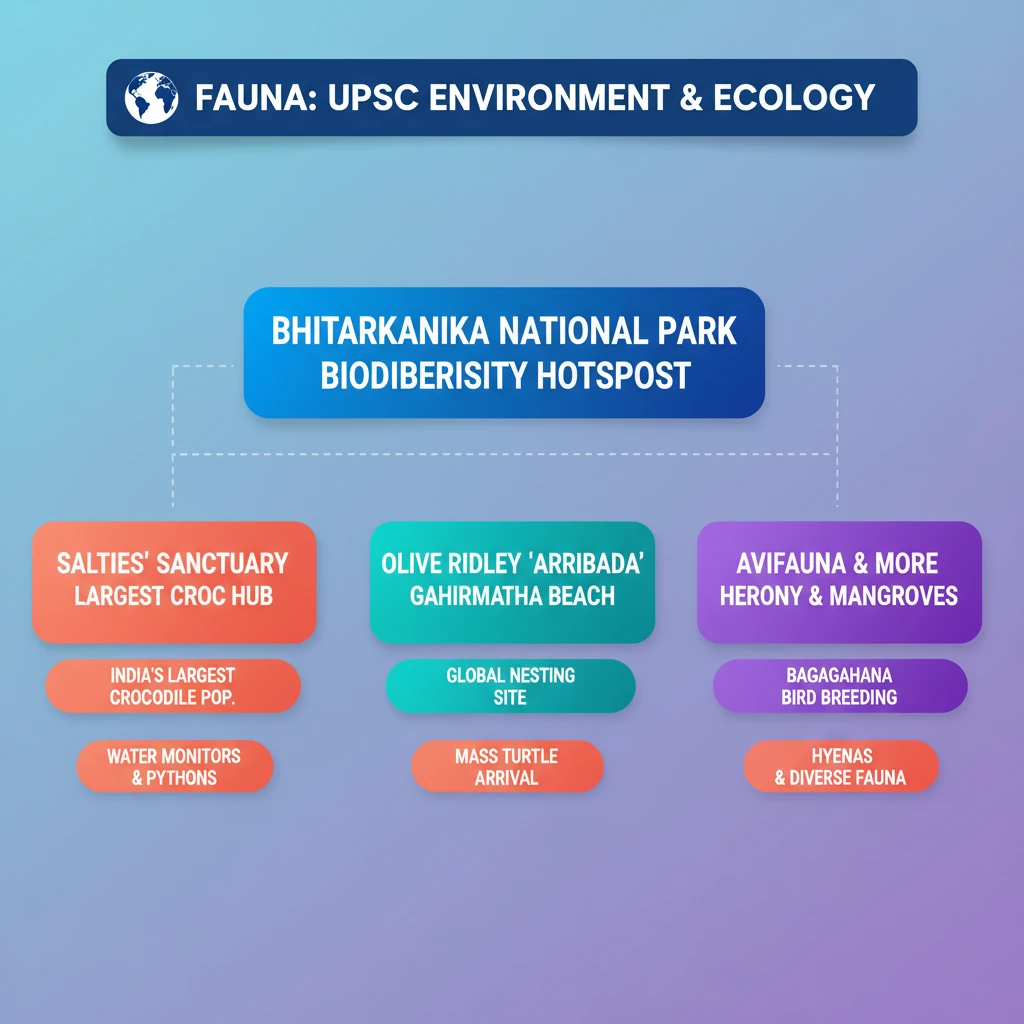
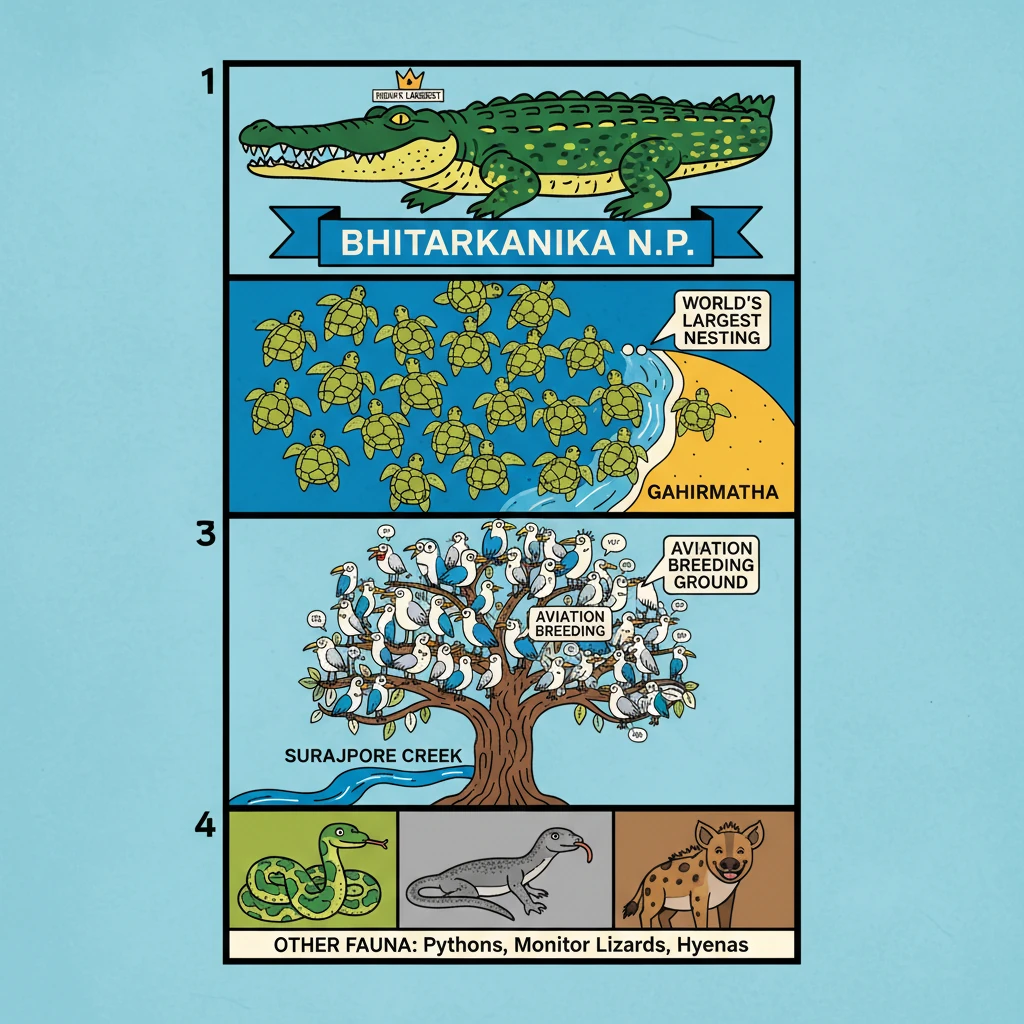
- •Bhitarkanika National Park is home to India's largest congregation of saltwater crocodiles.
- •Gahirmatha Beach within BNP is the world's largest nesting site for Olive Ridley Sea Turtles, famous for 'Arribada'.
- •Bagagahana (Herony) near Surajpore creek is a significant avian breeding ground.
- •Other notable fauna include water monitor lizards, pythons, and hyenas.
- •The park's diverse fauna highlights the importance of mangrove ecosystems and coastal biodiversity conservation.
🧠 Memory Techniques
95% Verified Content
📚 Reference Sources
•Bhitarkanika National Park official information (general knowledge)
•IUCN Red List for species conservation status