Critical Threats Facing the Aravallis - Environment And Ecology | UPSC Learning
Topics
0 topics • 0 completed
🔍
No topics match your search
Critical Threats Facing the Aravallis
Medium⏱️ 8 min read
environment and ecology
📖 Introduction
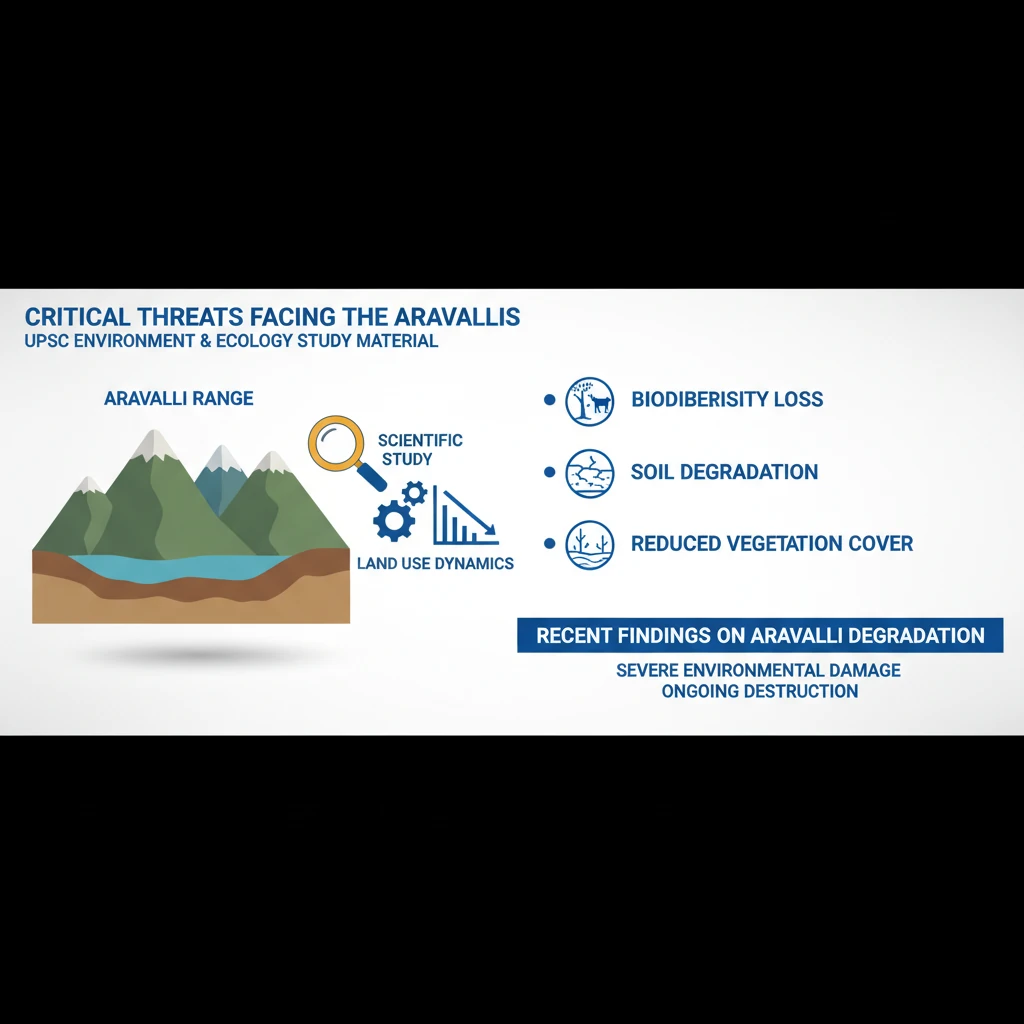
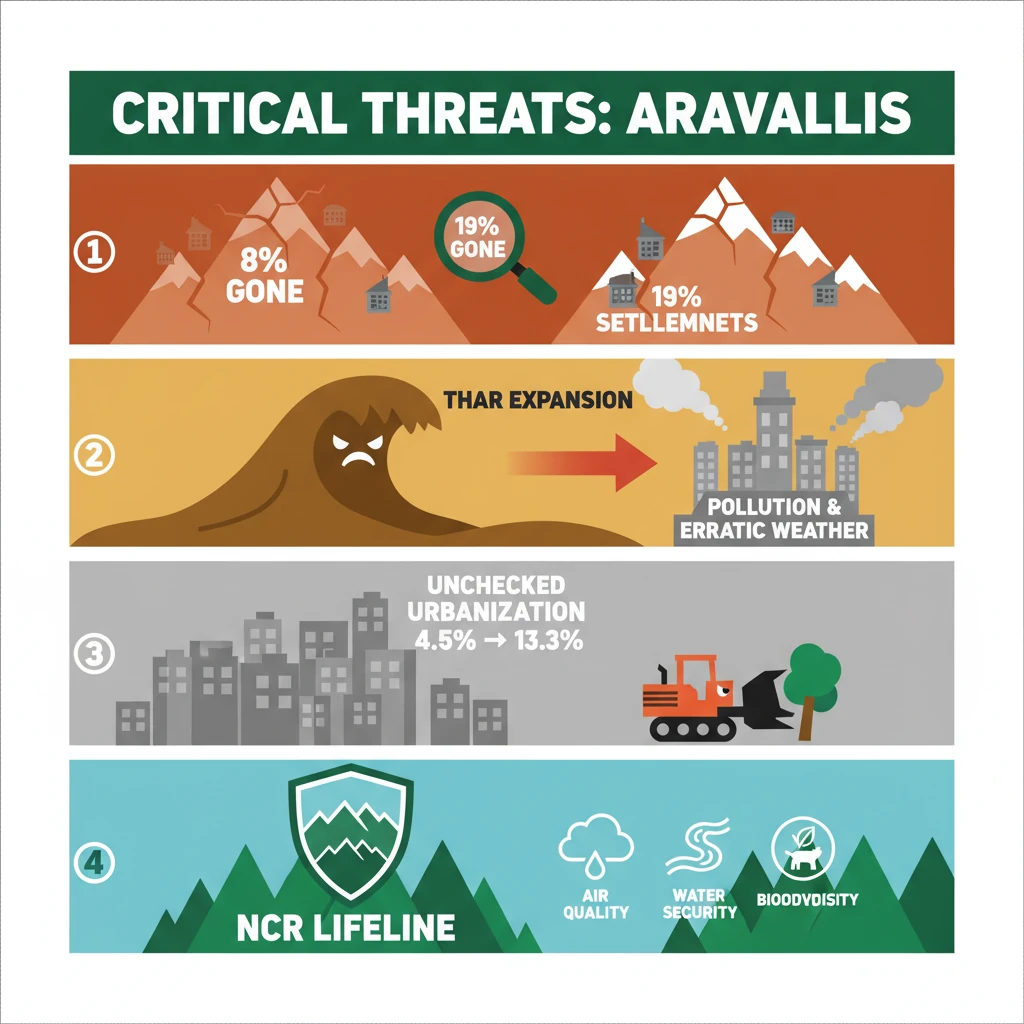
<h4>Recent Findings on Aravalli Degradation</h4><p>A recent <strong>scientific study</strong> on <strong>land use dynamics</strong> in the <strong>Aravallis</strong> has brought to light the severe threats facing this ancient mountain range. The study highlights significant environmental damage.</p><p>The ongoing destruction has led to considerable <strong>biodiversity loss</strong>, widespread <strong>soil degradation</strong>, and a marked reduction in <strong>vegetation cover</strong> across the region.</p><div class='exam-tip-box'><p><strong>UPSC Prelims/Mains:</strong> Understanding such studies is crucial for questions on <strong>environmental degradation</strong>, <strong>biodiversity conservation</strong>, and <strong>sustainable development</strong> in India.</p></div><h4>Quantifying the Decline of the Aravallis</h4><p>The study provides stark figures illustrating the physical disappearance of the Aravalli hills between <strong>1975</strong> and <strong>2019</strong>. This period saw substantial changes in the landscape.</p><div class='info-box'><ul><li><strong>8%</strong> (approximately <strong>5,772.7 sq km</strong>) of the entire <strong>Aravalli range</strong> has completely vanished.</li><li>Much of this lost area has transformed from rock to barren land.</li><li>An additional <strong>19%</strong> of the range has been converted into <strong>human settlements</strong>.</li></ul></div><p>This rapid transformation underscores the intense anthropogenic pressure on the fragile ecosystem of the Aravallis.</p><h4>Rising Desertification Risk</h4><p>The degradation of the <strong>Aravallis</strong> poses a critical threat, particularly concerning the expansion of the <strong>Thar Desert</strong>. The mountain range acts as a natural barrier against desertification.</p><p>With the weakening of this natural barrier, the <strong>Thar Desert</strong> is increasingly expanding towards the <strong>National Capital Region (NCR)</strong>. This has severe environmental consequences.</p><div class='key-point-box'><p>The expansion exacerbates existing problems such as <strong>air pollution</strong>, accelerates <strong>desertification processes</strong>, and contributes to more <strong>erratic weather patterns</strong> in the region.</p></div><h4>Primary Cause: Unchecked Urbanization</h4><p>One of the most significant drivers of <strong>Aravalli degradation</strong> is the relentless surge in <strong>urbanization</strong>. The demand for land and resources from growing cities is immense.</p><div class='info-box'><ul><li>In <strong>1975</strong>, <strong>settlements</strong> accounted for only <strong>4.5%</strong> of the Aravalli region.</li><li>By <strong>2019</strong>, this figure dramatically increased to <strong>13.3%</strong>.</li></ul></div><p>This substantial increase is primarily driven by <strong>unchecked urban expansion</strong>, leading to encroachment, construction, and resource extraction within the ecologically sensitive Aravalli range.</p>
💡 Key Takeaways
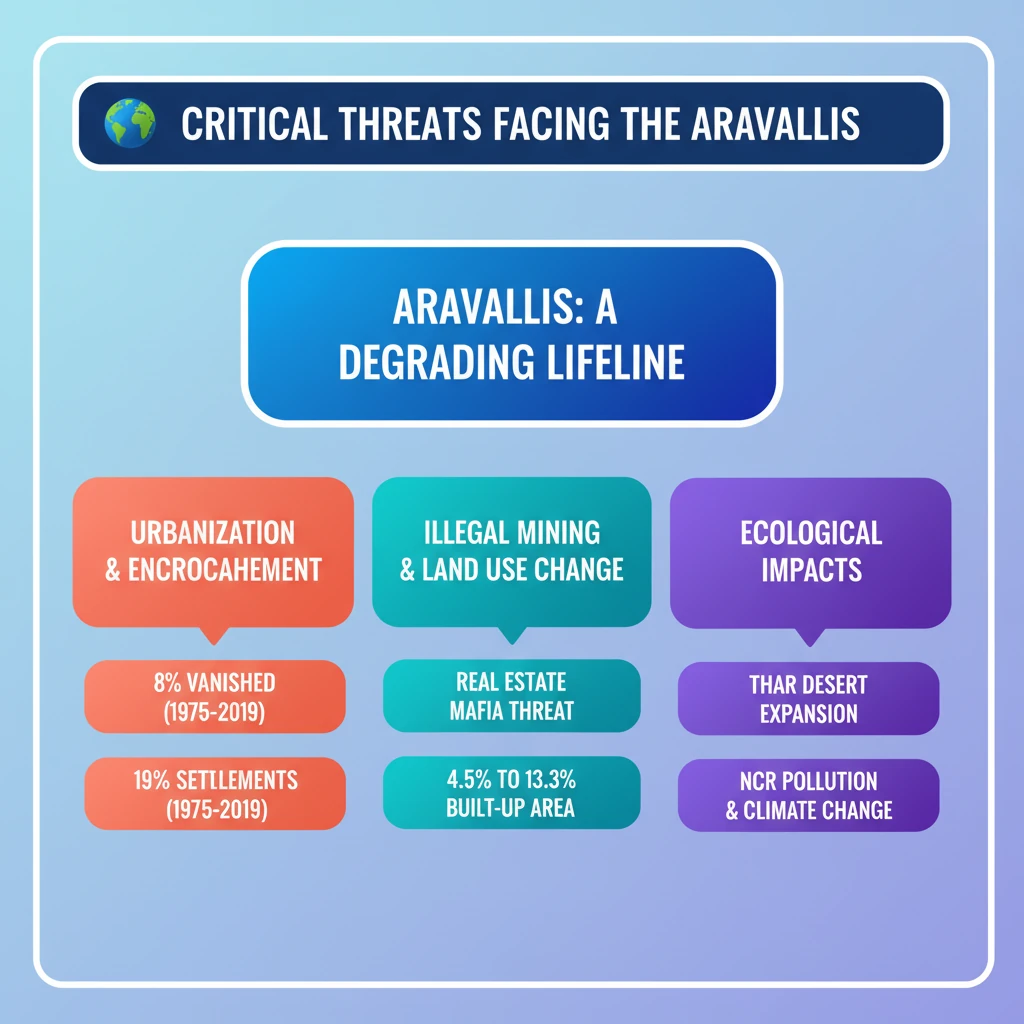
- •Aravallis are rapidly degrading: 8% vanished, 19% converted to settlements (1975-2019).
- •Degradation accelerates Thar Desert expansion towards NCR, worsening pollution and erratic weather.
- •Unchecked urbanization (settlements up from 4.5% to 13.3%) is a primary cause.
- •Aravallis are critical for NCR's air quality, water security, and biodiversity.
- •Illegal mining and real estate encroachment are major threats to this ancient mountain range.
🧠 Memory Techniques
95% Verified Content
📚 Reference Sources
•Scientific studies on Aravalli land use dynamics (general reference)
•Government reports on environmental degradation
•Environmental Protection Agency data
•Academic research papers on desertification