Himalayan Magpies - Environment And Ecology | UPSC Learning
Topics
0 topics • 0 completed
🔍
No topics match your search
Himalayan Magpies
Medium⏱️ 6 min read
environment and ecology
📖 Introduction
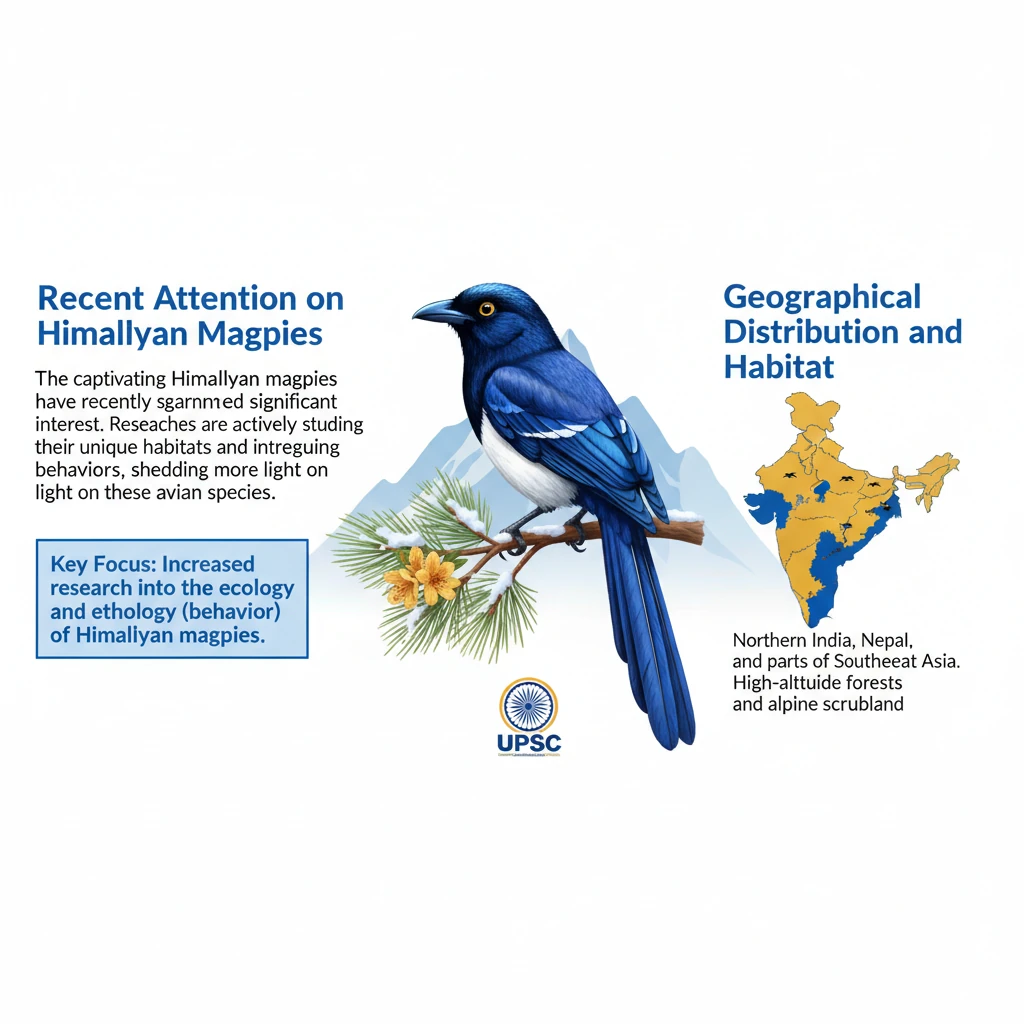
<h4>Recent Attention on Himalayan Magpies</h4><p>The captivating <strong>Himalayan magpies</strong> have recently garnered significant interest. Researchers are actively studying their unique <strong>habitats</strong> and intriguing <strong>behaviours</strong>, shedding more light on these avian species.</p><div class='info-box'><p><strong>Key Focus:</strong> Increased research into the ecology and ethology (behaviour) of Himalayan magpies.</p></div><h4>Geographical Distribution and Habitat</h4><p>These enchanting birds are prominent inhabitants of the majestic <strong>mountainous landscapes</strong> of the <strong>Himalayan region</strong>. Their distribution spans a vast area, extending from <strong>Kashmir</strong> in the west to <strong>Myanmar</strong> in the east.</p><p>They are known to add vibrant colours and sounds, contributing significantly to the biodiversity of these high-altitude ecosystems.</p><div class='key-point-box'><p><strong>Habitat Range:</strong> From <strong>Kashmir</strong> across the Himalayas to <strong>Myanmar</strong>.</p></div><div class='exam-tip-box'><p><strong>UPSC Insight:</strong> Questions on <strong>biodiversity hotspots</strong> often include specific species. Understanding the distribution and ecological role of indicator species like the <strong>Himalayan magpie</strong> can be crucial for Environment & Ecology papers (<strong>GS-III</strong>).</p></div>
💡 Key Takeaways
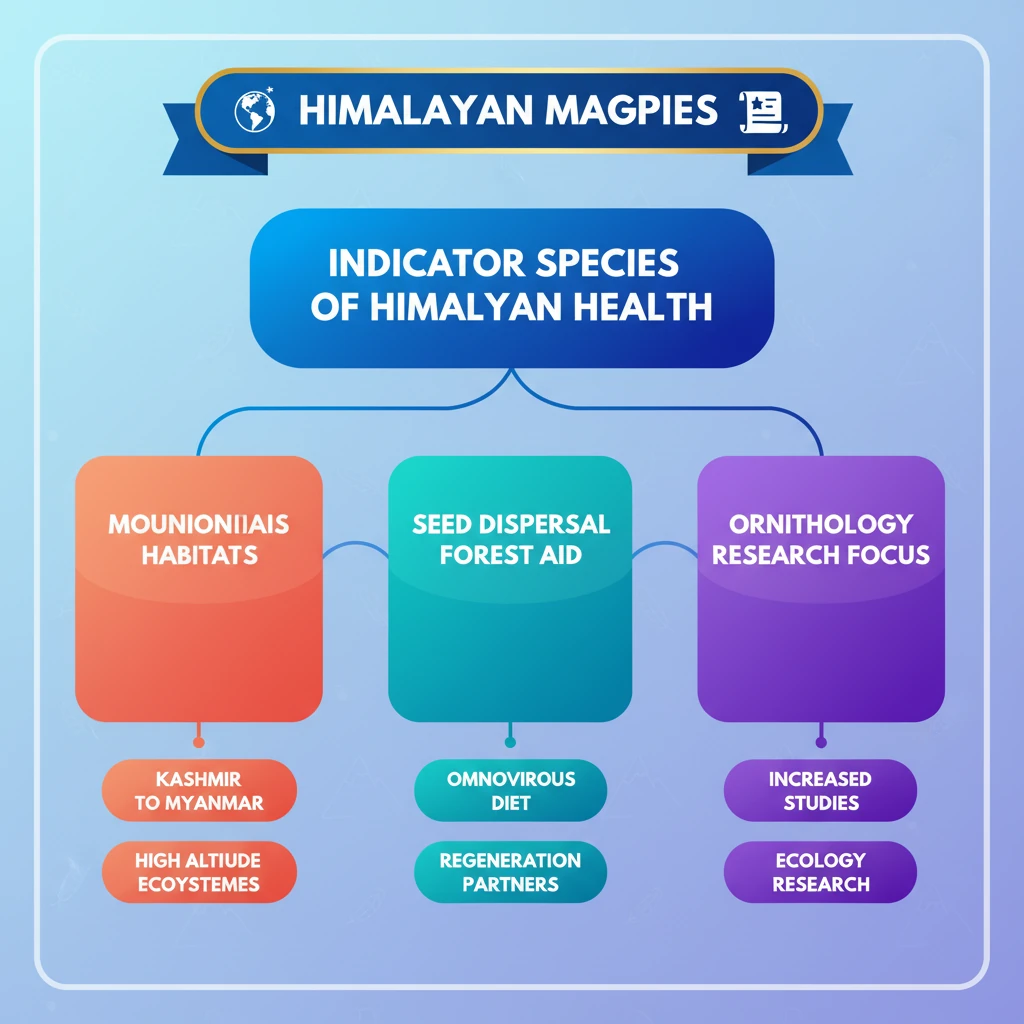
- •Himalayan magpies are captivating birds recently under increased research focus.
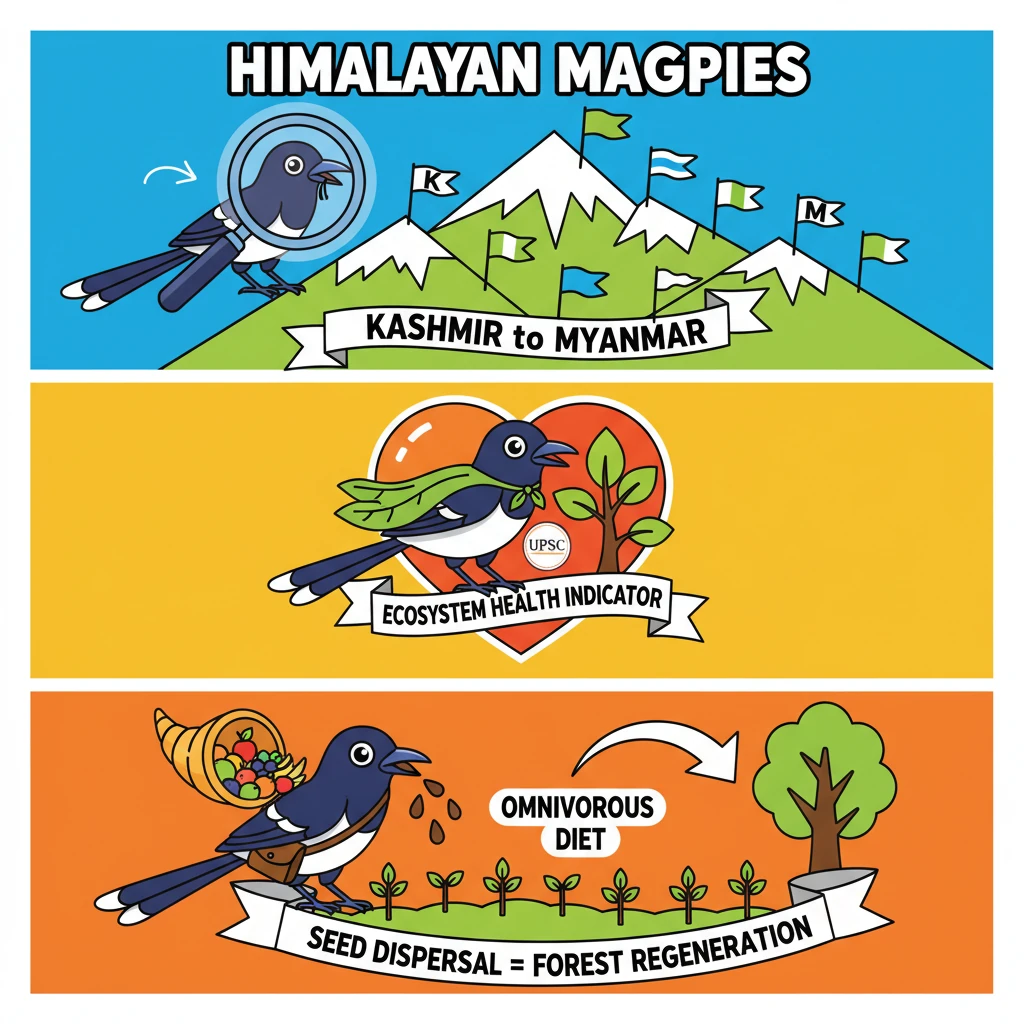
- •They inhabit mountainous landscapes from Kashmir to Myanmar.
- •They are important indicator species for Himalayan ecosystem health.
- •Their omnivorous diet includes seed dispersal, aiding forest regeneration.
- •Historical ornithological studies laid the groundwork for current research.
🧠 Memory Techniques
90% Verified Content
📚 Reference Sources
•BirdLife International Species Factsheets (General Avian Ecology)
•Journal of Himalayan Ecology and Conservation (General Himalayan Ecosystems)
•IUCN Red List (for general conservation status of similar species)