What are the Key Facts About Gentoo Penguins? - Environment And Ecology | UPSC Learning
Topics
0 topics • 0 completed
🔍
No topics match your search
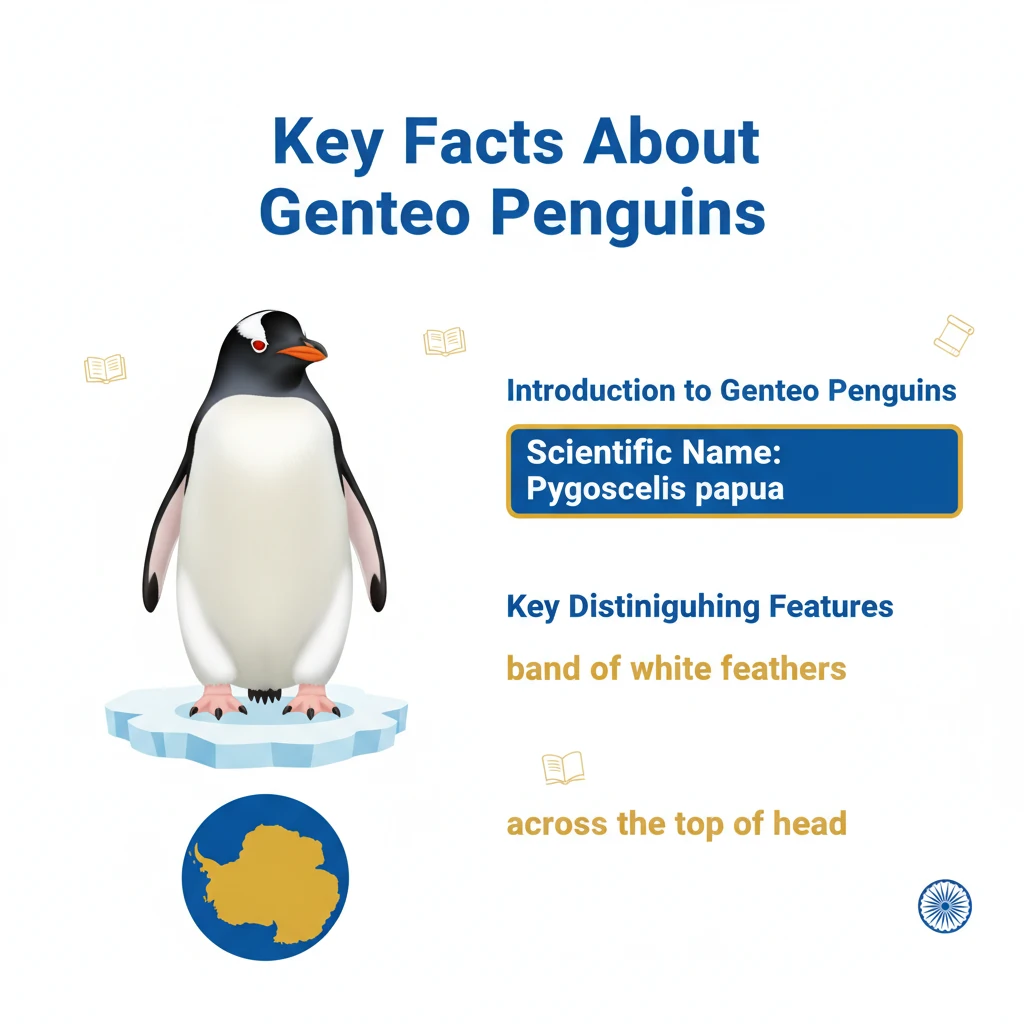
What are the Key Facts About Gentoo Penguins?
Medium⏱️ 6 min read
environment and ecology
📖 Introduction
<h4>Introduction to Gentoo Penguins</h4><p>The <strong>Gentoo Penguin</strong> (scientific name: <strong>Pygoscelis papua</strong>) is a distinctive species known for its unique appearance and specific habitat preferences.</p><div class='info-box'><p><strong>Scientific Name:</strong> <strong>Pygoscelis papua</strong></p></div><h4>Key Distinguishing Features</h4><p>These penguins are easily recognized by a prominent <strong>band of white feathers</strong>.</p><p>This band extends across the top of their head, originating just above each eye.</p><div class='info-box'><ul><li><strong>Throat:</strong> <strong>Black</strong></li><li><strong>Tail:</strong> A large <strong>brush tail</strong>, notably larger than other penguin species.</li><li><strong>Bill:</strong> Primarily <strong>deep orange or red</strong> in color.</li></ul></div><h4>Geographical Distribution</h4><p><strong>Gentoo Penguins</strong> are exclusively found in the <strong>Southern Hemisphere</strong>.</p><p>Their primary range includes the <strong>Antarctic Peninsula</strong> and numerous <strong>sub-Antarctic islands</strong>.</p><div class='key-point-box'><p>A significant concentration of <strong>Gentoo Penguins</strong> is observed in the <strong>Falkland Islands</strong>, located in the <strong>South Atlantic Ocean</strong>.</p></div><h4>Preferred Habitat</h4><p>These penguins typically establish their colonies along <strong>shorelines</strong>.</p><p>This strategic positioning provides them with quick and efficient access to essential <strong>food sources</strong>.</p><p>Staying close to their nests also facilitates effective <strong>foraging</strong> and successful <strong>nesting activities</strong>.</p><h4>Major Threats to Survival</h4><p><strong>Gentoo Penguins</strong> face various threats, both natural and anthropogenic.</p><div class='info-box'><p><strong>Natural Predators:</strong></p><ul><li><strong>South American sea lions</strong></li><li><strong>Weddell seals</strong></li><li><strong>Leopard seals</strong></li><li><strong>Killer whales</strong></li><li><strong>Skuas</strong></li><li><strong>Sheathbills</strong></li><li><strong>Caracaras</strong></li><li><strong>Giant fulmars</strong></li></ul></div><div class='info-box'><p><strong>Human Impact (Historical):</strong></p><ul><li><strong>Egg collection</strong> for supplementation.</li><li><strong>Harvesting of skins</strong> and <strong>blubber</strong>.</li></ul></div><div class='exam-tip-box'><p>Understanding the specific threats to species like the <strong>Gentoo Penguin</strong> is crucial for questions on <strong>biodiversity conservation</strong> and <strong>environmental protection</strong> in <strong>UPSC GS Paper III</strong>.</p></div>
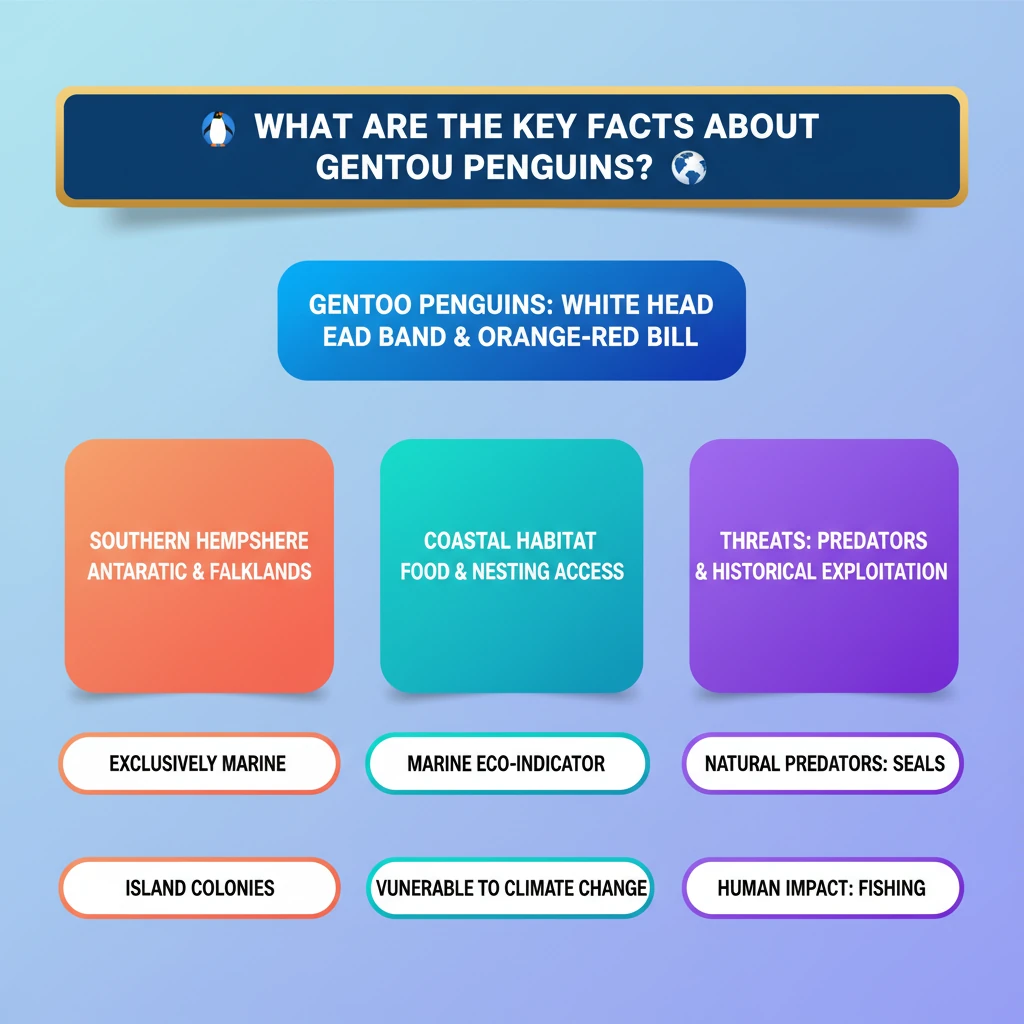
💡 Key Takeaways
- •Gentoo Penguins (Pygoscelis papua) are identified by a white head band and orange-red bill.
- •Exclusively found in the Southern Hemisphere, concentrated in the Antarctic Peninsula and Falkland Islands.
- •Habitat along shorelines ensures access to food and nesting sites.
- •Threatened by natural predators (seals, killer whales, skuas) and historical human exploitation (egg/blubber harvesting).
- •Serve as indicators of marine ecosystem health, vulnerable to climate change and fishing pressures.
🧠 Memory Techniques
95% Verified Content
📚 Reference Sources
•General knowledge of penguin biology and Antarctic ecology