Great Barrier Reef (GBR) - Environment And Ecology | UPSC Learning
Topics
0 topics • 0 completed
🔍
No topics match your search
Great Barrier Reef (GBR)
Medium⏱️ 7 min read
environment and ecology
📖 Introduction
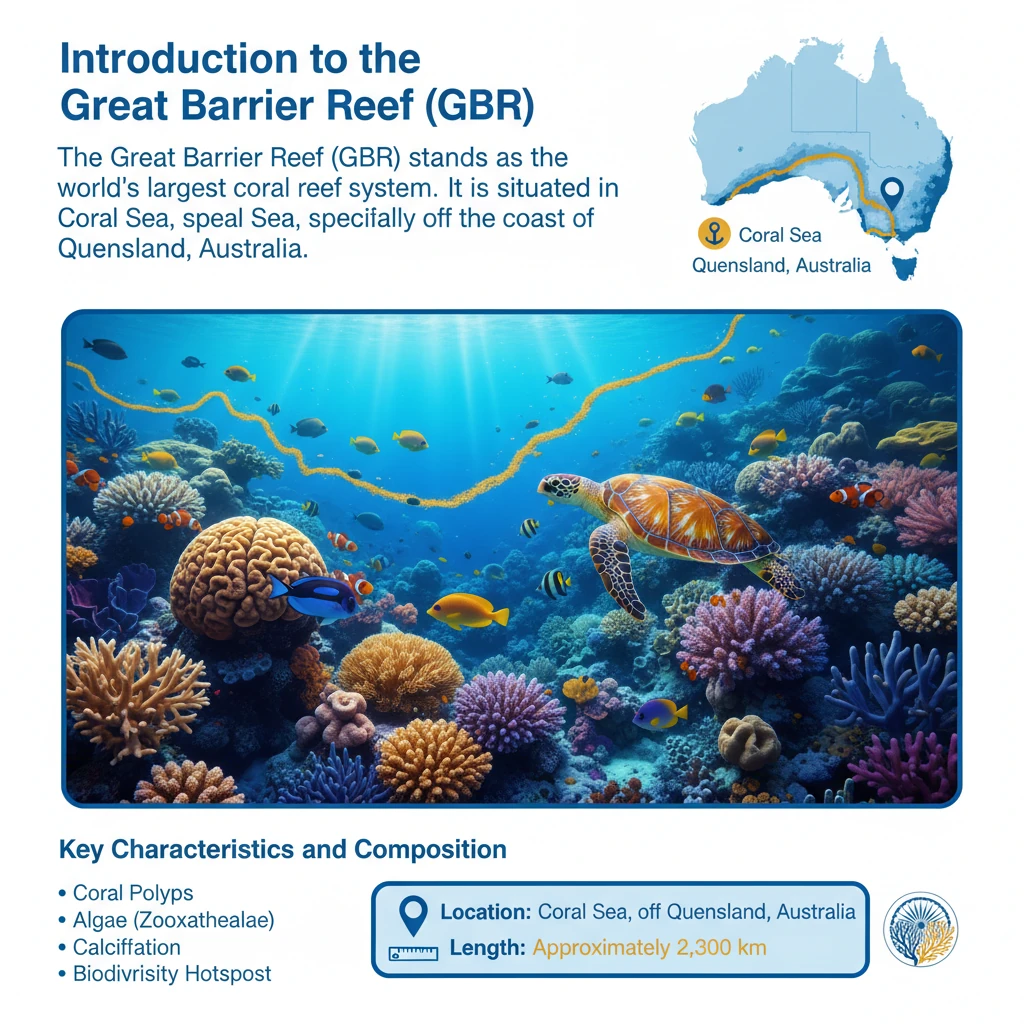
<h4>Introduction to the Great Barrier Reef (GBR)</h4><p>The <strong>Great Barrier Reef (GBR)</strong> stands as the <strong>world's largest coral reef system</strong>. It is situated in the <strong>Coral Sea</strong>, specifically off the coast of <strong>Queensland, Australia</strong>.</p><div class='info-box'><p>📍 <strong>Location:</strong> Coral Sea, off Queensland, Australia</p><p>📏 <strong>Length:</strong> Approximately <strong>2,300 km</strong></p></div><h4>Key Characteristics and Composition</h4><p>This immense natural wonder is not a single entity but a complex network. It comprises around <strong>3,000 individual reefs</strong> and features approximately <strong>900 islands</strong> scattered across its vast expanse.</p><h4>Rich Biodiversity of the GBR</h4><p>The <strong>GBR</strong> is renowned for its incredible biodiversity, supporting a wide array of marine life. It is home to a remarkable diversity of coral species and numerous fish species.</p><ul><li><strong>Coral Species:</strong> Over <strong>400 types</strong> of coral thrive within the reef system.</li><li><strong>Fish Species:</strong> Approximately <strong>1,500 species</strong> of fish inhabit these waters.</li><li><strong>Endangered Species:</strong> Critical habitat for endangered animals such as the <strong>dugong</strong> and the <strong>large green turtle</strong>.</li></ul><h4>UNESCO World Heritage Status</h4><p>Recognizing its outstanding universal value, the <strong>Great Barrier Reef</strong> was designated a <strong>UNESCO World Heritage site</strong>. This inscription underscores its global significance for natural heritage.</p><div class='info-box'><p>📅 <strong>UNESCO Inscription Year:</strong> <strong>1981</strong></p><p>⭐ <strong>Status:</strong> UNESCO World Heritage site</p></div><h4>Persistent Threats and Mass Bleaching Events</h4><p>Despite its protected status, the <strong>GBR</strong> faces severe environmental challenges. The primary threats include <strong>pollution</strong> and the escalating impacts of <strong>warming oceans</strong>, leading to widespread <strong>coral bleaching</strong>.</p><div class='key-point-box'><p><strong>Coral Bleaching:</strong> This phenomenon occurs when corals expel algae (zooxanthellae) living in their tissues, causing them to turn white and often leading to their death if conditions do not improve.</p></div><p>The reef has experienced multiple severe mass bleaching events over the past few decades, indicating the ongoing stress from climate change.</p><div class='info-box'><p>📅 <strong>Major Mass Bleaching Events:</strong></p><ul><li><strong>1998</strong> (First widespread event)</li><li><strong>2002</strong></li><li><strong>2016</strong></li><li><strong>2017</strong></li><li><strong>2020</strong></li><li><strong>2022</strong></li><li><strong>2024</strong> (Most recent event)</li></ul></div><h4>Recent UNESCO Committee Deliberations (2023)</h4><p>In <strong>2023</strong>, the <strong>UNESCO Heritage Committee</strong> reviewed the status of the <strong>GBR</strong>. While they chose not to list it as a site <strong>"in danger"</strong> at that time, they issued a stark warning.</p><div class='exam-tip-box'><p>⚡ <strong>UPSC Insight:</strong> The <strong>2023 UNESCO decision</strong> highlights the delicate balance between conservation efforts and geopolitical considerations. Understanding the reasons for not listing it "in danger" versus the warning of "serious threat" is crucial for Mains answers.</p></div><p>The committee explicitly stated that the world's largest coral reef ecosystem remained under <strong>"serious threat"</strong> from persistent <strong>pollution</strong> and the escalating issue of <strong>warming oceans</strong>.</p>
💡 Key Takeaways
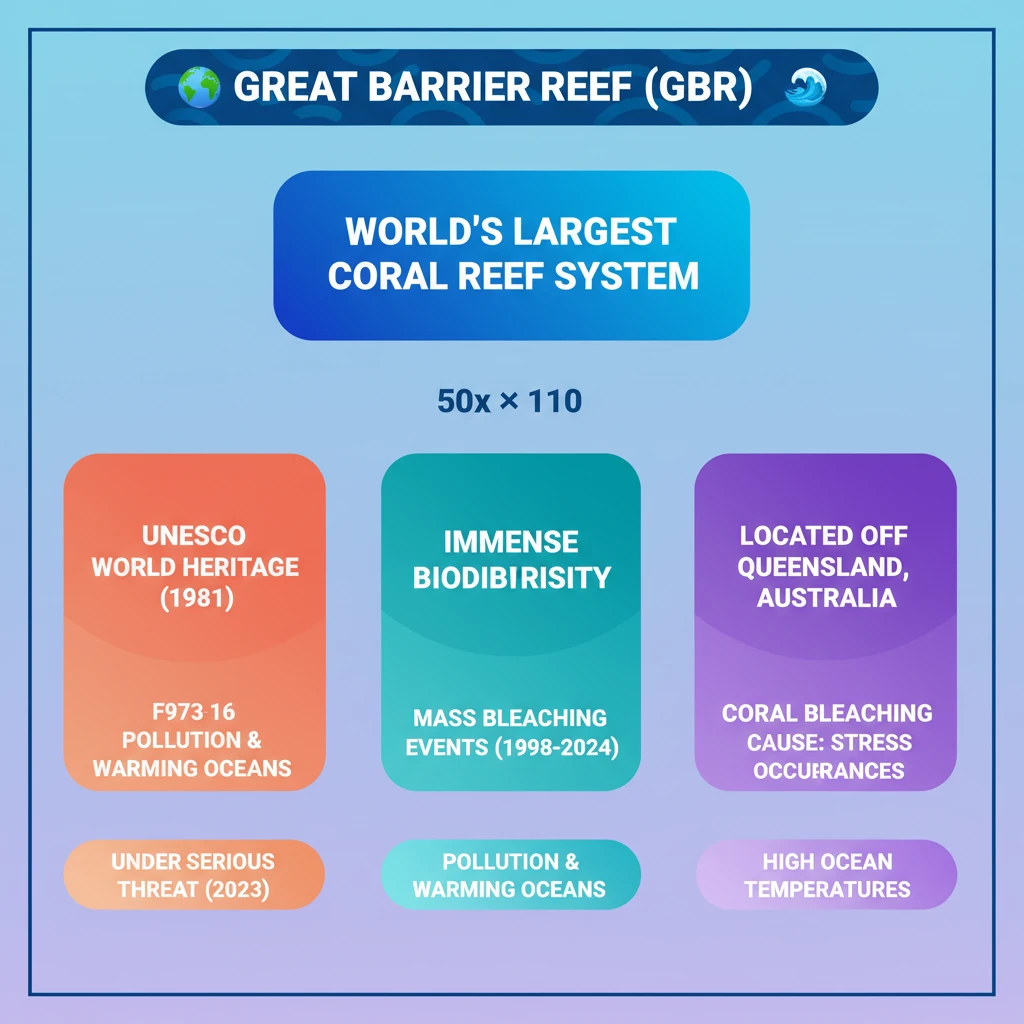
- •GBR is the world's largest coral reef system, located off Queensland, Australia.
- •It's a UNESCO World Heritage site (1981) known for immense biodiversity.
- •Faces "serious threat" from pollution and warming oceans, as warned by UNESCO in 2023.
- •Has experienced multiple widespread mass bleaching events (1998, 2002, 2016, 2017, 2020, 2022, 2024).
- •Coral bleaching is caused by stress, primarily high ocean temperatures, leading to coral death.
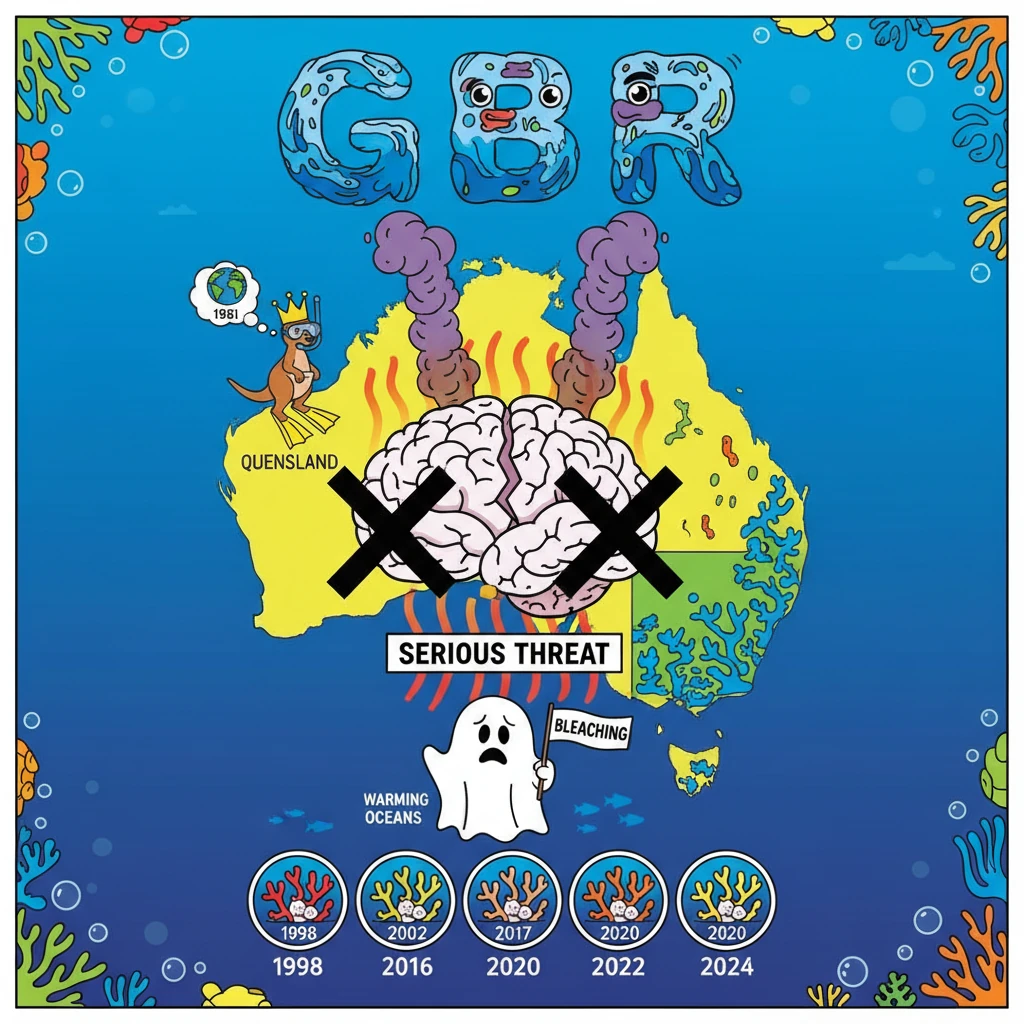
🧠 Memory Techniques
95% Verified Content
📚 Reference Sources
•UNESCO World Heritage Centre website
•Australian Institute of Marine Science (AIMS) reports
•NOAA Coral Reef Watch