Dicliptera Polymorpha - Environment And Ecology | UPSC Learning
Topics
0 topics • 0 completed
🔍
No topics match your search
Dicliptera Polymorpha
Medium⏱️ 7 min read
environment and ecology
📖 Introduction
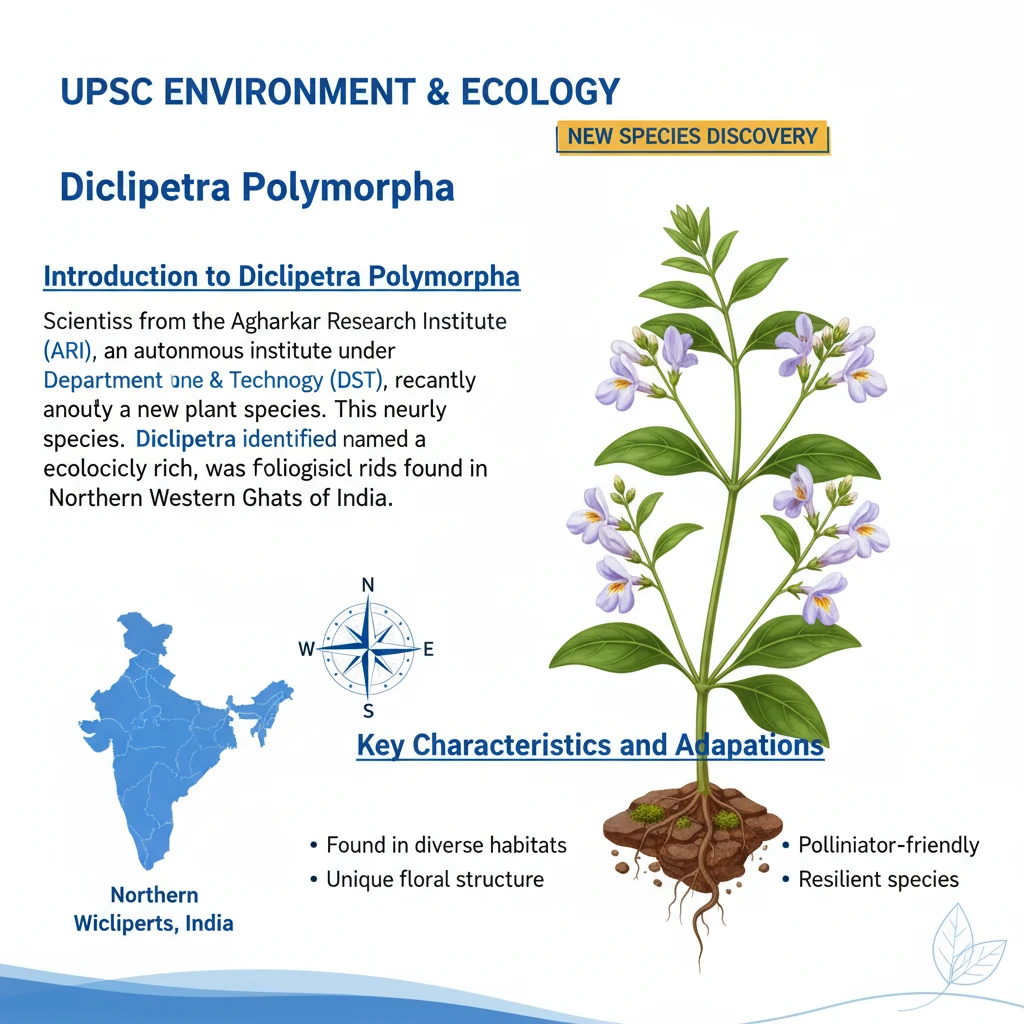
<h4>Introduction to Dicliptera Polymorpha</h4><p>Scientists from the <strong>Agharkar Research Institute (ARI)</strong>, an autonomous institute under the <strong>Department of Science & Technology (DST)</strong>, recently announced the discovery of a new plant species.</p><p>This newly identified species, named <strong>Dicliptera Polymorpha</strong>, was found in the ecologically rich <strong>Northern Western Ghats of India</strong>.</p><h4>Key Characteristics and Adaptations</h4><div class='key-point-box'><p><strong>Dicliptera Polymorpha</strong> exhibits several unique traits, highlighting its remarkable adaptability to challenging environmental conditions.</p></div><ul><li><strong>Fire Resilience:</strong> The species demonstrates an exceptional ability to <strong>survive summer droughts</strong> and <strong>adapt to grassland fires</strong>, a common occurrence in its habitat.</li><li><strong>Dual Blooming Pattern:</strong> It showcases a distinctive <strong>two-phase blooming cycle</strong>. The primary bloom occurs <strong>post-monsoon (November–April)</strong>, followed by a second bloom in <strong>May–June</strong>, specifically after fires.</li><li><strong>Morphological Distinction:</strong> Its <strong>inflorescence flower structures</strong> are uncommon among Indian species of Dicliptera, bearing a striking resemblance to those found in <strong>African species</strong>.</li></ul><h4>Adaptations to Harsh Conditions</h4><p>The plant thrives on <strong>open grassland slopes</strong> within the <strong>Western Ghats</strong>, indicating its preference for specific, often harsh, environmental niches.</p><p>A notable adaptation is its <strong>woody rootstocks</strong>, which are crucial for producing <strong>dwarf flowering shoots</strong> during its second flowering phase, especially after fire events.</p><h4>Threats to Dicliptera Polymorpha</h4><p>Despite its resilience, <strong>Dicliptera Polymorpha</strong> faces significant threats, primarily driven by human activities and habitat degradation.</p><ul><li><strong>Human-Induced Fires:</strong> While fires can trigger its second bloom, <strong>excessive or uncontrolled fires</strong> pose a severe risk, potentially destroying its habitat and hindering regeneration.</li><li><strong>Habitat Overuse:</strong> Practices like <strong>overgrazing</strong> and various <strong>land-use changes</strong> are major contributors to the degradation of grassland biodiversity, directly impacting the species' survival.</li></ul><div class='exam-tip-box'><p>For <strong>UPSC Prelims</strong>, remember the <strong>location of discovery (Northern Western Ghats)</strong>, the <strong>discovering institute (ARI)</strong>, and its <strong>unique traits like fire resilience and dual blooming</strong>. For <strong>Mains</strong>, discuss its significance in the context of <strong>biodiversity conservation</strong> and <strong>climate change adaptation</strong>.</p></div>
💡 Key Takeaways
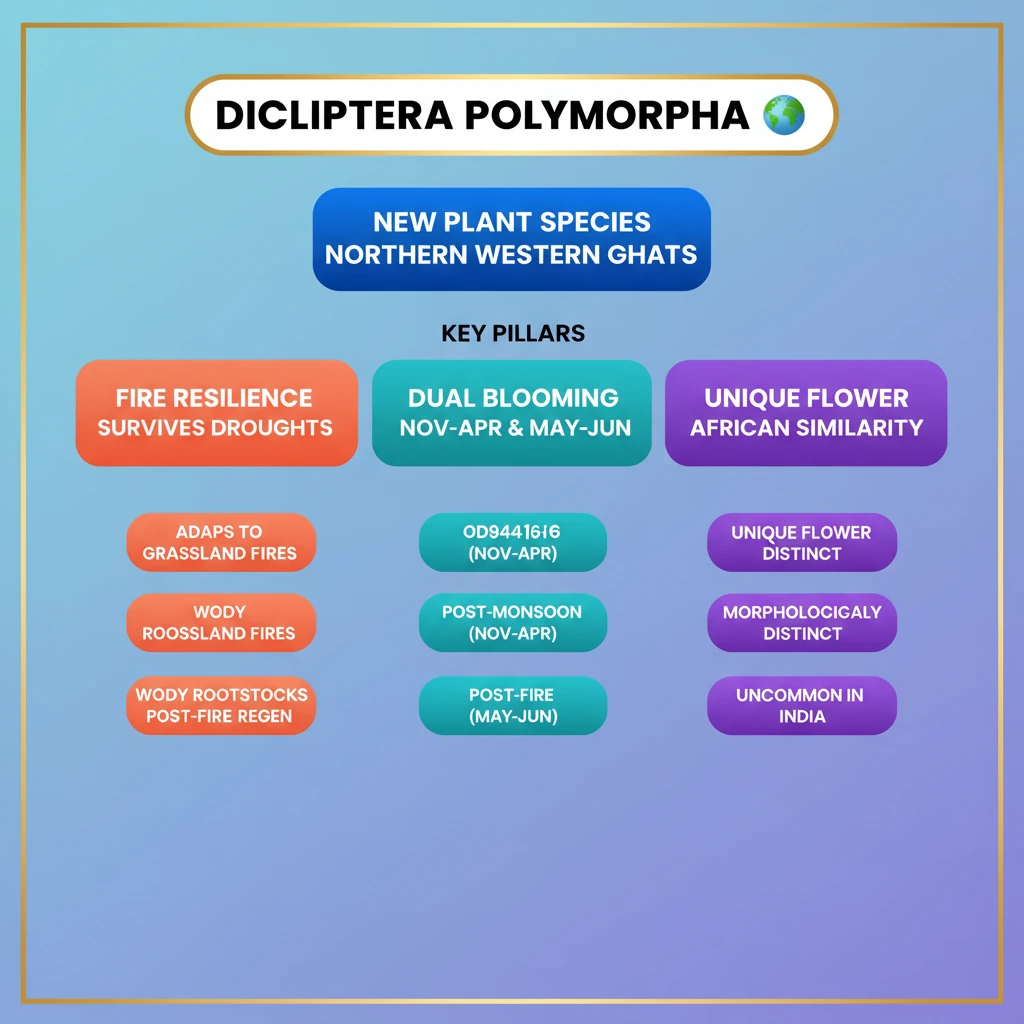
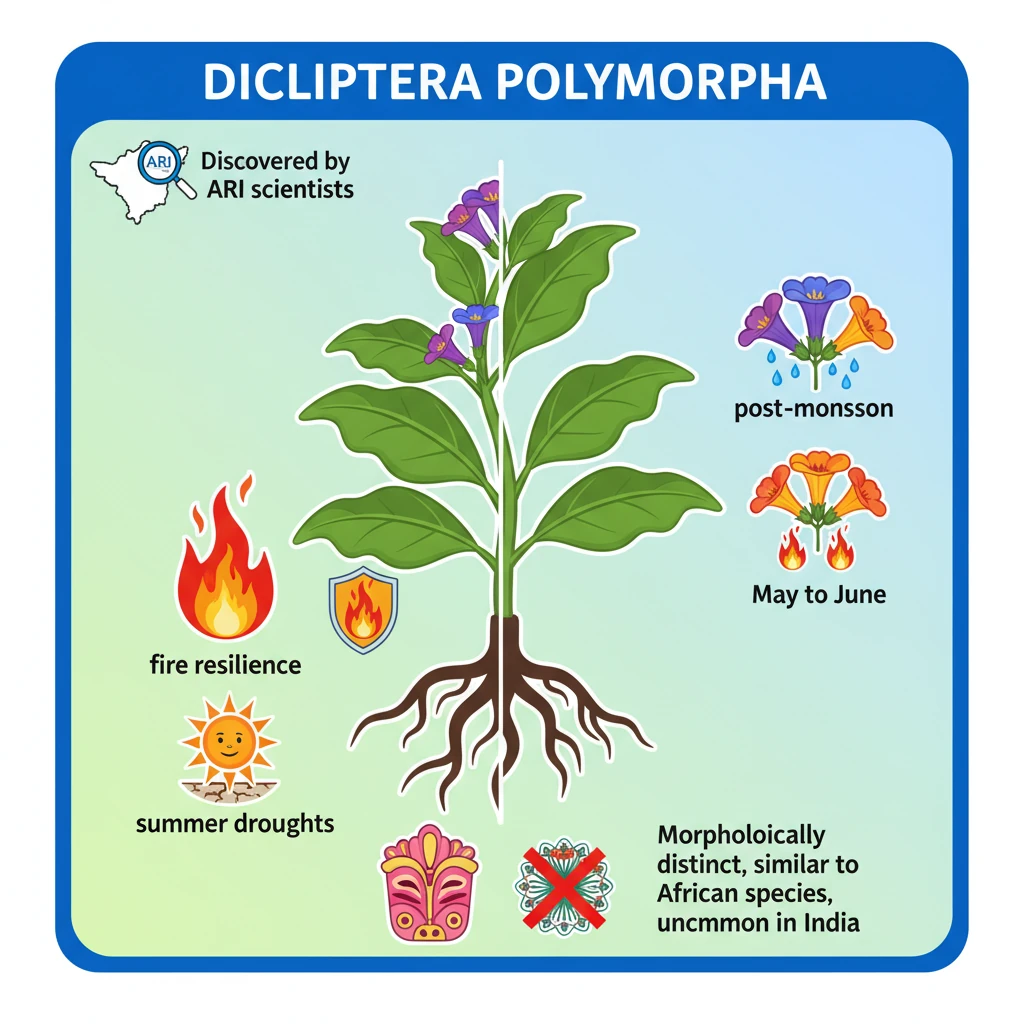
- •Dicliptera Polymorpha, a new plant species, was discovered by ARI scientists in the Northern Western Ghats.
- •It exhibits unique fire resilience, surviving summer droughts and adapting to grassland fires.
- •The species has a dual blooming pattern: post-monsoon (Nov-Apr) and again post-fire (May-Jun).
- •Its inflorescence flower structures are morphologically distinct, similar to African species, uncommon in Indian Dicliptera.
- •It thrives on open grassland slopes, utilizing woody rootstocks for regeneration after fires.
- •Key threats include human-induced fires (if excessive) and habitat overuse (overgrazing, land-use changes).
- •The discovery highlights the rich, yet vulnerable, biodiversity of the Western Ghats and the importance of ongoing scientific research for conservation.
🧠 Memory Techniques
95% Verified Content
📚 Reference Sources
•Agharkar Research Institute (ARI) official announcements (implied)
•Department of Science & Technology (DST) press releases (implied)