What are the Sources of Groundwater Contamination? - Environment And Ecology | UPSC Learning
Topics
0 topics • 0 completed
🔍
No topics match your search
What are the Sources of Groundwater Contamination?
Medium⏱️ 8 min read
environment and ecology
📖 Introduction
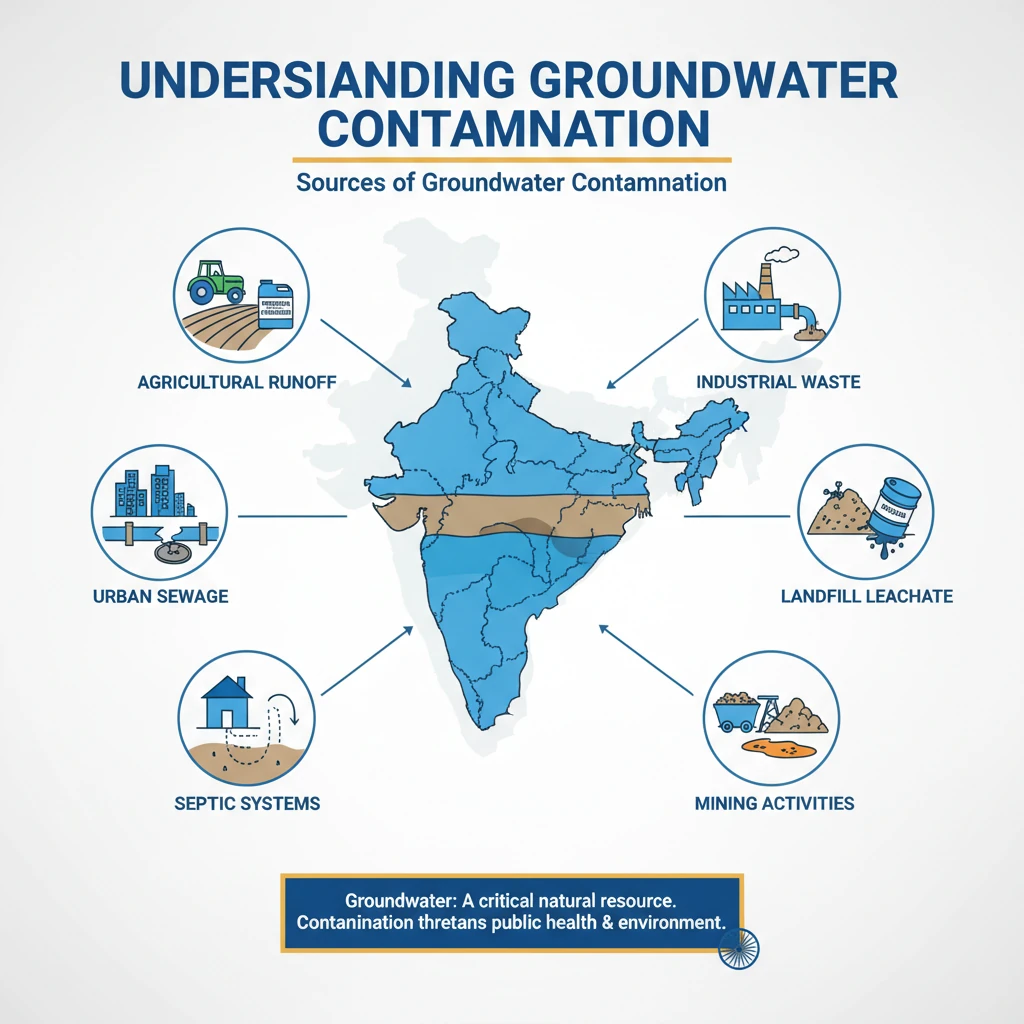
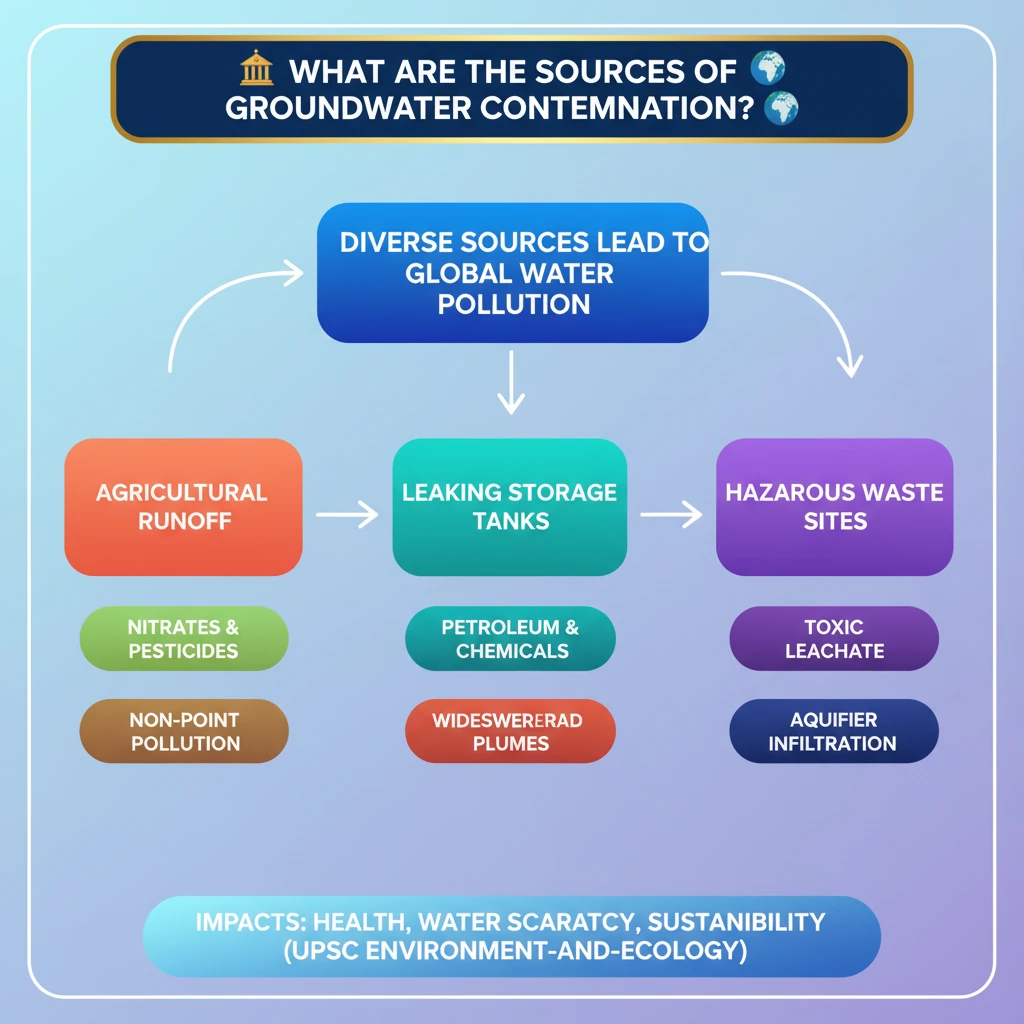
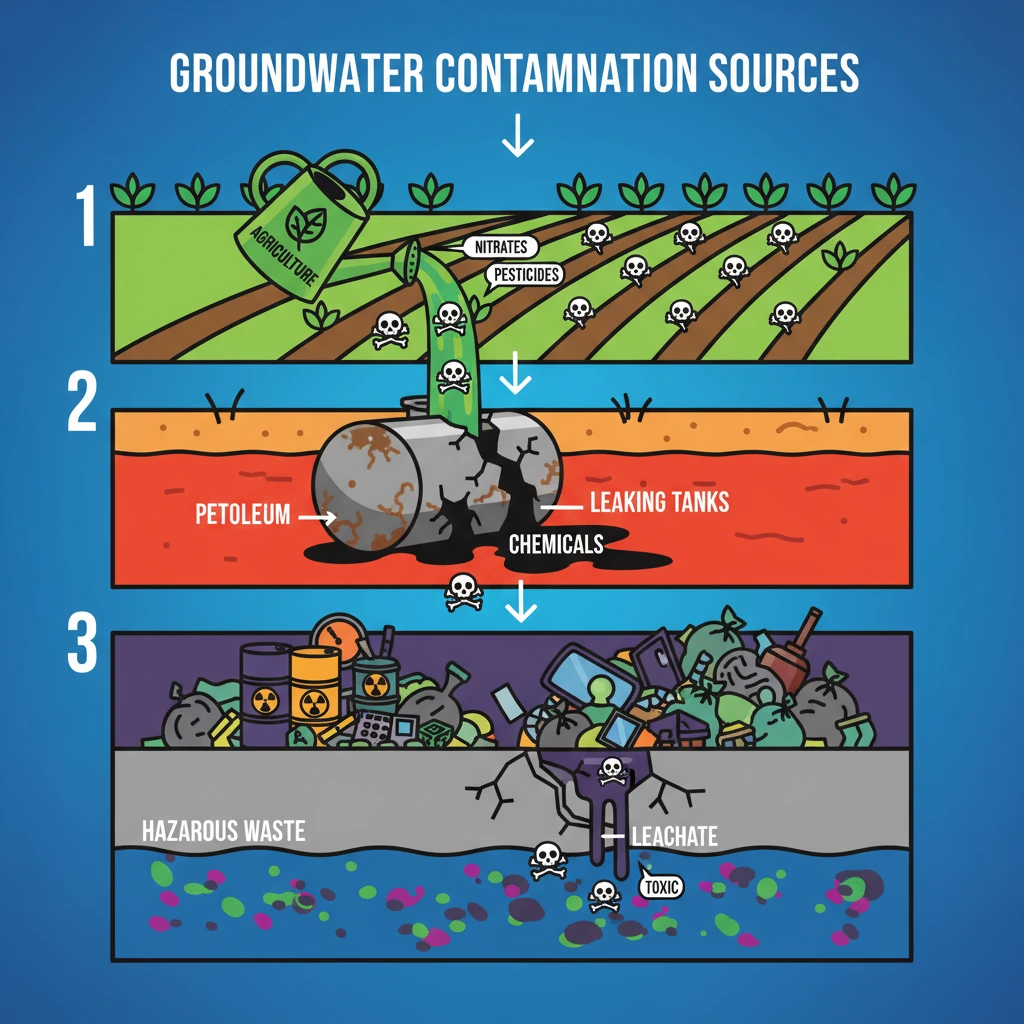
<h4>Understanding Groundwater Contamination</h4><p><strong>Groundwater contamination</strong> refers to the pollution of water present beneath the Earth's surface in aquifers. This vital resource becomes unfit for consumption and other uses when harmful substances infiltrate it.</p><div class='info-box'><p><strong>Groundwater</strong> is a critical source of drinking water and irrigation, especially in regions with limited surface water. Its contamination poses significant threats to public health and ecological balance.</p></div><h4>1. Agricultural Practices: A Major Contributor</h4><p>Intensive modern <strong>agricultural practices</strong> are a primary source of groundwater pollution. The widespread use of synthetic chemicals plays a crucial role in this degradation.</p><div class='key-point-box'><p>The core issue lies in the application of <strong>fertilizers</strong> and <strong>pesticides</strong>. These chemicals are designed to enhance crop yield and protect against pests, but their residues can have detrimental environmental impacts.</p></div><p><strong>Nitrate</strong> and <strong>phosphate</strong> compounds, commonly found in fertilizers, are highly soluble. When applied in excess, they do not get fully absorbed by plants.</p><p>These unabsorbed chemicals then undergo a process called <strong>leaching</strong>. Rainwater or irrigation water carries them downwards through the soil profile, eventually reaching the groundwater table.</p><p>Furthermore, <strong>improper irrigation</strong> techniques, such as flood irrigation, can accelerate this leaching process. It increases the volume of water moving through the soil, carrying contaminants with it.</p><p><strong>Over-extraction of water</strong>, often for agricultural purposes, can also exacerbate contamination. It can lower the water table, drawing in pollutants from surrounding areas or even inducing saline intrusion in coastal regions.</p><div class='exam-tip-box'><p>UPSC often asks about the environmental impact of the <strong>Green Revolution</strong>. Groundwater contamination from agricultural chemicals is a direct consequence and a vital point to include in such answers.</p></div><h4>2. Leaking Storage Tanks: A Hidden Threat</h4><p>Underground <strong>storage tanks</strong>, particularly those used for fuel or industrial chemicals, represent another significant source of groundwater contamination.</p><p>Over time, these tanks can suffer from <strong>corrosion</strong>, especially if they are old or improperly maintained. This leads to cracks and holes in their structure.</p><p>Through these leaks, hazardous substances like <strong>gasoline</strong>, <strong>oil</strong>, or various industrial <strong>chemicals</strong> can seep directly into the surrounding soil.</p><p>Once in the soil, these contaminants migrate downwards, eventually reaching and polluting the underlying <strong>groundwater aquifers</strong>. This can go undetected for long periods.</p><div class='info-box'><p>A single leaking tank can contaminate a large volume of groundwater, making remediation efforts extremely challenging and costly. The substances often persist for decades.</p></div><h4>3. Hazardous Waste Sites: Legacy of Pollution</h4><p><strong>Hazardous waste sites</strong>, especially those that are abandoned or poorly managed, pose a severe long-term risk to groundwater quality.</p><p>These sites typically contain a variety of toxic materials, including industrial by-products, chemical wastes, and heavy metals. When these sites are neglected, their contents are exposed to the elements.</p><p>Over time, containers at these sites can degrade, leading to <strong>leaking materials</strong>. Rainwater can also percolate through the waste, creating a toxic leachate.</p><p>This contaminated leachate then infiltrates the soil, eventually reaching the groundwater. The impact can be widespread and severe, affecting communities reliant on nearby wells.</p><div class='key-point-box'><p>The term <strong>"Superfund sites"</strong> in the USA refers to such highly contaminated areas requiring long-term cleanup. India also faces challenges with legacy waste sites from various industries.</p></div>
💡 Key Takeaways
- •Groundwater contamination primarily stems from agricultural runoff, leaking storage tanks, and hazardous waste sites.
- •Agricultural practices introduce nitrates and phosphates via leaching from excessive fertilizers and pesticides.
- •Corroding underground storage tanks leak fuels and chemicals like gasoline and oil into aquifers.
- •Abandoned hazardous waste sites release toxic leachate, posing long-term risks to groundwater.
- •Contamination is hard to detect and remediate, impacting public health and water security.
- •Addressing this requires sustainable agriculture, strict industrial regulation, and effective waste management.
🧠 Memory Techniques
95% Verified Content
📚 Reference Sources
•Central Ground Water Board (CGWB) Reports
•Ministry of Jal Shakti Publications
•NCERT Geography Textbooks (Class 11 & 12)
•Environmental Studies by Benny Joseph