What are Key Facts About BNP? - Environment And Ecology | UPSC Learning
Topics
0 topics • 0 completed
🔍
No topics match your search
What are Key Facts About BNP?
Easy⏱️ 7 min read
environment and ecology
📖 Introduction
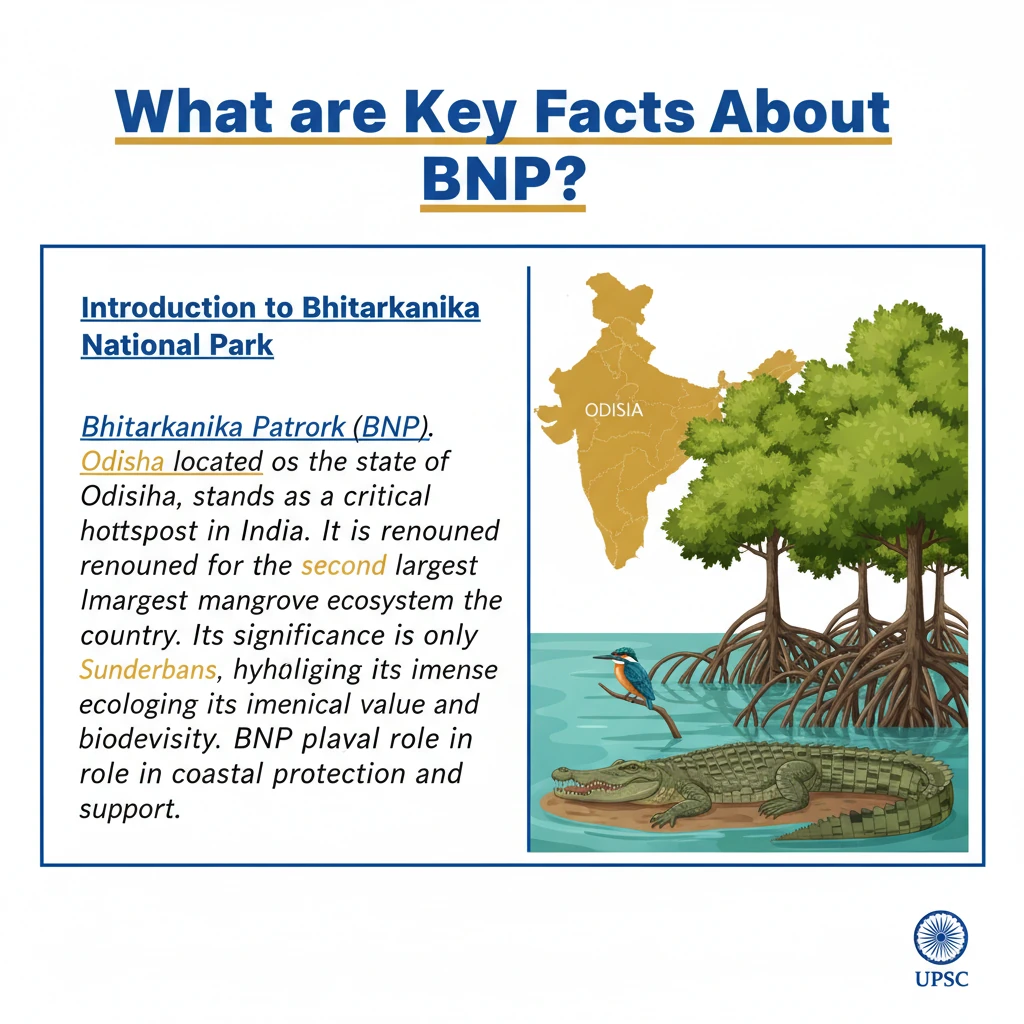
<h4>Introduction to Bhitarkanika National Park</h4><p><strong>Bhitarkanika National Park (BNP)</strong>, located in the state of <strong>Odisha</strong>, stands as a critical ecological hotspot in India. It is renowned for being the <strong>second largest mangrove ecosystem</strong> in the country.</p><p>Its significance is only surpassed by the vast <strong>Sunderbans</strong>, highlighting its immense ecological value and biodiversity. BNP plays a crucial role in coastal protection and supporting diverse flora and fauna.</p><h4>Geographical Location and Hydrology</h4><p>BNP is strategically positioned in <strong>Odisha</strong>, close to the <strong>Bay of Bengal</strong>. This proximity is vital for its unique ecosystem, as it facilitates the constant interaction of fresh and saline waters.</p><div class='info-box'><ul><li><strong>Location:</strong> Kendrapara district, <strong>Odisha</strong>, India.</li><li><strong>Major Rivers:</strong> Fed by the <strong>Brahmani</strong>, <strong>Baitarani</strong>, <strong>Dhamra</strong>, and <strong>Patasala</strong> rivers.</li><li><strong>Water System:</strong> Comprises an intricate network of <strong>creeks and canals</strong>.</li></ul></div><p>The confluence of these major rivers with the tidal waters from the <strong>Bay of Bengal</strong> creates a dynamic and nutrient-rich environment. This brackish water system is ideal for mangrove growth.</p><h4>Unique Mangrove Ecosystem Characteristics</h4><p>The park's ecosystem is characterized by its extensive <strong>mangrove forests</strong>, which thrive in the intertidal zones. These forests are critical for maintaining coastal ecological balance.</p><p>The constant influx of riverine and oceanic waters enriches the soil with essential <strong>salts</strong>. This saline-rich soil environment is a prerequisite for the survival and growth of specialized vegetation.</p><div class='key-point-box'><p>The vegetation primarily consists of <strong>tropical and subtropical intertidal species</strong>. These plants have evolved unique adaptations to survive in harsh saline and anaerobic conditions.</p></div><h4>International Recognition: Ramsar Site Status</h4><p><strong>Bhitarkanika National Park</strong> has received significant international recognition by being designated a <strong>Ramsar Site</strong>. This status underscores its importance as a wetland of global significance.</p><div class='exam-tip-box'><p>Understanding <strong>Ramsar Sites</strong> is crucial for UPSC. Questions often relate to their location, ecological significance, and the criteria for their designation. BNP is a prime example of a <strong>Wetland of International Importance</strong>.</p></div><p>The Ramsar Convention aims to conserve and wise use of all wetlands through local, regional and national actions and international cooperation, contributing towards achieving sustainable development throughout the world.</p>
💡 Key Takeaways
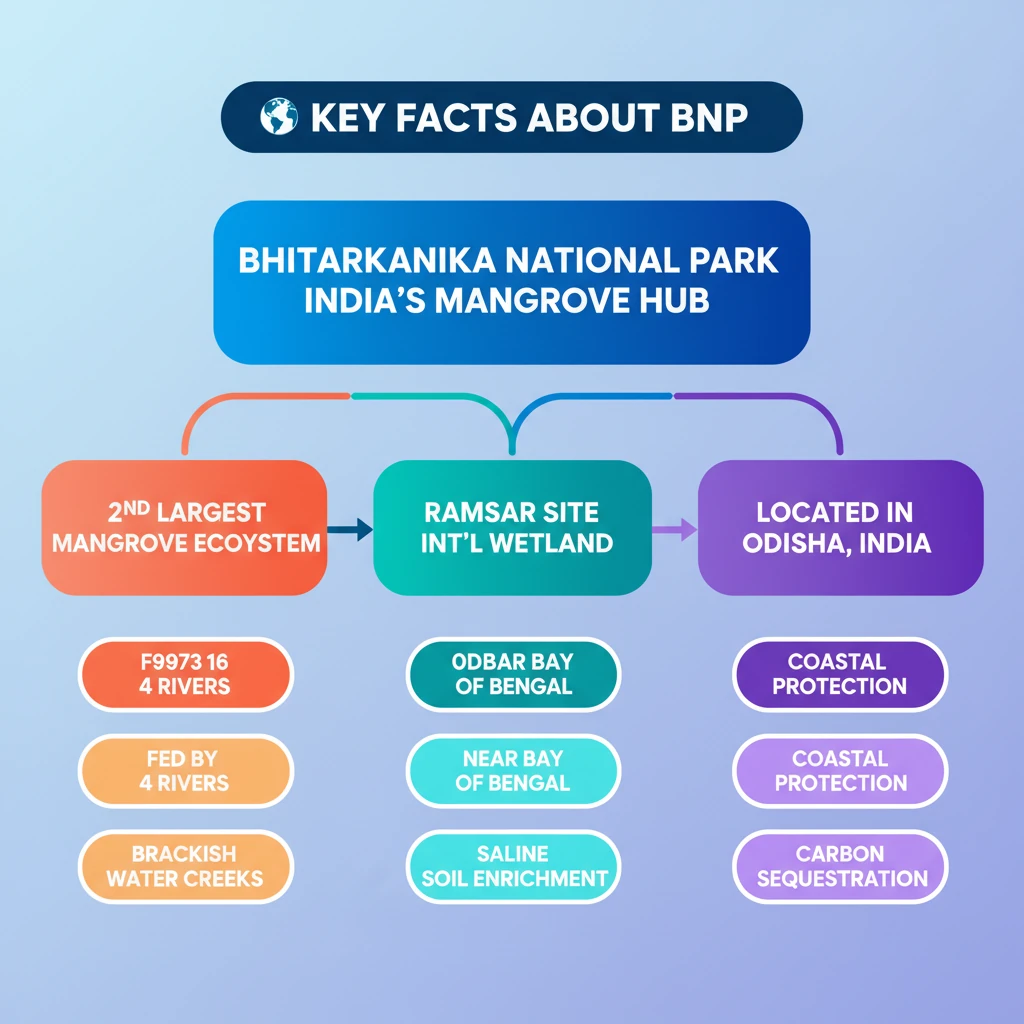
- •Bhitarkanika National Park (BNP) is India's 2nd largest mangrove ecosystem, located in Odisha.
- •It is a recognized Ramsar Site, signifying its international importance as a wetland.
- •BNP's unique ecosystem is fed by Brahmani, Baitarani, Dhamra, and Patasala rivers, creating brackish water creeks.
- •Proximity to the Bay of Bengal enriches soil with salts, supporting specialized intertidal vegetation.
- •Mangroves in BNP provide crucial coastal protection and carbon sequestration benefits.
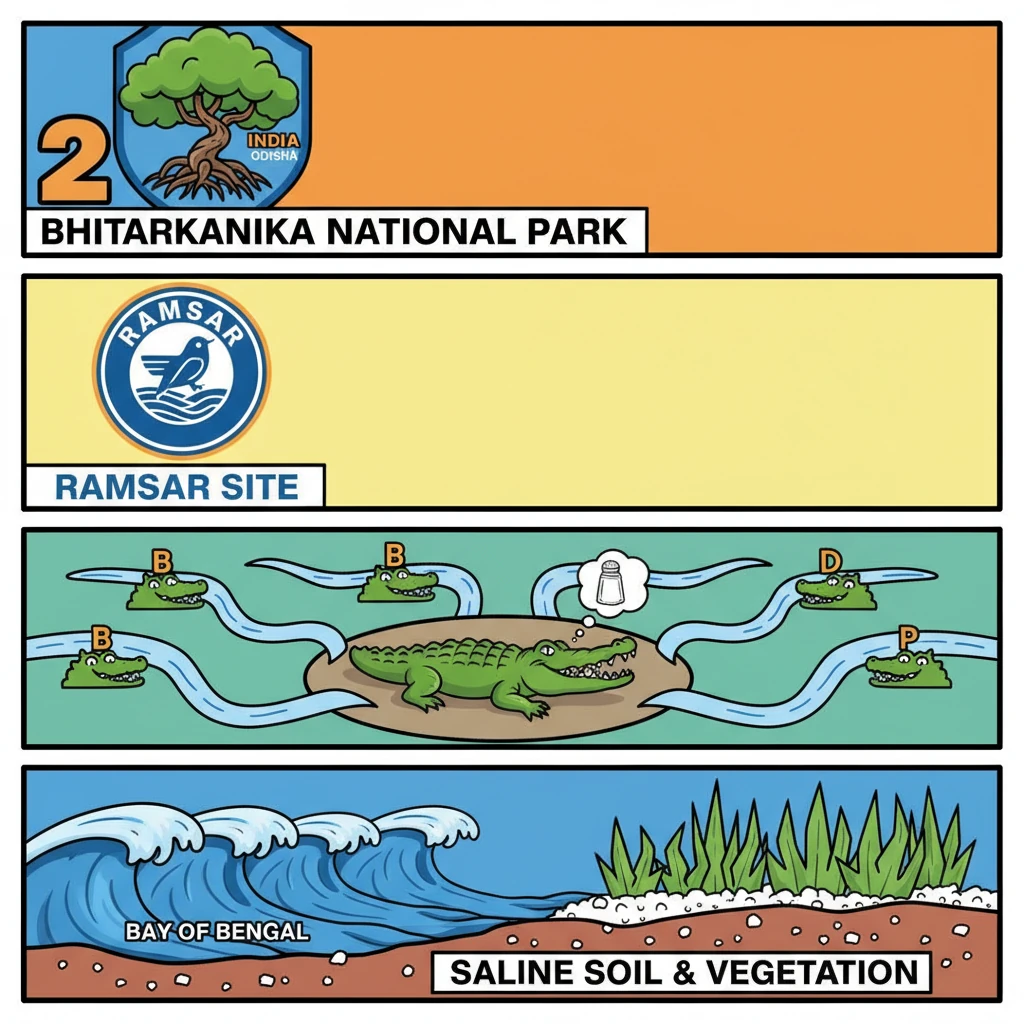
🧠 Memory Techniques
95% Verified Content
📚 Reference Sources
•Ramsar Sites Information Service
•Ministry of Environment, Forest and Climate Change (MoEFCC) reports