What are Biofuels? - Environment And Ecology | UPSC Learning
Topics
0 topics • 0 completed
🔍
No topics match your search
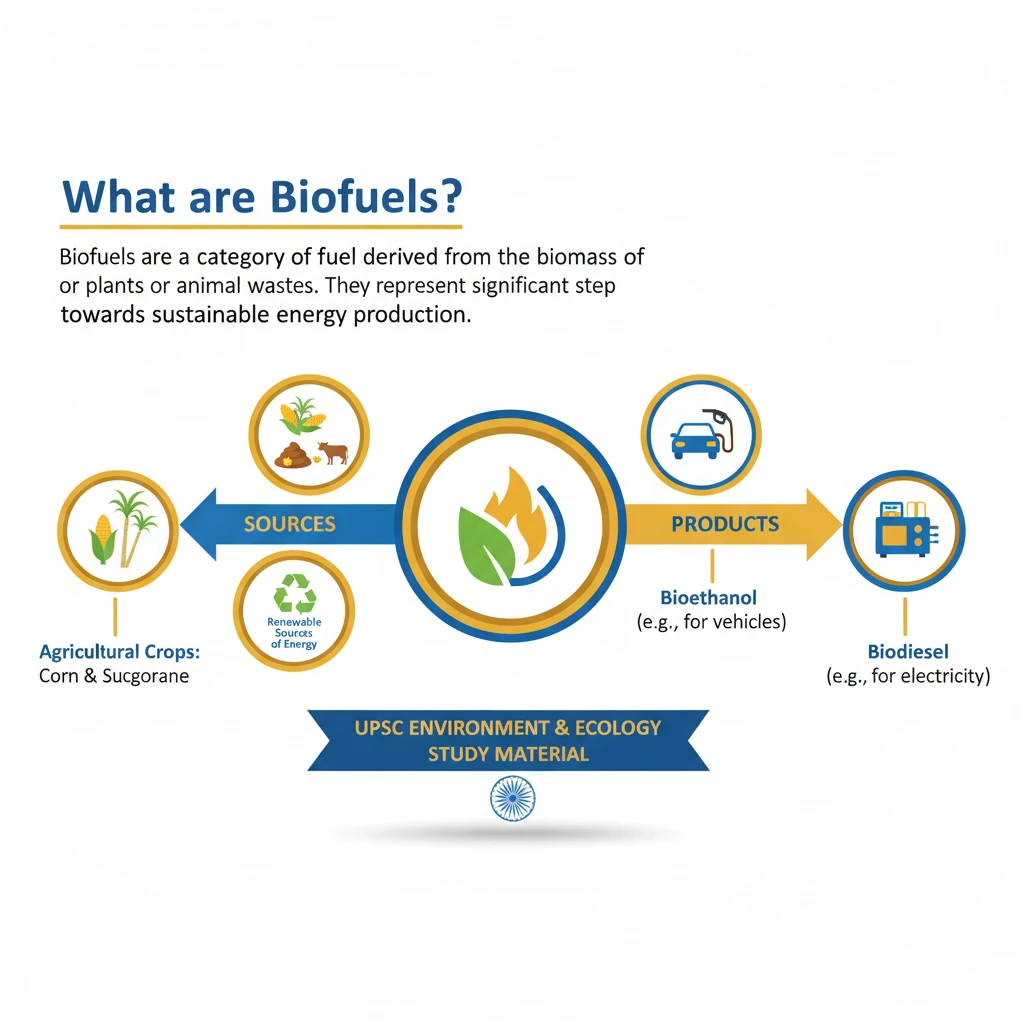
What are Biofuels?
Medium⏱️ 7 min read
environment and ecology
📖 Introduction
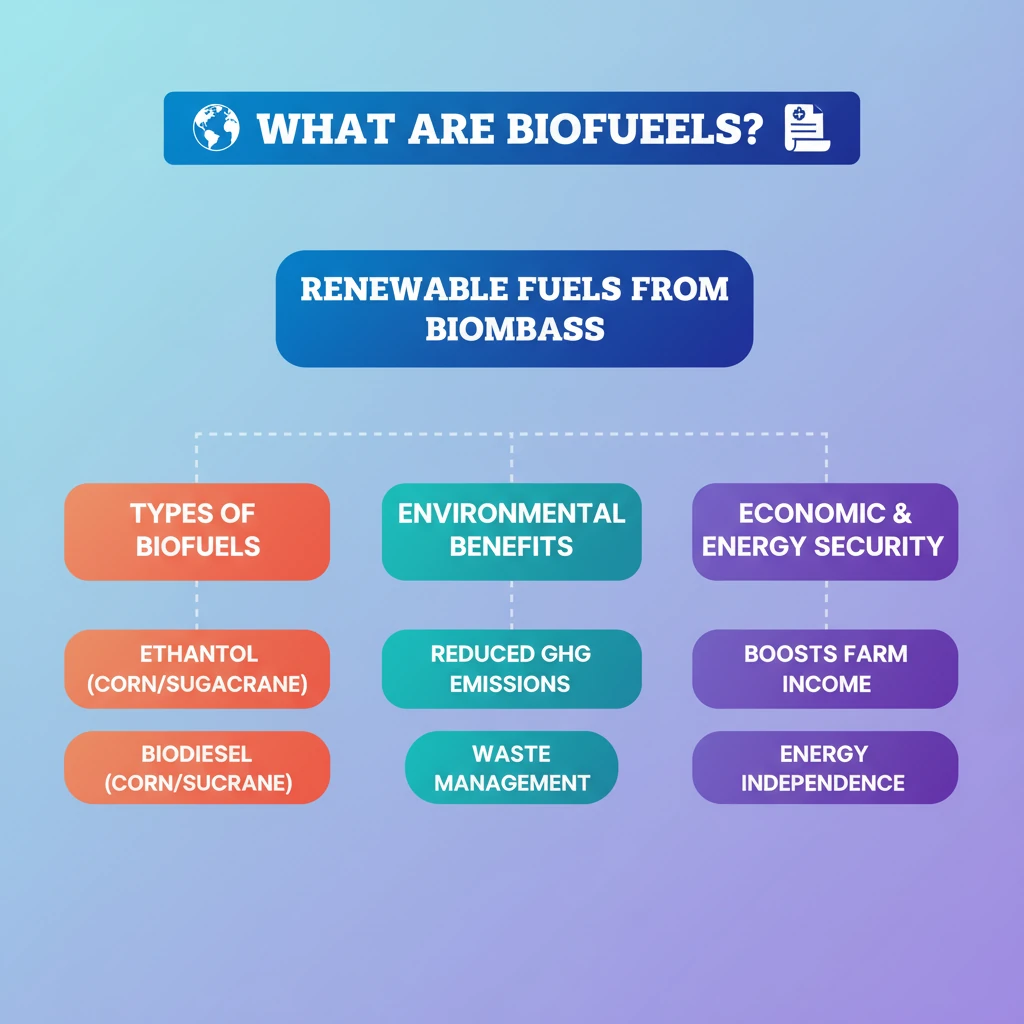
<h4>What are Biofuels?</h4><p><strong>Biofuels</strong> are a category of fuel derived from the <strong>biomass</strong> of plants or animal wastes. They represent a significant step towards sustainable energy production.</p><p>Common sources for <strong>biofuel</strong> production include agricultural crops like <strong>corn</strong> and <strong>sugarcane</strong>, as well as animal waste such as <strong>cow dung</strong>. These fuels are classified as <strong>renewable sources of energy</strong>.</p><div class='info-box'><p><strong>Definition:</strong> <strong>Biofuels</strong> are liquid or gaseous fuels produced from biomass, offering a renewable alternative to fossil fuels.</p></div><h4>Most Common Biofuels</h4><p>Two primary types of <strong>biofuels</strong> are widely recognized and utilized: <strong>Ethanol</strong> and <strong>Biodiesel</strong>.</p><h4>Ethanol</h4><p><strong>Ethanol</strong> is primarily produced through the <strong>fermentation</strong> of crop residues. Key feedstocks include <strong>corn</strong> and <strong>sugarcane</strong>.</p><p>After the fermentation process, <strong>ethanol</strong> is typically mixed with <strong>petroleum</strong>. This blending helps in reducing overall emissions from conventional fuels.</p><div class='info-box'><p>The most common blend is <strong>Ethanol-10 (E10)</strong>, which contains <strong>10% ethanol</strong> mixed with 90% gasoline.</p></div><p>The purity of <strong>ethanol</strong> varies based on its application. Fuel-grade <strong>ethanol</strong> requires a very high purity level.</p><div class='info-box'><p><strong>Ethanol Purity Levels:</strong><ul><li><strong>99.9% pure alcohol:</strong> Used in fuel applications.</li><li><strong>96% extra neutral alcohol:</strong> Used in potable liquor.</li><li><strong>94% rectified spirit:</strong> Found in industrial products like paints, cosmetics, and pharmaceuticals.</li></ul></p></div><h4>Biodiesel</h4><p><strong>Biodiesel</strong> is another significant <strong>biofuel</strong>. It is a <strong>renewable</strong> and <strong>biodegradable fuel</strong> derived from various organic sources.</p><p>Typical feedstocks for <strong>biodiesel</strong> include <strong>used cooking oil</strong>, recycled <strong>restaurant grease</strong>, <strong>yellow grease</strong>, or various types of <strong>animal fats</strong>.</p><p>The production process for <strong>biodiesel</strong> involves a chemical reaction where oil or fat is reacted with <strong>alcohol</strong> in the presence of a <strong>catalyst</strong>.</p><h4>Significance of Biofuels</h4><p><strong>Biofuels</strong> offer a multitude of benefits, addressing critical challenges in environmental sustainability, energy security, and economic development.</p><div class='key-point-box'><h4>Environmental Benefits</h4><p><strong>Biofuels</strong> are vital for promoting <strong>environmental sustainability</strong>. They help mitigate several negative impacts associated with <strong>fossil fuel</strong> use.</p><ul><li>They contribute to reducing <strong>greenhouse gas emissions</strong>, a major cause of climate change.</li><li>They lessen reliance on finite <strong>fossil fuel resources</strong>, combating resource depletion.</li><li>The utilization of organic waste for biofuel production also offers improved <strong>waste management solutions</strong>.</li></ul></div><div class='key-point-box'><h4>Energy Security</h4><p>For nations like <strong>India</strong>, <strong>biofuels</strong> play a crucial role in enhancing <strong>energy security</strong>. India is the <strong>world’s third-largest crude oil consumer</strong>.</p><p>The country imports over <strong>85% of its crude oil</strong> requirements. With rapidly rising energy demand, reducing this heavy reliance on imports is paramount.</p><p><strong>Biofuels</strong> provide a domestic, renewable alternative, thereby strengthening national <strong>energy security</strong>.</p></div><div class='key-point-box'><h4>Economic Benefits</h4><p>The adoption of <strong>biofuels</strong> can yield significant economic advantages for India.</p><ul><li>They can substantially reduce <strong>India’s oil import bill</strong>, saving valuable foreign exchange.</li><li>The production of biofuels, especially from agricultural produce, can significantly <strong>boost farm incomes</strong>.</li><li>They offer a sustainable solution for managing <strong>surplus production</strong> of crops like <strong>corn</strong> and <strong>sugarcane</strong>, providing farmers with an alternative market.</li></ul></div><div class='key-point-box'><h4>Abundant Availability</h4><p>One of the key advantages of <strong>biofuels</strong> is their diverse and abundant availability of feedstocks. They can be produced from a wide range of sources.</p><p>These sources include various <strong>crops</strong>, organic <strong>waste materials</strong>, and even <strong>algae</strong>, ensuring a broad and sustainable supply chain.</p></div>
💡 Key Takeaways
- •Biofuels are renewable fuels derived from plant or animal biomass, like corn, sugarcane, or animal waste.
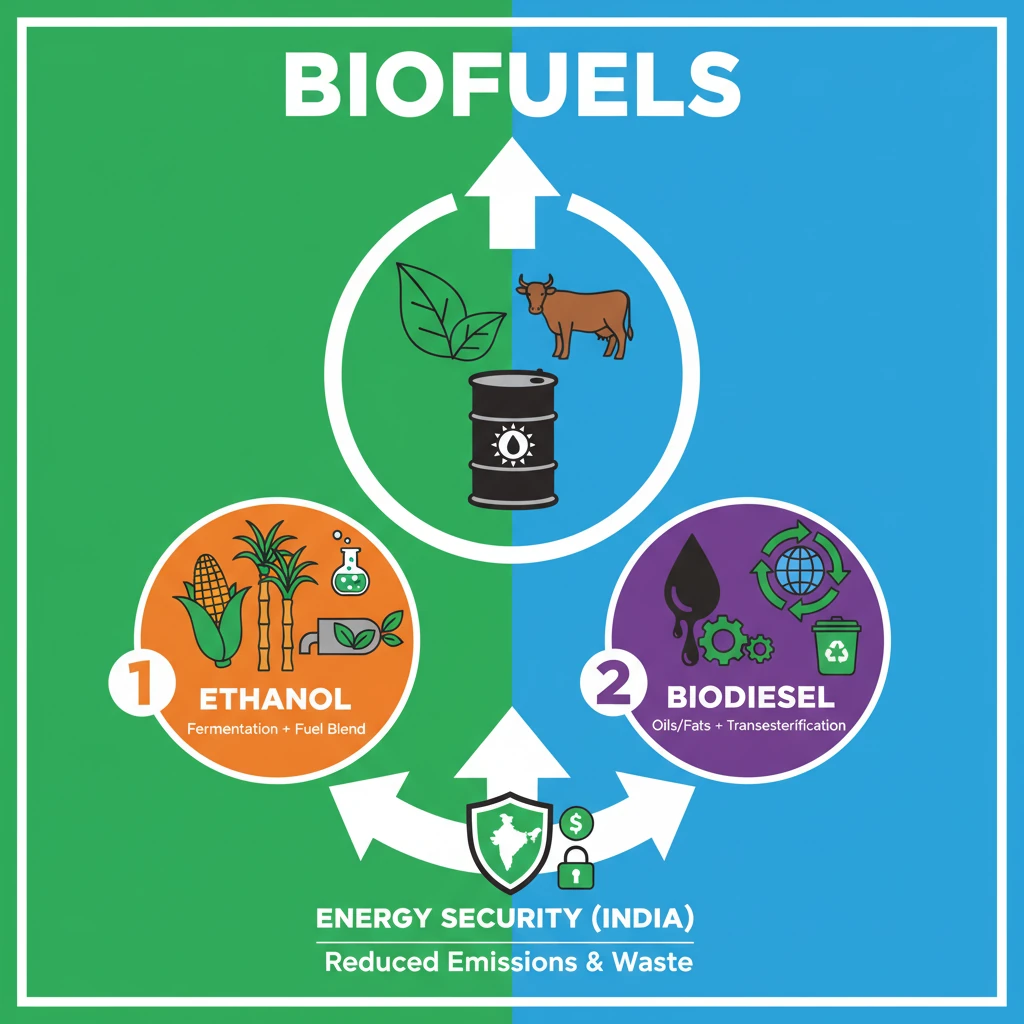
- •The most common types are Ethanol (from fermentation of crop residues, blended with petroleum) and Biodiesel (from oils/fats via transesterification).
- •They offer significant environmental benefits by reducing greenhouse gas emissions and improving waste management.
- •Biofuels enhance energy security, especially for import-dependent nations like India, by providing a domestic energy source.
- •Economically, they reduce import bills, boost farm incomes, and address crop surpluses.
- •India's National Policy on Biofuels (2018) and initiatives like EBP and SATAT highlight their current strategic importance.
🧠 Memory Techniques
95% Verified Content
📚 Reference Sources
•National Policy on Biofuels (2018), Ministry of Petroleum and Natural Gas, Government of India