Asia-Pacific Climate Report 2024 - Environment And Ecology | UPSC Learning
Topics
0 topics • 0 completed
🔍
No topics match your search
Asia-Pacific Climate Report 2024
Medium⏱️ 10 min read
environment and ecology
📖 Introduction
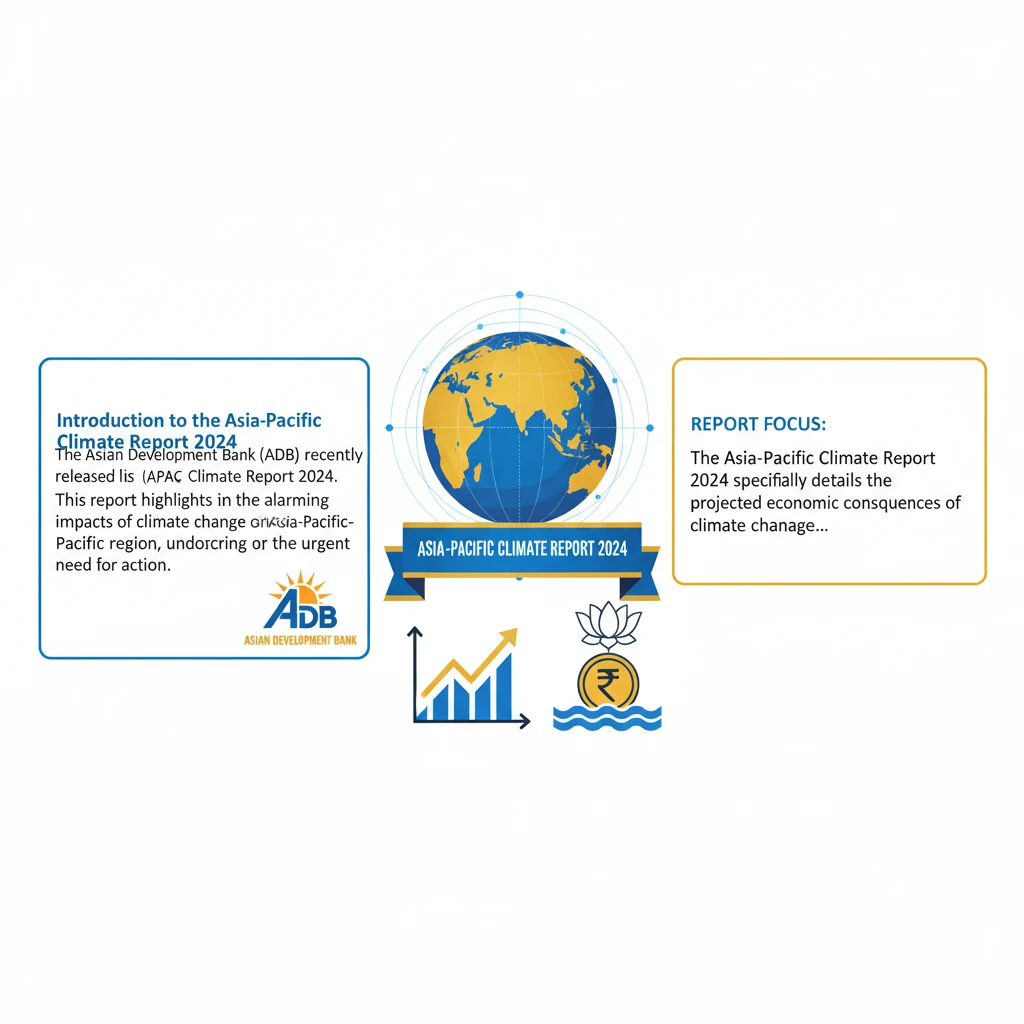
<h4>Introduction to the Asia-Pacific Climate Report 2024</h4><p>The <strong>Asian Development Bank (ADB)</strong> recently released its <strong>Asia-Pacific (APAC) Climate Report 2024</strong>. This report highlights the alarming economic impacts of climate change on the <strong>Asia-Pacific region</strong>, underscoring the urgent need for action.</p><div class='info-box'><p><strong>Report Focus:</strong> The <strong>Asia-Pacific Climate Report 2024</strong> specifically details the projected economic consequences of climate change, including GDP losses and increased disaster risks across the APAC region.</p></div><h4>Projected Economic Consequences of Climate Change</h4><p>The report projects significant economic downturns for the <strong>APAC region</strong> due to climate change. These losses are expected to intensify over the coming decades, impacting national economies severely.</p><ul><li><strong>GDP Decline by 2070:</strong> The <strong>APAC region</strong> could experience a substantial <strong>17% decline in GDP</strong> by the year <strong>2070</strong> under current climate trajectories.</li><li><strong>Accelerated Decline by 2100:</strong> Under a high emissions scenario, this decline is projected to worsen dramatically, reaching up to <strong>41% of GDP by 2100</strong>.</li></ul><h4>Country-Specific Economic Impacts</h4><p>Several countries within the <strong>Asia-Pacific region</strong> are particularly vulnerable to these economic impacts, facing considerable reductions in their national output.</p><ul><li><strong>India:</strong> Is projected to face a significant <strong>24.7% GDP drop by 2070</strong>, making it one of the most affected major economies.</li><li><strong>Other Severely Affected Nations:</strong> <strong>Bangladesh</strong> could see a <strong>30.5% GDP decline</strong>, <strong>Vietnam 30.2%</strong>, and <strong>Indonesia 26.8%</strong> by 2070, indicating widespread regional vulnerability.</li></ul><div class='exam-tip-box'><p><strong>UPSC Insight:</strong> Questions on climate change impacts often require specific data. Remember key percentages like <strong>India's projected GDP drop (24.7% by 2070)</strong> and the overall <strong>APAC decline (17% by 2070, 41% by 2100)</strong> to enrich your answers in <strong>GS Paper III (Environment & Economy)</strong>.</p></div><h4>Key Drivers of Economic Losses</h4><p>The report identifies several critical factors contributing to the anticipated economic damages across the <strong>Asia-Pacific region</strong>. These drivers highlight diverse vulnerabilities.</p><ul><li><strong>Sea Level Rise:</strong> By <strong>2070</strong>, an estimated <strong>300 million people</strong> in the region may be at risk of <strong>coastal flooding</strong>. Annual damages from this phenomenon could reach an astounding <strong>USD 3 trillion</strong>.</li><li><strong>Labour Productivity Decline:</strong> The <strong>APAC region</strong> as a whole faces a <strong>4.9% GDP loss</strong> due to reduced labour productivity. <strong>India's</strong> potential loss in this area is even higher, projected at <strong>11.6%</strong>.</li><li><strong>Cooling Demand:</strong> Rising temperatures will significantly increase the demand for cooling, leading to a regional <strong>GDP reduction of 3.3%</strong>. For <strong>India</strong>, this decline is projected to be <strong>5.1%</strong>.</li></ul><h4>Climate-Induced Disasters and Their Costs</h4><p>The frequency and intensity of climate-induced disasters are set to escalate, causing immense physical and economic damage across the <strong>Asia-Pacific region</strong>.</p><ul><li><strong>Riverine Flooding:</strong> By <strong>2070</strong>, damages from riverine flooding could hit <strong>USD 1.3 trillion</strong>, affecting approximately <strong>110 million people</strong>. <strong>India</strong> alone may suffer <strong>USD 400 billion</strong> in residential and <strong>USD 700 billion</strong> in commercial losses from this.</li><li><strong>Storms & Landslides:</strong> More intense storms are expected to escalate flooding events. Furthermore, <strong>landslides</strong> on the <strong>India-China border</strong> may increase by <strong>30-70%</strong> under severe warming scenarios, posing significant risks to infrastructure and lives.</li></ul>
💡 Key Takeaways
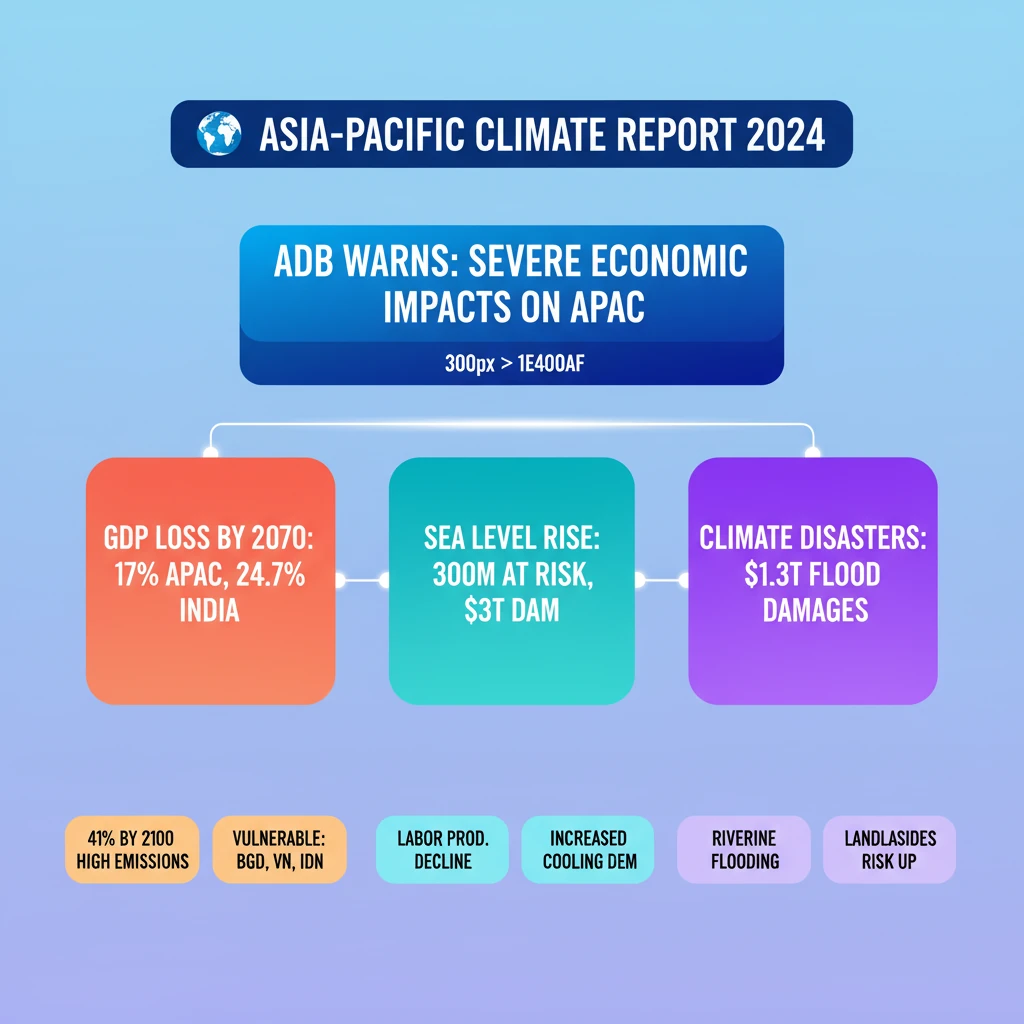
- •Asia-Pacific Climate Report 2024 by ADB warns of severe economic impacts on the APAC region.
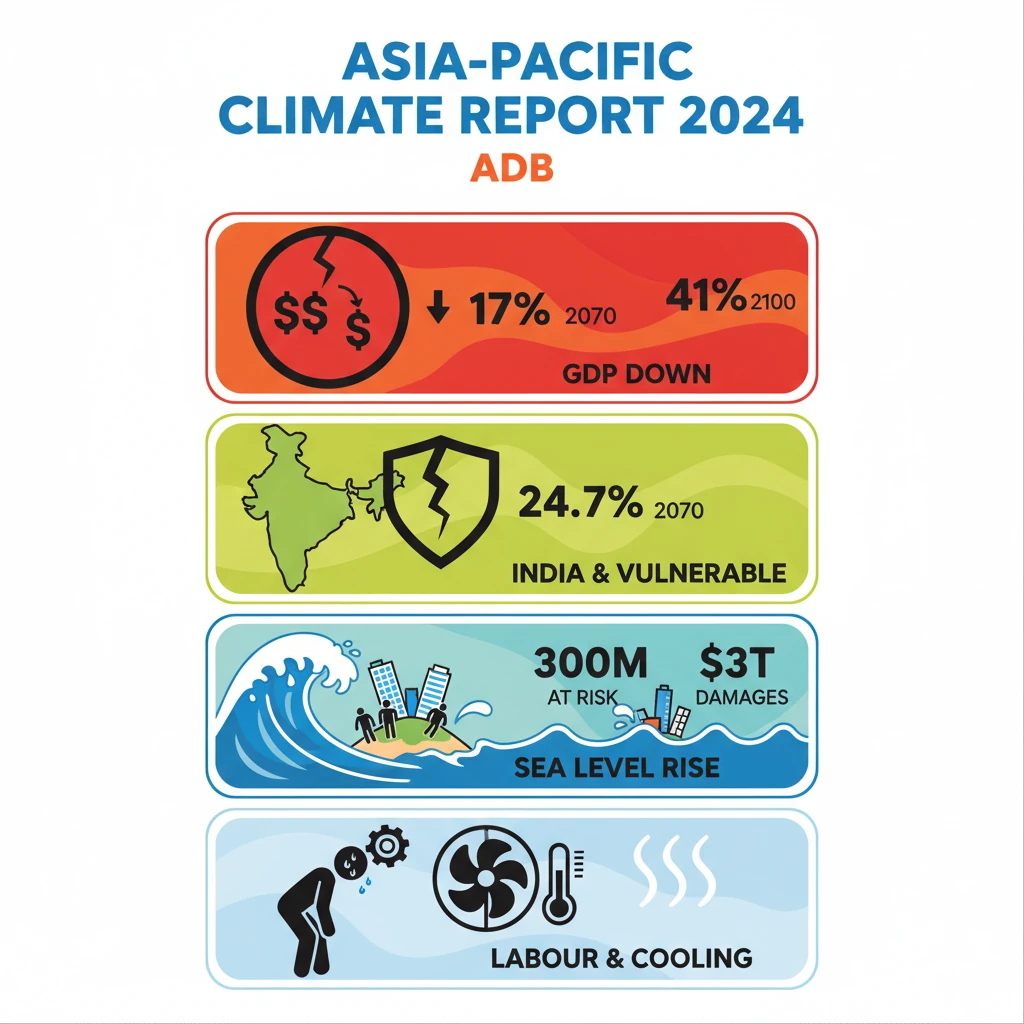
- •APAC GDP could decline by 17% by 2070, potentially reaching 41% by 2100 under high emissions.
- •India faces a projected 24.7% GDP drop by 2070; Bangladesh, Vietnam, Indonesia also highly vulnerable.
- •Key drivers of loss include sea level rise (300M at risk, $3T damages by 2070), labour productivity decline, and increased cooling demand.
- •Climate-induced disasters like riverine flooding ($1.3T damages by 2070) and increased landslides pose significant threats.
- •ADB, founded in 1966 with India as a founding member, is crucial for promoting sustainable growth and climate resilience in the region.
🧠 Memory Techniques
95% Verified Content
📚 Reference Sources
•Asian Development Bank (ADB) official reports (implied by summary content)