Radioactive Discharges from Indian Nuclear Plants - Environment And Ecology | UPSC Learning
Topics
0 topics • 0 completed
🔍
No topics match your search
Radioactive Discharges from Indian Nuclear Plants
Medium⏱️ 6 min read
environment and ecology
📖 Introduction
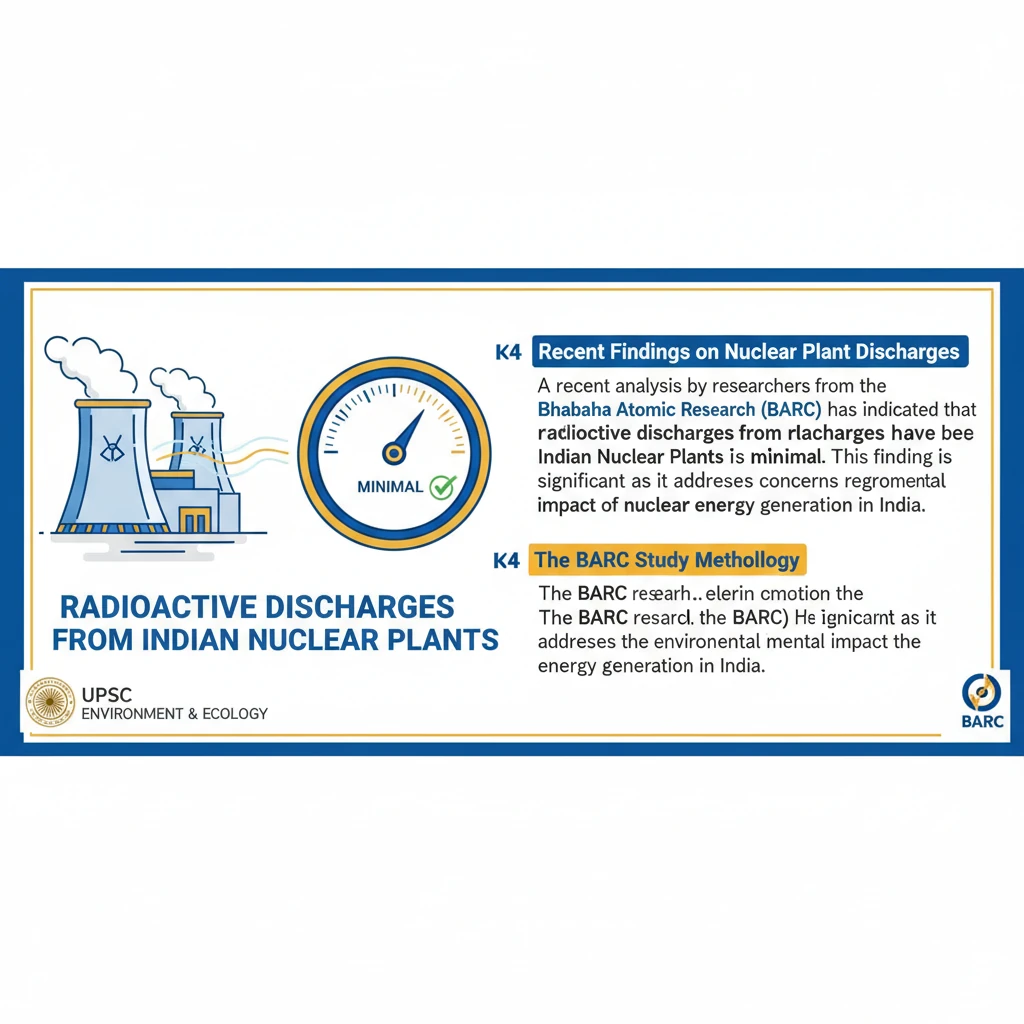
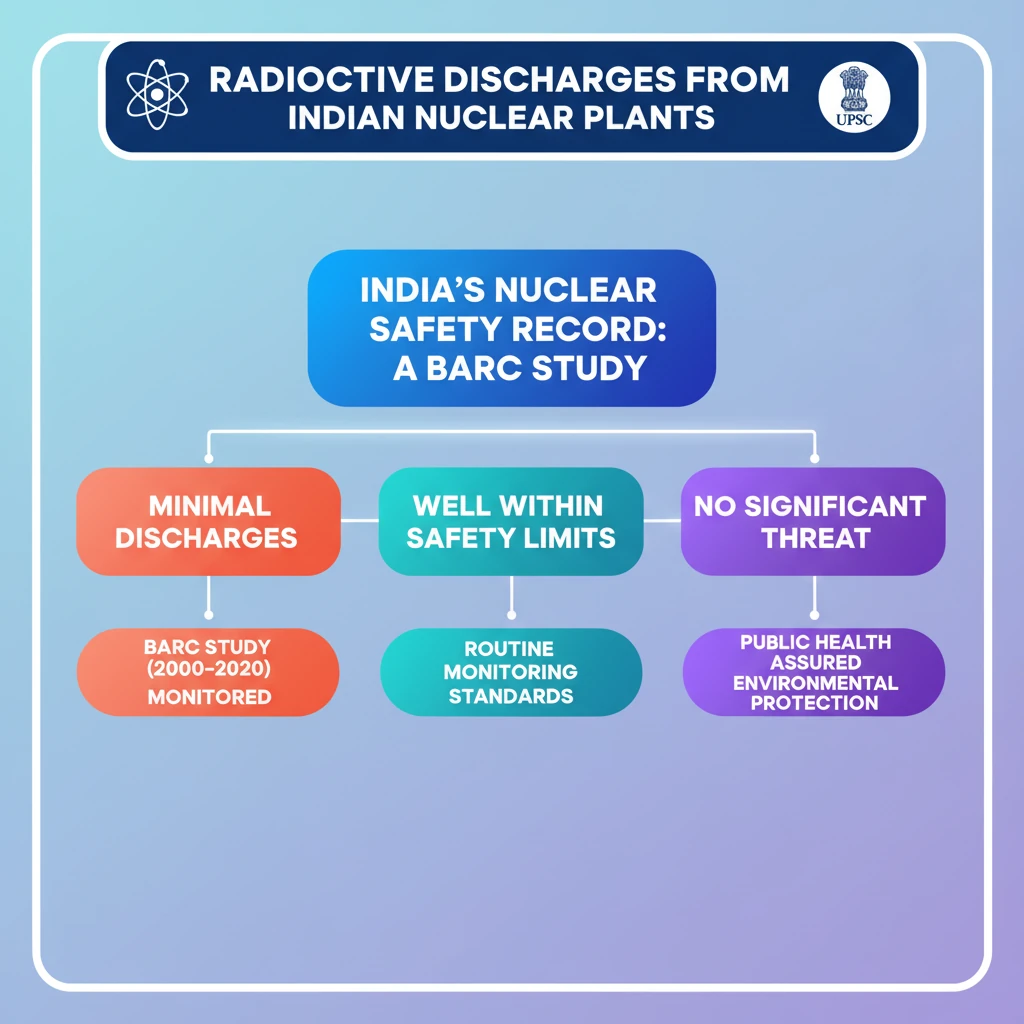
<h4>Recent Findings on Nuclear Plant Discharges</h4><p>A recent analysis by researchers from the <strong>Bhabha Atomic Research Centre (BARC)</strong> has indicated that <strong>radioactive discharges</strong> from <strong>Indian Nuclear Plants</strong> have been consistently <strong>minimal</strong>.</p><p>This finding is significant as it addresses concerns regarding the environmental impact of nuclear energy generation in India.</p><h4>The BARC Study Methodology</h4><p>The <strong>BARC researchers</strong> conducted a comprehensive analysis of <strong>radiological data</strong> collected over a substantial period.</p><p>The study spanned <strong>20 years</strong>, from <strong>2000 to 2020</strong>, providing a long-term perspective on discharge levels.</p><p>Data was gathered from <strong>six nuclear power plants</strong> across India, ensuring a representative sample.</p><h4>Understanding Radioactive Discharge</h4><div class='info-box'><p><strong>Radioactive discharge</strong> refers to the release of <strong>radioactive substances</strong> into the environment.</p><p>These releases typically originate from <strong>human activities</strong>, particularly from <strong>nuclear facilities</strong> such as <strong>nuclear power plants</strong>, <strong>research reactors</strong>, or other industrial processes involving <strong>radioactive materials</strong>.</p></div><div class='key-point-box'><p>The term <strong>"minimal"</strong> in the context of radioactive discharges implies that the levels are well within prescribed safety limits and pose no significant threat to public health or the environment.</p></div><h4>Implications for India's Nuclear Program</h4><p>These findings reinforce confidence in the <strong>safety protocols</strong> and operational standards of <strong>Indian nuclear facilities</strong>.</p><p>It supports India's continued reliance on <strong>nuclear energy</strong> as a clean and sustainable power source, crucial for meeting growing energy demands.</p><div class='exam-tip-box'><p>For <strong>UPSC Mains (GS Paper 3 - Environment & Ecology, Science & Technology)</strong>, understanding the safety aspects of nuclear energy is crucial. This study provides data points to argue for the safety of India's nuclear program.</p></div>
💡 Key Takeaways
- •BARC study (2000-2020) found minimal radioactive discharges from 6 Indian nuclear plants.
- •"Minimal" means discharges are well within safety limits, posing no significant threat to health or environment.
- •Radioactive discharge is the release of radioactive substances from human activities, primarily nuclear facilities.
- •The findings reinforce confidence in India's nuclear safety protocols and operational standards.
- •This supports nuclear energy as a clean, viable option for India's energy security and climate goals.
🧠 Memory Techniques

95% Verified Content
📚 Reference Sources
•Bhabha Atomic Research Centre (BARC) analysis (as cited by Drishti IAS)