What is the Global Tree Assessment Report? - Environment And Ecology | UPSC Learning
Topics
0 topics • 0 completed
🔍
No topics match your search
What is the Global Tree Assessment Report?
Medium⏱️ 7 min read
environment and ecology
📖 Introduction
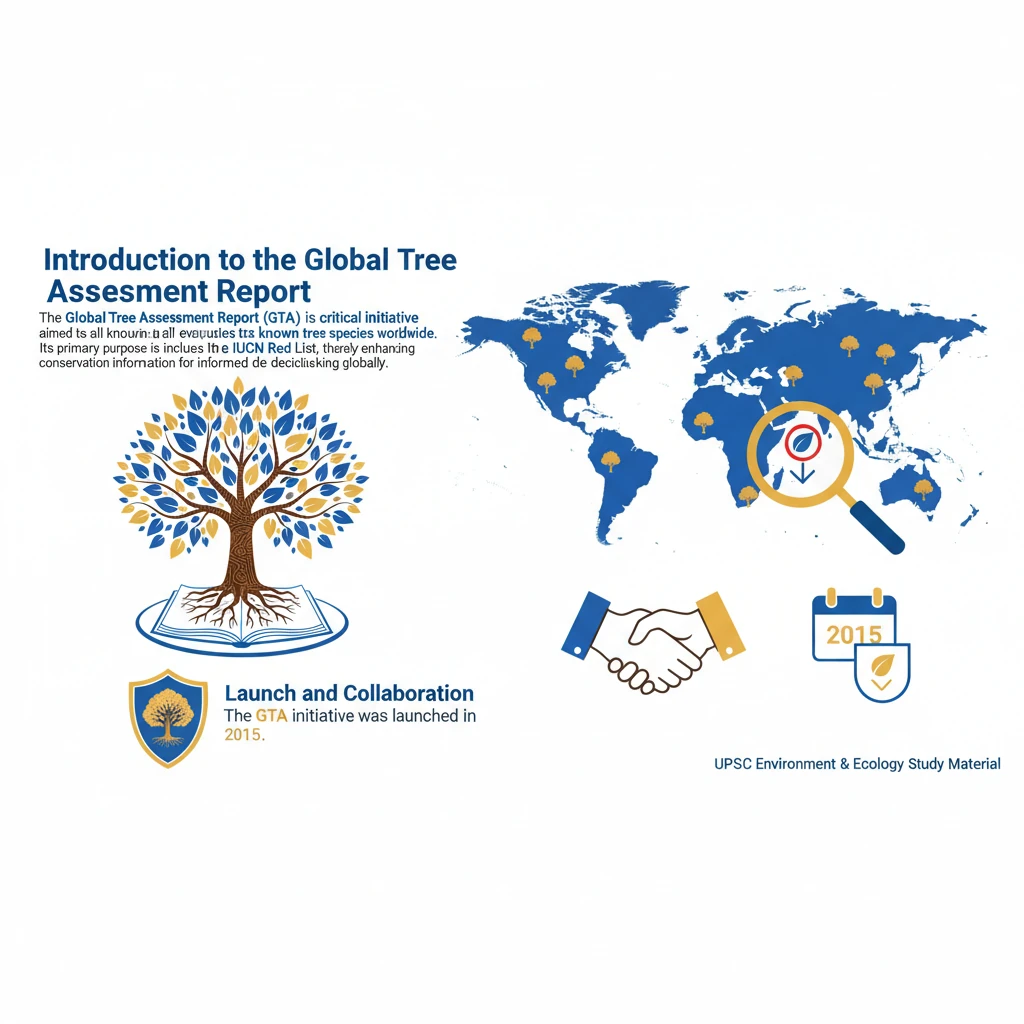
<h4>Introduction to the Global Tree Assessment Report</h4><p>The <strong>Global Tree Assessment Report (GTA)</strong> is a critical initiative aimed at evaluating all known <strong>tree species</strong> worldwide.</p><p>Its primary purpose is to include these species in the <strong>IUCN Red List</strong>, thereby enhancing conservation information for informed decision-making globally.</p><h4>Launch and Collaboration</h4><p>The <strong>GTA</strong> initiative was launched in <strong>2015</strong>. Since its inception, it has been instrumental in prioritizing conservation actions, research efforts, and funding allocations for tree species most vulnerable to extinction.</p><div class='info-box'><ul><li><strong>Launch Year:</strong> <strong>2015</strong></li><li><strong>Key Objective:</strong> Prioritize conservation for at-risk tree species.</li><li><strong>Collaborators:</strong> Over <strong>60 botanical organizations</strong>, <strong>25 IUCN groups</strong>, and numerous <strong>tree experts</strong> globally.</li></ul></div><h4>Key Findings: Trees at Risk</h4><p>The report highlights a significant number of tree species facing extinction, underscoring the urgent need for conservation.</p><div class='key-point-box'><ul><li><strong>Species Analyzed:</strong> <strong>47,282</strong> tree species.</li><li><strong>Species Facing Extinction:</strong> <strong>16,425</strong> species.</li><li><strong>Examples of Threatened Genera:</strong> <strong>Magnolias</strong>, <strong>Oaks</strong>, <strong>Maples</strong>, and <strong>Ebonies</strong>.</li><li><strong>Severity:</strong> Threatened tree species collectively outnumber endangered <strong>birds</strong>, <strong>mammals</strong>, <strong>reptiles</strong>, and <strong>amphibians</strong> combined, across <strong>192 countries</strong>.</li></ul></div><p>A specific example is <strong>Buchanania barberi</strong>, found in <strong>Kenya’s South Western</strong> or <strong>Chyulu</strong> region, which has been listed as <strong>Critically Endangered (IUCN, 2018)</strong>. This listing has spurred conservation efforts, including successful germination trials.</p><h4>Major Threats to Tree Species</h4><p>Several factors contribute to the escalating threat to global tree populations, primarily driven by human activities and environmental changes.</p><div class='key-point-box'><ul><li><strong>Deforestation:</strong> <strong>Land clearing</strong> for <strong>agriculture</strong> and <strong>livestock</strong> is a primary driver, particularly prevalent in <strong>tropical regions</strong>.</li><li><strong>Logging:</strong> Over <strong>5,000 tree species</strong> are commercially exploited for <strong>timber</strong>. Additionally, <strong>2,000 species</strong> are utilized for <strong>food</strong>, <strong>medicine</strong>, and <strong>fuel</strong>, often unsustainably.</li><li><strong>Invasive Species & Diseases:</strong> The spread of <strong>non-native species</strong> and <strong>pathogens</strong> poses an increasing threat, especially impacting trees in <strong>temperate regions</strong>.</li><li><strong>Climate Change:</strong> Rising global temperatures, sea level rise, and an increase in extreme weather events directly threaten tree ecosystems, particularly vulnerable <strong>tropical</strong> and <strong>island ecosystems</strong>.</li></ul></div><h4>Global Conservation Efforts</h4><p>Despite the challenges, various successful conservation initiatives have been implemented worldwide to protect endangered tree species.</p><div class='info-box'><ul><li><strong>Successful Initiatives:</strong> Conservation efforts have yielded positive results in areas like the <strong>Juan Fernández Islands</strong>, <strong>Cuba</strong>, <strong>Madagascar</strong>, and <strong>Fiji</strong>.</li><li><strong>National Strategies:</strong> Countries such as <strong>Ghana</strong>, <strong>Colombia</strong>, <strong>Chile</strong>, and <strong>Kenya</strong> have developed and implemented their own <strong>national tree conservation strategies</strong>.</li><li><strong>Dedicated Zones:</strong> <strong>Gabon</strong> has notably established specific <strong>conservation zones</strong> dedicated solely to tree preservation.</li></ul></div><div class='exam-tip-box'><p>Understanding the <strong>Global Tree Assessment Report</strong> is crucial for <strong>UPSC Mains GS-III (Environment & Ecology)</strong>. It provides data for questions on <strong>biodiversity loss</strong>, <strong>conservation strategies</strong>, and <strong>climate change impacts</strong>.</p></div>
💡 Key Takeaways
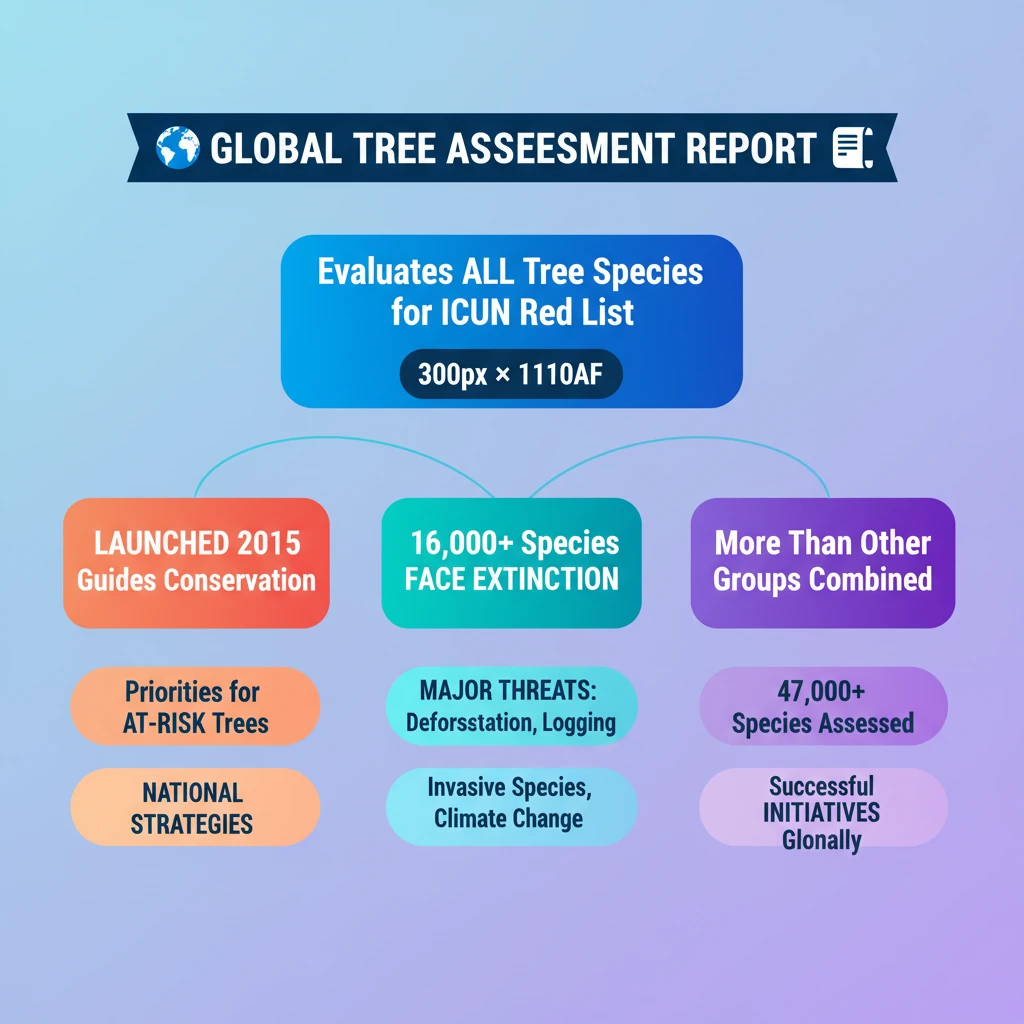
- •The Global Tree Assessment (GTA) evaluates all tree species for the IUCN Red List.
- •Launched in 2015, it guides conservation priorities for at-risk trees.
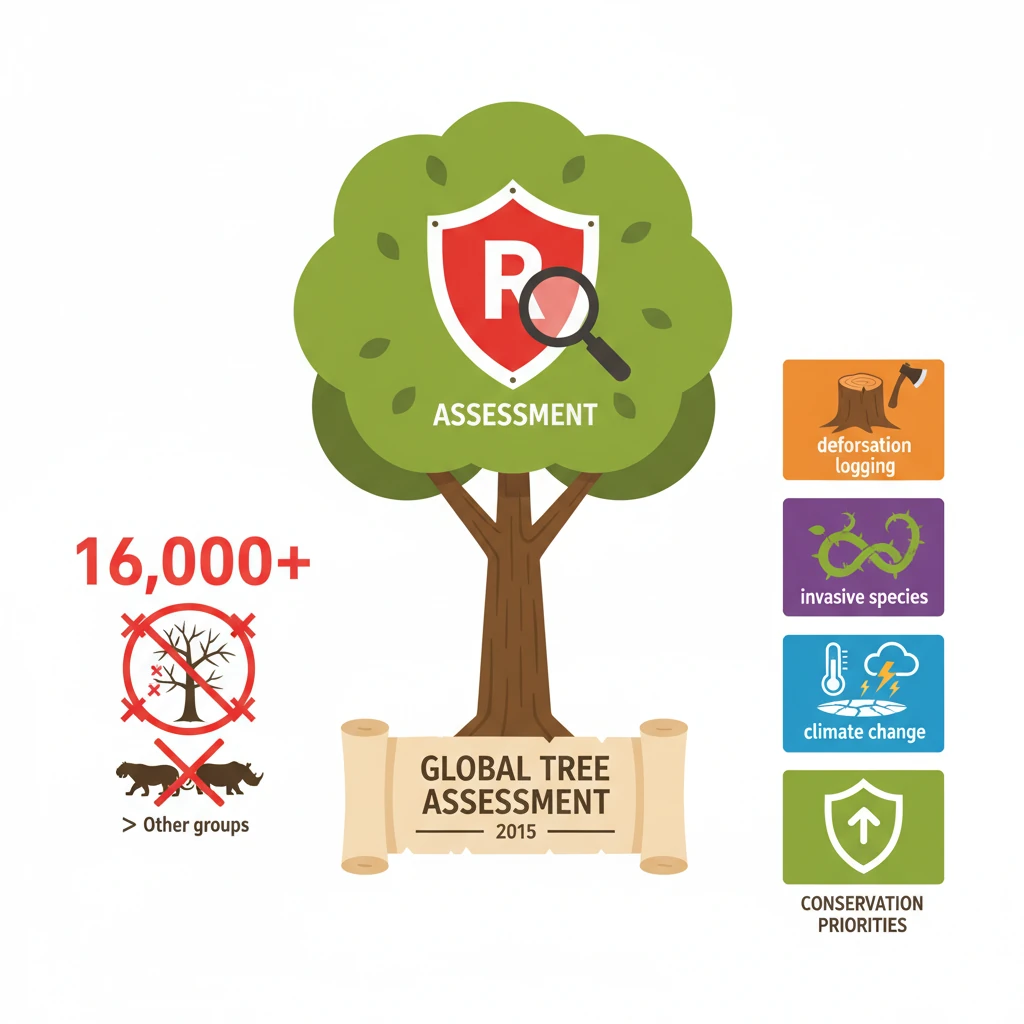
- •Over 16,000 of 47,000+ assessed tree species face extinction, outnumbering other endangered groups combined.
- •Major threats include deforestation, logging, invasive species, and climate change.
- •Successful conservation initiatives and national strategies are underway globally.
🧠 Memory Techniques
98% Verified Content