Tool-Using Fish Species Found in the Laccadive Sea - Environment And Ecology | UPSC Learning
Topics
0 topics • 0 completed
🔍
No topics match your search
Tool-Using Fish Species Found in the Laccadive Sea
Medium⏱️ 7 min read
environment and ecology
📖 Introduction
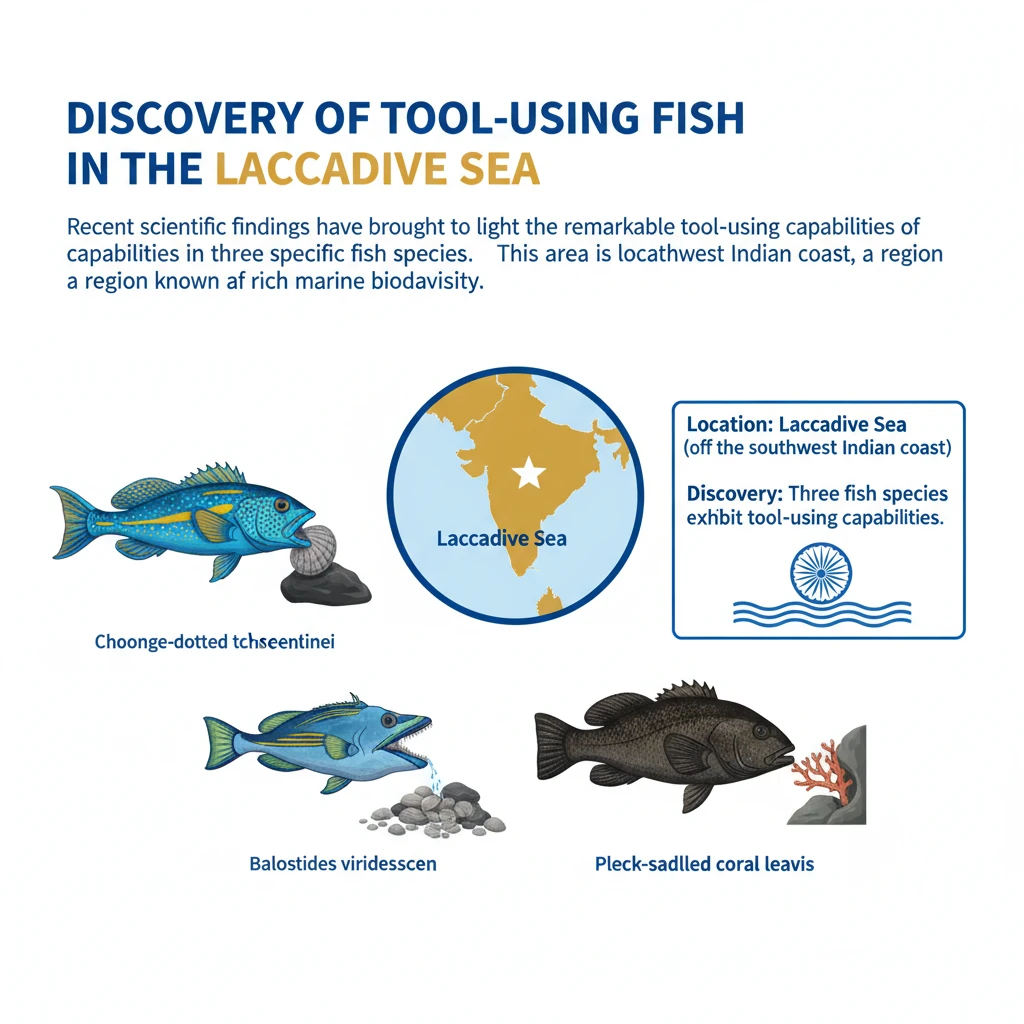
<h4>Discovery of Tool-Using Fish in the Laccadive Sea</h4><p>Recent scientific findings have brought to light the remarkable tool-using capabilities of three specific fish species in the <strong>Laccadive Sea</strong>. This area is located off the <strong>southwest Indian coast</strong>, a region known for its rich marine biodiversity.</p><div class='info-box'><p><strong>Location:</strong> Laccadive Sea (off the southwest Indian coast)</p><p><strong>Discovery:</strong> Three fish species exhibiting tool-use.</p></div><h4>Previously Known Tool-Users in the Animal Kingdom</h4><p>The concept of <strong>tool-use</strong> is well-established across various animal groups. Many species are recognized for their ability to manipulate objects to achieve a goal.</p><ul><li><strong>Primates:</strong> Widely known for using sticks, stones, and leaves.</li><li><strong>Birds:</strong> Certain species, like crows, employ twigs to extract insects.</li><li><strong>Otters:</strong> Use rocks to crack open shellfish.</li><li><strong>Octopuses:</strong> Known to use shells as shelters or to open prey.</li></ul><h4>The Novelty of Tool-Use in Fish</h4><p>Traditionally, <strong>tool-use by fish</strong> was considered highly improbable. This perception stemmed from their anatomical limitations, specifically the absence of hands, claws, or tentacles for grasping and manipulating objects effectively.</p><div class='key-point-box'><p><strong>Key Challenge:</strong> Fish lack specialized appendages for object manipulation, making tool-use a surprising discovery.</p></div><h4>The Three Tool-Using Fish Species Identified</h4><p>The groundbreaking research identified three distinct wrasse species demonstrating this complex behavior. These species are now recognized for their innovative feeding strategies.</p><ul><li><strong>Jansen’s Wrasse</strong> (<em>Thalassoma jansenii</em>)</li><li><strong>Checkerboard Wrasse</strong> (<em>Halichoeres hortulanus</em>)</li><li><strong>Moon Wrasse</strong> (<em>Thalassoma lunare</em>)</li></ul><h4>Mechanism of Tool-Use: Cracking Sea Urchins</h4><p>These wrasses utilize their environment creatively to access food. They specifically target <strong>sea urchins</strong>, which possess spiny, hard shells that are difficult to penetrate.</p><p>The fish employ <strong>live or dead coral structures</strong> as natural <strong>anvils</strong>. They repeatedly strike the sea urchins against these hard surfaces to break open their protective shells.</p><div class='info-box'><p><strong>Tool:</strong> Live or dead coral structures</p><p><strong>Prey:</strong> Sea urchins (specifically <em>E. molaris</em>)</p><p><strong>Method:</strong> Striking urchins against coral anvils to access edible soft parts.</p></div><h4>Significance of the Findings for Each Species</h4><p>The discovery holds different levels of significance for each of the identified wrasse species, marking important milestones in marine biology.</p><ul><li>For <strong>Jansen’s Wrasse</strong> and <strong>Checkerboard Wrasse</strong>, this is the <strong>first-ever reported instance</strong> of tool-use.</li><li>For the <strong>Moon Wrasse</strong>, while tool-use might have been suspected, this marks the <strong>first documented instance in the wild</strong>.</li></ul><h4>Detailed Feeding Behavior of Wrasses</h4><p>Wrasses demonstrate a sophisticated sequence of actions to overcome the challenges posed by sea urchins. Unlike other tool-using fish like <strong>archerfish</strong>, wrasses do not possess specialized mouthparts for this task.</p><ol><li>They carefully <strong>turn the urchin over</strong> to expose its softer, more vulnerable underside.</li><li>They then transport the urchin to a suitable <strong>hard coral structure</strong>.</li><li>The urchin is repeatedly <strong>cracked against the coral</strong> until its skeleton breaks.</li><li>This allows the wrasses to consume the soft, edible parts inside.</li></ol><div class='exam-tip-box'><p><strong>UPSC Insight:</strong> This discovery challenges previous assumptions about fish intelligence and adaptability. It can be cited in questions related to <strong>animal behavior</strong>, <strong>marine biodiversity</strong>, and <strong>ecosystem dynamics</strong>.</p></div>
💡 Key Takeaways
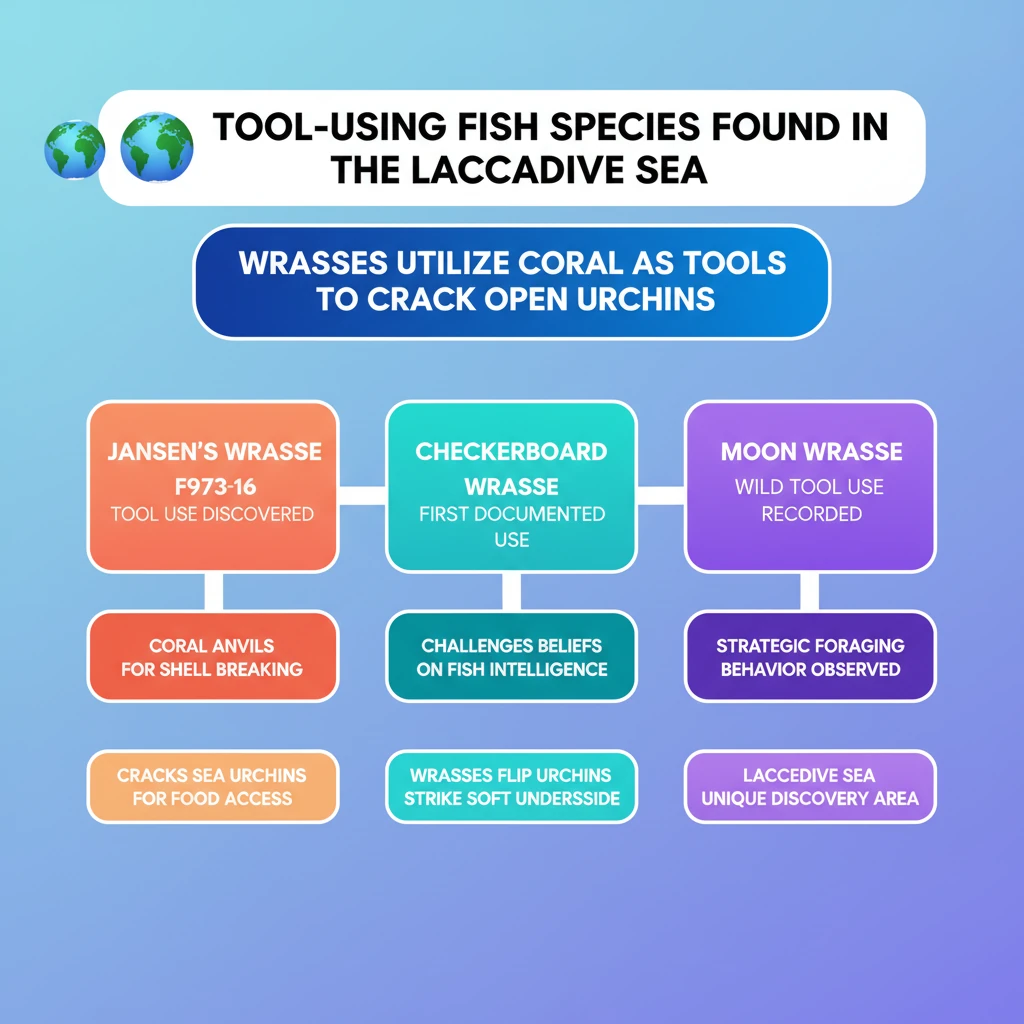
- •Three wrasse species (Jansen’s, Checkerboard, Moon) in the Laccadive Sea use coral as tools.
- •They use coral as anvils to crack open hard-shelled sea urchins for food.
- •This is the first documented tool-use for Jansen's and Checkerboard wrasses, and the first wild documentation for Moon wrasse.
- •The discovery challenges previous beliefs about fish intelligence and tool-use capabilities.
- •Wrasses strategically flip urchins to expose soft undersides before striking them against coral.
🧠 Memory Techniques
90% Verified Content