Sundarbans: Flora, Fauna, and Biodiversity - Environment And Ecology | UPSC Learning
Topics
0 topics • 0 completed
🔍
No topics match your search
Sundarbans: Flora, Fauna, and Biodiversity
Medium⏱️ 8 min read
environment and ecology
📖 Introduction
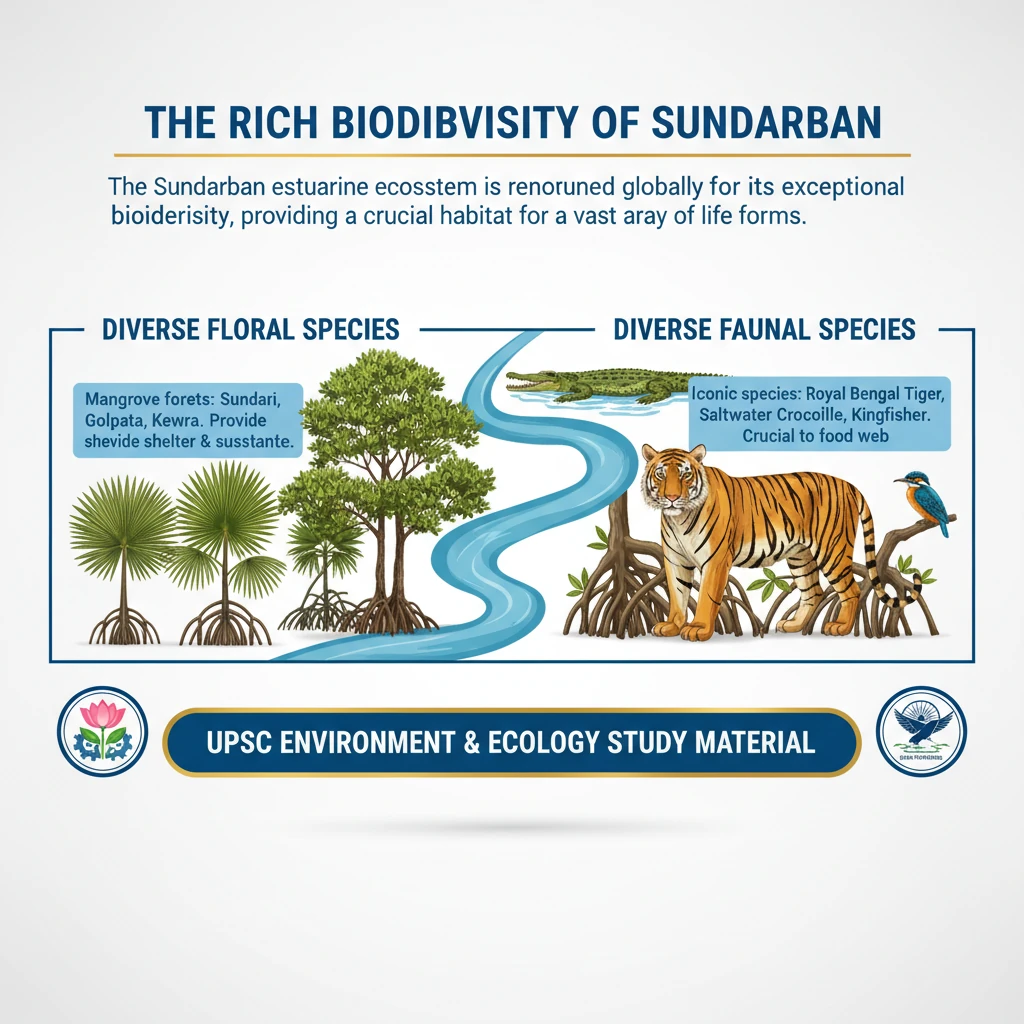
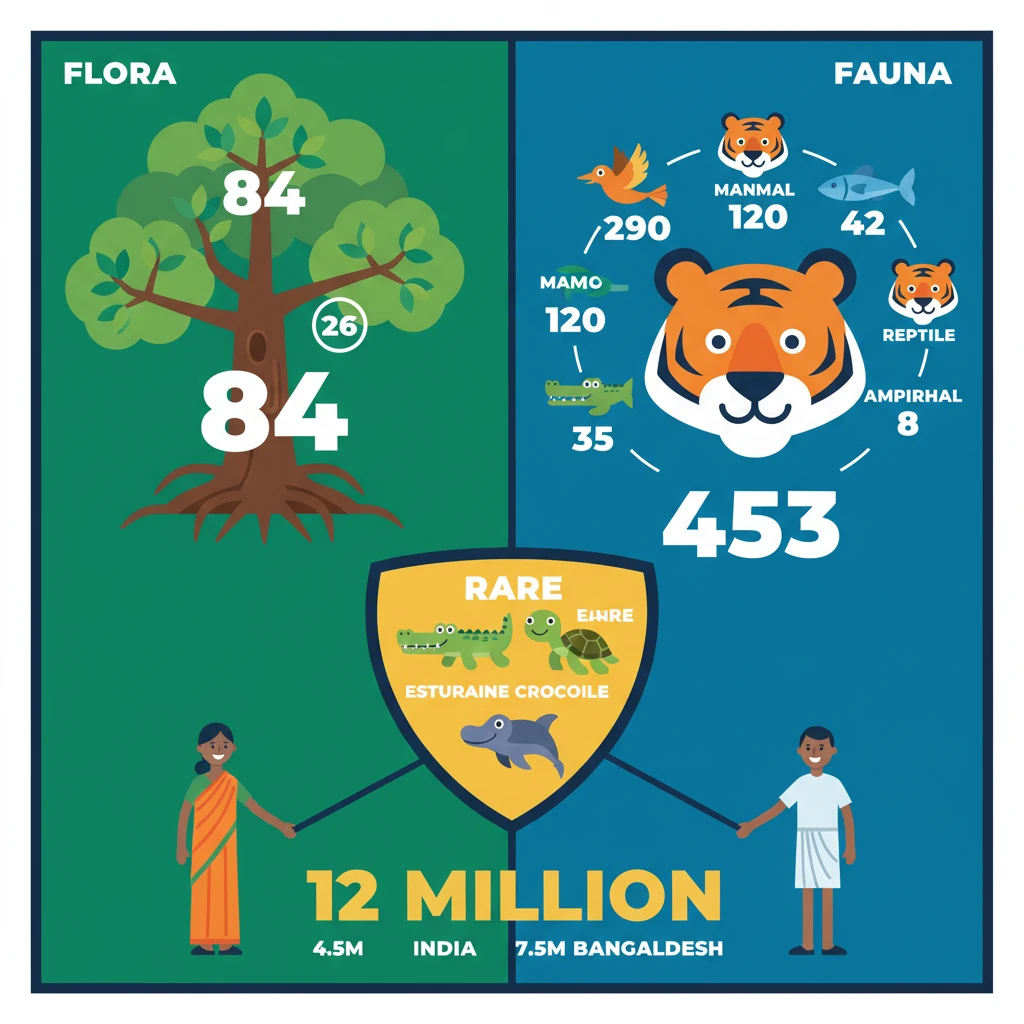
<h4>The Rich Biodiversity of Sundarban</h4><p>The <strong>Sundarban estuarine ecosystem</strong> is renowned globally for its exceptional biodiversity, providing a crucial habitat for a vast array of life forms. It serves as a natural sanctuary for numerous species, playing a vital role in regional ecology.</p><h4>Diverse Floral Species</h4><p>The <strong>Sundarban</strong> region is a haven for plant life, particularly its unique mangrove forests. This ecosystem provides shelter and sustenance for a remarkable number of floral species.</p><div class='info-box'><p>The area supports <strong>84 species of flora</strong>. Among these, a significant proportion comprises <strong>26 distinct mangrove species</strong>, highlighting the specialized nature of this estuarine environment.</p></div><h4>Abundant Faunal Diversity</h4><p>Beyond its rich flora, <strong>Sundarban</strong> is a vibrant hub for animal life. It hosts a diverse range of faunal groups, with many species relying on this ecosystem for their entire life cycle.</p><div class='info-box'><ul><li><strong>Total Fauna Species:</strong> 453 species</li><li><strong>Fish Species:</strong> 120 species</li><li><strong>Bird Species:</strong> 290 species</li><li><strong>Mammal Species:</strong> 42 species</li><li><strong>Reptile Species:</strong> 35 species</li><li><strong>Amphibian Species:</strong> 8 species</li></ul></div><h4>Ecosystem Services and Shelter</h4><p>The <strong>Sundarban ecosystem</strong> is more than just a habitat; it is a critical feeding, breeding, and sheltering ground. Many animal groups depend entirely on its unique environment for survival and reproduction.</p><div class='key-point-box'><p>The <strong>Sundarban</strong> acts as a natural abode, offering essential resources and protection that foster high biodiversity. Its complex network of waterways and dense mangroves creates ideal conditions for various species.</p></div><h4>Home to Globally Threatened Wildlife</h4><p>Significantly, the <strong>Sundarban</strong> is a refuge for several rare and globally threatened wildlife species. Its undisturbed areas provide critical habitats for these vulnerable populations.</p><div class='info-box'><ul><li><strong>Estuarine Crocodile:</strong> A top predator in the estuarine food web.</li><li><strong>Water Monitor Lizard:</strong> An important scavenger and predator.</li><li><strong>Gangetic Dolphin:</strong> An endangered freshwater dolphin found in its rivers.</li><li><strong>Olive Ridley Turtle:</strong> A migratory sea turtle, often nesting in coastal areas.</li></ul></div><h4>Human-Ecosystem Interdependence</h4><p>The <strong>Sundarban estuarine ecosystem</strong> also supports a large human population, demonstrating a close interdependence between nature and human livelihoods. Millions rely on its resources for their daily existence.</p><div class='info-box'><p>More than <strong>12 million people</strong> live within this ecosystem, with approximately <strong>4.5 million in India</strong> and <strong>7.5 million in Bangladesh</strong>, highlighting the significant socio-ecological dimension.</p></div>
💡 Key Takeaways
- •Sundarban is a globally significant estuarine ecosystem with immense flora and fauna diversity.
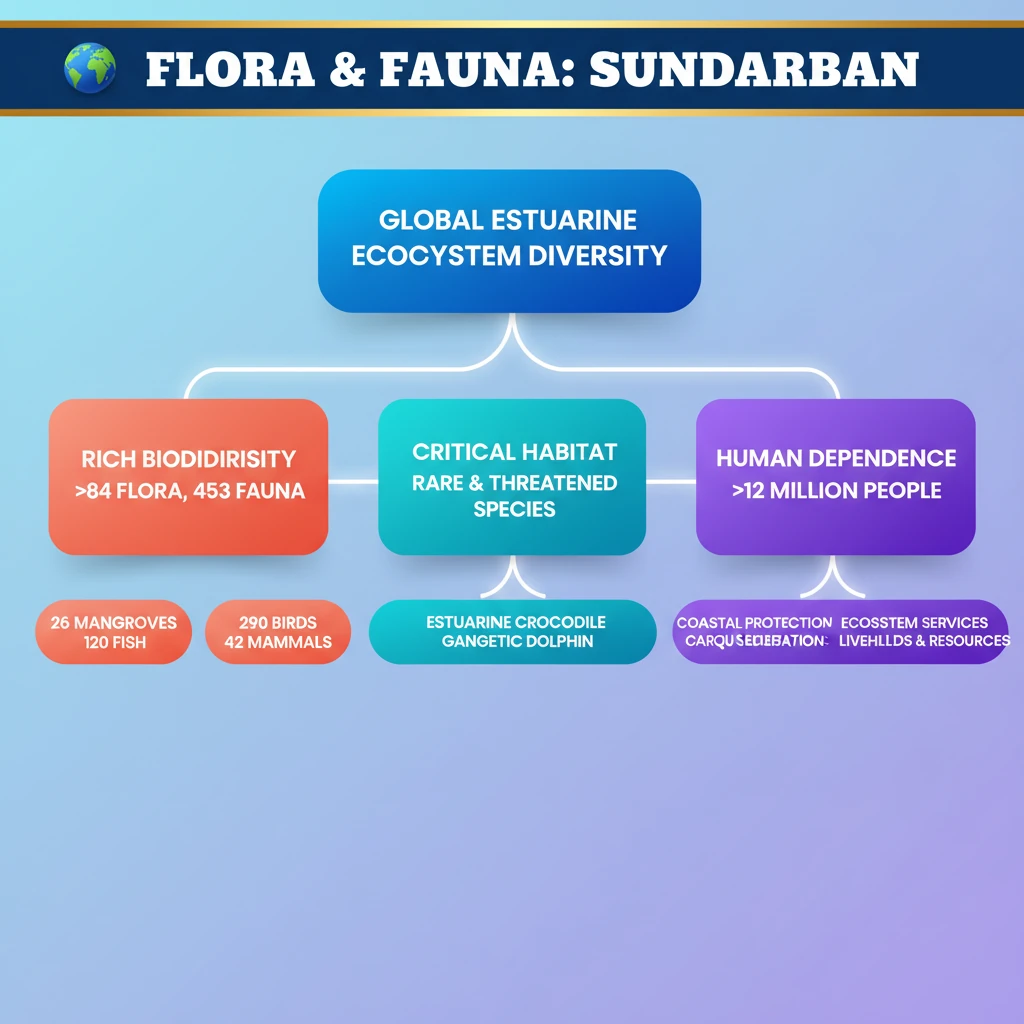
- •It hosts 84 flora species (26 mangroves) and 453 fauna species (120 fish, 290 birds, 42 mammals, 35 reptiles, 8 amphibians).
- •Crucial habitat for rare and threatened species like Estuarine Crocodile, Gangetic Dolphin, and Olive Ridley Turtle.
- •Over 12 million people (4.5M India, 7.5M Bangladesh) depend on this ecosystem.
- •Mangroves provide vital ecosystem services, including coastal protection and carbon sequestration.
🧠 Memory Techniques
95% Verified Content
📚 Reference Sources
•UNESCO World Heritage Centre
•IUCN Red List Database
•Ministry of Environment, Forest and Climate Change (MoEFCC), Government of India