What are the Sources of Groundwater Contamination? - Environment And Ecology | UPSC Learning
Topics
0 topics • 0 completed
🔍
No topics match your search
What are the Sources of Groundwater Contamination?
Medium⏱️ 8 min read
environment and ecology
📖 Introduction
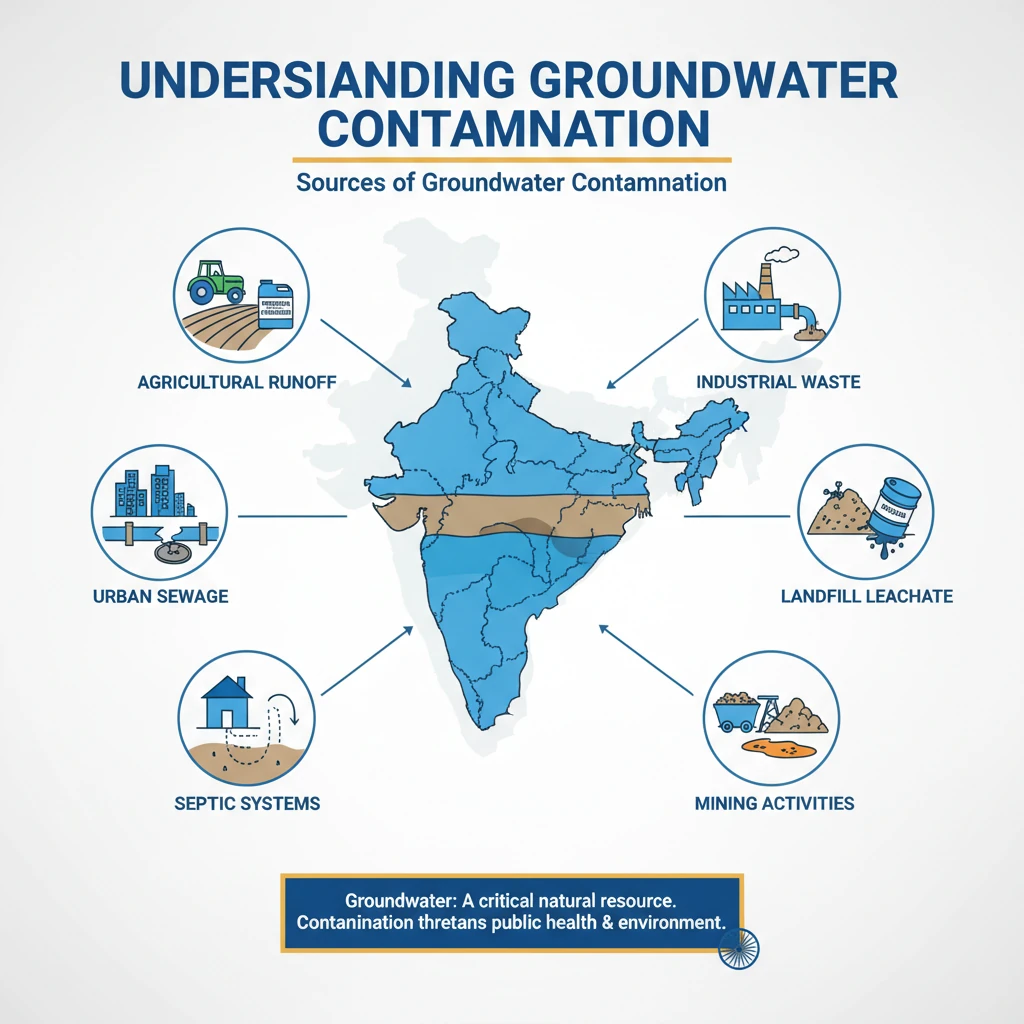
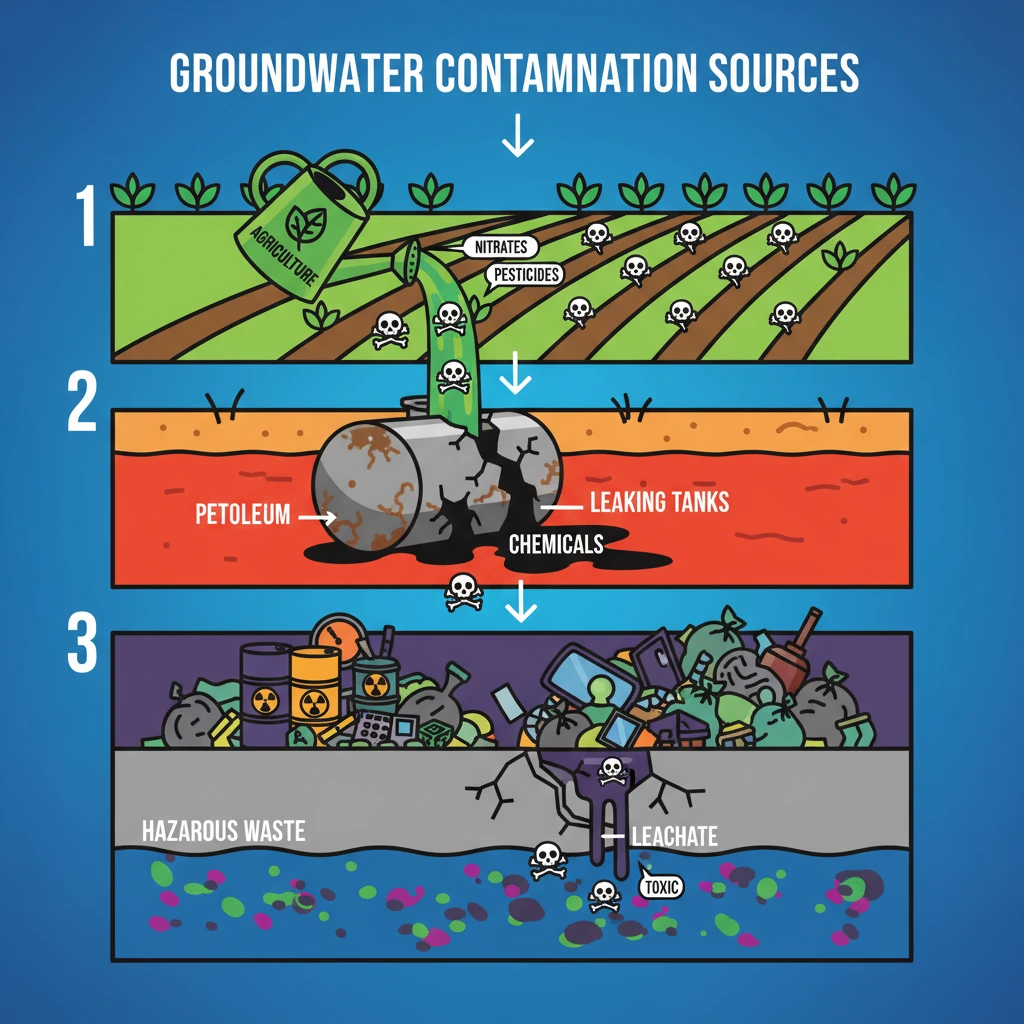
<h4>Understanding Groundwater Contamination</h4><p><strong>Groundwater</strong> is a critical natural resource, serving as a primary source of drinking water and irrigation globally. However, human activities often lead to its degradation through various forms of <strong>contamination</strong>.</p><p>Understanding the sources of this contamination is essential for effective environmental management and public health protection. These sources can be broadly categorized into agricultural, industrial, and waste-related origins.</p><div class='key-point-box'><p><strong>Key Concept:</strong> Groundwater contamination occurs when pollutants infiltrate the ground and reach the underground water reservoirs known as <strong>aquifers</strong>, making the water unsafe for consumption or other uses.</p></div><h4>Agricultural Practices</h4><p>Agricultural activities are a significant contributor to groundwater contamination, primarily due to the intensive use of chemical inputs.</p><p>The excessive application of <strong>fertilizers</strong> and <strong>pesticides</strong> on agricultural lands leads to their leaching into the soil. These chemicals, particularly <strong>nitrates</strong> and <strong>phosphates</strong> from fertilizers, are highly soluble and can easily percolate through the soil profile.</p><div class='info-box'><p><strong>Common Contaminants:</strong></p><ul><li><strong>Nitrates:</strong> From nitrogenous fertilizers, linked to 'blue baby syndrome' (methemoglobinemia) in infants.</li><li><strong>Pesticides:</strong> Including insecticides, herbicides, and fungicides, which can be toxic and persistent.</li></ul></div><p>Furthermore, <strong>improper irrigation practices</strong>, such as over-irrigation, can exacerbate the issue by increasing the downward movement of these dissolved contaminants. <strong>Over-extraction of water</strong> also lowers the water table, potentially drawing in contaminants from surrounding areas.</p><div class='exam-tip-box'><p><strong>UPSC Insight:</strong> Agricultural runoff is often termed a <strong>non-point source pollution</strong>, making it challenging to regulate and control compared to point sources. This is a crucial distinction for Mains answers.</p></div><h4>Leaking Storage Tanks</h4><p>Storage tanks, particularly those buried underground, pose a substantial risk of groundwater contamination if not properly maintained or monitored.</p><p>Over time, these <strong>underground storage tanks (USTs)</strong> can corrode and develop leaks. The contents, which often include hazardous substances like <strong>gasoline</strong>, <strong>oil</strong>, or various <strong>industrial chemicals</strong>, then seep directly into the surrounding soil and groundwater.</p><div class='info-box'><p><strong>Typical Contents of Leaking Tanks:</strong></p><ul><li><strong>Petroleum Products:</strong> Gasoline, diesel, heating oil.</li><li><strong>Industrial Solvents:</strong> Used in manufacturing and dry cleaning.</li><li><strong>Chemical Reagents:</strong> Stored at industrial facilities.</li></ul></div><p>Even small leaks can lead to significant contamination over time, as these substances can spread widely through the aquifer, affecting large areas and numerous water sources.</p><h4>Hazardous Waste Sites</h4><p><strong>Hazardous waste sites</strong>, especially abandoned or improperly managed ones, represent a severe threat to groundwater quality. These sites often contain a cocktail of toxic materials.</p><p>When such sites are left without proper containment, the hazardous materials can leach into the soil. Rainwater percolating through these wastes can form highly toxic liquid known as <strong>leachate</strong>.</p><div class='key-point-box'><p><strong>Definition:</strong> <strong>Leachate</strong> is a liquid that has passed through a solid material and has extracted soluble or suspended solids from it. In waste sites, it carries concentrated pollutants.</p></div><p>This leachate then infiltrates the ground, carrying a range of pollutants including <strong>heavy metals</strong>, organic compounds, and other toxic chemicals directly into the groundwater system. The remediation of such contaminated sites is often complex, costly, and time-consuming.</p>
💡 Key Takeaways
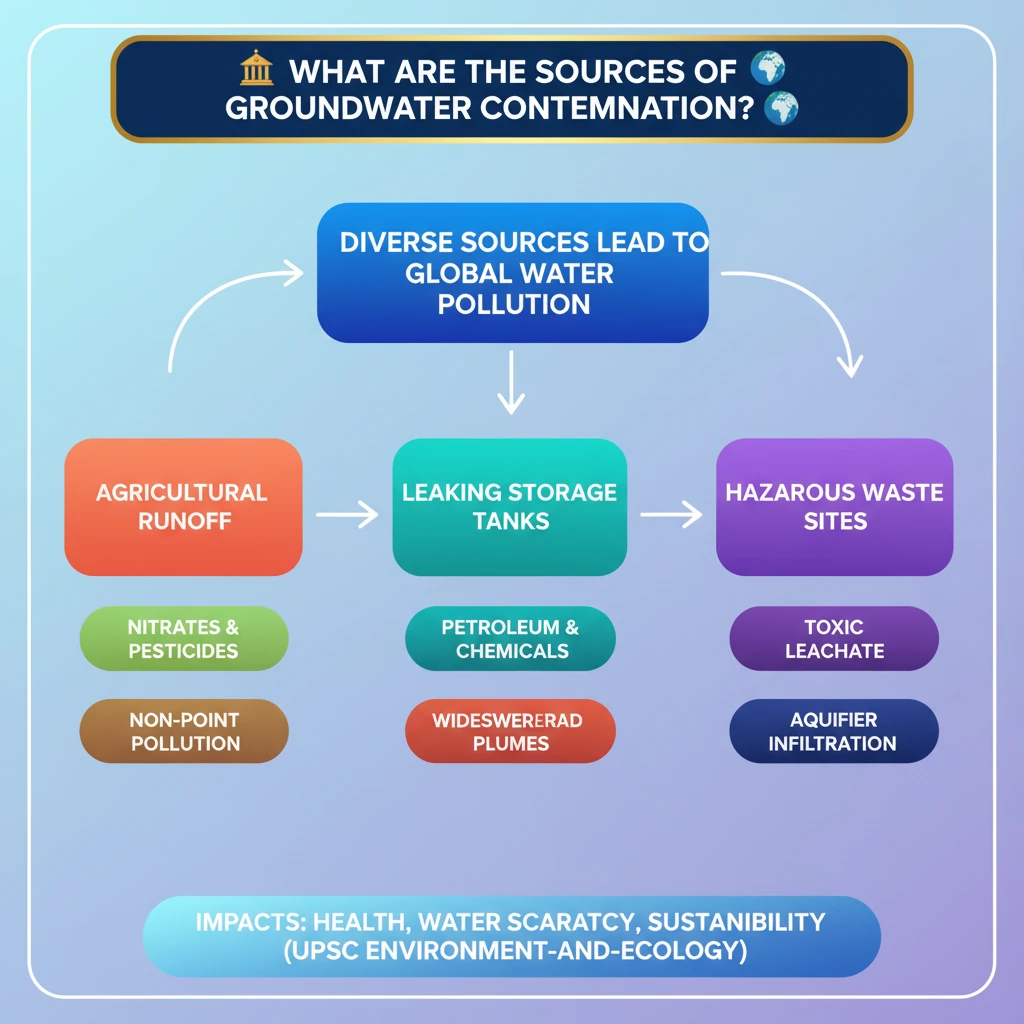
- •Groundwater contamination stems from diverse sources: agriculture, leaking storage tanks, and hazardous waste sites.
- •Agricultural runoff, rich in nitrates and pesticides, is a major non-point source of pollution.
- •Corroding underground storage tanks leak petroleum and chemicals, forming widespread plumes.
- •Hazardous waste sites and landfills generate toxic leachate that infiltrates aquifers.
- •Contamination impacts water availability, public health, and sustainable development.
- •Effective management requires stringent regulations, monitoring, and sustainable practices.
🧠 Memory Techniques
98% Verified Content
📚 Reference Sources
•Central Ground Water Board (CGWB) Reports, Ministry of Jal Shakti, Government of India
•Ministry of Environment, Forest and Climate Change (MoEFCC) Publications
•National Water Mission Documents