What are the Major Plants Related to Wolves? - Environment And Ecology | UPSC Learning
Topics
0 topics • 0 completed
🔍
No topics match your search
What are the Major Plants Related to Wolves?
Medium⏱️ 8 min read
environment and ecology
📖 Introduction
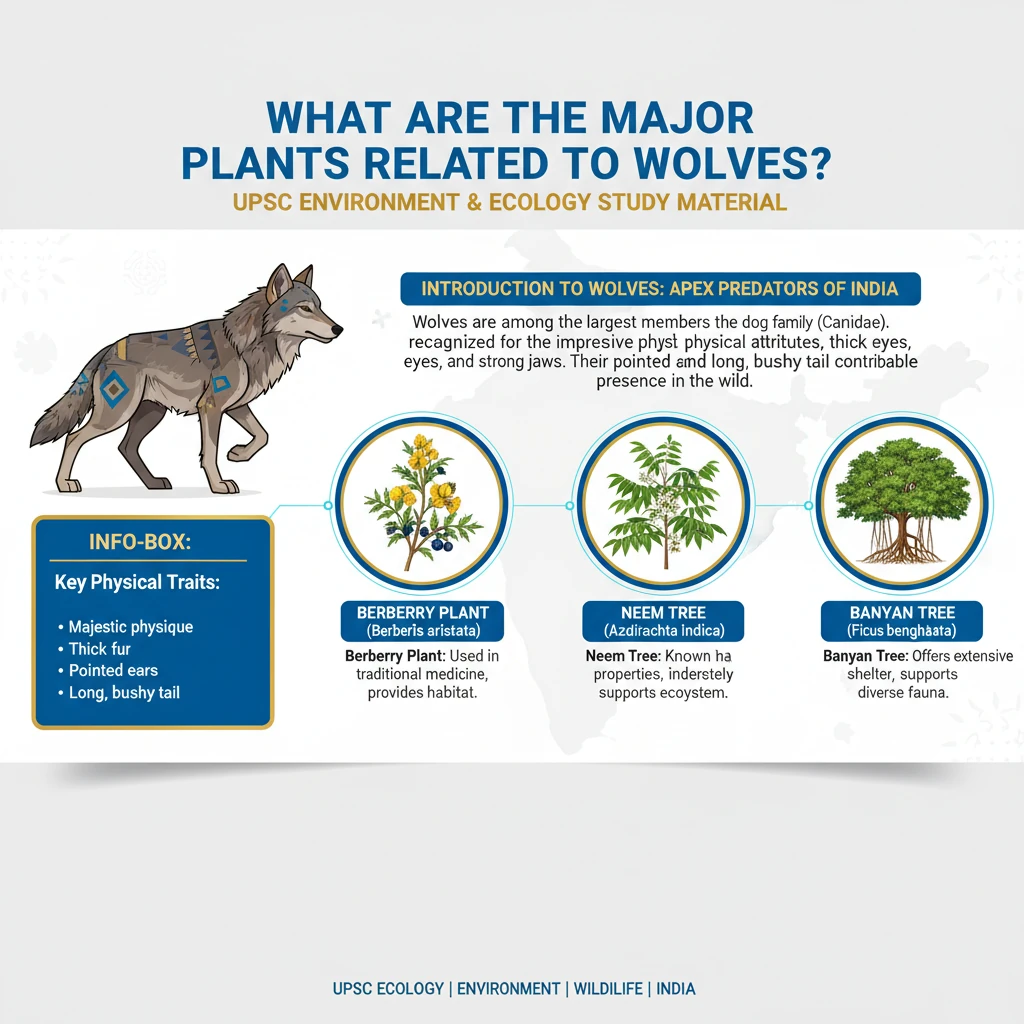
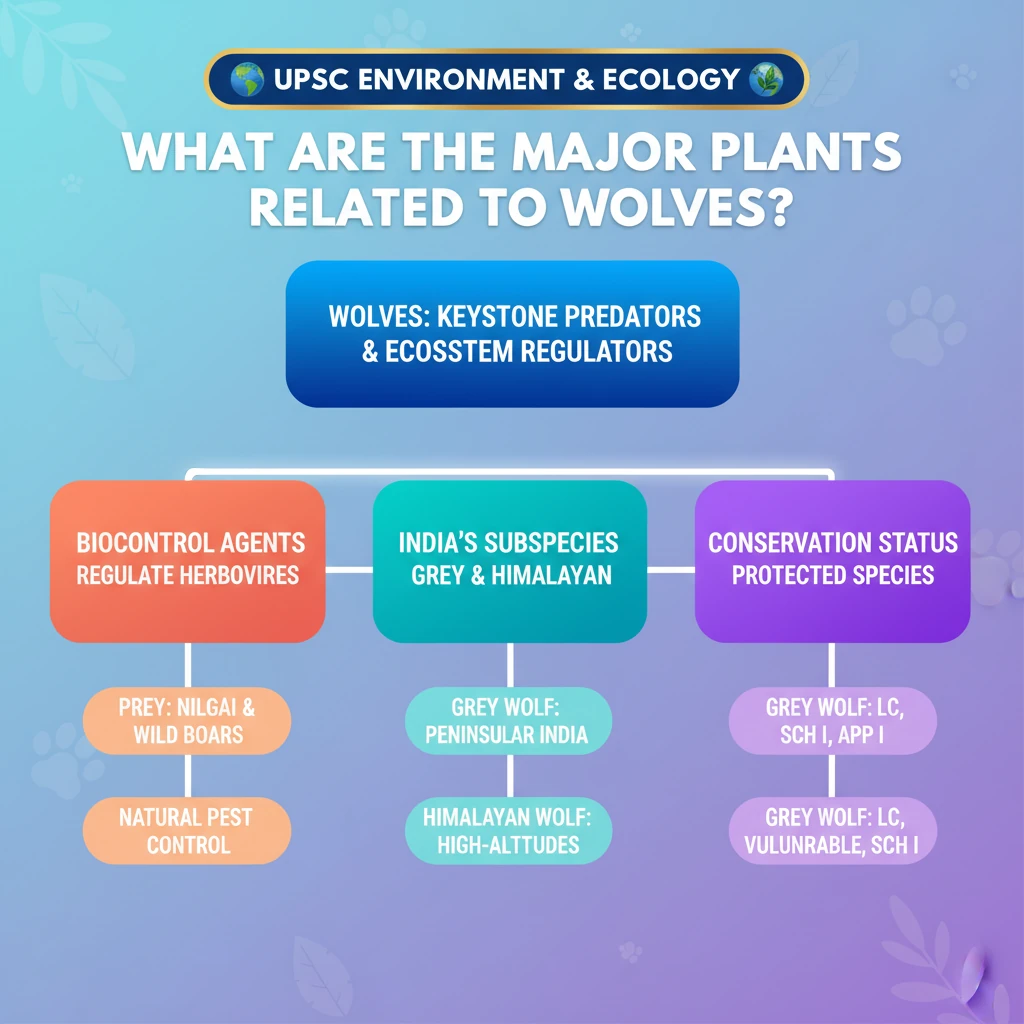
<h4>Introduction to Wolves: Apex Predators of India</h4><p><strong>Wolves</strong> are among the largest members of the <strong>dog family (Canidae)</strong>. They are recognized for their impressive physical attributes, including a majestic physique, thick fur, sharp eyes, and strong jaws. Their pointed ears and long, bushy tail contribute to their formidable presence in the wild.</p><div class='info-box'><p><strong>Key Physical Traits:</strong></p><ul><li><strong>Majestic physique</strong> and <strong>thick fur</strong></li><li><strong>Sharp eyes</strong> and <strong>strong jaws</strong></li><li><strong>Pointed ears</strong> and a <strong>long bushy tail</strong></li></ul></div><h4>Ecology and Behavior of Wolves</h4><p>Wolves are highly <strong>social animals</strong>, typically living in packs. A pack usually consists of a breeding pair and their offspring, who work together for survival.</p><div class='key-point-box'><p><strong>Social Structure:</strong> Packs collaborate in hunting and raising their young, fostering strong communal bonds.</p></div><p>As <strong>apex predators</strong>, wolves primarily hunt large <strong>ungulates</strong> such as <strong>deer</strong>, <strong>elk</strong>, and <strong>moose</strong>. This predatory role is crucial for maintaining the delicate balance of their ecosystems.</p><div class='info-box'><p><strong>Ecological Role:</strong> Wolves act as <strong>biocontrol agents</strong>, regulating populations of wild herbivores like <strong>nilgai (blue bulls)</strong> and <strong>wild boars</strong>.</p></div><p>Wolves are also known as <strong>communicative masters</strong>. Their distinctive howls serve multiple purposes, including strengthening pack bonds, defending territory, and communicating with other wolf packs over long distances.</p><h4>Wolf Subspecies Found in India</h4><p>India is home to two distinct wolf subspecies, each adapted to different geographical regions within the country. These subspecies represent a vital part of India's biodiversity.</p><ol><li><strong>Grey Wolf (Canis lupus pallipes):</strong> Primarily found in the peninsular region of India.</li><li><strong>Himalayan or Tibetan Wolf (Canis lupus chanco):</strong> Inhabits the northern, high-altitude regions of India.</li></ol><h4>Distribution Range in India</h4><p>The distribution of wolf subspecies in India is geographically diverse, reflecting their specific habitat requirements and historical ranges. Understanding their range is crucial for conservation efforts.</p><div class='info-box'><p><strong>Grey Wolf Distribution:</strong></p><ul><li><strong>Gujarat</strong></li><li><strong>Rajasthan</strong></li><li><strong>Uttar Pradesh</strong></li><li><strong>Madhya Pradesh</strong></li><li><strong>Maharashtra</strong> and other states across the peninsular region.</li></ul></div><div class='info-box'><p><strong>Himalayan Wolf Distribution:</strong></p><ul><li>Primarily in the <strong>Ladakh region</strong>.</li><li>Also found in the <strong>Lahaul and Spiti region</strong> of northeastern <strong>Himachal Pradesh</strong>, among other high-altitude areas.</li></ul></div><h4>Protection Status of Wolves in India</h4><p>The conservation status of wolf subspecies varies, reflecting different levels of threat and protection measures. These statuses are determined by international and national bodies.</p><div class='info-box'><p><strong>Grey Wolf Protection Status:</strong></p><ul><li><strong>IUCN Red List:</strong> <strong>Least Concern</strong></li><li><strong>Wildlife Protection Act (India), 1972:</strong> <strong>Schedule I</strong> (highest protection)</li><li><strong>CITES Appendix:</strong> <strong>I</strong> (prohibits international commercial trade)</li></ul></div><div class='info-box'><p><strong>Himalayan Wolf Protection Status:</strong></p><ul><li><strong>IUCN Red List:</strong> <strong>Vulnerable</strong></li></ul></div><div class='exam-tip-box'><p><strong>UPSC Insight:</strong> Note the difference in <strong>IUCN status</strong> between the <strong>Grey Wolf (Least Concern)</strong> and the <strong>Himalayan Wolf (Vulnerable)</strong>. Both are protected under <strong>Schedule I of the WPA, 1972</strong>, highlighting India's commitment to their conservation.</p></div>
💡 Key Takeaways
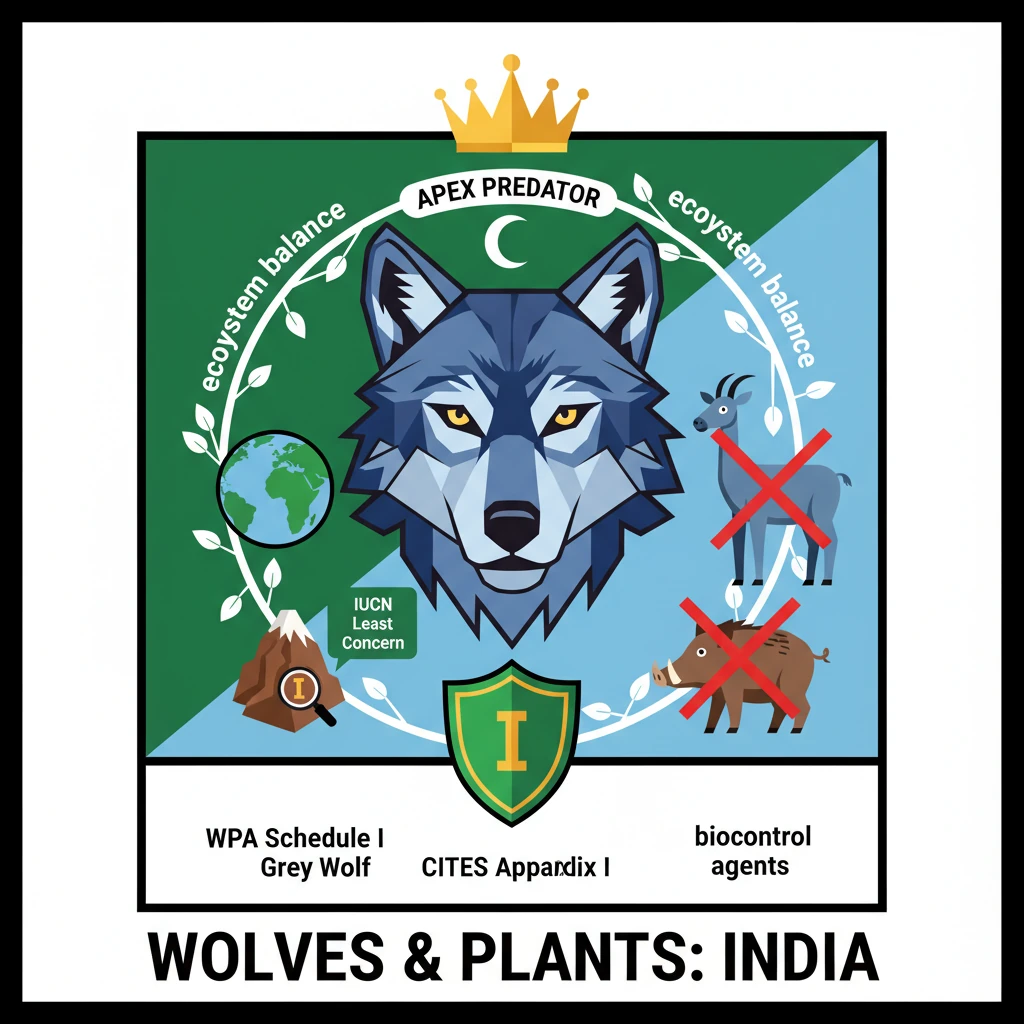
- •Wolves are apex predators (Canidae family) crucial for ecosystem balance.
- •They act as biocontrol agents, regulating herbivore populations like nilgai and wild boars.
- •India has two subspecies: Grey Wolf (peninsular) and Himalayan Wolf (northern high-altitudes).
- •Grey Wolf: IUCN Least Concern, WPA Schedule I, CITES Appendix I.
- •Himalayan Wolf: IUCN Vulnerable, WPA Schedule I.
- •Conservation efforts are vital due to habitat loss and human-wildlife conflict.
🧠 Memory Techniques
98% Verified Content
📚 Reference Sources
•IUCN Red List of Threatened Species (for protection status)
•Wildlife Protection Act, 1972 (for Schedule I status)
•CITES Appendices (for international trade status)