Potential Impact of Lithium Mining in Reasi (J&K) - Environment And Ecology | UPSC Learning
Topics
0 topics • 0 completed
🔍
No topics match your search
Potential Impact of Lithium Mining in Reasi (J&K)
Medium⏱️ 7 min read
environment and ecology
📖 Introduction
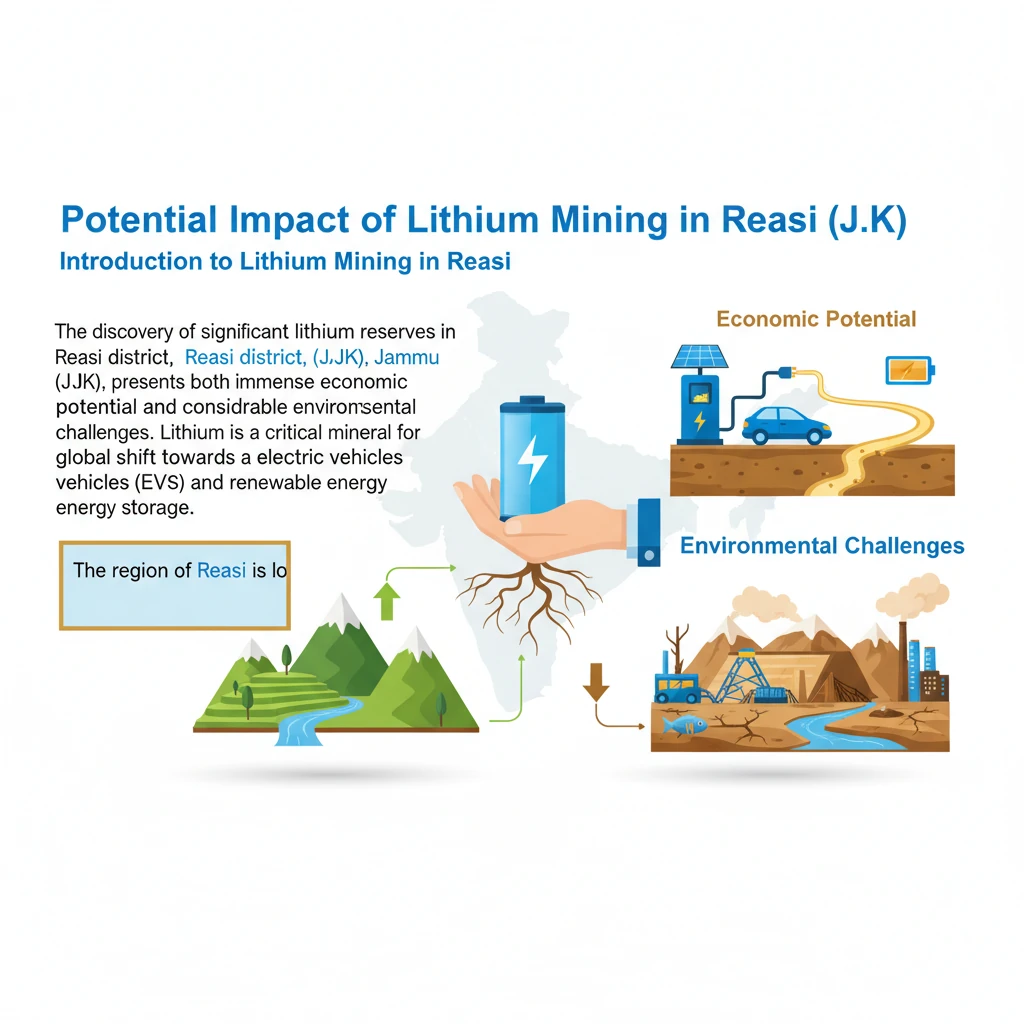
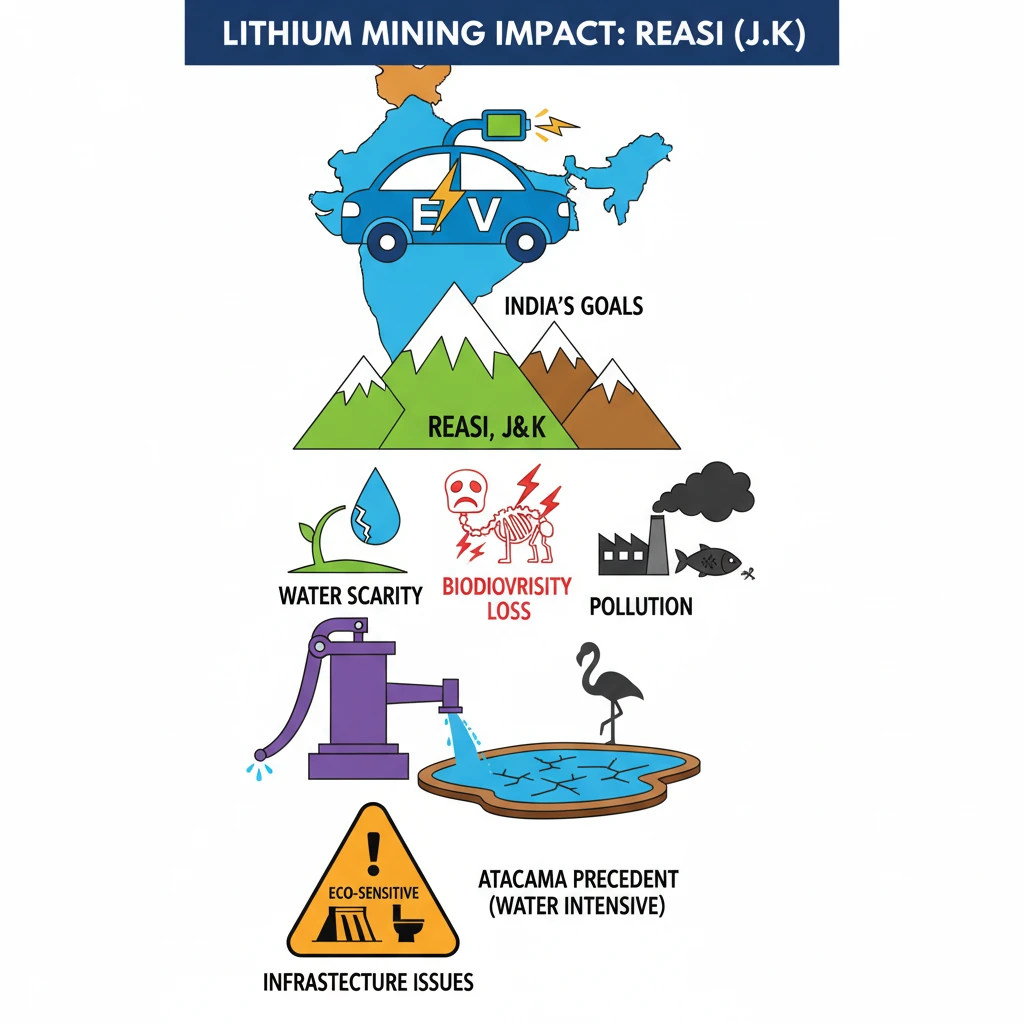
<h4>Introduction to Lithium Mining in Reasi</h4><p>The discovery of significant <strong>lithium reserves</strong> in <strong>Reasi district</strong>, <strong>Jammu and Kashmir (J&K)</strong>, presents both immense economic potential and considerable environmental challenges. Lithium is a critical mineral for the global shift towards <strong>electric vehicles (EVs)</strong> and <strong>renewable energy storage</strong>.</p><div class='key-point-box'><p>The region of <strong>Reasi</strong> is located in the ecologically sensitive <strong>Himalayan belt</strong>, making any large-scale industrial activity, such as mining, a subject of intense scrutiny regarding its potential environmental impact.</p></div><h4>Impact on Wildlife and Biodiversity</h4><p>Mining activities, particularly in ecologically sensitive zones, pose a direct threat to local and migratory wildlife. The <strong>Himalayan region in J&K</strong> is recognized as a <strong>biodiversity hotspot</strong> and an <strong>eco-sensitive region</strong>.</p><p>Large-scale mining operations can lead to significant <strong>habitat destruction</strong> and fragmentation. This directly impacts various species, including important <strong>migratory birds</strong> like the <strong>Common Teal</strong> and <strong>Northern Pintail</strong>, which rely on the lakes, marshes, and wetlands of J&K for their annual stay.</p><div class='info-box'><p>A <strong>2022 study</strong> from the <strong>Atacama region</strong>, a major lithium mining hub, highlighted a concerning decline in <strong>flamingo populations</strong>. This was attributed to reduced <strong>water levels</strong>, which severely affected their reproduction rates, serving as a cautionary tale for other regions.</p></div><h4>Exacerbation of Water Crisis</h4><p><strong>Water scarcity</strong> is already a pressing issue in many villages across <strong>Reasi</strong>. Perennial streams have reportedly dried up following the construction of the <strong>Chenab Rail Bridge</strong>, impacting local communities.</p><p><strong>Lithium mining</strong> is a highly <strong>water-intensive process</strong>. It requires substantial amounts of water for extraction and processing, which could further deplete already strained local water resources. This exacerbates the existing water crisis, affecting both human populations and natural ecosystems.</p><h4>Threat to Food Security</h4><p>The processes involved in <strong>mining and processing lithium</strong> can have far-reaching environmental consequences that indirectly threaten <strong>food security</strong>. These activities are associated with excessive <strong>carbon emissions</strong>, significant <strong>water usage</strong>, and large-scale <strong>land use changes</strong>.</p><p>Such environmental degradation can impact agricultural productivity, alter local climate patterns, and reduce the availability of natural resources essential for food production, thereby jeopardizing the food security of local communities.</p><h4>Pollution of Riparian Ecosystems</h4><p>The <strong>Himalayas</strong> are the source of numerous vital rivers that sustain vast populations downstream. Any mining activity in this sensitive mountainous region carries a high risk of <strong>pollution</strong>.</p><p>Mining waste, chemicals, and disturbed soil can leach into river systems, polluting the entire <strong>riparian ecosystem</strong>. This contamination can harm aquatic life, affect water quality for human consumption, and have cascading negative effects on the environment downstream.</p>

💡 Key Takeaways
- •Lithium discovery in Reasi, J&K, is crucial for India's EV and energy storage goals.
- •Mining poses significant environmental risks: water scarcity, biodiversity loss, and pollution.
- •Reasi is an eco-sensitive Himalayan region, already facing water issues from infrastructure projects.
- •Precedent from Atacama (flamingo decline) highlights water-intensive nature of lithium extraction.
- •Balancing strategic mineral needs with environmental protection and local livelihoods is a major challenge.
- •Robust EIA and sustainable mining practices are essential for mitigating negative impacts.
🧠 Memory Techniques
95% Verified Content
📚 Reference Sources
•General knowledge on lithium mining processes and environmental impacts
•Reports on Atacama region's ecological impact from lithium mining (as cited in source)
•Information on J&K's ecological status and biodiversity hotspots