What is Sustainable Agriculture? - Environment And Ecology | UPSC Learning
Topics
0 topics • 0 completed
🔍
No topics match your search
What is Sustainable Agriculture?
Medium⏱️ 8 min read
environment and ecology
📖 Introduction
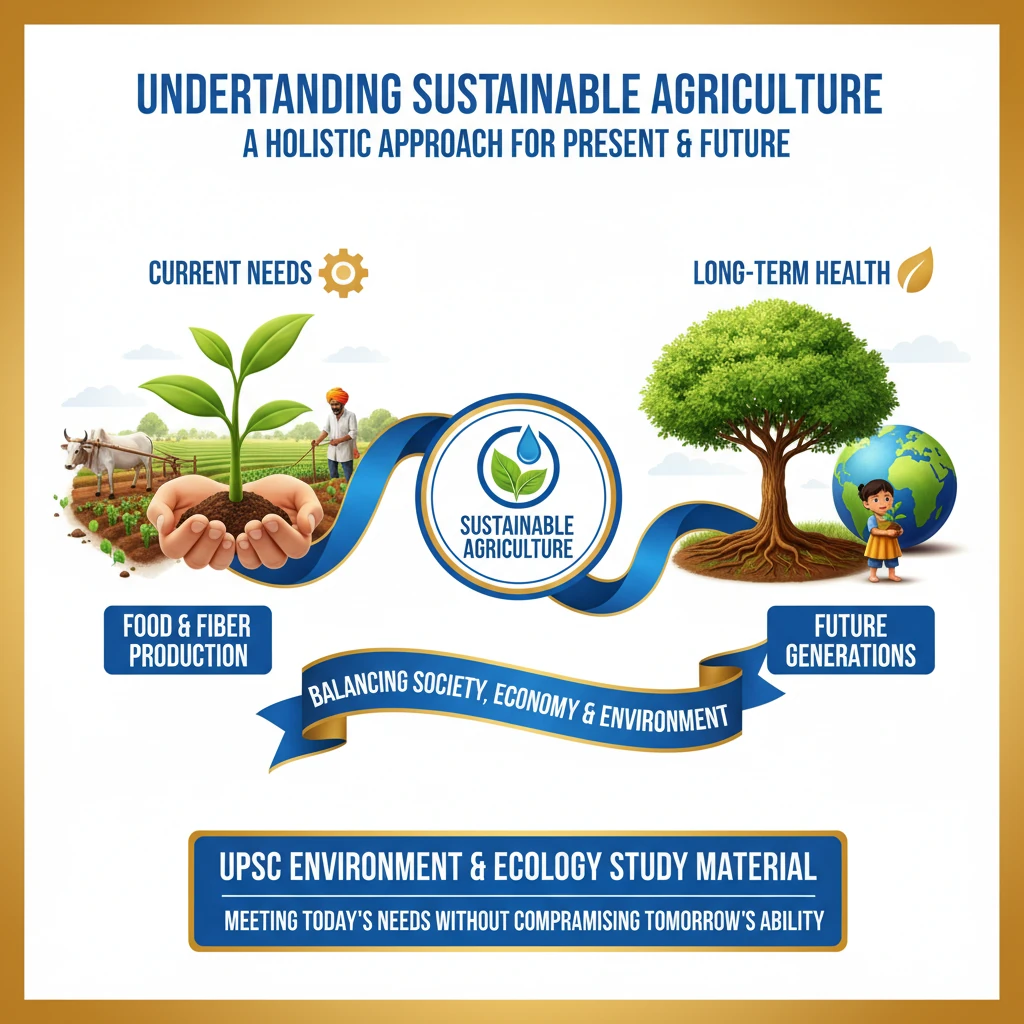
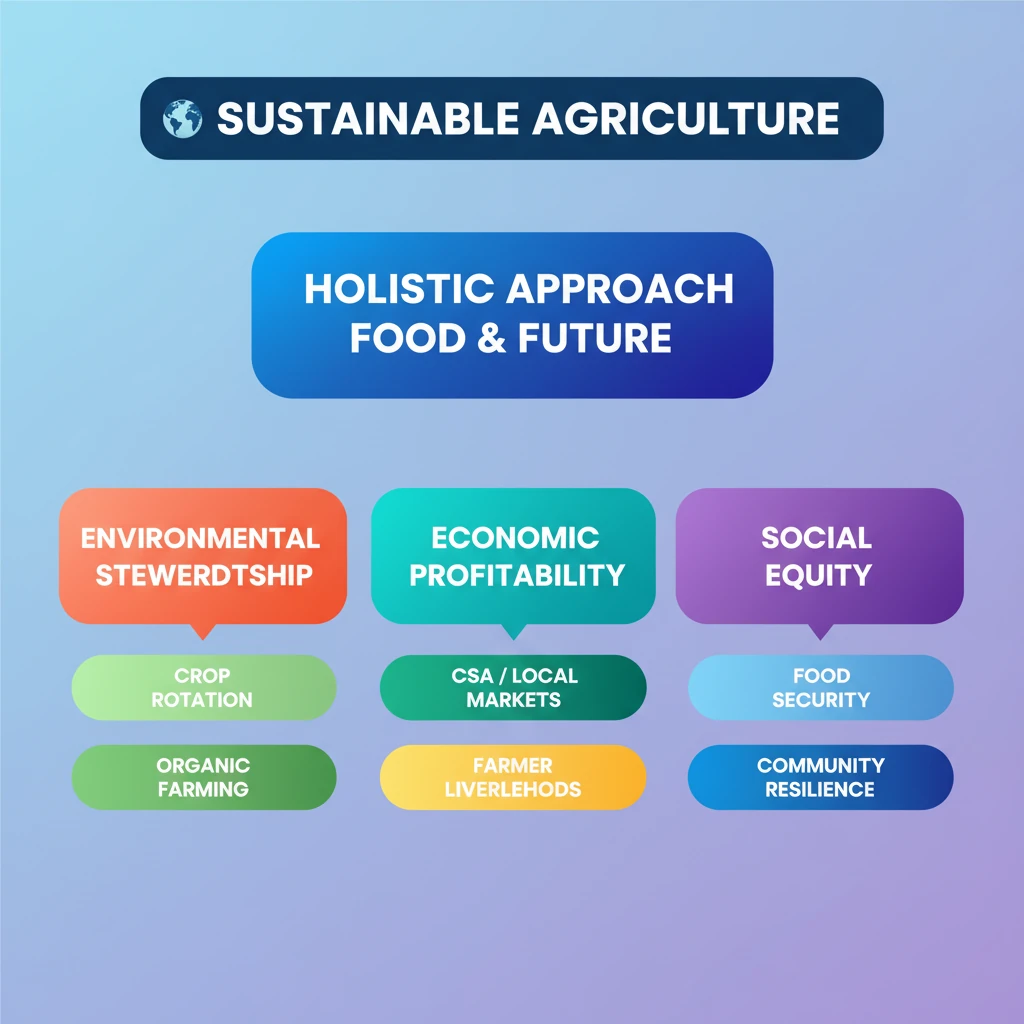
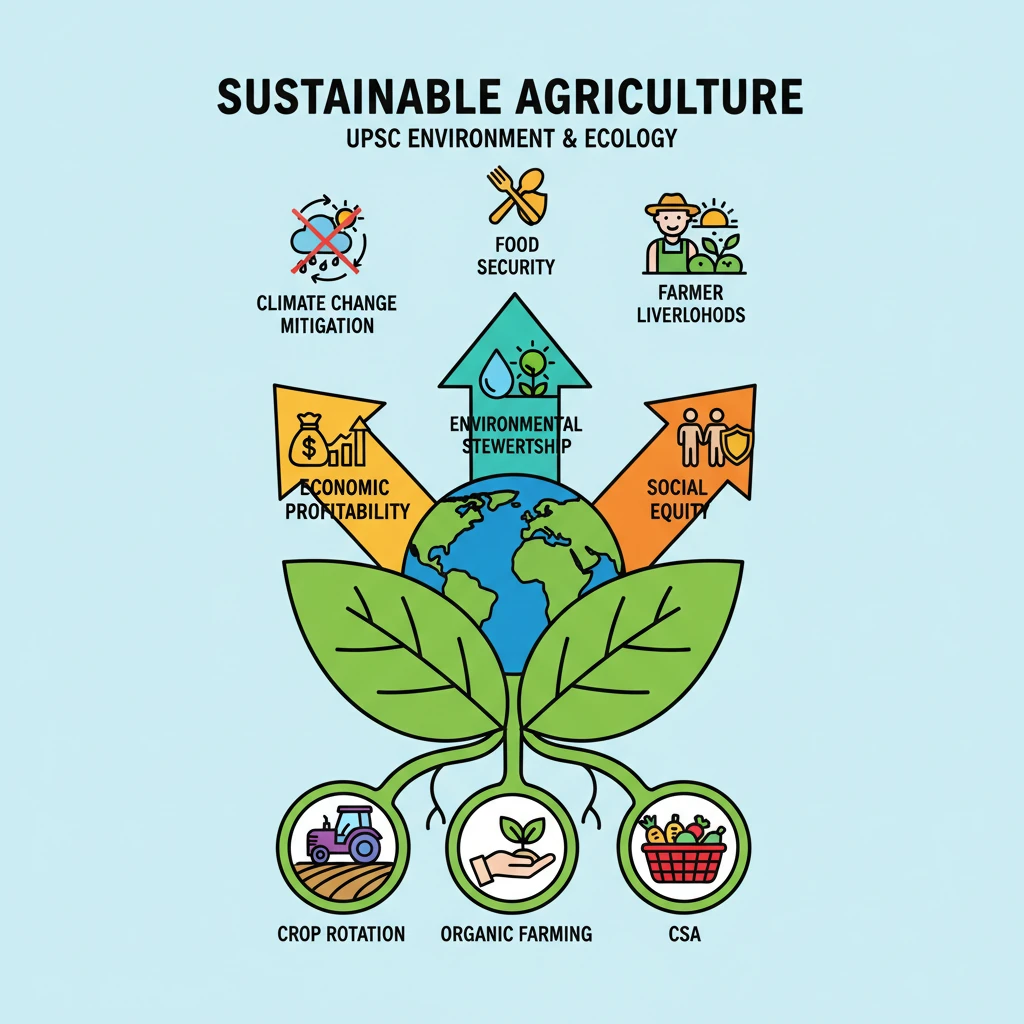
<h4>Understanding Sustainable Agriculture</h4><p><strong>Sustainable agriculture</strong> is a comprehensive and <strong>holistic approach</strong> to farming and food production. It seeks to balance the immediate demands of society with the long-term health of agricultural systems and the environment.</p><div class='key-point-box'><p>The primary goal is to meet the <strong>current needs</strong> for food and fiber without compromising the ability of <strong>future generations</strong> to meet their own needs. This involves careful management of natural resources.</p></div><h4>Core Principles and Practices</h4><p>This approach integrates various practices and principles that ensure the viability of farming. It moves beyond conventional farming to incorporate ecological, social, and economic considerations.</p><ul><li><strong>Crop Switching:</strong> Implementing diverse crop rotations to improve soil health and reduce pest pressure.</li><li><strong>Organic Farming:</strong> Avoiding synthetic fertilizers, pesticides, and genetically modified organisms (GMOs) to promote ecological balance.</li><li><strong>Community Supported Agriculture (CSA):</strong> Fostering direct relationships between farmers and consumers, enhancing local food systems.</li></ul><h4>Pillars of Sustainability</h4><p>Sustainable agriculture is built upon three interconnected pillars, ensuring a balanced and resilient food system.</p><div class='info-box'><ul><li><strong>Environmental Stewardship:</strong> Protecting and enhancing natural resources, including soil, water, air, and biodiversity.</li><li><strong>Economic Profitability:</strong> Ensuring that farming remains financially viable for farmers, providing a stable livelihood.</li><li><strong>Social Equity:</strong> Promoting fair labor practices, access to healthy food, and community well-being.</li></ul></div><div class='exam-tip-box'><p>For UPSC, remember that <strong>Sustainable Agriculture</strong> is not just about environmental protection; it equally emphasizes <strong>economic viability</strong> for farmers and <strong>social justice</strong> within the food system. This holistic perspective is crucial for Mains answers.</p></div>
💡 Key Takeaways
- •Sustainable Agriculture is a holistic approach balancing current food needs with future resource preservation.
- •Its three core pillars are environmental stewardship, economic profitability, and social equity.
- •Practices like crop rotation, organic farming, and CSA are integral to its implementation.
- •It is vital for climate change mitigation, food security, and enhancing farmer livelihoods.
- •The concept has evolved from traditional practices, gaining urgency due to modern agricultural impacts.
🧠 Memory Techniques
95% Verified Content
📚 Reference Sources
•FAO reports on Sustainable Agriculture
•Ministry of Agriculture & Farmers Welfare, Government of India documents