Financial Stability Board - Economy | UPSC Learning
Topics
0 topics • 0 completed
🔍
No topics match your search
Financial Stability Board
Medium⏱️ 6 min read
economy
📖 Introduction
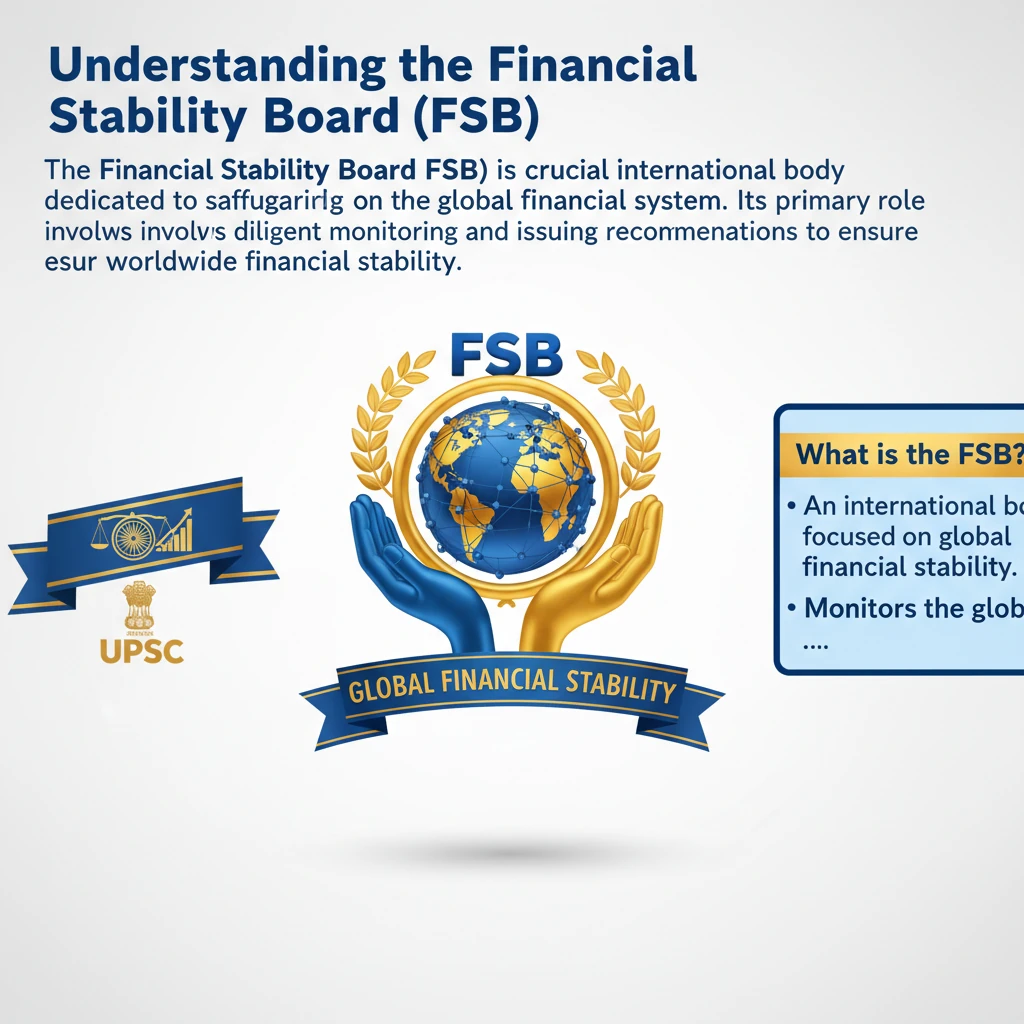
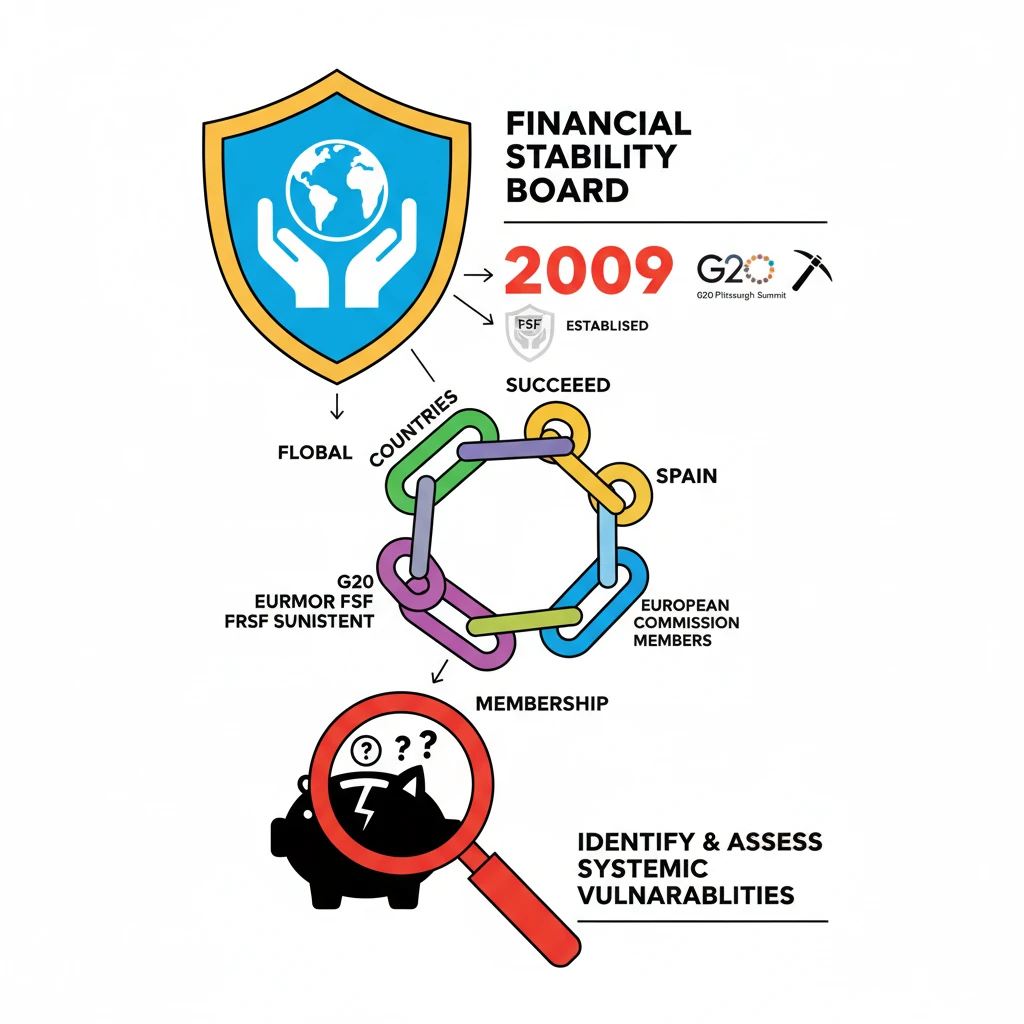
<h4>Understanding the Financial Stability Board (FSB)</h4><p>The <strong>Financial Stability Board (FSB)</strong> is a crucial international body dedicated to safeguarding the global financial system. Its primary role involves diligent monitoring and issuing recommendations to ensure worldwide financial stability.</p><div class='info-box'><p><strong>What is the FSB?</strong></p><ul><li>An <strong>international body</strong> focused on global financial stability.</li><li>Monitors the <strong>global financial system</strong> for vulnerabilities.</li><li>Makes <strong>recommendations</strong> to mitigate risks.</li></ul></div><h4>Establishment and Evolution</h4><p>The <strong>FSB</strong> was officially established in <strong>2009</strong>. This significant development occurred at the <strong>G20 Pittsburgh Summit</strong>, marking a pivotal moment in international financial governance.</p><p>It was created as the direct successor to the <strong>Financial Stability Forum (FSF)</strong>, an earlier body with similar objectives but a more limited scope and membership.</p><div class='key-point-box'><p><strong>Key Event:</strong> The <strong>2008 Global Financial Crisis</strong> highlighted the urgent need for a more robust and inclusive international body to address systemic risks, leading to the FSB's formation.</p></div><h4>Membership Structure</h4><p>The <strong>FSB's membership</strong> is broad and inclusive, reflecting its global mandate. It comprises a diverse group of countries and international organizations.</p><p>Its members include all <strong>G20 countries</strong>, along with <strong>Spain</strong> and the <strong>European Commission</strong>. This expanded membership significantly broadened the reach and influence compared to its predecessor.</p><div class='info-box'><p><strong>FSB Membership Includes:</strong></p><ul><li>All <strong>G20 countries</strong></li><li><strong>Spain</strong></li><li>The <strong>European Commission</strong></li><li>Members of the former <strong>Financial Stability Forum (FSF)</strong></li></ul></div><h4>Core Functions and Mandate</h4><p>A fundamental responsibility of the <strong>FSB</strong> is to actively identify and rigorously assess <strong>systemic vulnerabilities</strong> within the global financial system. This proactive approach aims to prevent future financial crises.</p><p>By identifying these risks, the <strong>FSB</strong> can then formulate and promote effective regulatory, supervisory, and other financial sector policies. These policies are designed to enhance financial stability.</p><div class='exam-tip-box'><p><strong>UPSC Insight:</strong> Understanding the <strong>FSB's role</strong> is vital for topics related to <strong>international economic institutions</strong> and <strong>global governance</strong> in <strong>GS Paper 2</strong> and <strong>GS Paper 3</strong>. Focus on its origin, mandate, and key functions.</p></div>
💡 Key Takeaways
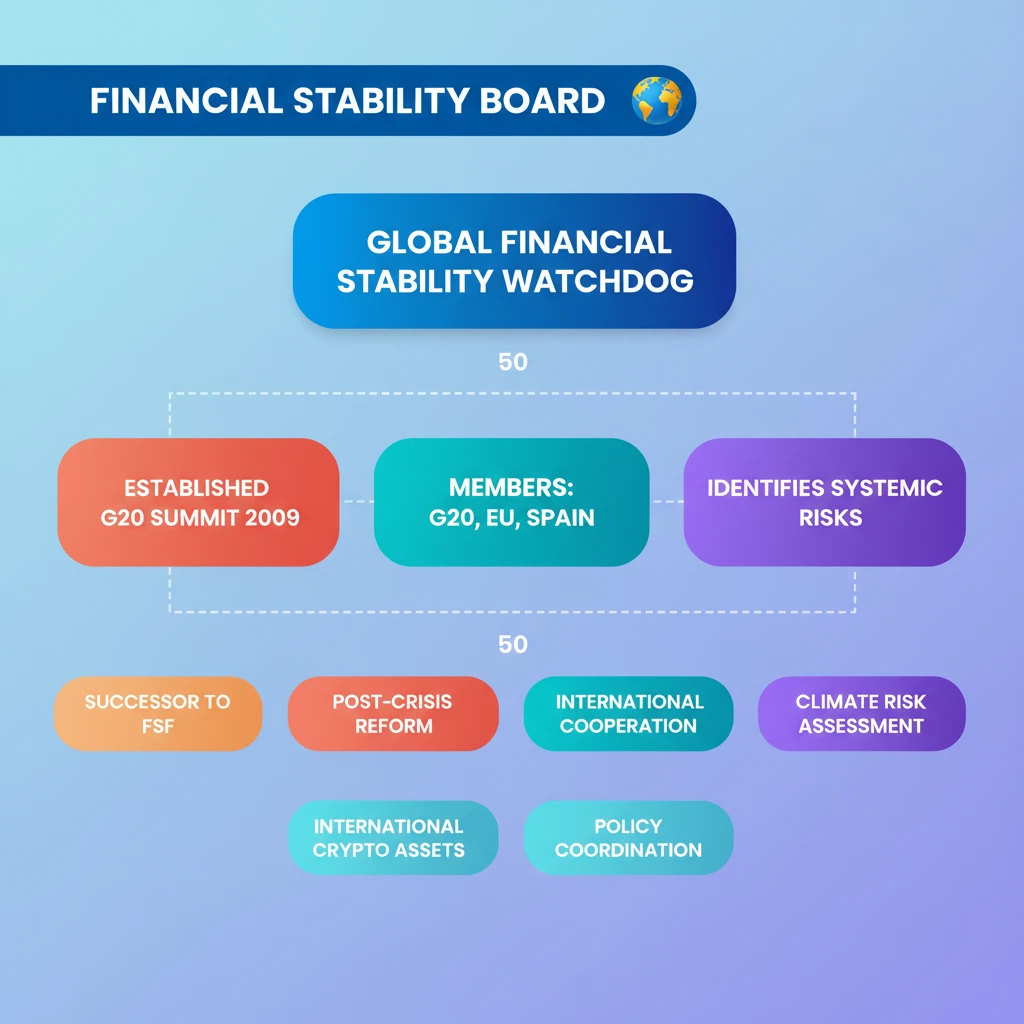
- •The Financial Stability Board (FSB) is an international body monitoring and recommending policies for global financial stability.
- •It was established in 2009 at the G20 Pittsburgh Summit, succeeding the Financial Stability Forum (FSF).
- •Its membership includes G20 countries, Spain, the European Commission, and former FSF members.
- •The FSB's core function is to identify and assess systemic vulnerabilities in the global financial system.
- •It plays a key role in coordinating international regulatory reforms and addressing emerging risks like shadow banking, climate risk, and crypto-assets.
🧠 Memory Techniques
98% Verified Content
📚 Reference Sources
•Financial Stability Board (FSB) Official Website (for additional details and current initiatives)