Cryptocurrency and Blockchain - Economy | UPSC Learning
Topics
0 topics • 0 completed
🔍
No topics match your search
Cryptocurrency and Blockchain
Medium⏱️ 8 min read
economy
📖 Introduction
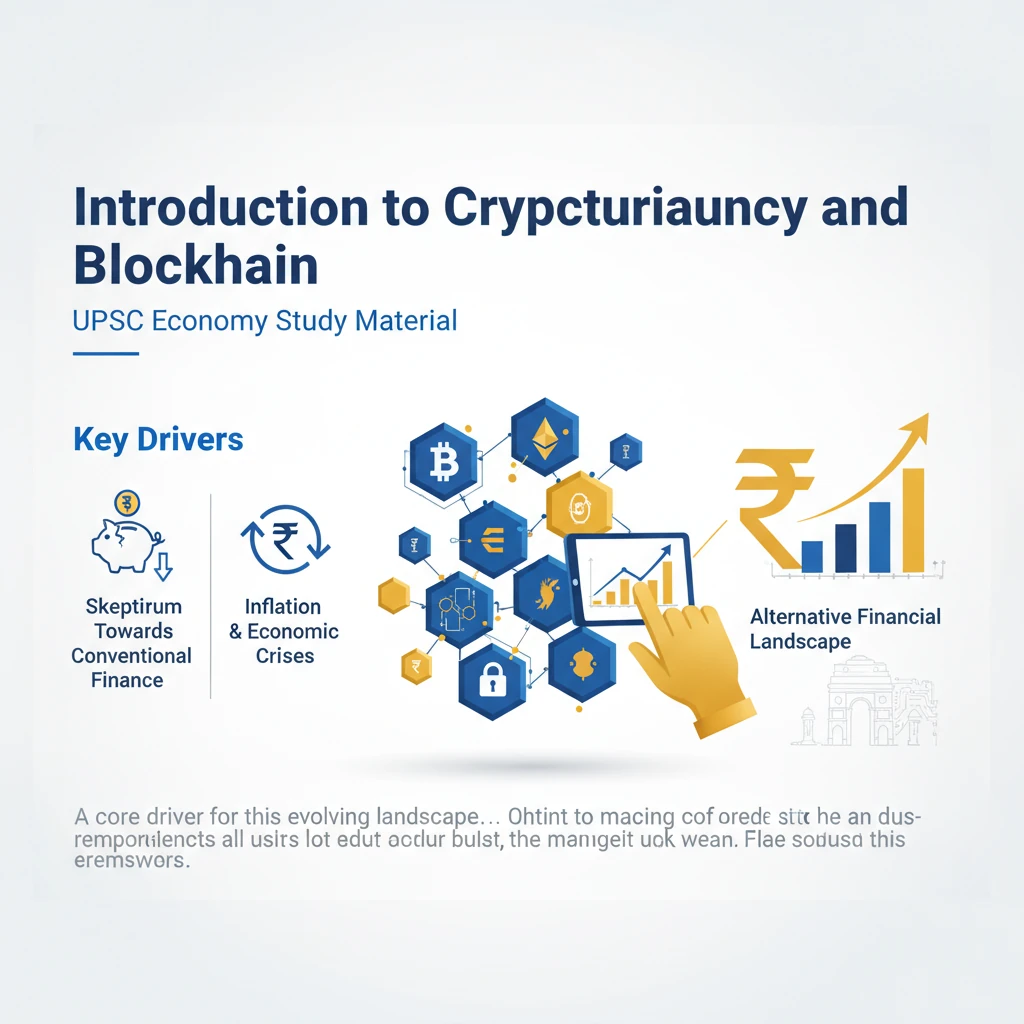
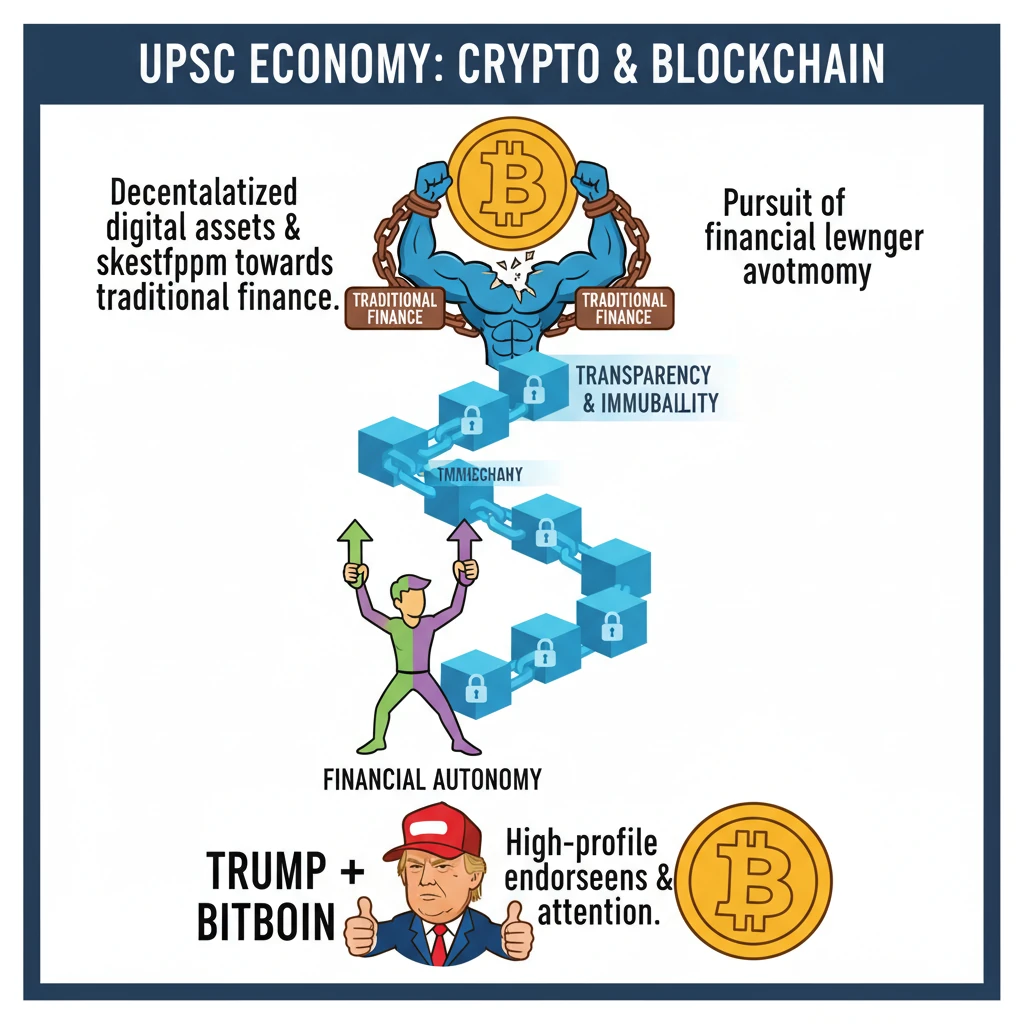
<h4>Introduction to Cryptocurrency and Blockchain</h4><p>The rise of <strong>Cryptocurrency</strong> and <strong>Blockchain technology</strong> represents a significant shift in global financial discourse. This movement is largely fueled by a growing <strong>skepticism towards conventional financial systems</strong>, especially amidst widespread discontent over government handling of <strong>inflation</strong> and <strong>economic crises</strong>.</p><p>A core driver for this evolving landscape is the pursuit of greater <strong>financial autonomy</strong>. Individuals and institutions are increasingly exploring alternatives that offer control outside traditional banking and governmental structures.</p><div class='key-point-box'><p>The underlying force behind this transformation is the promise of <strong>Blockchain technology</strong>. It offers a decentralized, transparent, and immutable ledger system, which is seen as revolutionary for various sectors, not just finance.</p></div><h4>Understanding Cryptocurrency's Appeal</h4><p><strong>Cryptocurrencies</strong>, like <strong>Bitcoin</strong>, are digital or virtual currencies secured by cryptography. This security makes them nearly impossible to counterfeit or double-spend. Their decentralized nature means they are not subject to government or financial institution control.</p><p>Notably, high-profile figures have acknowledged this space. Former <strong>US President Donald Trump</strong>, for instance, expressed support for <strong>Bitcoin</strong> at a crypto gathering, indicating a growing mainstream awareness and, at times, acceptance.</p><h4>Challenges and Uncertainties</h4><p>Despite the enthusiasm, the sector faces considerable challenges. The <strong>enduring financial viability</strong> and <strong>existential sustainability</strong> of many cryptocurrencies remain uncertain. This uncertainty stems from regulatory ambiguities, market volatility, and scalability issues.</p><div class='exam-tip-box'><p><strong>UPSC Insight:</strong> When discussing cryptocurrencies, it's crucial to balance their transformative potential with inherent risks and regulatory challenges. This nuanced approach is key for both <strong>Prelims</strong> and <strong>Mains</strong> answers, particularly in <strong>GS Paper III (Economy)</strong>.</p></div>
💡 Key Takeaways
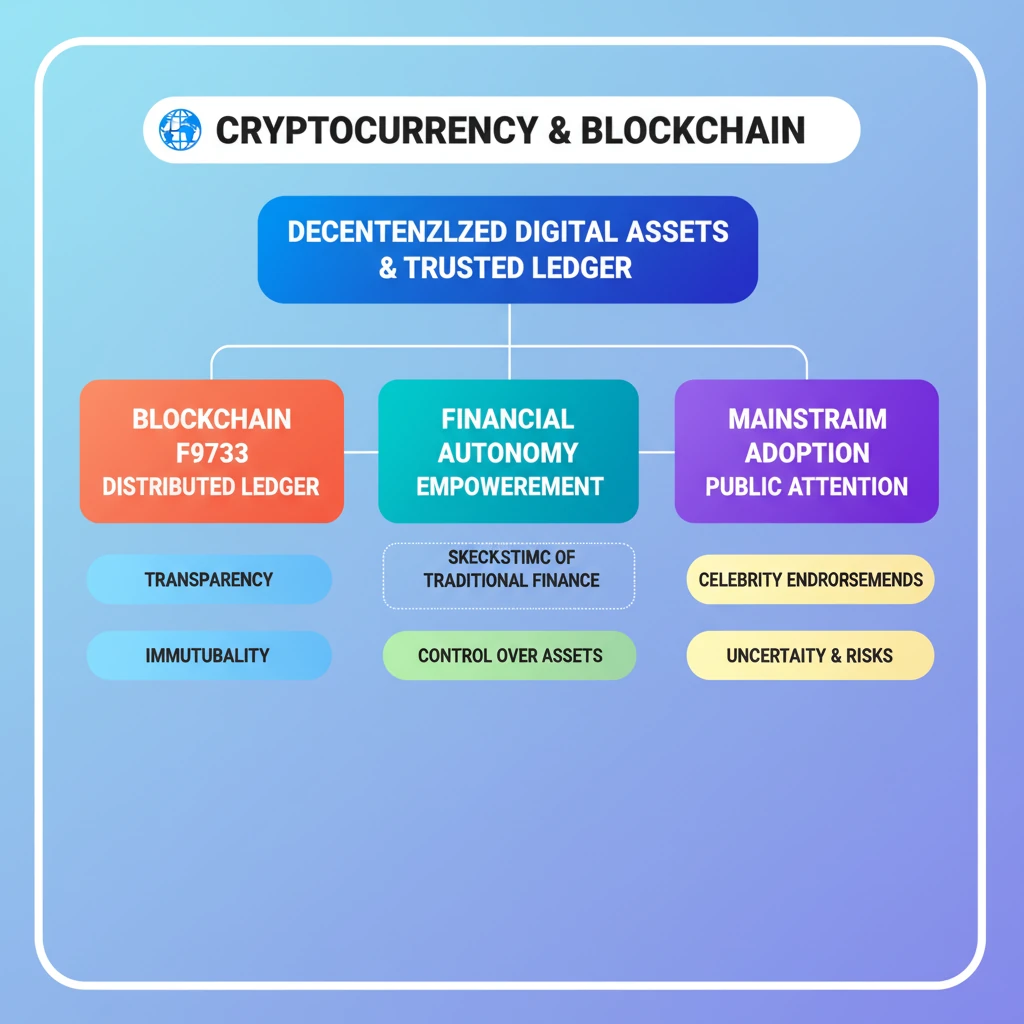
- •Cryptocurrencies are decentralized digital assets, often driven by skepticism towards traditional financial systems.
- •Blockchain is the underlying distributed ledger technology, ensuring transparency and immutability.
- •The pursuit of financial autonomy is a key factor in the growth of the crypto and blockchain movement.
- •High-profile endorsements, like former US President Trump's support for Bitcoin, highlight growing mainstream attention.
- •Significant uncertainty persists regarding the long-term financial viability and sustainability of cryptocurrencies.
- •Blockchain's applications extend beyond crypto, including supply chain management and digital identity.
🧠 Memory Techniques
95% Verified Content
📚 Reference Sources
•Bitcoin Whitepaper by Satoshi Nakamoto
•Ethereum Whitepaper by Vitalik Buterin
•Reserve Bank of India (RBI) publications on Central Bank Digital Currency (CBDC)
•General knowledge on global economic trends and cryptocurrency news