Benefits and Potential of Cryptocurrency & Blockchain - Economy | UPSC Learning
Topics
0 topics • 0 completed
🔍
No topics match your search

Benefits and Potential of Cryptocurrency & Blockchain
Medium⏱️ 10 min read
economy
📖 Introduction
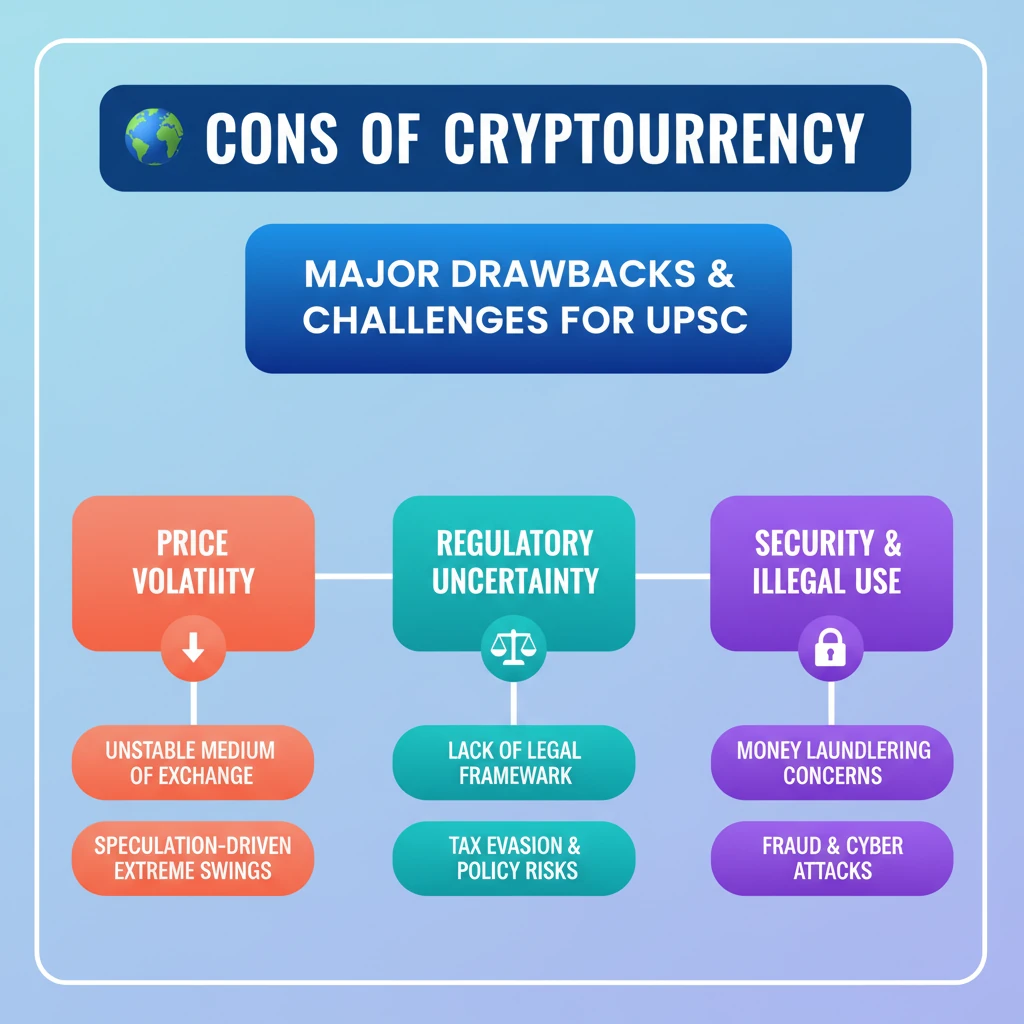
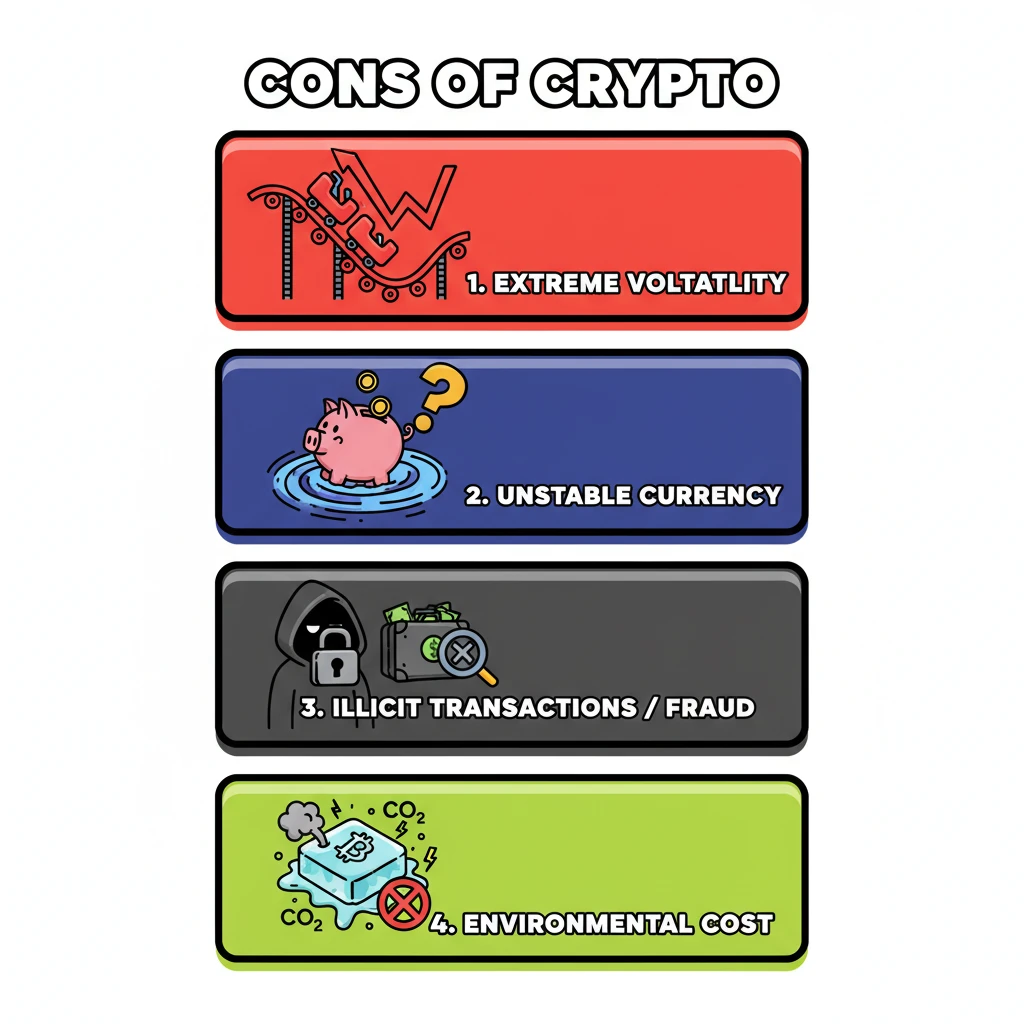
<h4>Potential Benefits of Cryptocurrencies and Blockchain</h4><p>The underlying <strong>blockchain technology</strong> and <strong>cryptocurrencies</strong> offer several advantages, impacting financial systems and individual autonomy. These benefits often highlight the functional potential that can sometimes be overshadowed by market dynamics.</p><h5>Decentralised Ledger System Benefits</h5><p>A <strong>decentralised ledger system</strong> is a core feature that significantly reduces <strong>fraud</strong> and <strong>operational costs</strong> for financial institutions. This system ensures a more <strong>secure</strong> and <strong>transparent transaction processing environment</strong>, enhancing trust.</p><div class='info-box'><p><strong>Decentralised Ledger:</strong> A distributed database maintained by multiple participants, eliminating the need for a central authority. This enhances security and transparency.</p></div><h5>Innovation and Tokenization Potential</h5><p>The <strong>blockchain technology</strong> enables <strong>tokenization</strong>, a process applicable across various sectors. It allows for the conversion of diverse assets into <strong>digital tokens</strong>, opening new avenues for investment and ownership.</p><p>This innovation can be harnessed independently of specific cryptocurrencies. It facilitates the creation of new <strong>financial instruments</strong> and advanced <strong>asset management models</strong>, fostering economic growth.</p><h5>Reshaping Global Finance</h5><p><strong>Cryptocurrencies</strong> represent a significant evolution in the history of assets. They challenge traditional notions of <strong>trust</strong> and redefine <strong>ownership</strong>, potentially reshaping global financial systems.</p><p>As these <strong>digital assets</strong> gain wider acceptance, they could transform how <strong>value is stored</strong> and <strong>transferred across borders</strong>. This offers a new paradigm for <strong>financial inclusion</strong> and facilitates <strong>global trade</strong>, especially for underserved populations.</p><h5>Financial Autonomy</h5><p><strong>Cryptocurrencies</strong> provide a means for greater <strong>financial autonomy</strong>, particularly in regions experiencing <strong>unstable economies</strong> or having <strong>limited access to traditional banking systems</strong>.</p><p>They offer individuals and businesses an alternative to <strong>centralised financial institutions</strong>. This can potentially reduce reliance on conventional banking infrastructure, empowering users with more control over their finances.</p><h4>Key Disadvantages (Cons) of Cryptocurrencies</h4><p>Despite their potential, cryptocurrencies face significant challenges and criticisms, primarily due to their inherent characteristics and the evolving regulatory landscape.</p><h5>Speculative Nature and Volatility</h5><p>The highly <strong>speculative nature</strong> of cryptocurrencies frequently overshadows their functional potential. Their value is largely driven by <strong>market sentiment</strong> and intense <strong>speculation</strong>, leading to extreme <strong>price volatility</strong>.</p><p>This pronounced <strong>volatility</strong> severely undermines their utility as a <strong>stable medium of exchange</strong> and a <strong>reliable store of value</strong>. Such fluctuations make them risky for everyday transactions and long-term savings.</p><div class='key-point-box'><p><strong>Volatility Risk:</strong> Extreme price swings in cryptocurrencies make them unsuitable for many traditional financial applications, posing risks to investors and economic stability.</p></div><h5>Regulatory Challenges and Uncertainty</h5><p>The <strong>regulatory environment</strong> surrounding cryptocurrencies is fraught with considerable <strong>uncertainty</strong>. Governments worldwide are oscillating between outright <strong>acceptance</strong> and complete <strong>bans</strong>, creating an unpredictable landscape.</p><p>Significant concerns exist regarding <strong>money laundering</strong>, <strong>tax evasion</strong>, and the <strong>financing of illegal activities</strong> through cryptocurrencies. These issues necessitate stringent <strong>regulatory measures</strong>.</p><p>However, such stringent regulations, while necessary for stability, may inadvertently <strong>stifle innovation</strong>. They could also hinder the smooth <strong>integration of cryptocurrencies</strong> into the mainstream financial system, limiting their broader adoption.</p><div class='exam-tip-box'><p><strong>UPSC Insight:</strong> When discussing cryptocurrencies, always present a balanced view. Acknowledge both their transformative potential (pros) and the significant risks and challenges (cons), especially regulatory and stability issues. This demonstrates a comprehensive understanding for <strong>GS Paper III: Economy</strong>.</p></div>
💡 Key Takeaways
- •Cryptocurrencies leverage a decentralised ledger system for secure and transparent transactions.
- •They offer significant potential for innovation, including asset tokenization and new financial instruments.
- •Cryptocurrencies can enhance financial autonomy, especially in regions with limited traditional banking access.
- •Their primary drawbacks are extreme price volatility due to speculation, making them unstable as a medium of exchange.
- •Regulatory uncertainty, concerns over money laundering, and tax evasion pose major challenges to their mainstream integration.
🧠 Memory Techniques
95% Verified Content
📚 Reference Sources
•Reserve Bank of India (RBI) reports and statements on Digital Currency
•NITI Aayog discussions on Blockchain and Digital Assets
•International Monetary Fund (IMF) reports on Crypto Assets and Financial Stability
•Financial Action Task Force (FATF) guidelines on Virtual Assets