What is the Environmental Ship Index (ESI)? - Economy | UPSC Learning
Topics
0 topics • 0 completed
🔍
No topics match your search
What is the Environmental Ship Index (ESI)?
Medium⏱️ 5 min read
economy
📖 Introduction
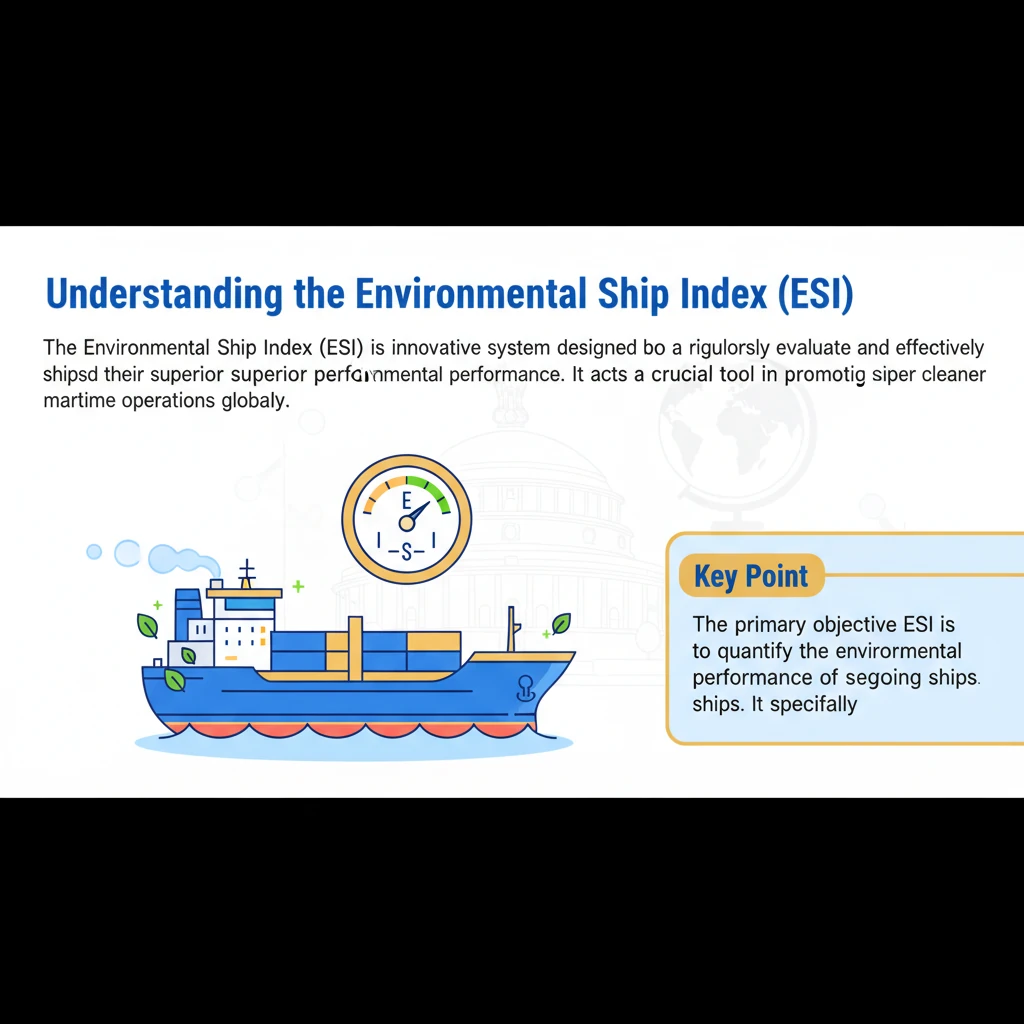
<h4>Understanding the Environmental Ship Index (ESI)</h4><p>The <strong>Environmental Ship Index (ESI)</strong> is an innovative system designed to rigorously evaluate and effectively reward ships based on their superior environmental performance. It acts as a crucial tool in promoting cleaner maritime operations globally.</p><div class='key-point-box'><p>The primary objective of <strong>ESI</strong> is to quantify the environmental performance of <strong>seagoing ships</strong>. It specifically identifies and credits vessels that significantly outperform the existing <strong>International Maritime Organization (IMO) emission standards</strong>, particularly in reducing air pollutants.</p></div><h4>Quantifying Environmental Performance</h4><p><strong>ESI</strong> goes beyond mere compliance, focusing on ships that demonstrate a proactive approach to environmental stewardship. It provides a numerical score indicating how much better a ship performs compared to baseline regulatory requirements for air emissions.</p><div class='info-box'><p><strong>Key Metrics Evaluated by ESI:</strong><ul><li><strong>Nitrogen Oxides (NOx)</strong> emissions</li><li><strong>Sulphur Oxides (SOx)</strong> emissions</li><li><strong>Greenhouse Gas (GHG)</strong> emissions (specifically <strong>Carbon Dioxide - CO2</strong>)</li></ul></p></div><h4>Alignment with IMO's GHG Strategy</h4><p>The <strong>Environmental Ship Index</strong> plays a vital role in supporting broader international environmental goals within the maritime sector. It aligns with ambitious targets set by global regulatory bodies.</p><div class='info-box'><p>The <strong>2023 IMO Greenhouse Gas (GHG) Strategy</strong> sets forth a clear vision for sustainable shipping. A key objective of this strategy is to achieve a substantial reduction in the <strong>carbon intensity</strong> of international shipping.</p></div><p>Specifically, the <strong>IMO GHG Strategy</strong> envisages a reduction in the <strong>carbon intensity</strong> of international shipping by at least <strong>40% by 2030</strong>, compared to 2008 levels. The <strong>ESI</strong> encourages practices that contribute directly to this target.</p><div class='exam-tip-box'><p><strong>UPSC Insight:</strong> The <strong>Environmental Ship Index (ESI)</strong> is important for <strong>GS Paper III (Economy, Environment)</strong>. Questions may relate to sustainable shipping, international environmental agreements, or mechanisms for reducing pollution in the transport sector. Understanding its link to <strong>IMO GHG Strategy 2023</strong> is crucial.</p></div>
💡 Key Takeaways
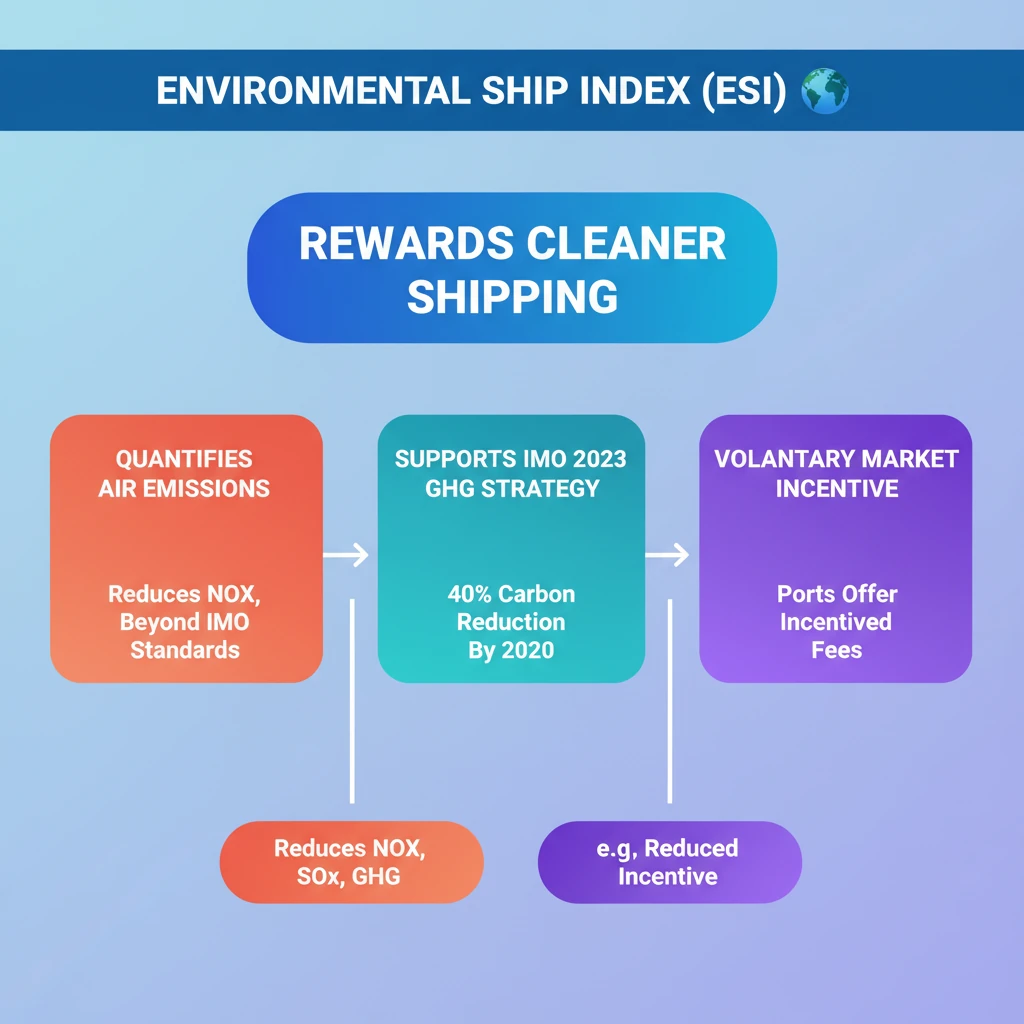
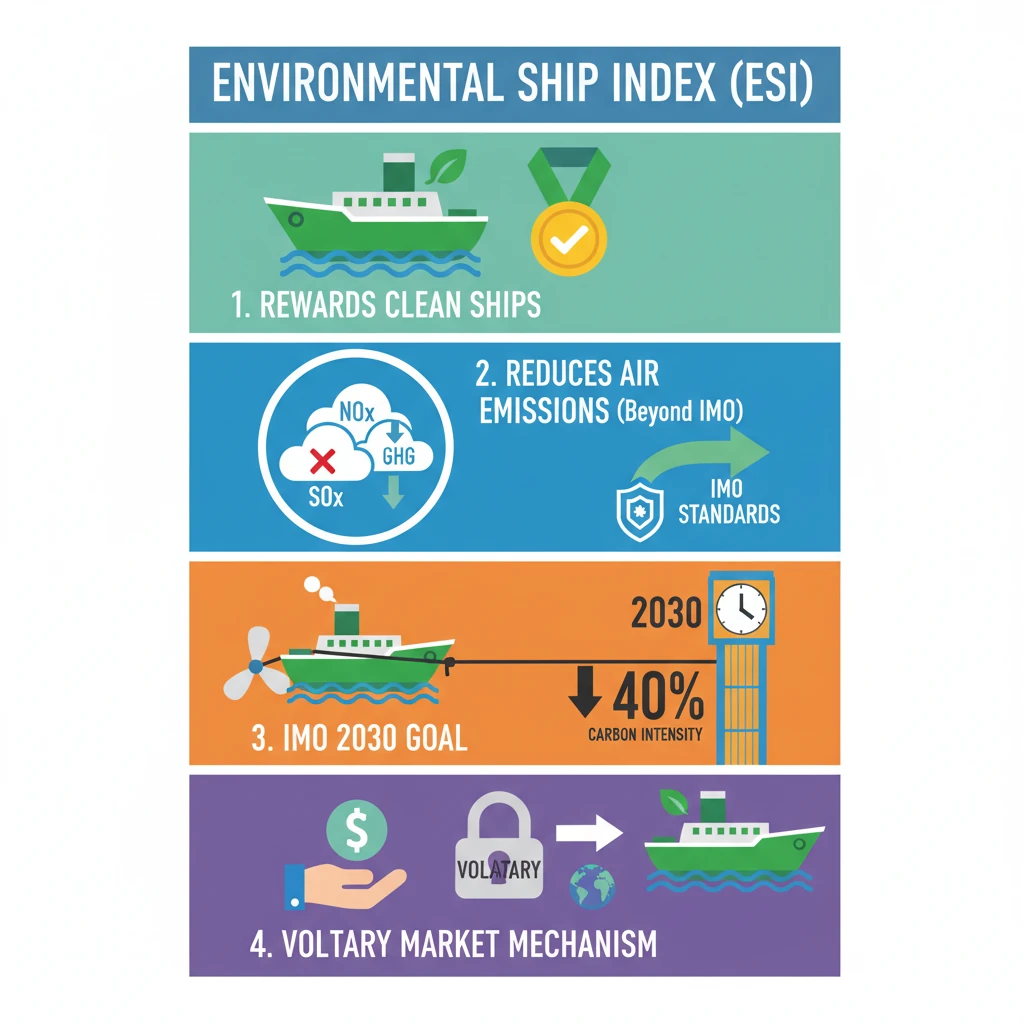
- •Environmental Ship Index (ESI) evaluates and rewards ships for better environmental performance.
- •It quantifies ships that reduce air emissions (NOx, SOx, GHG) beyond IMO standards.
- •ESI supports the IMO 2023 GHG Strategy's goal of 40% carbon intensity reduction by 2030.
- •It is a voluntary, market-based incentive system promoting cleaner shipping.
- •Ports offer incentives (e.g., reduced fees) to ESI-compliant vessels.
🧠 Memory Techniques
95% Verified Content
📚 Reference Sources
•International Maritime Organization (IMO) official website: GHG Strategy details
•World Ports Climate Initiative (WPCI) / International Association of Ports and Harbors (IAPH) official website: ESI details