Central Trade Unions (CTUs) Demand for Labour Welfare - Economy | UPSC Learning
Topics
0 topics • 0 completed
🔍
No topics match your search
Central Trade Unions (CTUs) Demand for Labour Welfare
Medium⏱️ 6 min read
economy
📖 Introduction
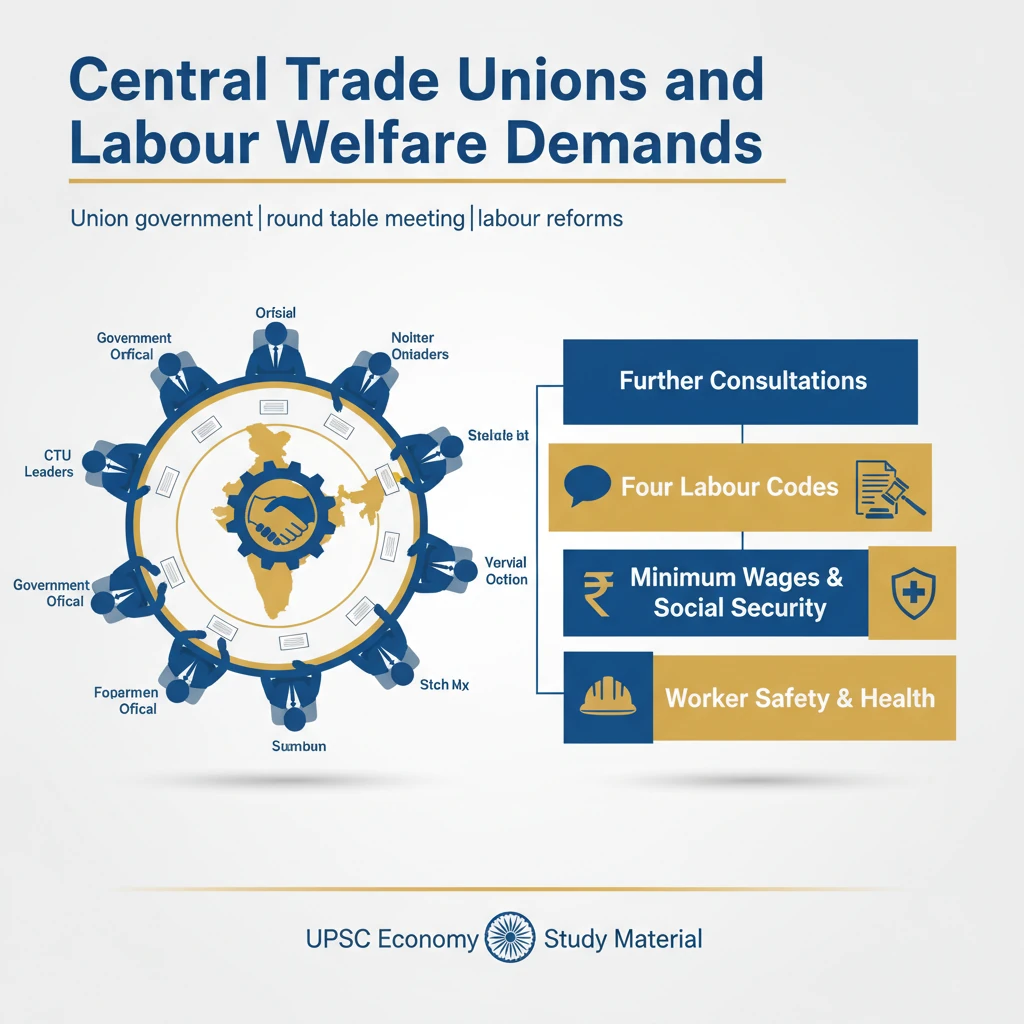
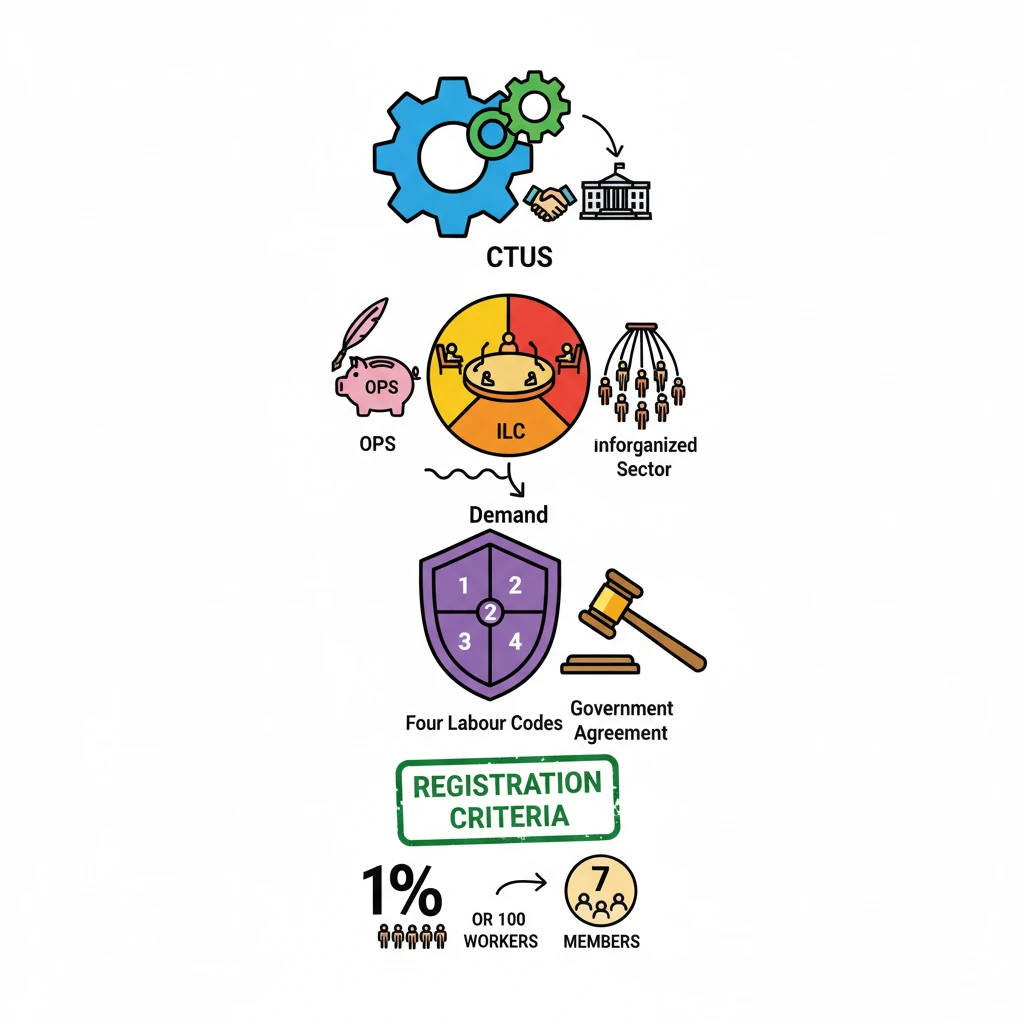
<h4>Central Trade Unions and Labour Welfare Demands</h4><p>The <strong>Union government</strong> recently convened a <strong>round table meeting</strong> with various <strong>Central Trade Unions (CTUs)</strong>. This meeting aimed to discuss critical issues concerning labour welfare and the future of labour reforms in India.</p><p>Following the discussions, the government has expressed its willingness to hold <strong>further consultations</strong> regarding the implementation of the <strong>four Labour Codes</strong>. This indicates an ongoing dialogue between the government and labour representatives.</p><div class='key-point-box'><p><strong>Key Demands by CTUs:</strong></p><ul><li><strong>Restoration of the Old Pension Scheme (OPS)</strong>: A major demand, reflecting concerns over post-retirement financial security for workers.</li><li><strong>Convening of the Indian Labour Conference (ILC)</strong>: CTUs urged for the regular and timely convening of this tripartite body for policy discussions.</li><li><strong>Increased Support for the Informal Sector</strong>: A call for greater governmental intervention and welfare measures for workers in the unorganized economy.</li></ul></div><h4>Trade Union Registration Provisions in India</h4><p>The formation and registration of trade unions in India are governed by specific legal provisions, ensuring their legitimacy and representativeness.</p><div class='info-box'><p><strong>Registration Criteria for a Trade Union:</strong></p><ul><li>A registered trade union must comprise at least <strong>10%</strong> of the workers or a minimum of <strong>100 workers</strong>, whichever number is less.</li><li>Additionally, it must have a minimum of <strong>7 members</strong> from the relevant establishment or industry to qualify for registration.</li></ul></div><h4>Organisations Exempted from Forming Trade Unions</h4><p>Certain critical organisations are explicitly exempted from forming trade unions. This provision is primarily aimed at ensuring their operational efficiency, discipline, and national security.</p><ul><li><strong>Armed Forces</strong>: Employees of the <strong>Indian Armed Forces</strong> (Army, Navy, and Air Force) are strictly prohibited from forming trade unions.</li><li>This restriction is enshrined in the <strong>Armed Forces Act, 1950</strong>, which outlines the conduct and discipline within the military.</li><li><strong>Police and Law Enforcement Agencies</strong>: The <strong>Police Forces (Restriction of Rights) Act, 1966</strong>, prohibits non-gazetted police employees, specifically those below the rank of inspector, from forming any kind of union or group.</li></ul><div class='exam-tip-box'><p><strong>UPSC Insight:</strong> Understanding the legal framework for trade unions, including both registration criteria and exemptions, is crucial for <strong>GS-II (Governance and Social Justice)</strong> and <strong>GS-III (Indian Economy)</strong>. Questions may focus on the balance between labour rights and national security/efficiency.</p></div>
💡 Key Takeaways
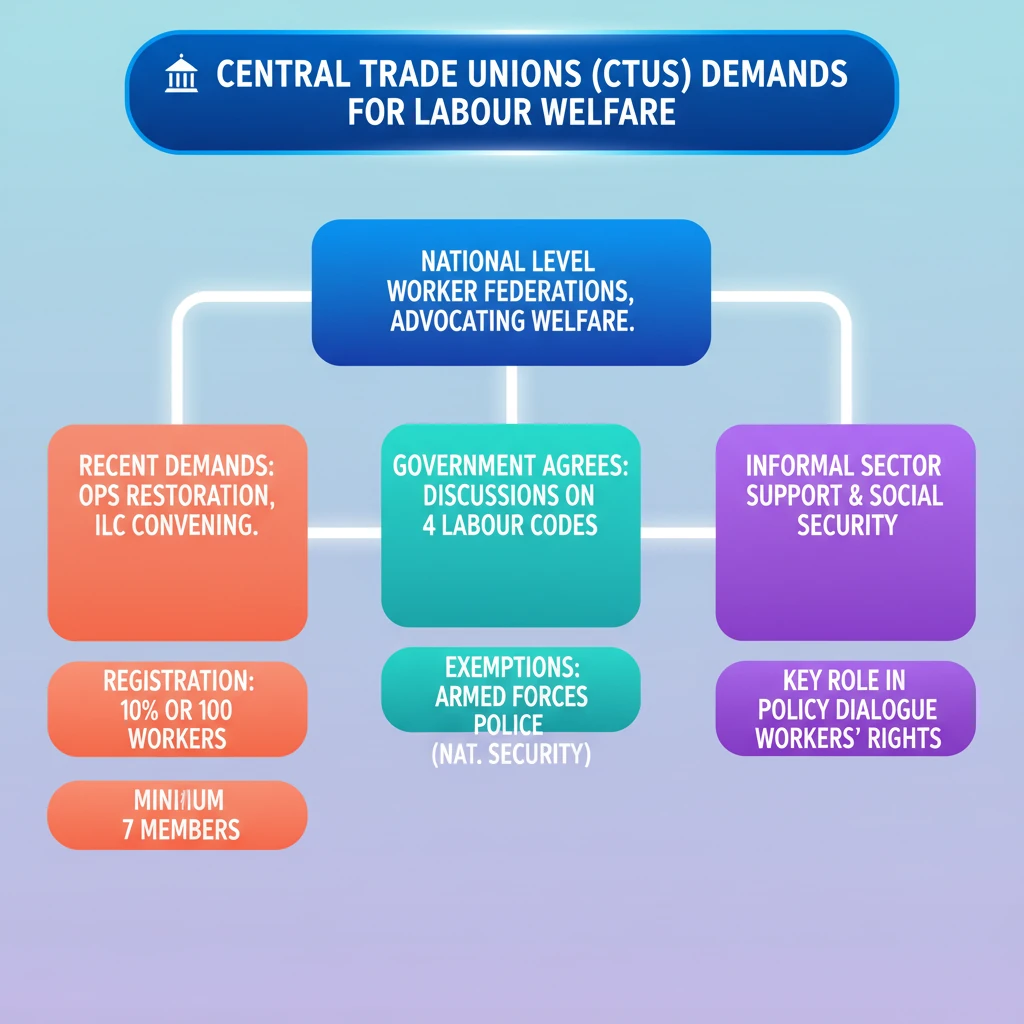
- •CTUs are national-level federations representing workers, engaging with the government on labour welfare.
- •Recent CTU demands include restoring the Old Pension Scheme, convening the ILC, and supporting the informal sector.
- •Government has agreed to further discussions on implementing the four Labour Codes.
- •Trade unions require specific registration criteria: 10% or 100 workers (whichever is less) and 7 members.
- •Armed Forces and Police are legally exempt from forming trade unions due to national security and discipline considerations.
🧠 Memory Techniques
95% Verified Content
📚 Reference Sources
•The Trade Unions Act, 1926 (implied by registration provisions)
•Armed Forces Act, 1950
•Police Forces (Restriction of Rights) Act, 1966
•Ministry of Labour & Employment, Government of India official releases (for CTU meetings and Labour Codes)