Insurance for All by 2047 - Economy | UPSC Learning
Topics
0 topics • 0 completed
🔍
No topics match your search
Insurance for All by 2047
Medium⏱️ 8 min read
economy
📖 Introduction
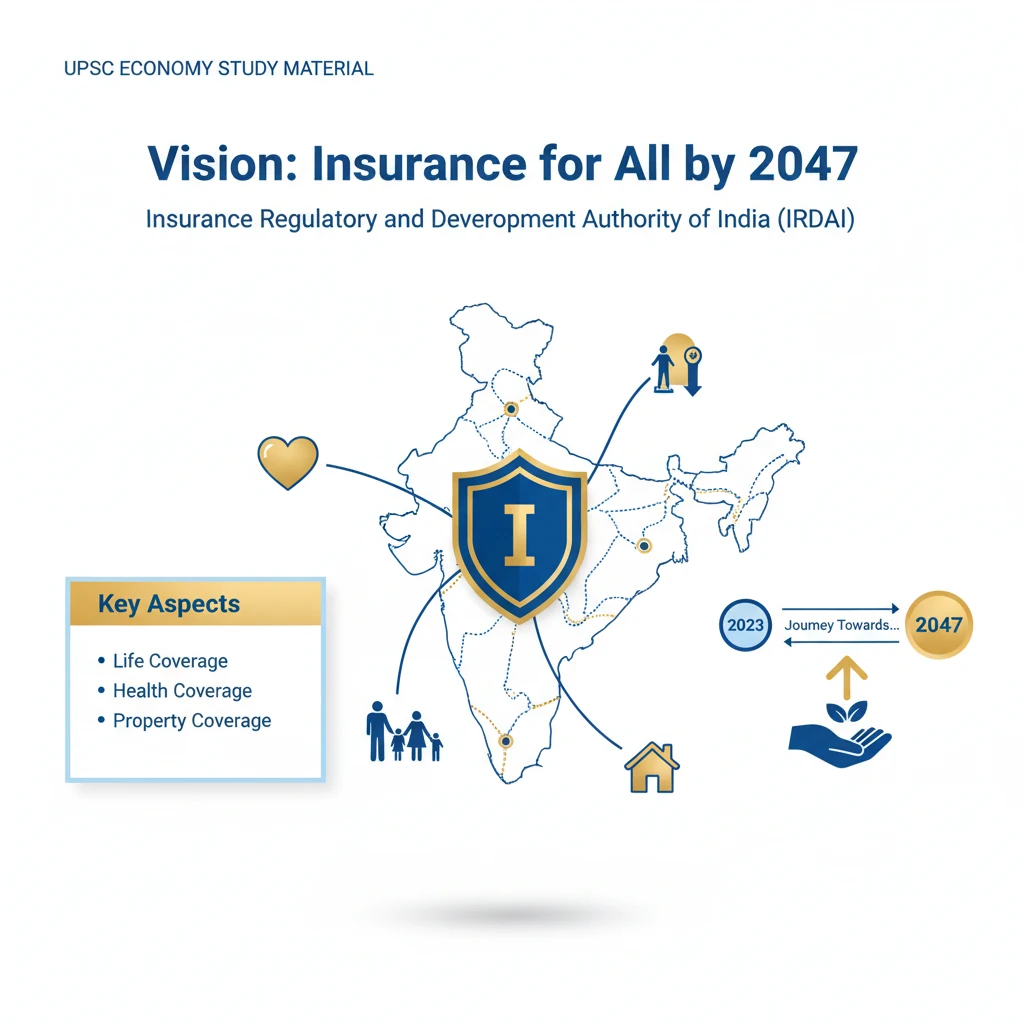
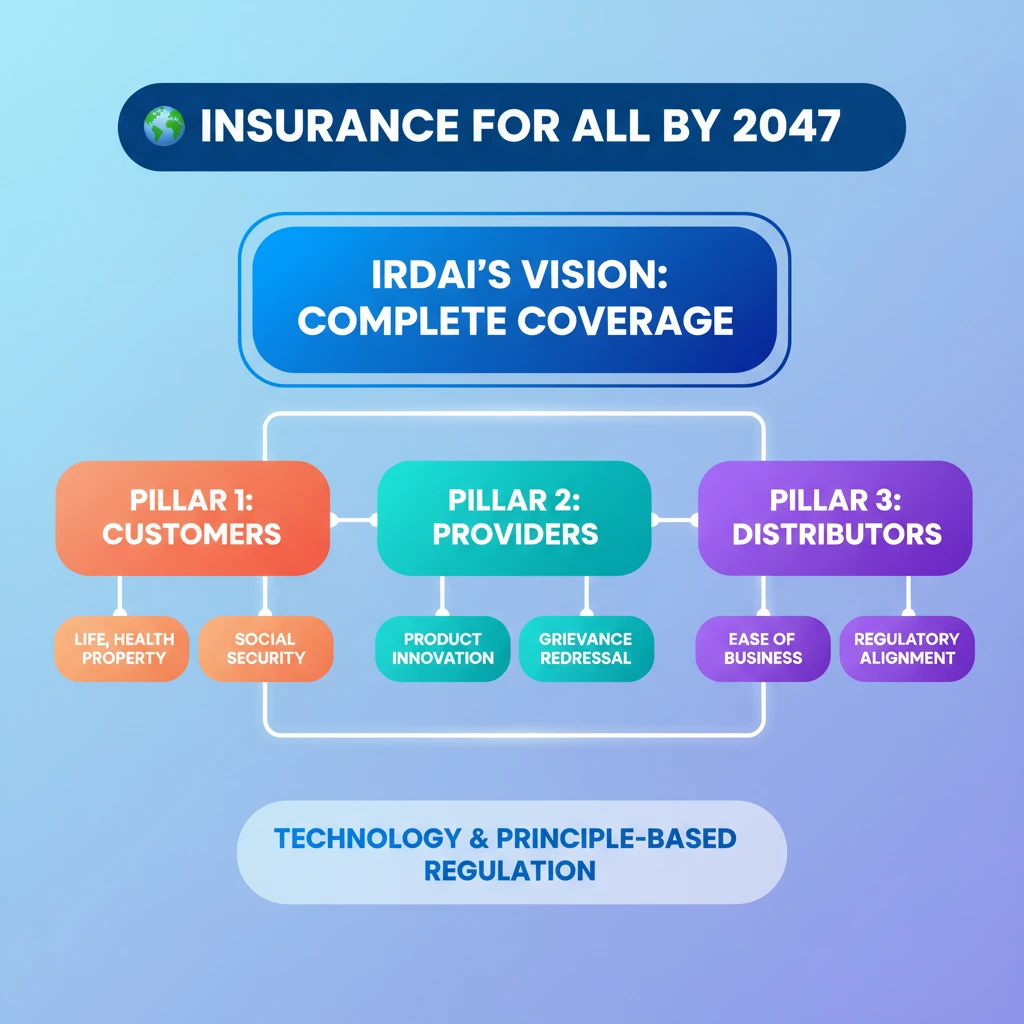
<h4>Vision: Insurance for All by 2047</h4><p>The <strong>Insurance Regulatory and Development Authority of India (IRDAI)</strong> has set an ambitious goal: to achieve <strong>'Insurance for All' by the year 2047</strong>. This initiative aims to ensure comprehensive insurance coverage across India.</p><div class='info-box'><p>The vision of <strong>'Insurance for All' by 2047</strong> encompasses several critical aspects. It seeks to provide every citizen with <strong>life, health, and property insurance coverage</strong>.</p><p>Furthermore, it aims to support <strong>enterprises</strong> with appropriate and tailored insurance solutions, fostering economic stability and growth.</p></div><h4>The Three Pillars of Insurance for All</h4><p>The IRDAI's vision is built upon a robust framework involving three fundamental pillars. These pillars represent the key stakeholders essential for the successful implementation of this ambitious goal.</p><div class='key-point-box'><ul><li><strong>Insurance Customers (Policyholders):</strong> These are the individuals and entities who purchase and benefit from insurance policies.</li><li><strong>Insurance Providers (Insurers):</strong> These are the companies that offer various insurance products and services.</li><li><strong>Insurance Distributors (Intermediaries):</strong> This category includes agents, brokers, and other channels that facilitate the sale and distribution of insurance policies.</li></ul></div><h4>Key Focus Areas for Achieving the Vision</h4><p>To realize the <strong>'Insurance for All' by 2047</strong> objective, IRDAI has identified several critical focus areas. These areas are designed to strengthen the insurance ecosystem and enhance its reach and effectiveness.</p><ul><li><strong>Product Alignment:</strong> Ensuring the availability of <strong>right products to right customers</strong>, tailored to their specific needs and risk profiles.</li><li><strong>Grievance Redressal:</strong> Creating a <strong>robust grievance redressal mechanism</strong> to efficiently address policyholder complaints and ensure consumer protection.</li><li><strong>Ease of Doing Business:</strong> Facilitating <strong>ease of doing business</strong> in the insurance sector, reducing regulatory hurdles and encouraging participation.</li><li><strong>Regulatory Alignment:</strong> Ensuring the <strong>regulatory architecture is aligned with market dynamics</strong>, adapting to evolving industry trends and technological advancements.</li><li><strong>Innovation and Competition:</strong> Boosting <strong>innovation</strong> and promoting healthy <strong>competition</strong> among insurers to offer better products and services.</li><li><strong>Distribution Efficiencies:</strong> Enhancing <strong>distribution efficiencies</strong> by mainstreaming technology and expanding reach, especially in underserved areas.</li><li><strong>Principle-Based Regulation:</strong> Moving towards a <strong>principle-based regulatory regime</strong>, providing flexibility while maintaining oversight and stability.</li></ul><div class='exam-tip-box'><p>For <strong>UPSC Mains GS-III (Economy)</strong>, understanding these focus areas is crucial. They highlight the multi-faceted approach required for financial sector development and inclusion. Be prepared to analyze how these areas contribute to broader economic goals.</p></div>
💡 Key Takeaways
- •IRDAI aims for 'Insurance for All' by 2047, covering life, health, property for citizens, and solutions for enterprises.
- •The vision rests on three pillars: customers, providers, and distributors.
- •Key focus areas include product innovation, grievance redressal, ease of business, and regulatory alignment.
- •It's crucial for financial inclusion, economic stability, and social security.
- •Leveraging technology and a principle-based regulatory regime are central to its success.
🧠 Memory Techniques

95% Verified Content
📚 Reference Sources
•Ministry of Finance publications
•Economic Survey of India
•NITI Aayog reports on financial inclusion