Ship Emissions Evaluation: NOx, SOx, & Greenhouse Gas Reporting - Economy | UPSC Learning
Topics
0 topics • 0 completed
🔍
No topics match your search
Ship Emissions Evaluation: NOx, SOx, & Greenhouse Gas Reporting
Medium⏱️ 8 min read
economy
📖 Introduction
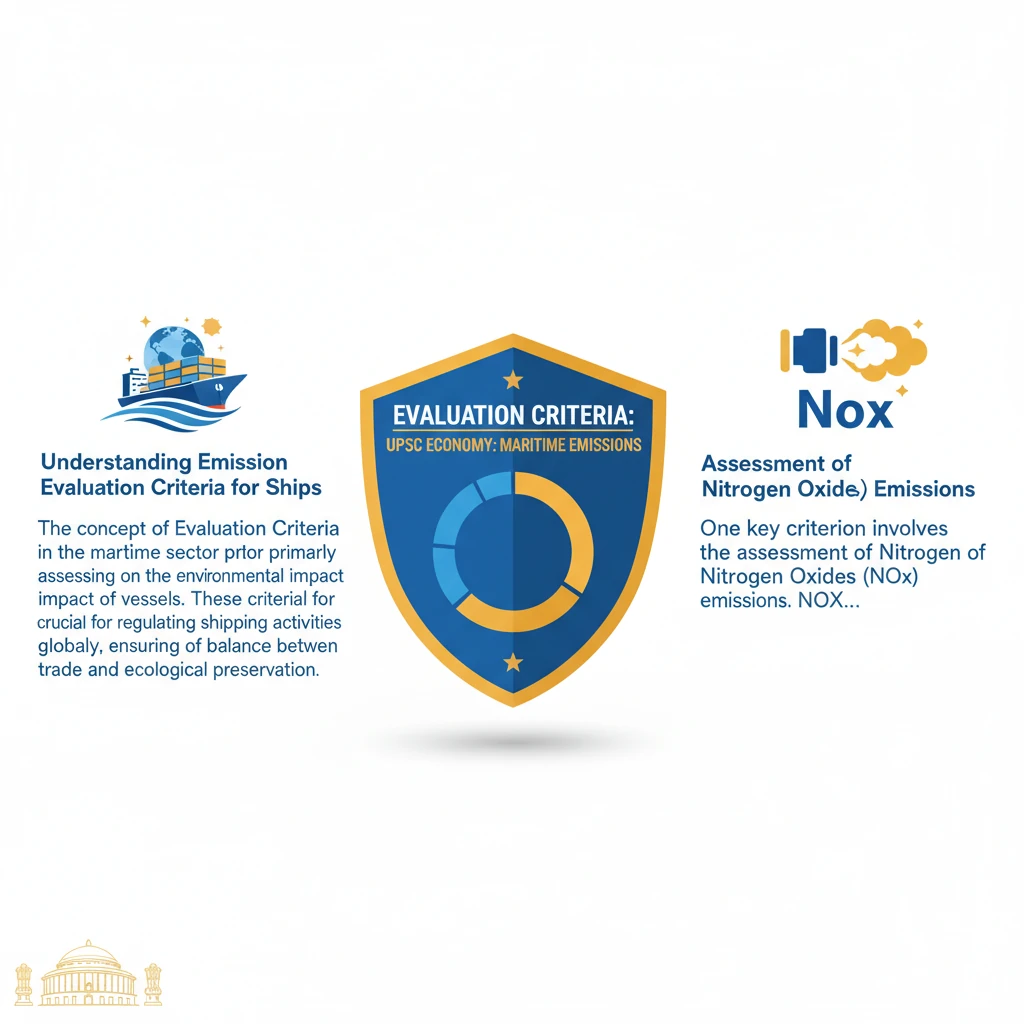
<h4>Understanding Emission Evaluation Criteria for Ships</h4><p>The concept of <strong>Evaluation Criteria</strong> in the maritime sector primarily focuses on assessing the environmental impact of vessels. These criteria are crucial for regulating shipping activities globally, ensuring a balance between trade and ecological preservation.</p><h4>Assessment of Nitrogen Oxides (NOx) Emissions</h4><p>One key criterion involves the assessment of <strong>Nitrogen Oxides (NOx)</strong> emissions. NOx are a group of highly reactive gases that contribute significantly to air pollution, smog formation, and acid rain, posing risks to both human health and ecosystems.</p><div class='info-box'><p><strong>NOx Emissions:</strong> These pollutants are primarily produced during the high-temperature combustion of fuel in marine engines. Various forms of nitrogen oxides are formed under these conditions.</p></div><h4>Assessment of Sulphur Oxides (SOx) Emissions</h4><p>Similarly, the evaluation criteria also encompass the emissions of <strong>Sulphur Oxides (SOx)</strong>. SOx are harmful air pollutants known to cause respiratory problems in humans and contribute to acid rain, damaging forests and aquatic life.</p><div class='info-box'><p><strong>SOx Emissions:</strong> These are a direct result of burning fuels that contain sulphur, such as heavy fuel oil, which is commonly used in ships. International regulations, like <strong>IMO 2020</strong>, have drastically tightened limits on fuel sulphur content.</p></div><h4>Greenhouse Gas (GHG) Emissions Reporting Scheme</h4><p>Beyond traditional air pollutants, the evaluation criteria now explicitly include a reporting scheme for <strong>Greenhouse Gas (GHG) emissions</strong> from vessels. This inclusion reflects the growing global concern over climate change and the shipping industry's contribution to it.</p><div class='key-point-box'><p><strong>GHG Reporting:</strong> This scheme aims to monitor and eventually reduce the emissions of gases like carbon dioxide (CO2), methane (CH4), and nitrous oxide (N2O), which are primary contributors to global warming.</p></div><div class='exam-tip-box'><p>UPSC often asks about international conventions and India's commitments related to environmental protection. Understanding the <strong>International Maritime Organization (IMO)'s role</strong> and specific emission types is vital for <strong>GS Paper III (Environment)</strong>.</p></div>
💡 Key Takeaways
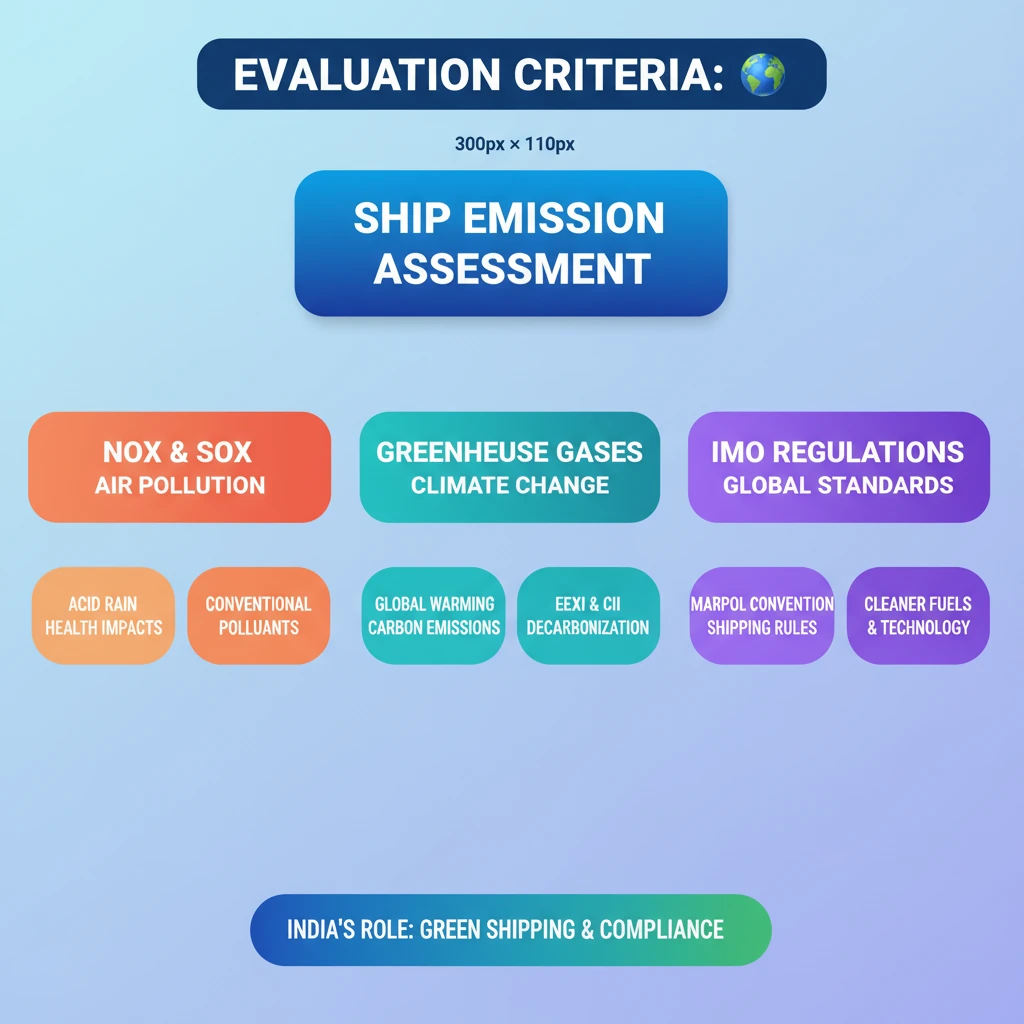
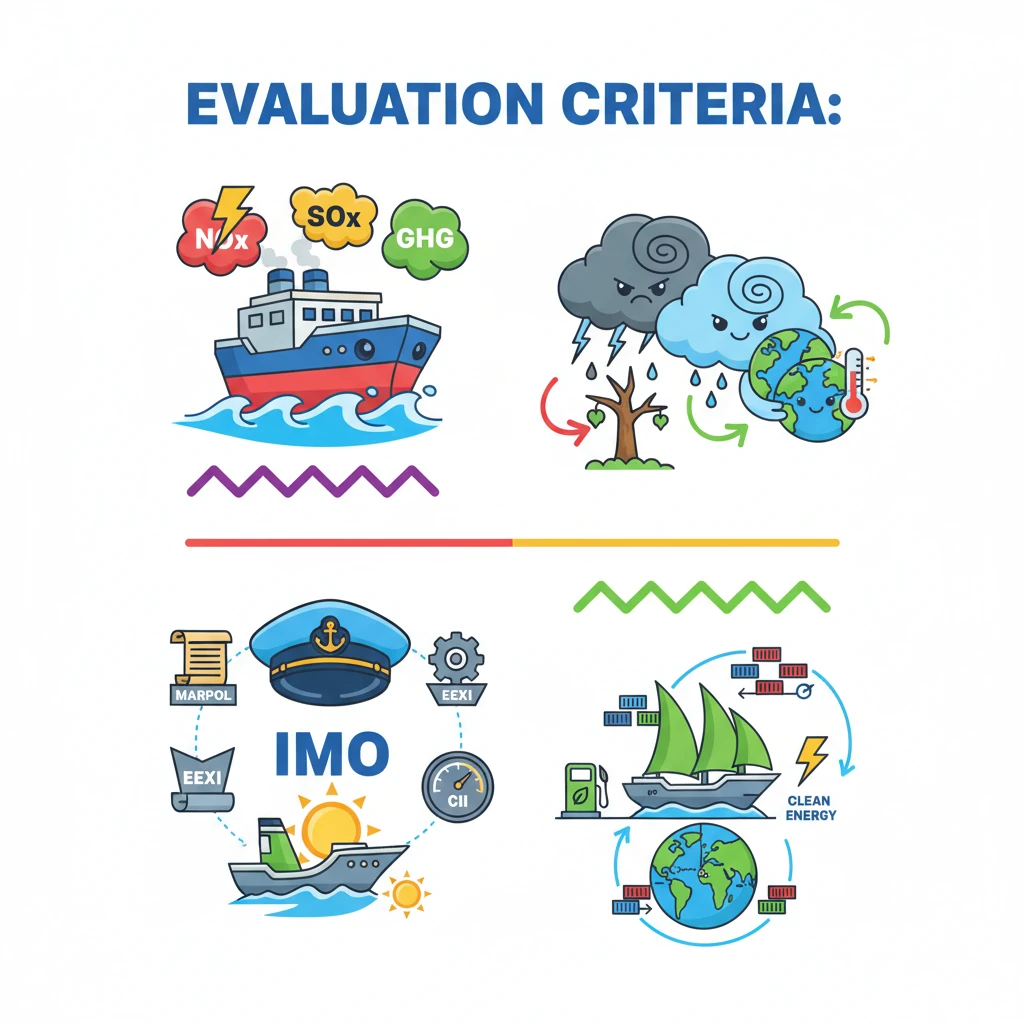
- •Ship emission evaluation criteria assess Nitrogen Oxides (NOx), Sulphur Oxides (SOx), and Greenhouse Gases (GHG).
- •NOx and SOx contribute to conventional air pollution and acid rain; GHG to global climate change.
- •The International Maritime Organization (IMO) is the primary global body setting these standards, including MARPOL, EEXI, and CII.
- •These criteria drive technological innovation towards cleaner fuels and energy-efficient shipping, impacting global trade.
- •India's compliance and proactive green shipping initiatives are crucial for its maritime sector and international climate commitments.
🧠 Memory Techniques
95% Verified Content
📚 Reference Sources
•Ministry of Ports, Shipping and Waterways, Government of India (shipmin.gov.in)
•European Union (EU) environmental regulations and directives (eur-lex.europa.eu)
•United Nations Environment Programme (UNEP) publications