Significance of Hybrid EVs - Economy | UPSC Learning
Topics
0 topics • 0 completed
🔍
No topics match your search
Significance of Hybrid EVs
Medium⏱️ 8 min read
economy
📖 Introduction
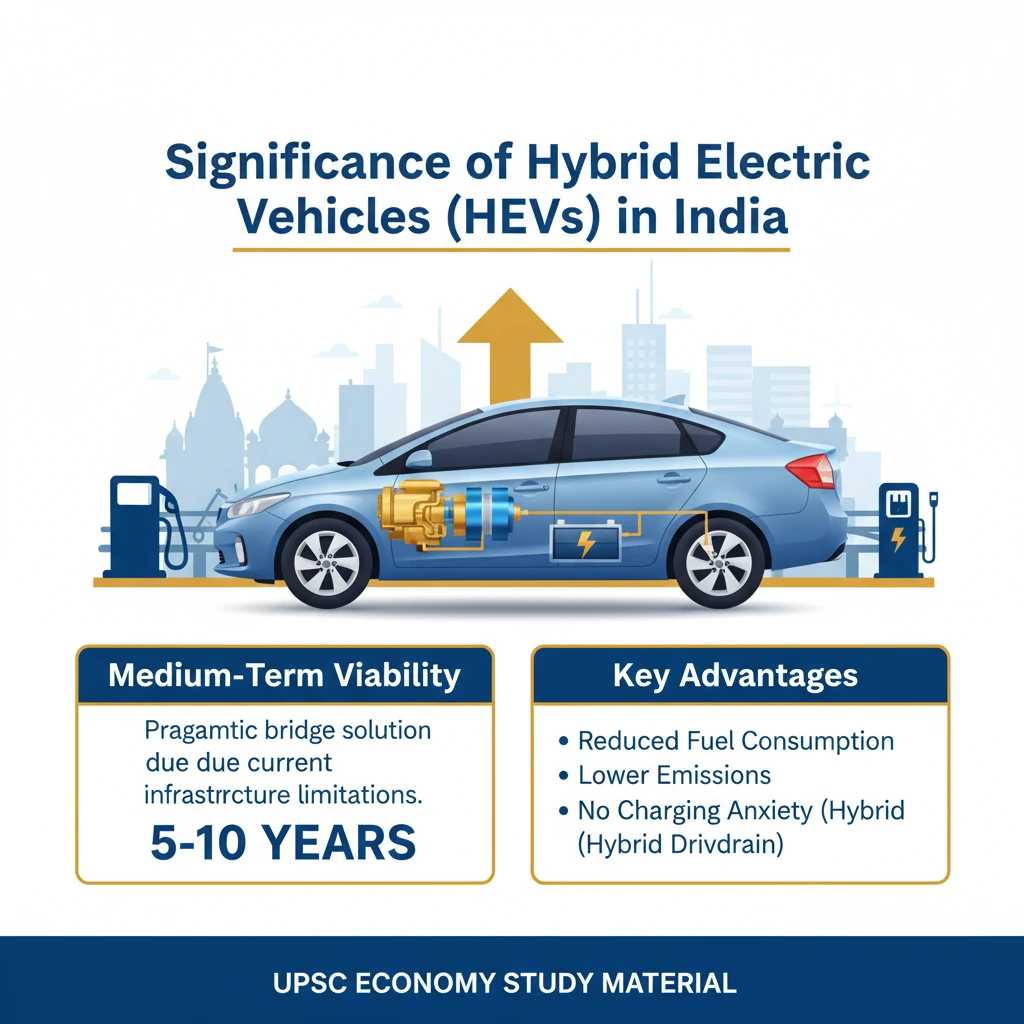
<h4>Significance of Hybrid Electric Vehicles (HEVs) in India</h4><p><strong>Hybrid Electric Vehicles (HEVs)</strong> are emerging as a crucial component in India's transition towards a fully electrified vehicle fleet. They offer a pragmatic bridge solution, especially for the medium term, given the current infrastructure limitations.</p><h4>Medium-Term Viability (5-10 Years)</h4><p><strong>Hybrid EVs</strong> are considered a highly practical and viable option for the next <strong>5-10 years</strong> in India. This is primarily because they do not necessitate an extensive <strong>external charging infrastructure</strong>.</p><p>The gradual move towards <strong>full electrification</strong> of India's vehicle fleet is a significant undertaking. Hybrids facilitate this transition by reducing immediate dependence on a widespread charging network.</p><div class='key-point-box'><p><strong>Key Point:</strong> <strong>Hybrid EVs</strong> serve as an effective interim solution, bridging the gap between conventional internal combustion engine (ICE) vehicles and fully battery electric vehicles (BEVs).</p></div><h4>Cost of Ownership Perspective</h4><p>From a <strong>cost of ownership</strong> standpoint, <strong>hybrid vehicles</strong> are proving to be quite attractive. Various <strong>state governments</strong> are actively providing incentives to encourage their adoption.</p><p>These incentives often include waivers on significant charges such as <strong>registration fees</strong> and <strong>RTO fees</strong>, directly reducing the upfront cost for consumers.</p><div class='info-box'><p><strong>Example: Uttar Pradesh Government Waiver</strong></p><ul><li>The <strong>Uttar Pradesh government</strong> has announced a <strong>100% waiver</strong> on <strong>registration fees</strong> for <strong>strong hybrids</strong>.</li><li>This policy can potentially save buyers a substantial amount, estimated to be up to <strong>Rs 3.5 lakh</strong>.</li></ul></div><p>Beyond initial purchase benefits, <strong>hybrid cars</strong> also offer superior <strong>fuel economy</strong> compared to conventional fuel cars. This translates into significant <strong>cost savings</strong> for drivers over the vehicle's lifespan, enhancing their overall economic viability.</p><div class='exam-tip-box'><p><strong>UPSC Insight:</strong> When discussing India's energy transition, the <strong>significance of Hybrid EVs</strong> should be framed as a pragmatic, medium-term strategy. Emphasize their role in overcoming <strong>infrastructure challenges</strong> and providing <strong>economic benefits</strong> to consumers.</p></div>
💡 Key Takeaways
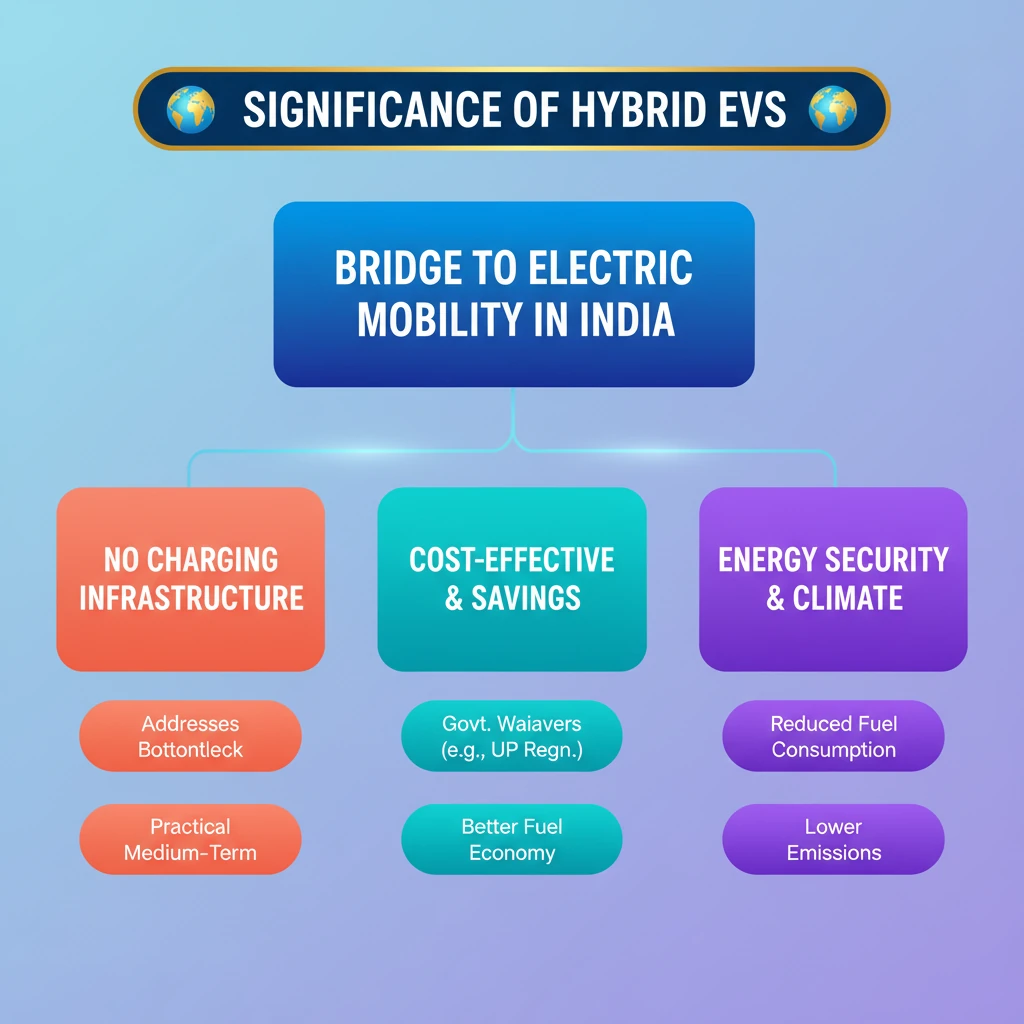
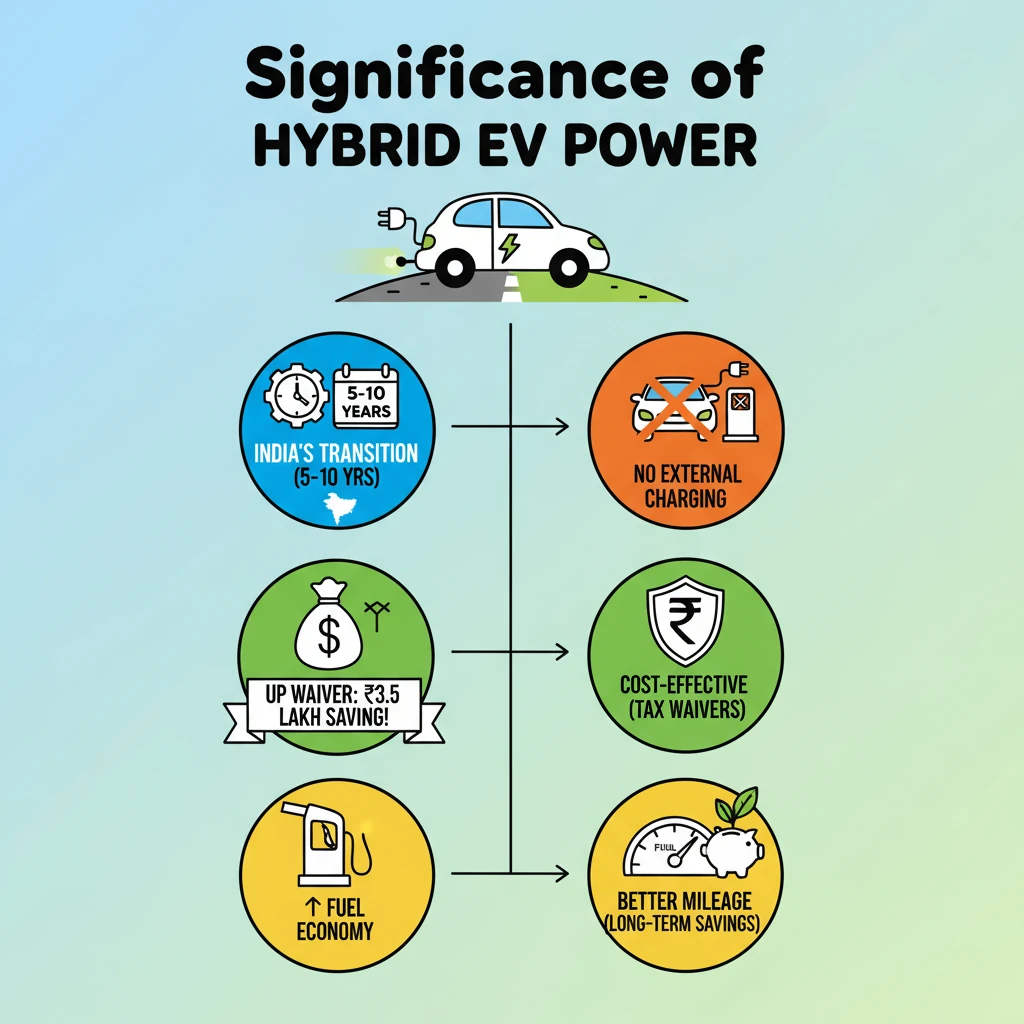
- •Hybrid EVs are a practical, medium-term solution for India's transition to full electrification (5-10 years).
- •They do not require external charging infrastructure, addressing a key bottleneck.
- •Hybrids are cost-effective due to state government waivers (e.g., 100% registration fee waiver in UP, saving up to Rs 3.5 lakh).
- •They offer better fuel economy than conventional cars, leading to long-term cost savings for drivers.
- •Hybrid EVs contribute to energy security and climate change mitigation by reducing fuel consumption and emissions.
🧠 Memory Techniques
95% Verified Content
📚 Reference Sources
•General knowledge on FAME India scheme and state EV policies (for contextualization)