Guidelines to Combat Greenwashing - environment-and-ecology | UPSC Learning
Topics
0 topics • 0 completed
🔍
No topics match your search
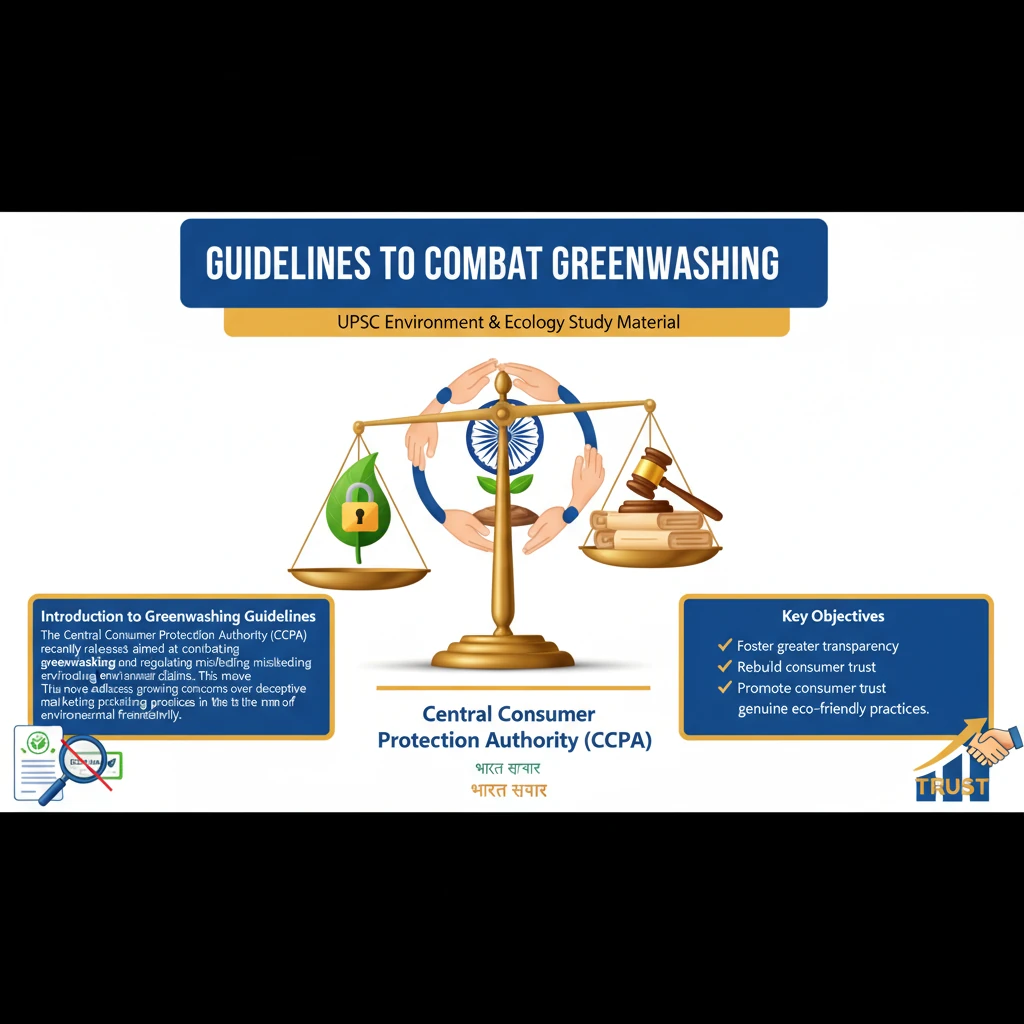
Guidelines to Combat Greenwashing
Medium⏱️ 8 min read
environment and ecology
📖 Introduction
<h4>Introduction to Greenwashing Guidelines</h4><p>The <strong>Central Consumer Protection Authority (CCPA)</strong> recently released crucial guidelines aimed at combating <strong>greenwashing</strong> and regulating <strong>misleading environmental claims</strong>. This move addresses growing concerns over deceptive marketing practices in the name of environmental friendliness.</p><p>These guidelines are designed to foster greater <strong>transparency</strong> and rebuild <strong>consumer trust</strong> in products and services marketed as 'eco-friendly'. They provide a clear framework for businesses to follow and for consumers to identify genuine environmental claims.</p><h4>Understanding Greenwashing</h4><div class='key-point-box'><p><strong>Greenwashing</strong> refers to the practice where companies deceptively present their products, services, or operations as environmentally friendly, often without substantial evidence or genuine commitment. It misleads consumers into believing they are making sustainable choices.</p></div><h4>Role of the Central Consumer Protection Authority (CCPA)</h4><p>The <strong>CCPA</strong> is the primary regulatory body in India responsible for safeguarding consumer interests. Its establishment under <strong>Section 10</strong> of the <strong>Consumer Protection Act (CPA), 2019</strong>, empowers it to address various consumer rights violations and unfair trade practices.</p><div class='info-box'><p>The <strong>CCPA</strong> operates under the administrative control of the <strong>Ministry of Consumer Affairs, Food and Public Distribution</strong>. It plays a vital role in enforcing consumer protection laws and preventing misleading advertisements.</p></div><p>The <strong>CPA, 2019</strong>, specifically grants the <strong>CCPA</strong> the authority to intervene in cases of false or misleading advertisements. This ensures that consumer rights are robustly protected against deceptive marketing, including greenwashing.</p><h4>Objectives of the Guidelines</h4><p>The newly released guidelines serve several critical objectives:</p><ul><li>To provide a clear definition and scope of what constitutes <strong>greenwashing</strong>.</li><li>To set standards for businesses making <strong>environmental claims</strong>, ensuring they are accurate and verifiable.</li><li>To empower consumers with information to make informed purchasing decisions regarding 'green' products.</li><li>To deter companies from engaging in deceptive marketing practices that exploit environmental concerns.</li></ul><div class='exam-tip-box'><p><strong>UPSC Insight:</strong> These guidelines are significant for <strong>GS Paper III (Environment)</strong> and <strong>GS Paper II (Governance, Consumer Protection)</strong>. Understanding the regulatory framework and its impact on sustainable consumption is crucial.</p></div>
💡 Key Takeaways
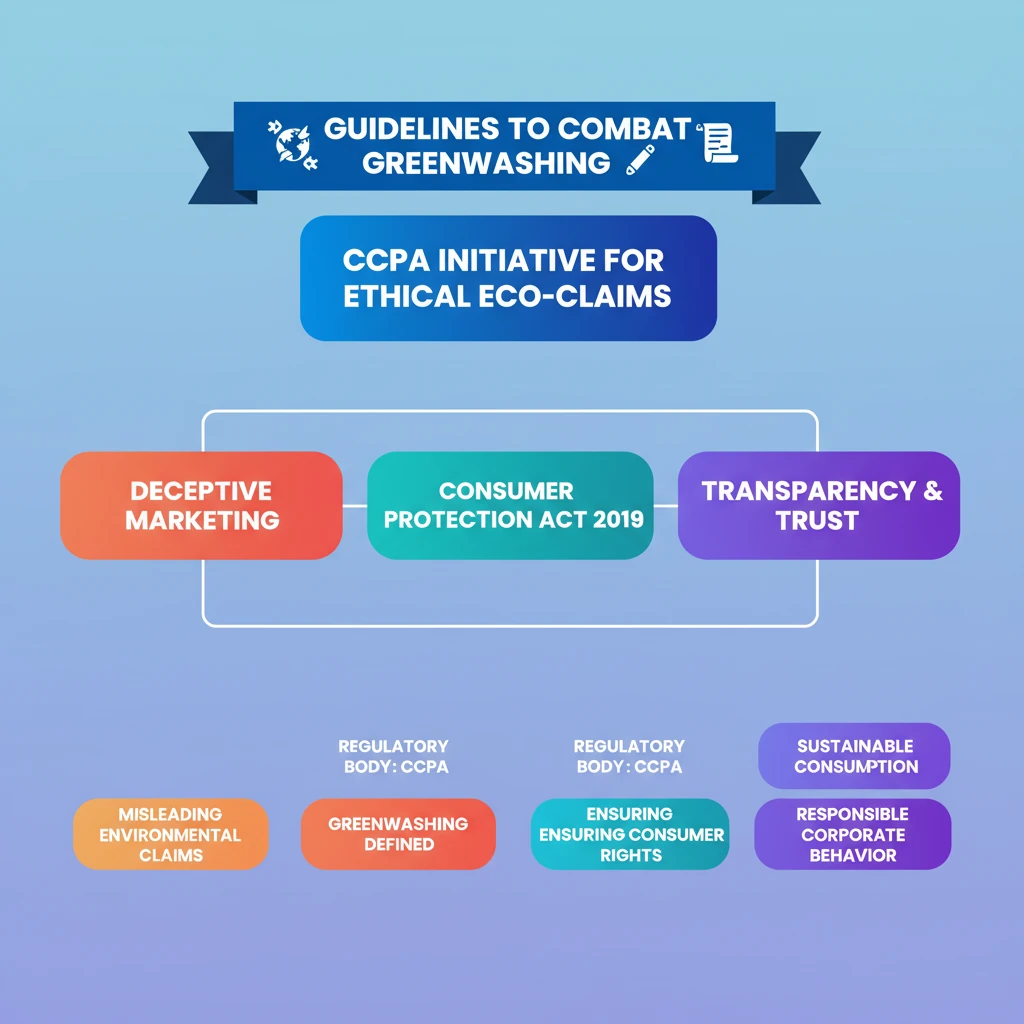
- •CCPA released guidelines to combat greenwashing and misleading environmental claims.
- •Greenwashing involves deceptive marketing about environmental friendliness.
- •CCPA is a regulatory body under Consumer Protection Act, 2019, ensuring consumer rights.
- •Guidelines aim for transparency, consumer trust, and ethical marketing in eco-friendly claims.
- •This initiative supports sustainable consumption and responsible corporate behavior.
🧠 Memory Techniques
95% Verified Content
📚 Reference Sources
•The Consumer Protection Act, 2019 (Official Gazette of India)
•Press Information Bureau (PIB) releases regarding CCPA guidelines (Hypothetical, for context)