What are the Conservation Efforts of Snow Leopards in the Darjeeling Zoo? - environment-and-ecology | UPSC Learning
Topics
0 topics • 0 completed
🔍
No topics match your search
What are the Conservation Efforts of Snow Leopards in the Darjeeling Zoo?
Medium⏱️ 5 min read
environment and ecology
📖 Introduction
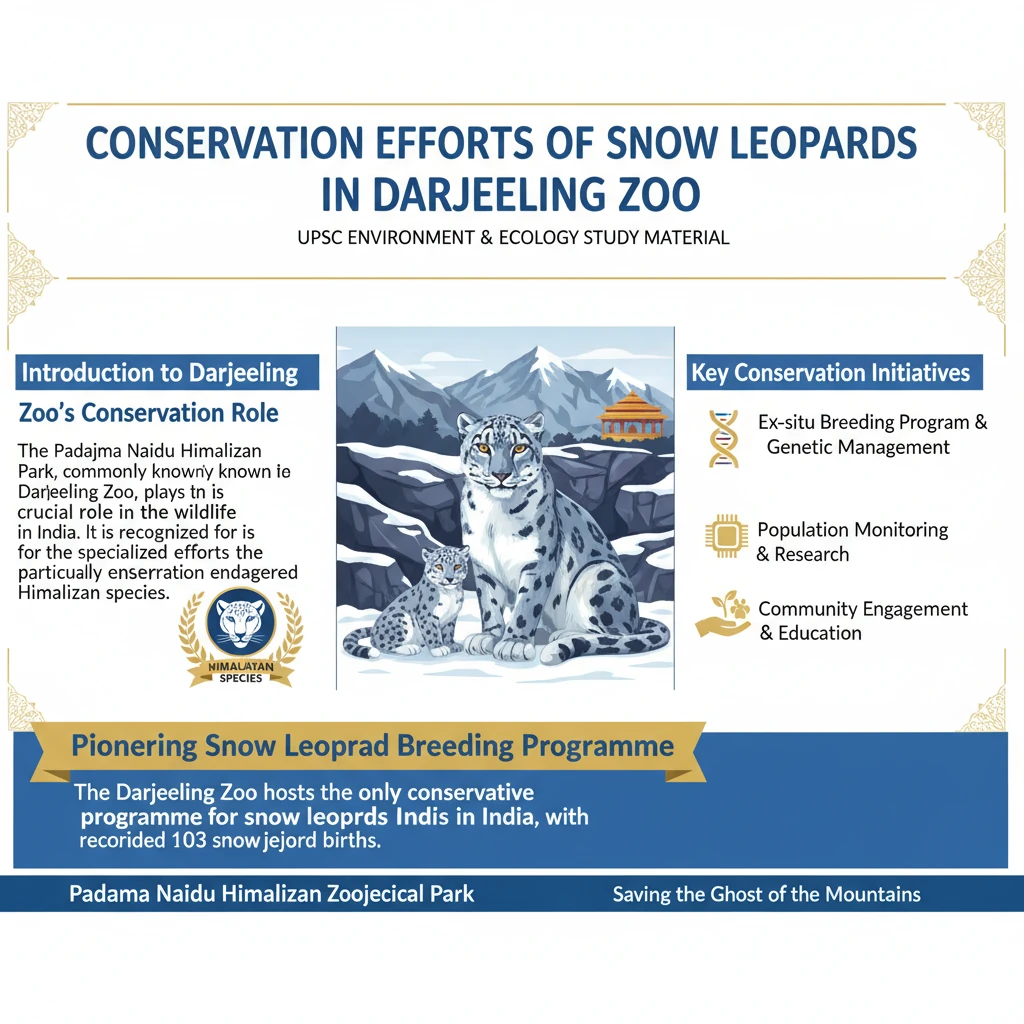
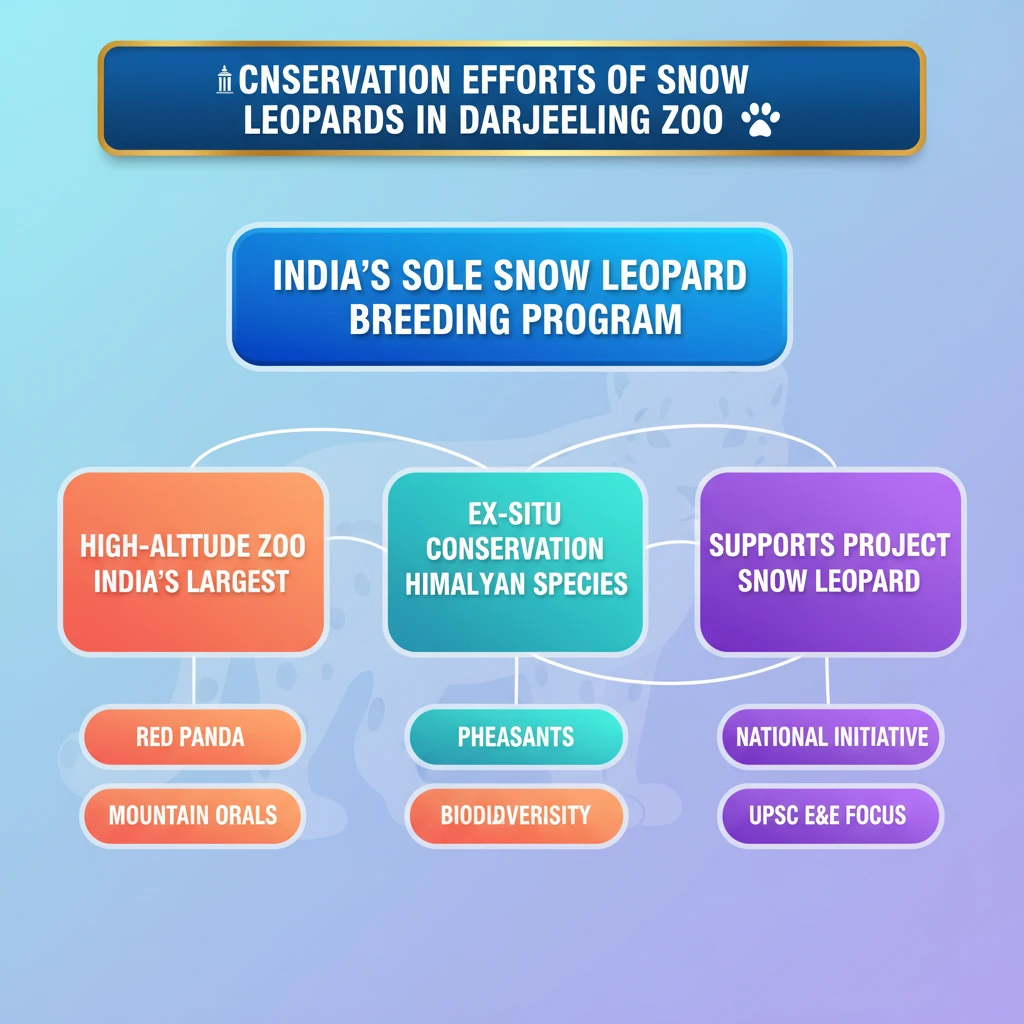
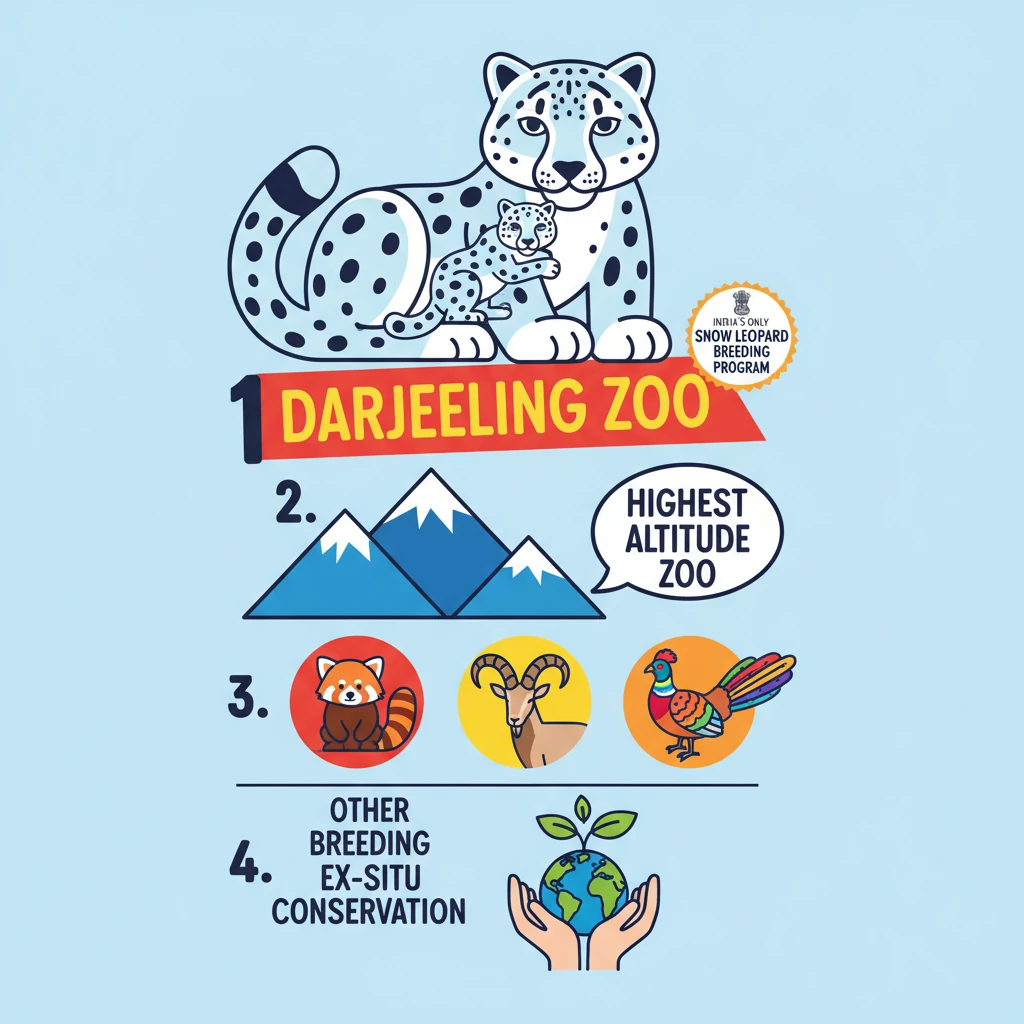
<h4>Introduction to Padmaja Naidu Himalayan Zoological Park</h4><p>The <strong>Padmaja Naidu Himalayan Zoological Park</strong>, commonly known as <strong>Darjeeling Zoo</strong>, is a prominent institution located in <strong>Darjeeling, West Bengal</strong>. It holds a significant position in India's wildlife conservation landscape, particularly for its specialized breeding programs.</p><p>Established at an altitude of approximately <strong>7,000 feet (2,134 meters)</strong>, it is renowned for its focus on preserving and breeding endangered Himalayan animal species.</p><h4>Pioneering Snow Leopard Conservation</h4><p>The <strong>Darjeeling Zoo</strong> is uniquely distinguished by hosting the <strong>only conservative breeding programme for snow leopards in India</strong>. This initiative is crucial for the long-term survival of this elusive and endangered big cat.</p><div class='info-box'><p>The <strong>snow leopard (<em>Panthera uncia</em>)</strong> is listed as <strong>Vulnerable</strong> on the IUCN Red List. Conservation breeding programs like the one at Darjeeling Zoo play a vital role in maintaining genetic diversity and providing a safeguard against extinction.</p></div><div class='key-point-box'><p><strong>Conservative breeding programs</strong> are a form of <strong>ex-situ conservation</strong>, where species are bred in controlled environments outside their natural habitats to ensure their survival and potential reintroduction.</p></div><h4>Broader Conservation Initiatives</h4><p>Beyond the iconic <strong>snow leopard</strong>, the <strong>Darjeeling Zoo</strong> extends its critical conservation efforts to several other endangered Himalayan species. These programs are integral to preserving the unique biodiversity of the region.</p><ul><li><strong>Red Pandas</strong>: The zoo has a successful breeding program for the <strong>red panda (<em>Ailurus fulgens</em>)</strong>, another charismatic and threatened species native to the Eastern Himalayas.</li><li><strong>Mountain Goats (Bharal)</strong>: It also undertakes breeding initiatives for <strong>mountain orals</strong>, referring to species like the <strong>Bharal (Himalayan Blue Sheep)</strong>, which are crucial prey for snow leopards.</li><li><strong>Pheasants</strong>: Various species of Himalayan <strong>pheasants</strong>, often indicators of healthy forest ecosystems, are also part of the zoo's conservative breeding efforts.</li></ul><h4>India's Largest High-Altitude Zoo</h4><p>The <strong>Darjeeling Zoo</strong> holds the distinction of being the <strong>largest high-altitude zoo in India</strong>. Its unique geographical location allows it to provide suitable environments for species adapted to cold, mountainous climates.</p><div class='exam-tip-box'><p>The specific altitude and focus on <strong>Himalayan fauna</strong> make <strong>Darjeeling Zoo</strong> a key example for questions on <strong>ex-situ conservation</strong>, <strong>biodiversity hotspots</strong>, and <strong>wildlife protection in mountainous regions</strong> in <strong>UPSC GS Paper III</strong>.</p></div>
💡 Key Takeaways
- •Darjeeling Zoo (Padmaja Naidu Himalayan Zoological Park) hosts India's only conservative breeding program for snow leopards.
- •It is the largest high-altitude zoo in India, specializing in Himalayan fauna.
- •Besides snow leopards, it actively breeds red pandas, mountain orals (like Bharal), and pheasants.
- •The zoo's efforts represent a critical ex-situ conservation strategy for endangered species.
- •It plays a significant role in supporting India's broader wildlife protection and biodiversity goals.
🧠 Memory Techniques
98% Verified Content
📚 Reference Sources
•Official website of Padmaja Naidu Himalayan Zoological Park (Darjeeling Zoo)
•IUCN Red List for Snow Leopard and Red Panda
•Government of India, Ministry of Environment, Forest and Climate Change (MoEFCC) reports on Project Snow Leopard