Indian Navy: History, Motto, Navy Day, and Commands - Defence And Security | UPSC Learning
Topics
0 topics • 0 completed
🔍
No topics match your search
Indian Navy: History, Motto, Navy Day, and Commands
Medium⏱️ 7 min read
defence and security
📖 Introduction
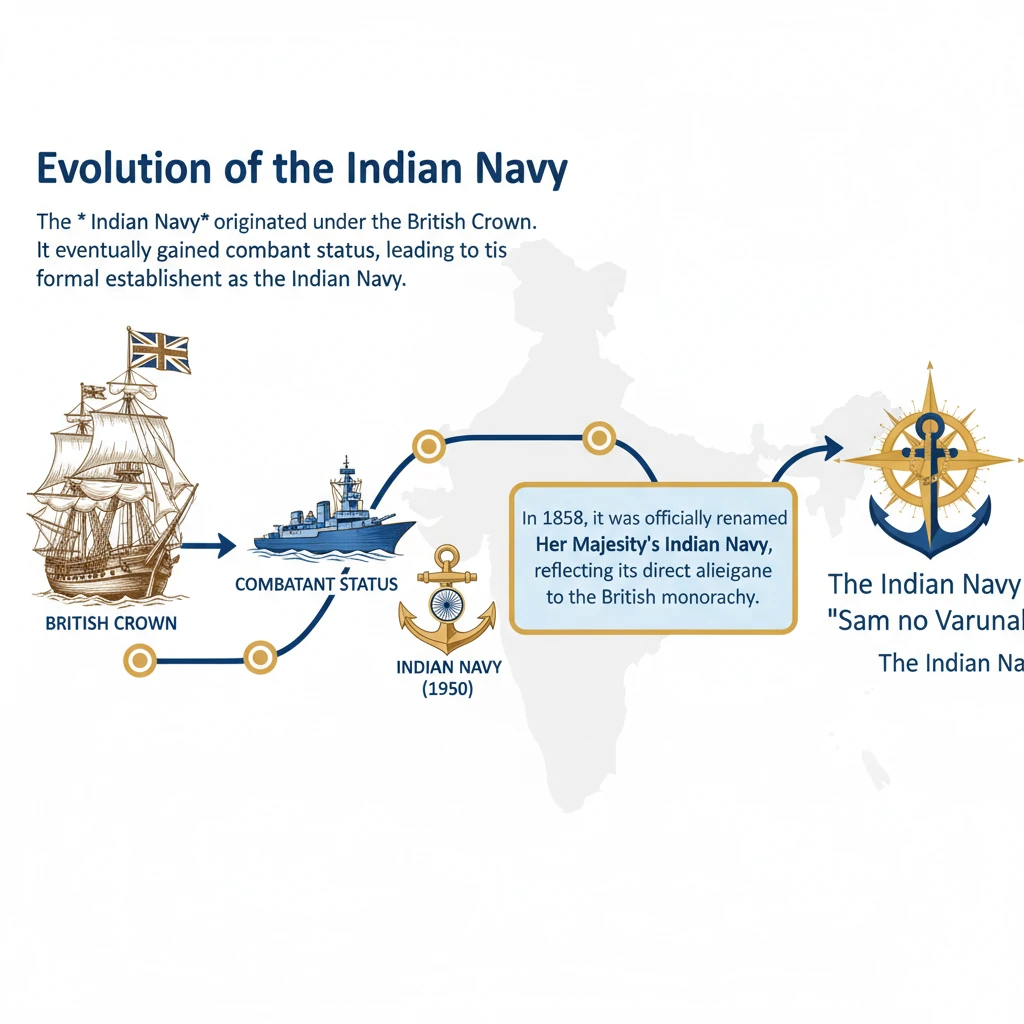
<h4>Evolution of the Indian Navy</h4><p>The <strong>Indian Navy</strong> originated under the <strong>British Crown</strong>. It eventually gained <strong>combatant status</strong>, leading to its formal establishment as the Indian Navy.</p><div class='info-box'><p>In <strong>1858</strong>, it was officially renamed <strong>Her Majesty’s Indian Navy</strong>, reflecting its direct allegiance to the British monarchy.</p></div><h4>The Indian Navy Motto: "Sam no Varunah"</h4><p>The <strong>Indian Navy</strong> adopted a profound <strong>Vedic invocation</strong> as its emblem motto: <strong>"Sam no Varunah"</strong>.</p><div class='key-point-box'><p>This phrase is addressed to <strong>Lord Varuna</strong>, the Hindu deity associated with oceans and cosmic order, and translates to <strong>"Be auspicious unto us, O Varuna"</strong>.</p></div><h4>Navy Day: Celebrating Valor and Sacrifice</h4><p>The first observance of <strong>Navy Day</strong> took place on <strong>21st October 1944</strong>.</p><p>However, since <strong>1972</strong>, <strong>Navy Day</strong> has been celebrated annually on <strong>4th December</strong>.</p><div class='info-box'><p>This date commemorates the <strong>successful naval operations</strong> conducted during the <strong>1971 Indo-Pak War</strong>, specifically the impactful <strong>missile attack on Karachi harbor</strong> and other operations in the <strong>Arabian Sea</strong> and <strong>Bay of Bengal</strong>. It also serves to pay tribute to <strong>war martyrs</strong>.</p></div><div class='exam-tip-box'><p>Remember the shift in <strong>Navy Day</strong> dates and the reason behind the <strong>4th December</strong> celebration, as it links directly to a significant historical event – the <strong>1971 War</strong> – often asked in <strong>UPSC Prelims</strong> and <strong>Mains (GS-I History, GS-III Security)</strong>.</p></div><h4>Organizational Structure: Naval Commands</h4><p>The <strong>Indian Navy</strong> is structured into <strong>three operational Commands</strong>, each headed by a <strong>Flag Officer Commanding-in-Chief</strong>.</p><ul><li><strong>Western Naval Command</strong>: Headquartered in <strong>Mumbai</strong>.</li><li><strong>Eastern Naval Command</strong>: Headquartered in <strong>Visakhapatnam</strong>.</li><li><strong>Southern Naval Command</strong>: Headquartered in <strong>Kochi</strong>.</li></ul><div class='key-point-box'><p>These commands are crucial for the effective deployment and administration of naval assets across India's vast coastline and maritime zones.</p></div>
💡 Key Takeaways
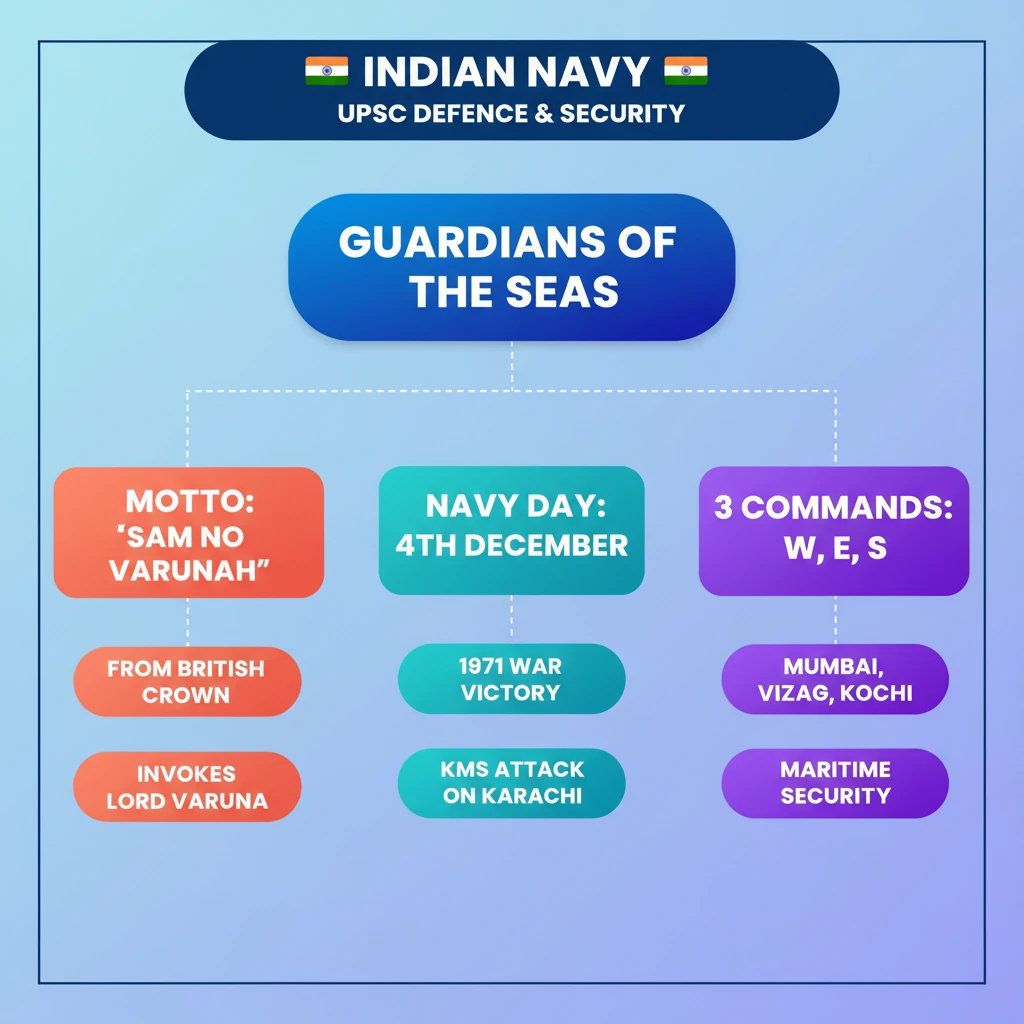
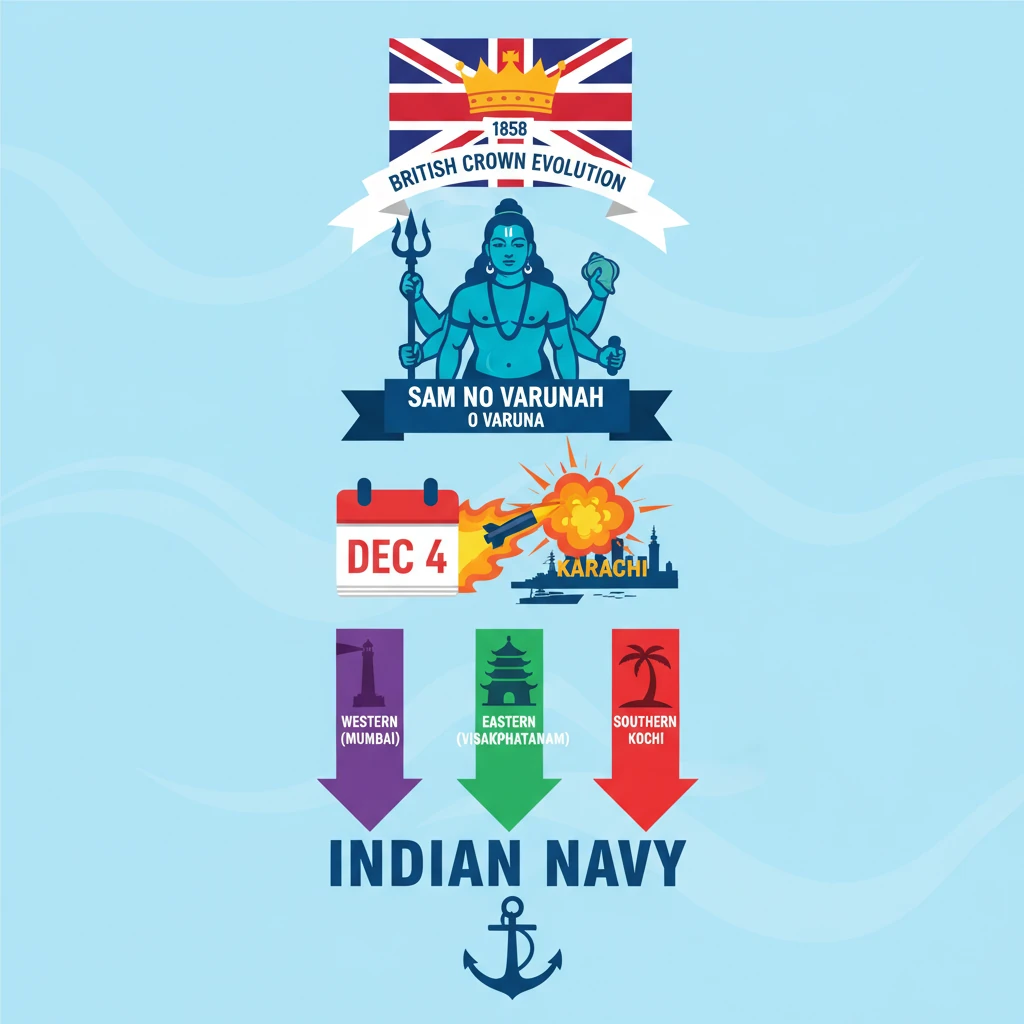
- •Indian Navy evolved from British Crown, renamed Her Majesty’s Indian Navy in 1858.
- •Motto "Sam no Varunah" means "Be auspicious unto us, O Varuna," invoking Lord Varuna.
- •Navy Day on 4th December commemorates the successful 1971 War operations, including the Karachi harbor missile attack.
- •Indian Navy has three commands: Western (Mumbai), Eastern (Visakhapatnam), and Southern (Kochi).
- •Crucial for maritime security, power projection, and HADR operations in the Indian Ocean Region.
🧠 Memory Techniques
95% Verified Content
📚 Reference Sources
•Indian Navy official website
•Ministry of Defence annual reports