SC Halts Criminal Cases under AFSPA - Defence And Security | UPSC Learning
Topics
0 topics • 0 completed
🔍
No topics match your search
SC Halts Criminal Cases under AFSPA
Medium⏱️ 8 min read
defence and security
📖 Introduction
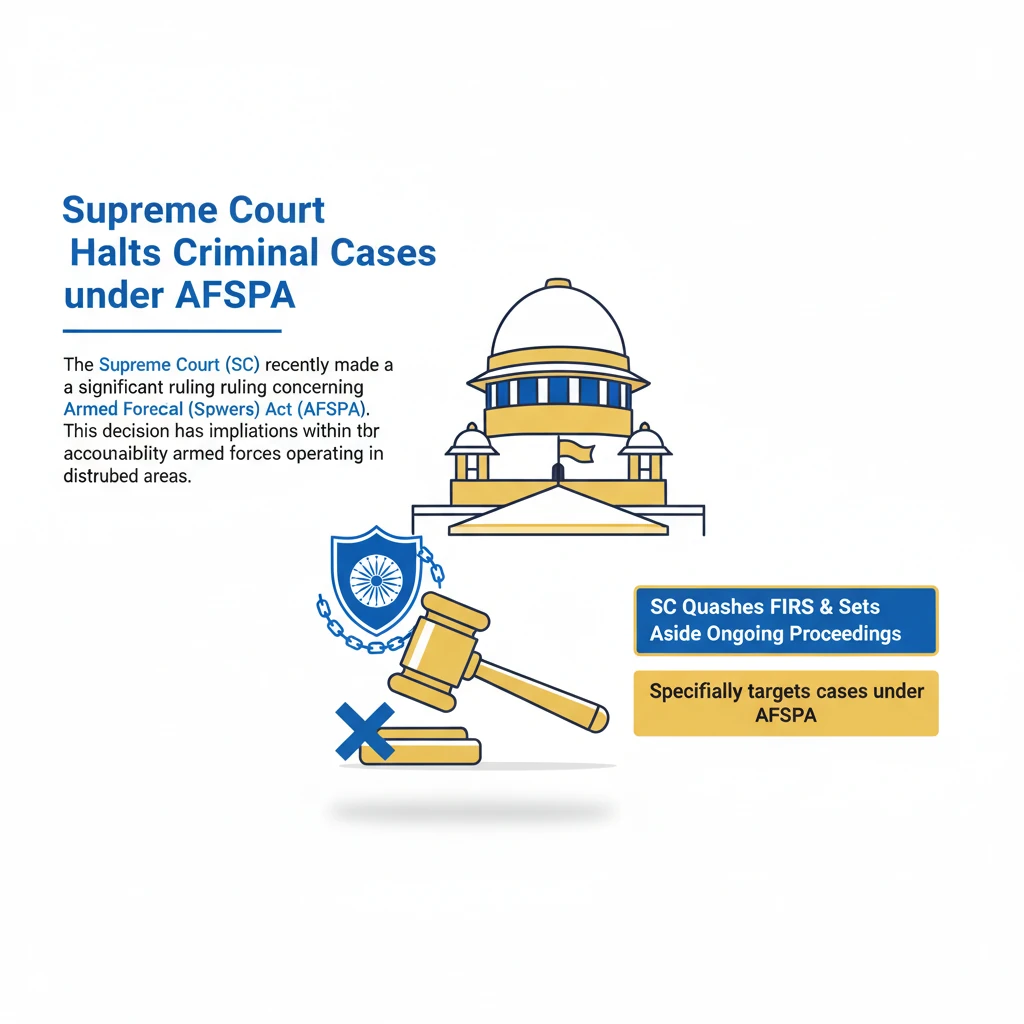
<h4>Supreme Court Halts Criminal Cases under AFSPA</h4><p>The <strong>Supreme Court (SC)</strong> recently made a significant ruling concerning the <strong>Armed Forces (Special Powers) Act (AFSPA)</strong>. This decision has implications for accountability within the armed forces operating in disturbed areas.</p><p>The <strong>SC</strong> has taken a crucial step by <strong>quashing First Information Reports (FIRs)</strong> and setting aside all ongoing proceedings. This action specifically targeted <strong>30 personnel</strong> from the <strong>21 Para (Special Force)</strong> unit.</p><h4>The Nagaland Incident</h4><p>These military personnel were accused of allegedly <strong>killing civilians</strong> in <strong>Nagaland</strong>. The incident brought to the forefront the complexities surrounding military operations and civilian protection in regions under <strong>AFSPA</strong>.</p><div class='info-box'><p><strong>Context:</strong> The case involves allegations of civilian casualties during an operation in <strong>Nagaland</strong>. This state is often under <strong>AFSPA</strong>, which grants special powers to armed forces.</p></div><h4>Role of Ministry of Home Affairs (MHA)</h4><p>A key factor in the <strong>SC's</strong> decision was the stance taken by the <strong>Union Ministry of Home Affairs (MHA)</strong>. The <strong>MHA</strong> declined to grant the necessary <strong>sanctions</strong> for initiating criminal prosecution against the accused personnel.</p><div class='key-point-box'><p><strong>Sanction for Prosecution:</strong> Under various laws, including aspects related to <strong>AFSPA</strong>, government sanction is often required before criminal proceedings can be initiated against armed forces personnel for actions taken in discharge of their official duties.</p></div><div class='exam-tip-box'><p><strong>UPSC Insight:</strong> This case highlights the delicate balance between <strong>national security</strong>, <strong>human rights</strong>, and the <strong>accountability</strong> of armed forces. It's crucial for understanding <strong>GS-II (Polity & Governance)</strong> and <strong>GS-III (Internal Security)</strong> topics.</p></div>
💡 Key Takeaways
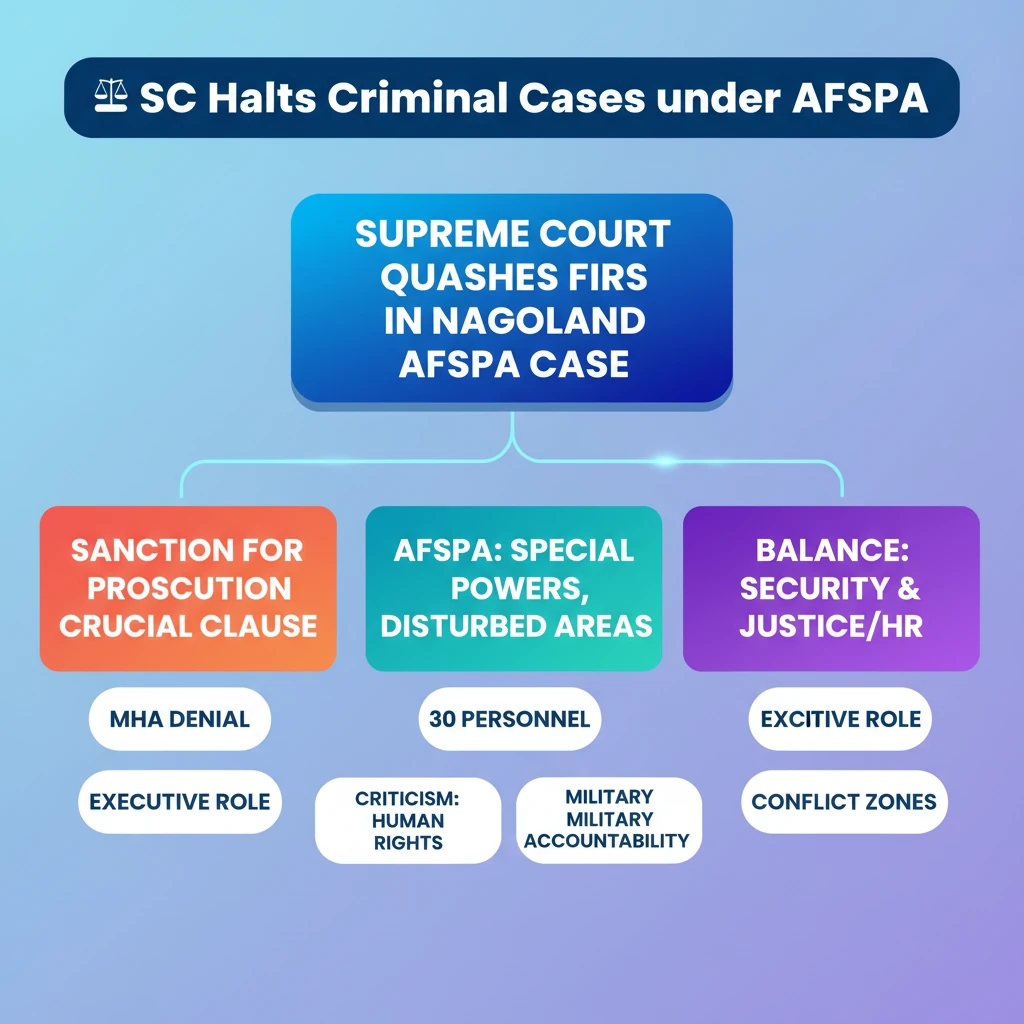
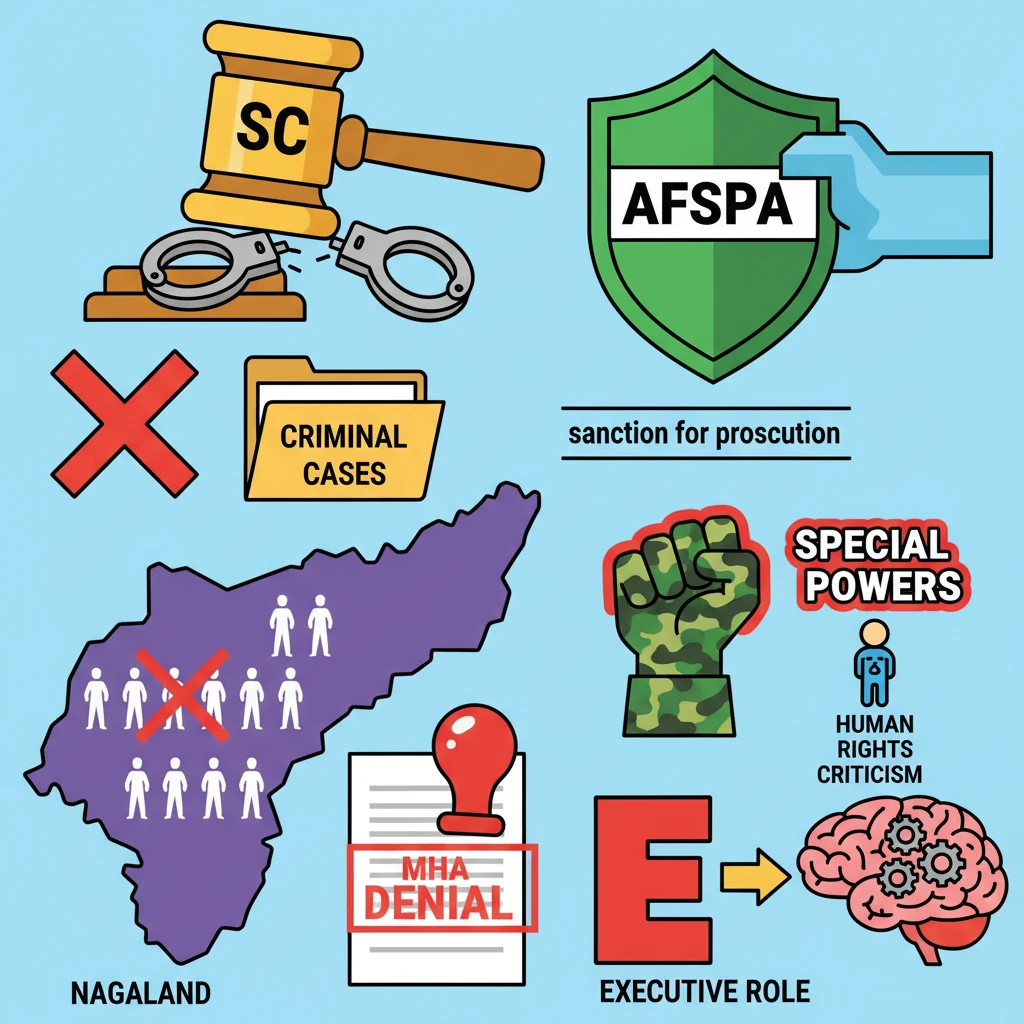
- •SC quashed FIRs against 30 personnel in Nagaland due to MHA's denial of prosecution sanction.
- •The case highlights the controversial 'sanction for prosecution' clause under AFSPA, which often shields personnel.
- •AFSPA grants special powers to armed forces in 'disturbed areas' but faces criticism for human rights concerns.
- •The MHA's decision underscores the executive's significant role in military accountability and legal proceedings.
- •This issue represents a critical balance between national security needs and demands for justice and human rights in conflict zones.
🧠 Memory Techniques
95% Verified Content
📚 Reference Sources
•Supreme Court of India records and judgments
•Ministry of Home Affairs official statements
•Government of India gazettes related to AFSPA
•Reports by human rights organizations (e.g., Amnesty International) on AFSPA