5 New Classical Languages and Change in Criteria - Art And Culture | UPSC Learning
Topics
0 topics • 0 completed
🔍
No topics match your search
5 New Classical Languages and Change in Criteria
Medium⏱️ 8 min read
art and culture
📖 Introduction
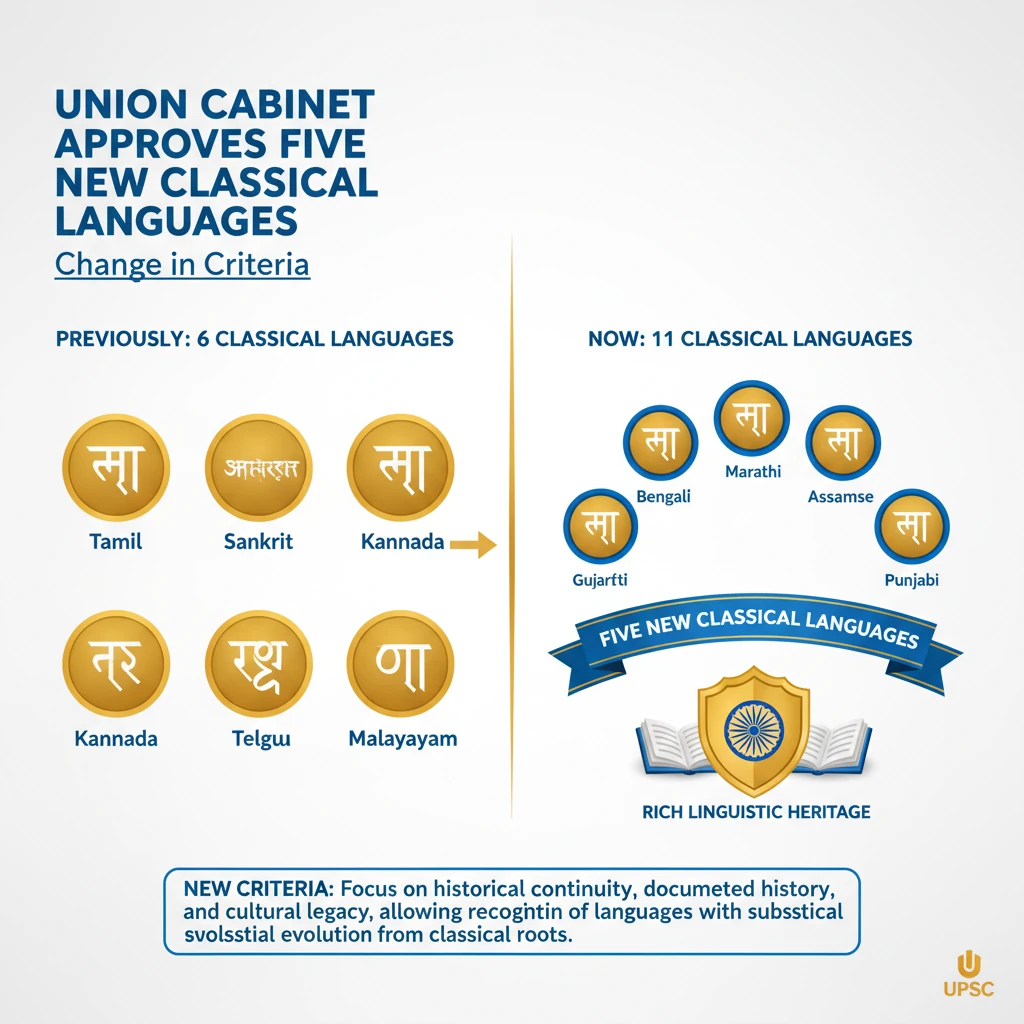
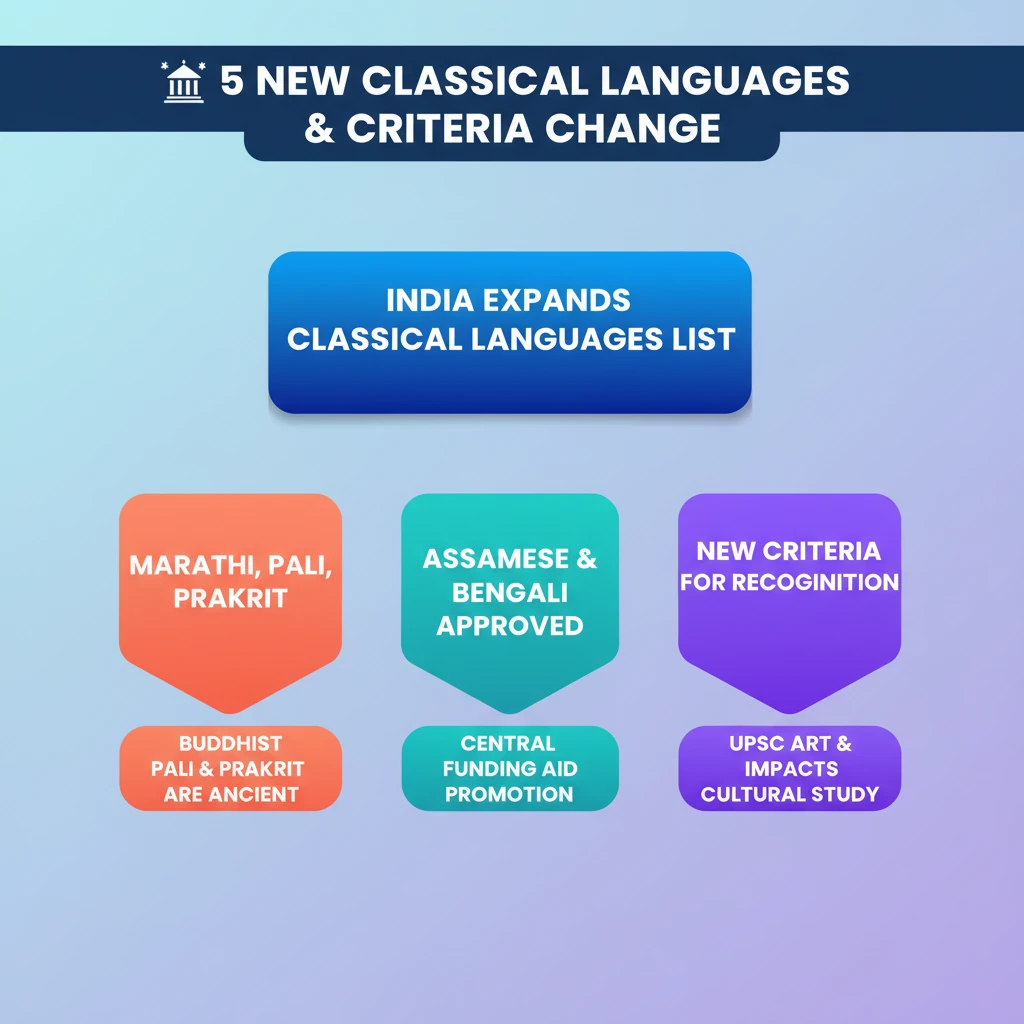
<h4>Union Cabinet Approves Five New Classical Languages</h4><p>The <strong>Union Cabinet</strong> has recently approved the recognition of <strong>five more languages</strong> as “classical” languages. This significant decision expands the nation’s prestigious list of culturally significant tongues.</p><p>Previously, <strong>six languages</strong> held this esteemed status. With the new additions, the total number of classical languages in India will increase, reflecting the country's rich linguistic diversity.</p><div class="info-box"><strong>New Classical Languages Approved:</strong><ul><li><strong>Marathi</strong></li><li><strong>Pali</strong></li><li><strong>Prakrit</strong></li><li><strong>Assamese</strong></li><li><strong>Bengali</strong></li></ul></div><h4>Expanding India's Cultural Heritage</h4><p>The inclusion of these five languages underscores their profound historical depth, rich literary traditions, and significant contributions to Indian culture. This recognition is a testament to their enduring legacy.</p><div class="key-point-box">The status of a <strong>Classical Language</strong> provides several benefits, including central government funding for studies, international promotion, and the establishment of Centres of Excellence for the study of these languages.</div><h4>Change in Criteria for Recognition</h4><p>The topic explicitly mentions a <strong>'Change in Criteria'</strong> for classical language status. While the specific modifications are not detailed in the source, this indicates a potential re-evaluation or broadening of the parameters used to assess a language's eligibility for this prestigious tag.</p><div class="exam-tip-box"><strong>UPSC Insight:</strong> Understanding the criteria for classical language status (even if changed) is crucial for <strong>GS Paper 1 (Art & Culture)</strong>. Be prepared to discuss the implications of such policy changes on linguistic diversity and cultural preservation.</div>
💡 Key Takeaways
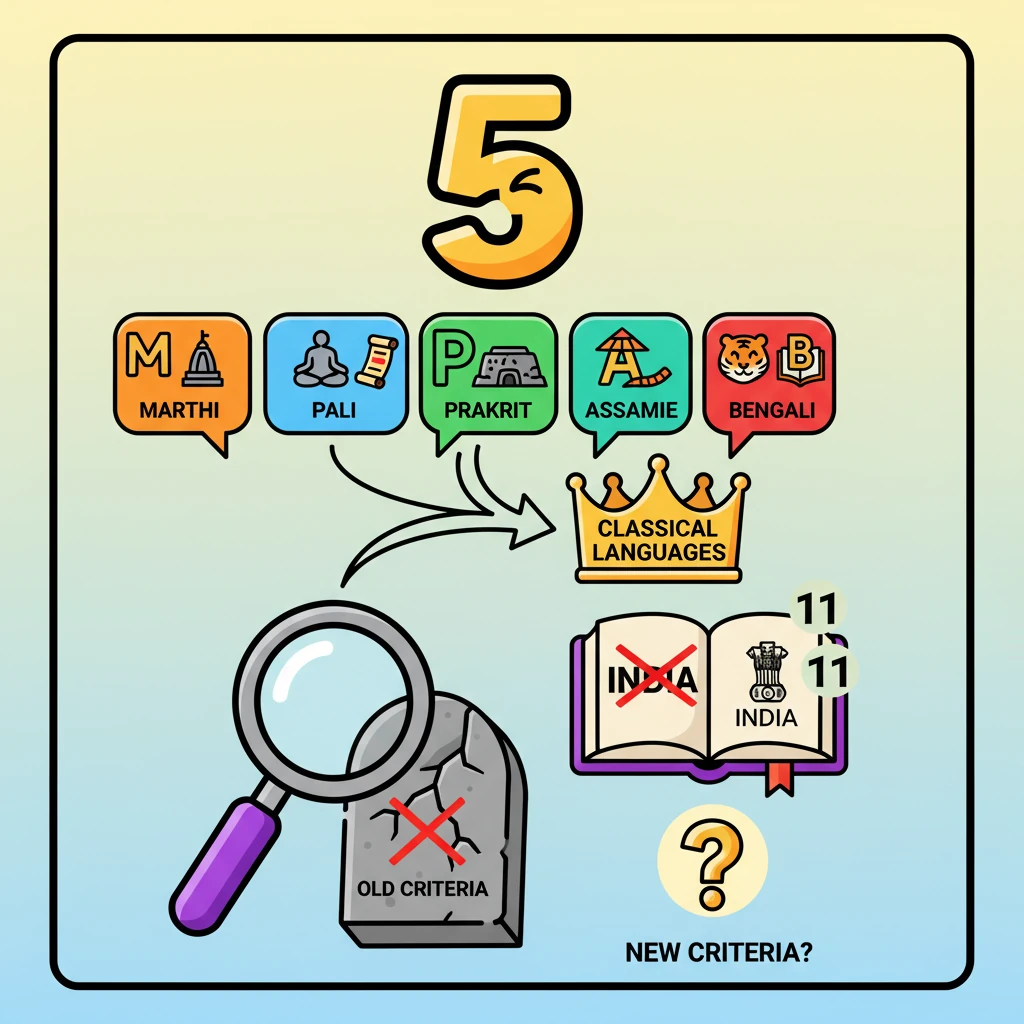
- •The Union Cabinet approved five new classical languages: Marathi, Pali, Prakrit, Assamese, and Bengali.
- •This expands India's list of classical languages beyond the original six.
- •Classical language status provides benefits like central funding and academic promotion.
- •The decision implies a 'change in criteria' for language recognition.
- •Pali and Prakrit are significant for ancient religious texts of Buddhism and Jainism.
- •The move aims to preserve and promote India's rich linguistic and cultural heritage.
- •This recognition strengthens regional cultural identities and boosts academic interest.
🧠 Memory Techniques
95% Verified Content
📚 Reference Sources
•Press Information Bureau (PIB) releases on Classical Languages (general knowledge)
•Ministry of Culture, Government of India (general knowledge on criteria and existing list)