What is the Status of Linguistic Diversity in India - Art And Culture | UPSC Learning
Topics
0 topics • 0 completed
🔍
No topics match your search
What is the Status of Linguistic Diversity in India
Medium⏱️ 7 min read
art and culture
📖 Introduction
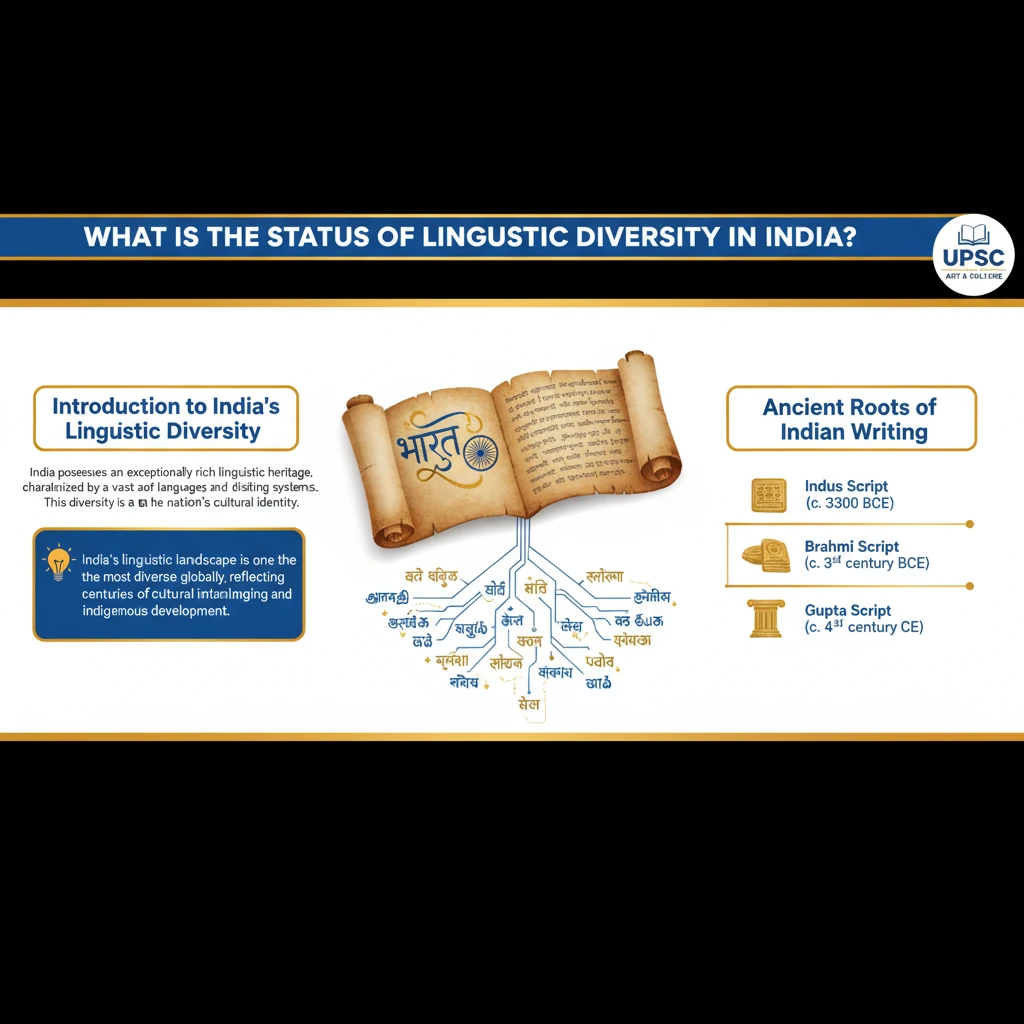
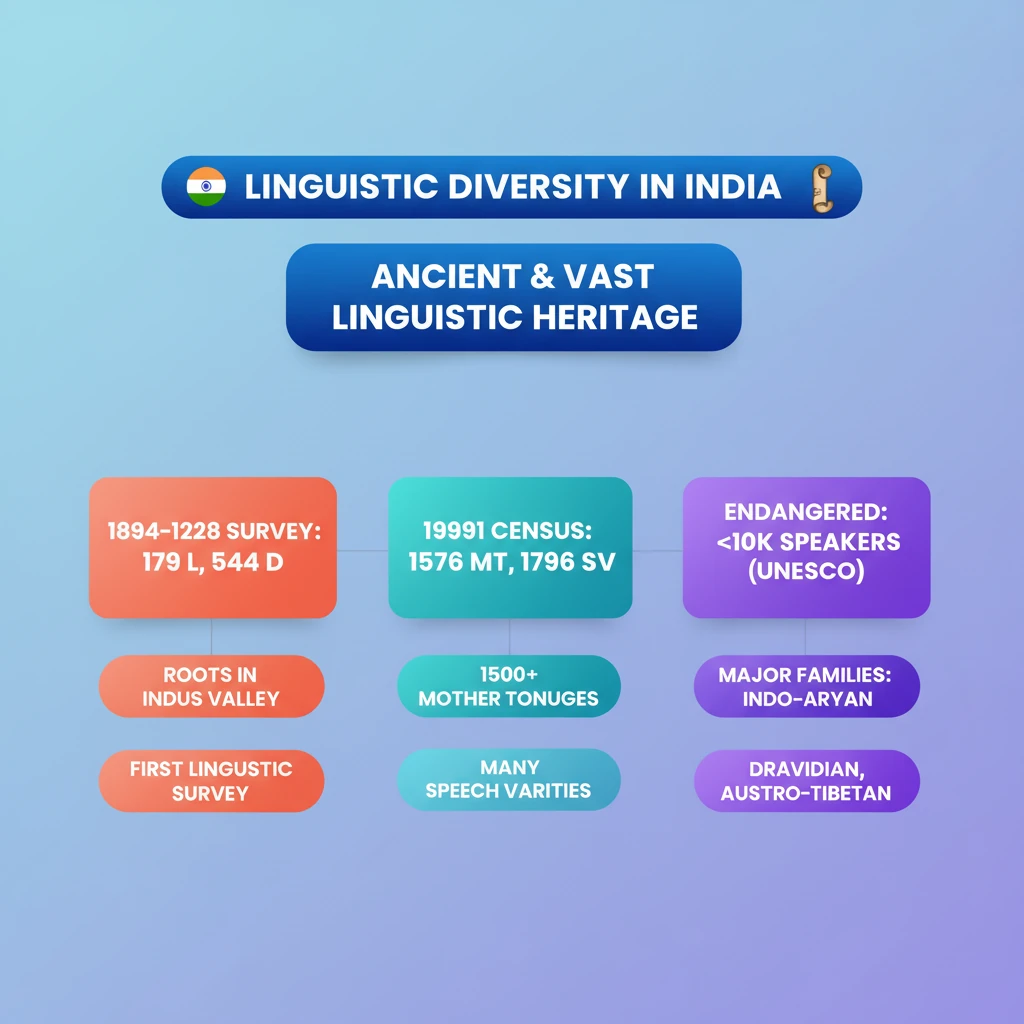
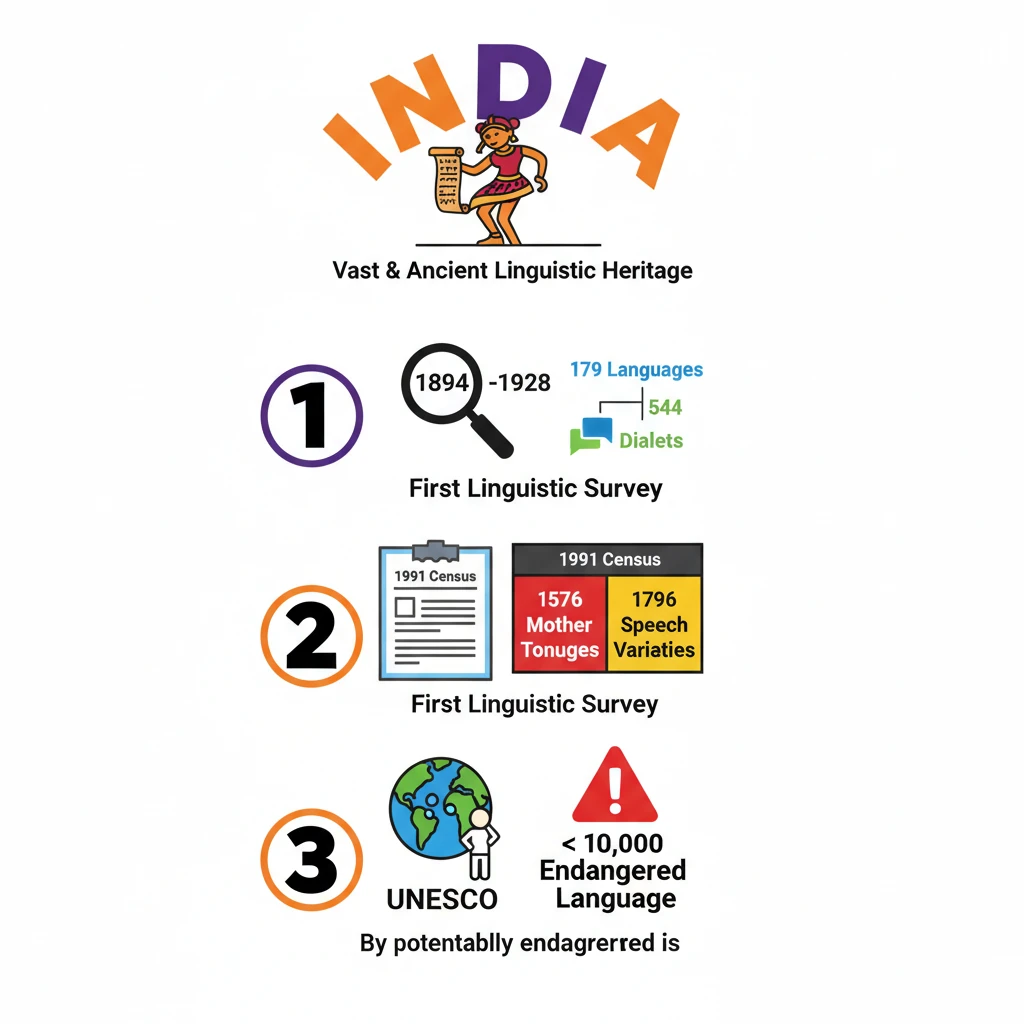
<h4>The Madhika Language and Chakaliya Community</h4><p>The <strong>Madhika language</strong> faces severe neglect, largely due to the <strong>social stigma</strong> historically associated with the <strong>Chakaliya community</strong>.</p><p>The <strong>Chakaliya community</strong> was traditionally considered <strong>untouchable</strong>, contributing to the marginalization of their language.</p><div class="key-point-box"><p><strong>Threat to Madhika:</strong> Lack of <strong>documentation</strong> (no script) and the dwindling number of <strong>older speakers</strong> put <strong>Madhika</strong> at significant risk of extinction.</p></div><h4>About the Chakaliya Community</h4><p>The <strong>Chakaliya community</strong> was originally <strong>nomadic</strong>, revering deities such as <strong>Thiruvenkatramana</strong> and <strong>Mariammana</strong>.</p><p>Centuries ago, they migrated from the <strong>hilly regions of Karnataka</strong> to <strong>northern Malabar</strong>.</p><div class="info-box"><p><strong>Categorisation Shift:</strong></p><ul><li>Initially classified as a <strong>Scheduled Tribe (ST)</strong>.</li><li>Later reclassified as a <strong>Scheduled Caste (SC)</strong> group in <strong>Kerala</strong>.</li></ul></div><h4>Overview of Linguistic Diversity in India</h4><p><strong>India</strong> boasts a remarkably <strong>rich linguistic heritage</strong>, characterized by a vast array of languages and diverse writing systems.</p><p>The history of writing in <strong>India</strong> extends back approximately <strong>four thousand years</strong>, originating from the era of the <strong>Indus Valley Civilisation</strong>.</p><h4>Linguistic Surveys and Data</h4><p>The <strong>first linguistic survey</strong> during <strong>colonial rule</strong> was conducted between <strong>1894 and 1928</strong>.</p><div class="info-box"><p><strong>Colonial Survey Findings:</strong> Identified <strong>179 languages</strong> and <strong>544 dialects</strong>.</p></div><p>The <strong>1991 Census of India</strong> provided a more comprehensive picture of linguistic variety.</p><div class="info-box"><p><strong>1991 Census Data:</strong></p><ul><li>Listed <strong>1576 'mother tongues'</strong> with distinct grammatical structures.</li><li>Classified <strong>1796 speech varieties</strong> as 'other mother tongues'.</li></ul></div><h4>Endangered Languages and UNESCO Criteria</h4><p>According to <strong>UNESCO</strong>, any language spoken by less than <strong>10,000 persons</strong> is considered <strong>“potentially endangered.”</strong></p><div class="exam-tip-box"><p><strong>UPSC Insight:</strong> Understanding <strong>UNESCO's criteria</strong> for language endangerment is crucial for questions on cultural preservation and government policies.</p></div><h4>Major Language Families of India</h4><p><strong>India's linguistic landscape</strong> is broadly categorized into several major <strong>language families</strong>.</p><ul><li><strong>Indo-Aryan</strong></li><li><strong>Dravidian</strong></li><li><strong>Austric</strong></li><li><strong>Tibeto-Burman</strong></li><li>And others.</li></ul><h4>Threat of Extinction</h4><p>The <strong>People’s Linguistic Survey of India (PLSI)</strong>, an initiative by the <strong>NGO Bhasha Research and Publication Centre</strong>, highlights a serious concern.</p><div class="key-point-box"><p><strong>PLSI Warning:</strong> Approximately <strong>400 languages</strong> in <strong>India</strong> are at risk of extinction within the next <strong>50 years</strong>.</p></div><p>This alarming statistic underscores the urgent need for robust language preservation efforts across the country.</p>
💡 Key Takeaways
- •India possesses immense linguistic diversity, comprising several major language families.
- •Many indigenous languages, such as Madhika, face extinction due to social stigma and lack of documentation.
- •Colonial linguistic surveys and the 1991 Census of India highlight the vast number of languages and dialects.
- •UNESCO classifies languages with fewer than 10,000 speakers as potentially endangered.
- •The People’s Linguistic Survey of India (PLSI) warns that approximately 400 Indian languages are at risk of extinction within 50 years.
- •The loss of a language signifies the irreversible loss of unique cultural heritage and traditional knowledge systems.
🧠 Memory Techniques
95% Verified Content
📚 Reference Sources
•Census of India 1991
•UNESCO
•People’s Linguistic Survey of India (PLSI) / Bhasha Research and Publication Centre