Kashmiri Temple Architecture - Art And Culture | UPSC Learning
Topics
0 topics • 0 completed
🔍
No topics match your search
Kashmiri Temple Architecture
Medium⏱️ 6 min read
art and culture
📖 Introduction
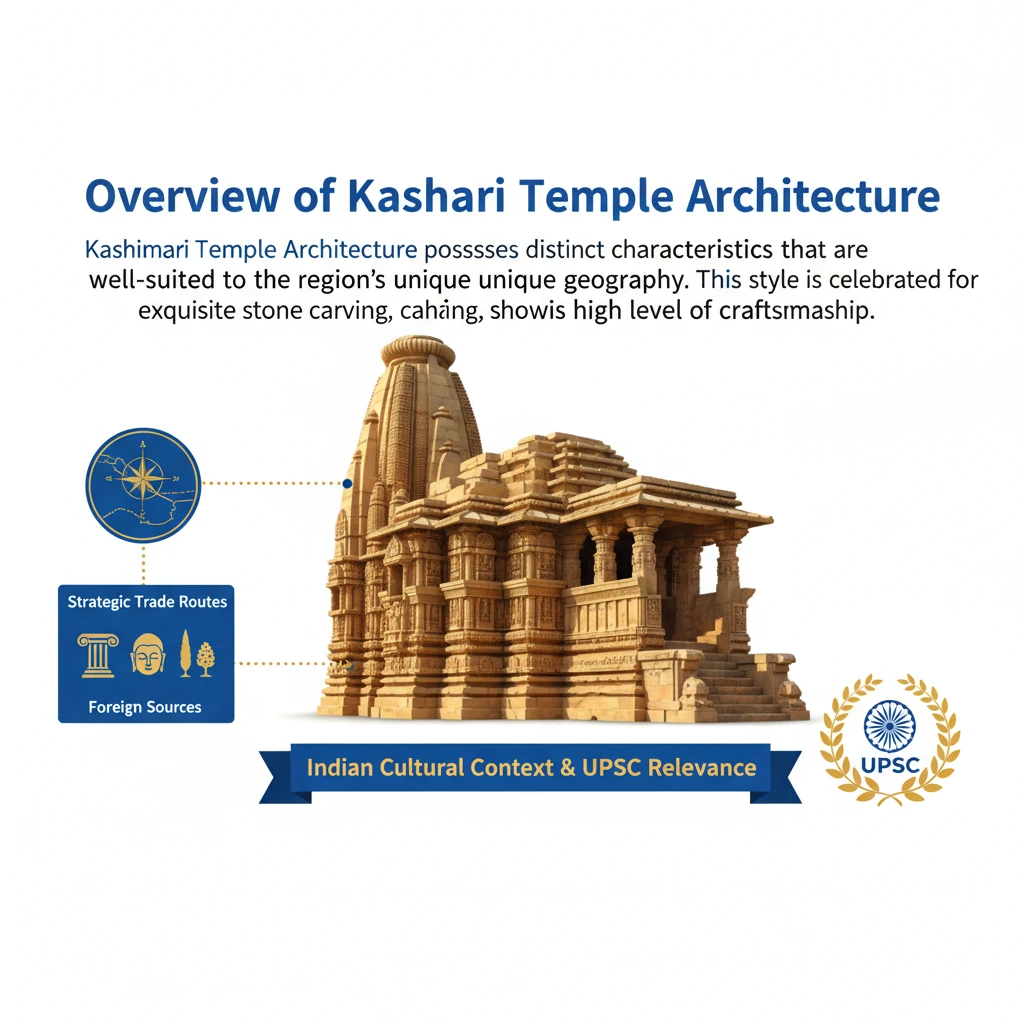
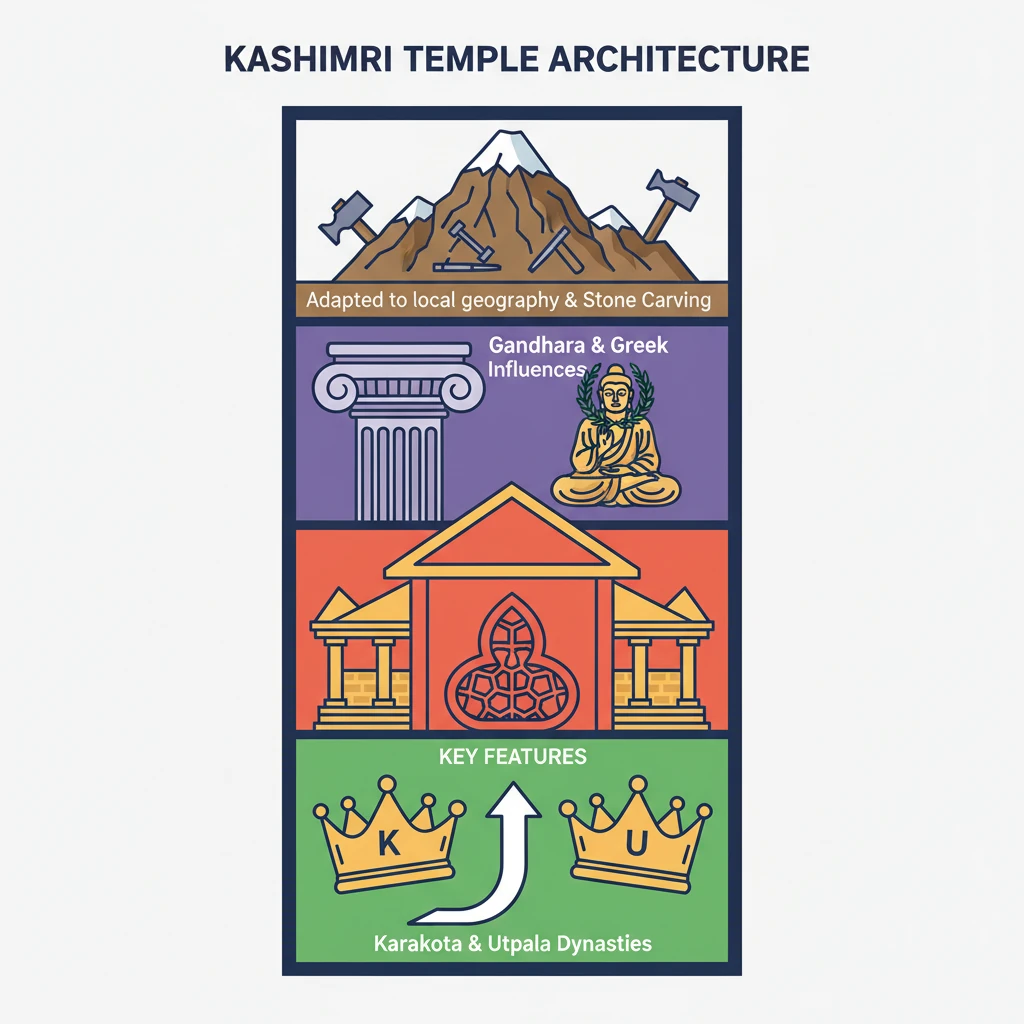
<h4>Overview of Kashmiri Temple Architecture</h4><p><strong>Kashmiri Temple Architecture</strong> possesses distinct characteristics that are well-suited to the region's unique geography. This style is celebrated for its exquisite <strong>stone carving</strong>, showcasing a high level of craftsmanship.</p><p>Its strategic location along important <strong>trade routes</strong> meant that the architectural style was significantly influenced by various <strong>foreign sources</strong>. This fusion of indigenous and external elements gives it a unique identity.</p><div class="key-point-box">Temple-making in Kashmir reached its zenith under the patronage of two prominent dynasties: the <strong>Karakota dynasty</strong> and the <strong>Utpala dynasty</strong>. Their rule marked a golden age for architectural development in the region.</div><h4>Key Features of Kashmiri Temple Architecture</h4><p>The Kashmiri style of architecture is distinguished by several identifiable features:</p><ul><li><strong>Trefoil arches:</strong> These arches show a clear influence from <strong>Gandhara art and architecture</strong>, characterized by their three-lobed design.</li><li><strong>Cellular layout and Enclosed courtyard:</strong> Temples often feature a complex internal arrangement and are typically situated within a well-defined, enclosed courtyard.</li><li><strong>Straight-edged Pyramidal roof:</strong> Unlike the curvilinear shikhara of many North Indian temples, Kashmiri temples often have distinctive straight-edged pyramidal roofs, adapted to the snowy climate.</li><li><strong>Column walls:</strong> The presence of column walls reflects an influence from <strong>Greek architectural styles</strong>, indicating cultural exchange.</li><li><strong>Triangular pediments:</strong> Similar to column walls, triangular pediments are another feature that points towards <strong>Greek influence</strong> in the design elements.</li><li><strong>Relatively more number of steps:</strong> Temples are often accessed via a greater number of steps, possibly due to their elevated positions or the terrain.</li></ul>
💡 Key Takeaways
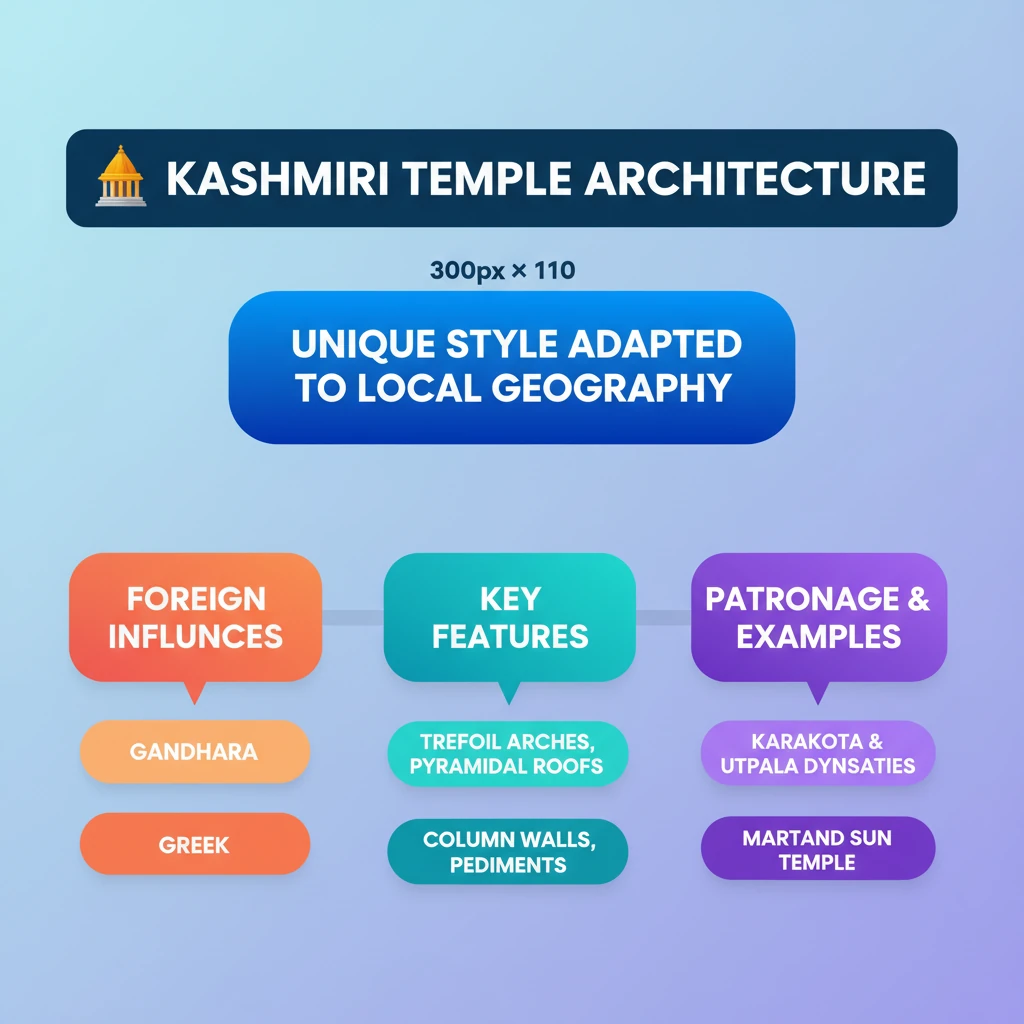
- •Kashmiri Temple Architecture is unique, adapted to local geography, and known for stone carving.
- •It shows significant foreign influences, particularly from Gandhara and Greek architectural styles.
- •Key features include trefoil arches, cellular layouts, pyramidal roofs, column walls, and triangular pediments.
- •Temple building flourished under the Karakota and Utpala dynasties.
- •The Martand Sun Temple is a prime example of this architectural style.
- •Its distinctiveness lies in the synthesis of indigenous traditions with external elements.
🧠 Memory Techniques
98% Verified Content
📚 Reference Sources
•NCERT Class 11 An Introduction to Indian Art Part 1
•Indian Art and Culture by Nitin Singhania