What are the Key Features of Sites Added to Tentative UNESCO List of WHS? - Art And Culture | UPSC Learning
Topics
0 topics • 0 completed
🔍
No topics match your search
What are the Key Features of Sites Added to Tentative UNESCO List of WHS?
Medium⏱️ 7 min read
art and culture
📖 Introduction
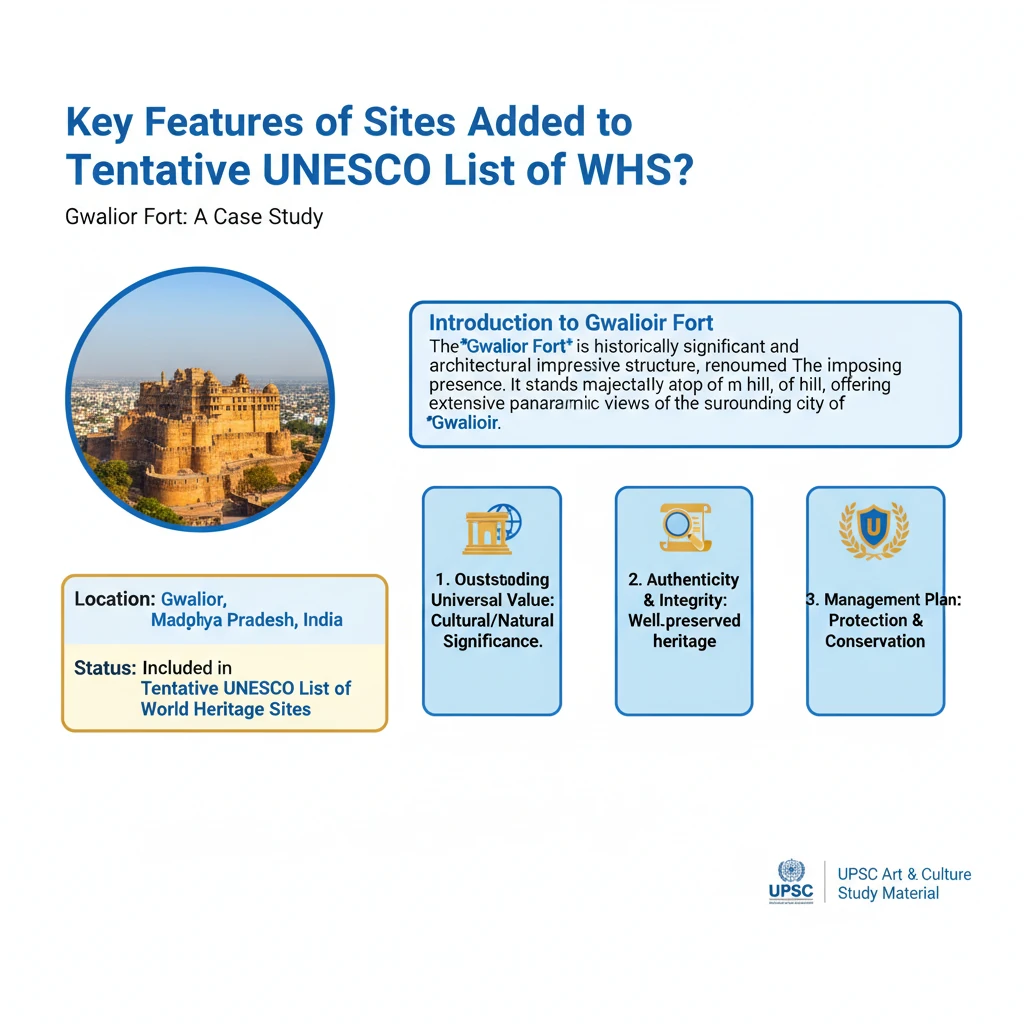
<h4>Introduction to Gwalior Fort</h4><p>The <strong>Gwalior Fort</strong> is a historically significant and architecturally impressive structure, renowned for its imposing presence. It stands majestically atop a hill, offering extensive panoramic views of the surrounding city of <strong>Gwalior</strong>.</p><div class="info-box"><strong>Location:</strong> Gwalior, Madhya Pradesh, India<br><strong>Status:</strong> Included in the <strong>Tentative UNESCO List of World Heritage Sites</strong></div><h4>Key Features: Formidable Walls and Strategic Location</h4><p>One of the most defining characteristics of <strong>Gwalior Fort</strong> is its <strong>formidable walls</strong>. These robust fortifications have historically made it a challenging stronghold to conquer, underscoring its strategic military importance throughout various periods of Indian history.</p><div class="key-point-box">The fort's elevated position on a hill not only provided a defensive advantage but also allowed for comprehensive surveillance of the surrounding plains, making it a crucial strategic asset.</div><h4>Historical Foundations and Founding</h4><p>The origins of <strong>Gwalior Fort</strong> are steeped in ancient history. It is widely believed that the initial foundations of this grand structure were laid in the <strong>6th century AD</strong>.</p><p>This significant undertaking is attributed to the valorous <strong>Rajput warrior Suraj Sen</strong>, marking the beginning of the fort's long and storied existence as a center of power and culture.</p><div class="exam-tip-box">For UPSC, remember the <strong>6th century AD</strong> and <strong>Suraj Sen</strong> as key historical markers. The fort's strategic location and formidable architecture are often points of discussion in Art & Culture and History papers.</div>
💡 Key Takeaways
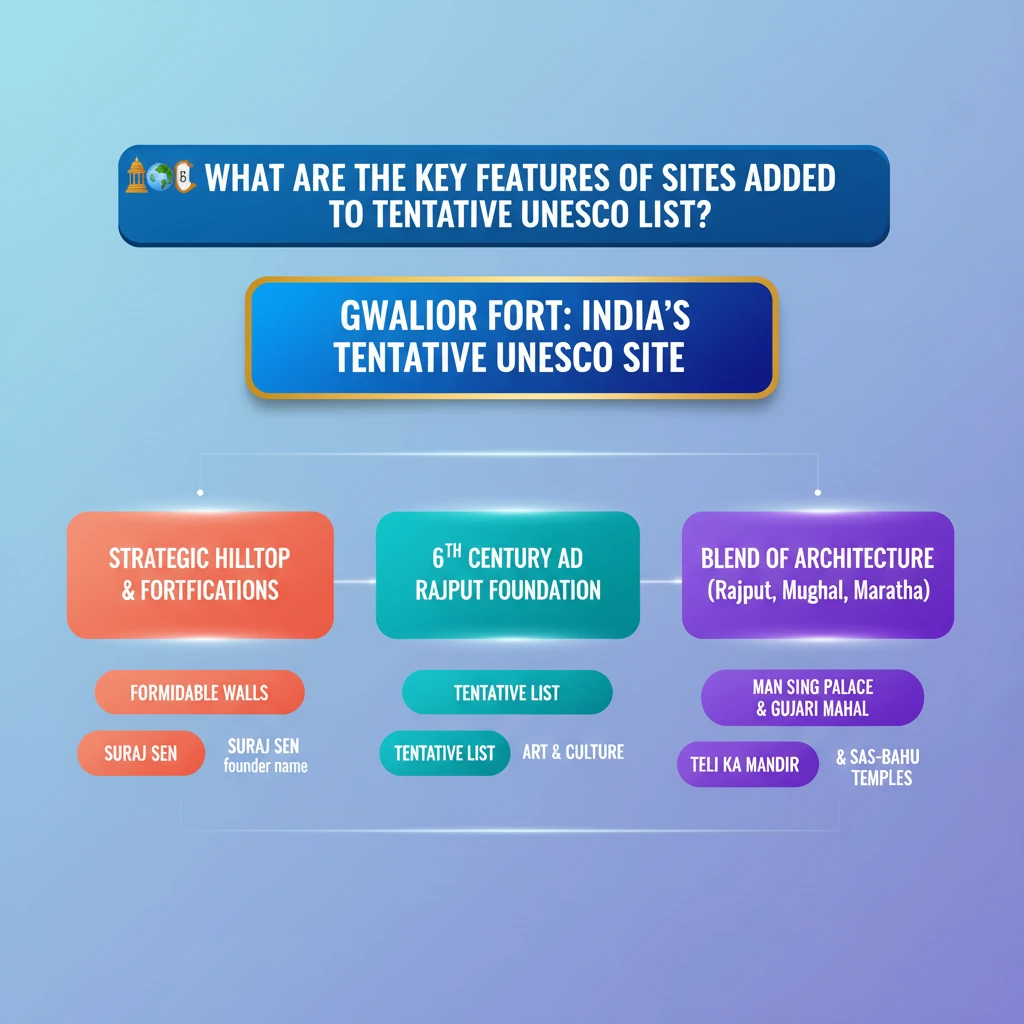
- •Gwalior Fort is known for its formidable walls and strategic hill-top location.
- •Its foundations were laid in the 6th century AD by Rajput warrior Suraj Sen.
- •The fort is currently on India's Tentative UNESCO List of World Heritage Sites.
- •It exhibits a blend of Rajput, Mughal, and Maratha architectural influences.
- •Key structures include Man Singh Palace, Gujari Mahal, Teli ka Mandir, and Sas-Bahu Temples.
- •Inclusion on the tentative list promotes conservation and cultural tourism.
🧠 Memory Techniques

95% Verified Content
📚 Reference Sources
•UNESCO World Heritage Centre official website (for general understanding of tentative list criteria)
•Archaeological Survey of India (ASI) publications (general knowledge of Indian forts)